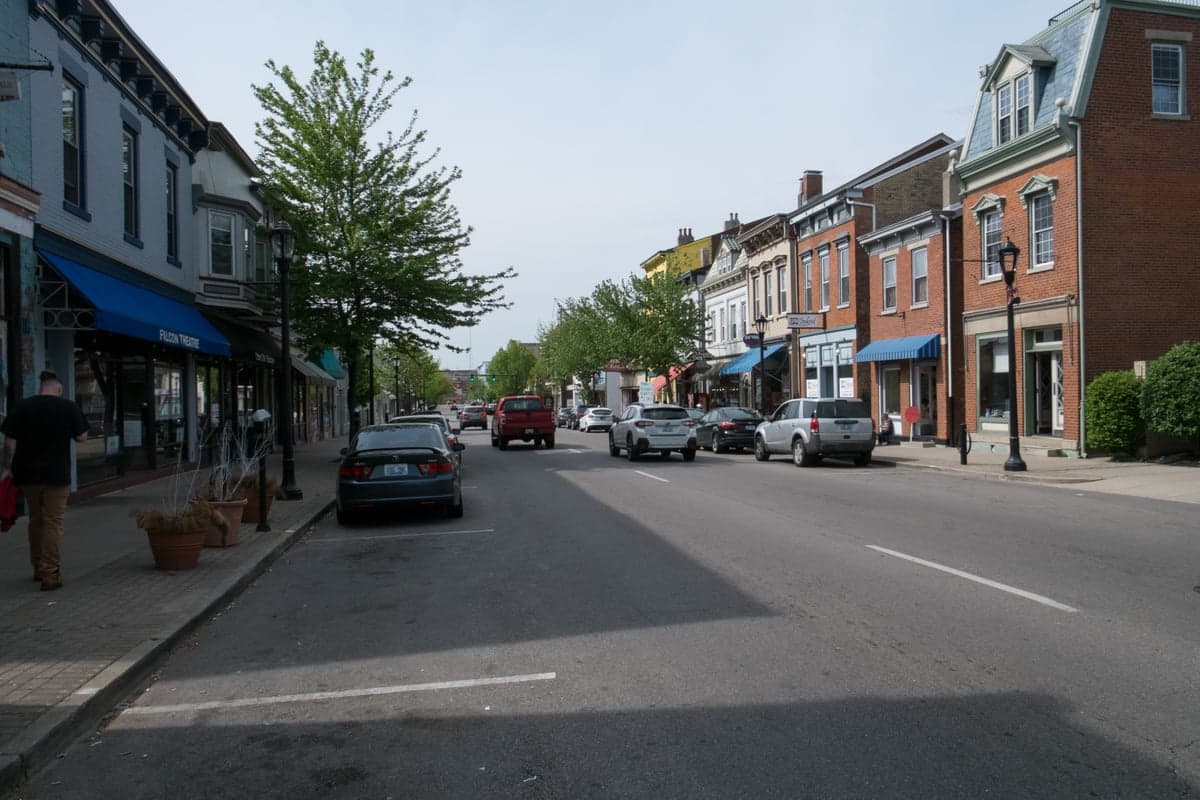
Photo: Wikipedia
Political ClimatePolitical Climate in Newport, KY
District shown is the primary district for this city’s centroid. Cities may span multiple districts.
Local Political AnalysisPolitical Analysis of Newport, KY
Newport, Kentucky, sits in a region that has long been a conservative stronghold, and the numbers back that up with a Cook PVI of R+18. For decades, this area has leaned reliably Republican, and while the city itself has seen some demographic shifts, the surrounding Campbell County and the broader Northern Kentucky region still vote overwhelmingly in favor of traditional, limited-government principles. If you’ve been around here long enough, you remember when the local politics were more about keeping taxes low and letting folks live their lives without a lot of interference from Frankfort or Washington. That’s still the baseline, but there’s a growing undercurrent of concern as some progressive ideas start to creep in from across the river in Cincinnati.
How it compares
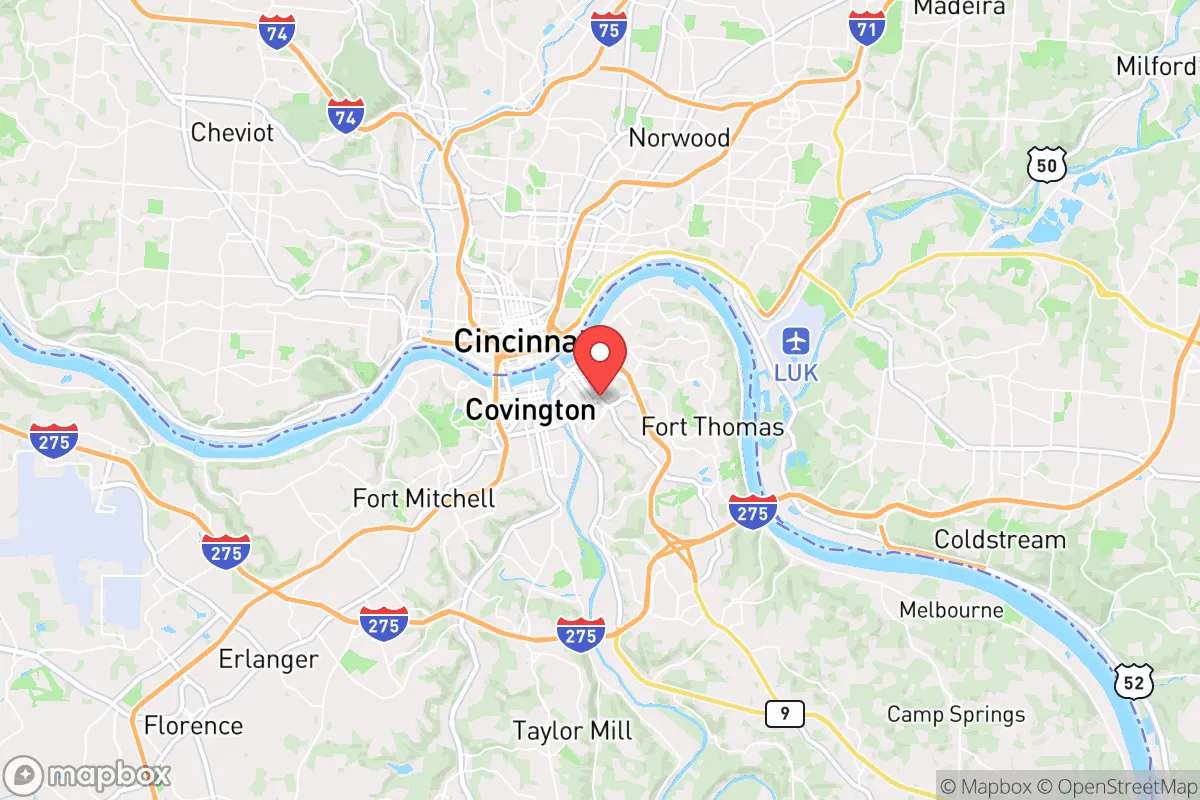
To really understand Newport’s political climate, you have to look at its neighbors. Just across the Ohio River, Cincinnati and Hamilton County are deep blue, with a Cook PVI of D+19. That’s a massive 37-point swing from Newport’s R+18. You can feel the difference driving over the bridge—Cincinnati’s city council has been pushing things like defunding police proposals and sanctuary city policies, while Newport’s local government has historically been more focused on public safety and fiscal responsibility. Further south, towns like Fort Thomas and Alexandria are even more conservative, often voting +25 or higher for Republican candidates. Newport itself is a bit of a mixed bag because of its riverfront development and younger transplants, but the county-wide numbers don’t lie: this is still a place where the Second Amendment is respected and people expect their tax dollars to be spent wisely, not on social experiments.
What this means for residents
For someone moving here, the political climate means you’ll generally have more breathing room when it comes to personal freedoms. You won’t see the kind of government overreach that’s become common in blue states—no heavy-handed lockdowns that lasted forever, no aggressive zoning rules that make it hard to run a small business out of your home, and no local officials trying to dictate what you can or can’t say. Property taxes are reasonable, and the county sheriff’s office still operates with a focus on community policing rather than woke training programs. That said, there’s a real worry among long-time residents that as Newport grows and attracts more people from Cincinnati looking for cheaper housing, some of those progressive voting habits might follow. The 2024 election showed a slight tightening in some precincts near the river, which has folks paying close attention to local school board and city council races.
One thing that sets Newport apart culturally is its strong sense of local identity and a healthy skepticism of top-down mandates. You’ll find that most people here still believe in the idea that your home is your castle, and the government’s job is to keep the streets safe and the roads paved, not to micromanage your life. The city has managed to revitalize its riverfront and downtown without falling into the trap of over-regulation, and that’s a testament to the common-sense approach that still dominates local politics. But if you look at the trajectory, there’s a clear dividing line: the older generation and native Kentuckians tend to vote solidly red, while some of the newer arrivals from Ohio and beyond are pushing for more government involvement in housing, policing, and schools. The next few years will tell whether Newport holds its conservative roots or starts to drift toward the chaos you see across the river. For now, it’s still a place where you can enjoy your freedoms without a lot of hassle, but you’d be wise to keep an eye on those local elections.

State Political ClimatePolitical Climate in Kentucky
State Political AnalysisPolitical Environment in the State
Kentucky has been a reliably red state for decades, but it’s not the deep-red monolith outsiders often assume. The state leans Republican by about 15-20 points in presidential elections—Donald Trump won it by 26 points in 2024—but that number masks a fierce urban-rural split and a slow, steady shift to the right in the exurbs and small towns. Over the past 20 years, the Democratic strongholds of Louisville and Lexington have become more liberal, while the rest of the state has hardened into a solid GOP base. If you’re looking for a place where conservative values still hold sway in everyday life, Kentucky delivers—but you need to know where the lines are drawn.
Urban vs. rural divide
The political map of Kentucky is a tale of two islands and a sea of red. Louisville (Jefferson County) and Lexington (Fayette County) are the only reliably blue metros, each voting Democratic by 15-20 points in recent cycles. These cities drive the state’s progressive energy—think higher taxes, more regulations, and a growing push for “equity” policies in schools and housing. Drive 20 minutes outside either city, and you’re in deep-red territory. Bowling Green and Owensboro are solidly conservative, with Warren and Daviess counties voting +30 R or more. The real story is in the exurbs: Oldham County, just northeast of Louisville, flipped from purple to deep red over the last decade, now voting +40 R. Boone County in northern Kentucky, part of the Cincinnati metro, has moved from swing to reliably red as suburban families fled city policies. The rural counties in eastern Kentucky—like Pike and Harlan—were once Democratic strongholds (coal country Democrats) but have swung hard to the GOP, now voting +50 R. The divide isn’t just geographic; it’s cultural. Urbanites want light rail and bike lanes; rural folks want lower taxes and fewer mandates.
Policy environment
Kentucky’s policy environment is a mixed bag for conservatives. On the plus side, the state has a flat income tax that’s been ratcheted down from 5% to 4% as of 2026, with a path to elimination by 2030. Property taxes are low, and there’s no state tax on Social Security benefits. The regulatory climate is business-friendly, with right-to-work laws and tort reform that have attracted manufacturing and logistics jobs. But there are real concerns: the state’s education system is underfunded and top-heavy with bureaucracy. The 2022 “school choice” bill (HB 563) passed, creating education opportunity accounts, but it’s been tied up in court by the teachers’ union. Healthcare is a sore spot—Kentucky expanded Medicaid under Obamacare, and nearly 30% of the population is on it, creating a massive entitlement dependency that drives up costs for everyone. Election laws are solid: voter ID is required, and the state purges inactive voters regularly. No mail-in ballot free-for-all here. But the gun rights picture is strong—constitutional carry passed in 2019, and there’s no state-level red flag law. On the whole, the state leans free-market, but the Medicaid expansion and union influence in Louisville and Lexington are persistent thorns.
Trajectory & freedom
Kentucky is moving in the right direction on personal freedom, but the pace is uneven. The biggest win was constitutional carry (SB 150, 2019), which removed the permit requirement for concealed carry. Parental rights got a boost with the 2022 “Parents’ Bill of Rights” (HB 563), which requires schools to notify parents about curriculum changes and allows them to opt their kids out of sex ed. On medical autonomy, the state banned nearly all abortions in 2019 (trigger law), and there’s no legalized marijuana—medical or recreational—though a 2023 bill to legalize medical use passed the House but died in the Senate. Property rights are strong: Kentucky is a “Dillon’s Rule” state, meaning local governments can’t impose their own gun or rental regulations without state approval. That’s a check on Louisville’s progressive city council. The concerning trend is tax creep: while the income tax is dropping, local sales taxes and property assessments are rising in blue metros. The state also passed a “critical race theory” ban in K-12 schools (HB 14, 2022), but enforcement is weak. Overall, freedom is expanding in the rural and suburban areas, but Louisville and Lexington are becoming more restrictive—think mask mandates, vaccine passports, and zoning fights.
Civil unrest & political movements
Kentucky has seen its share of flashpoints. The Breonna Taylor protests in Louisville in 2020 were the most intense—months of nightly demonstrations, arson, and looting that exposed a deep rift between the city’s progressive activists and the state’s conservative legislature. The state responded by passing a “back the blue” law (HB 321, 2021) that increased penalties for rioting and blocking roads. On the right, the “Kentucky Freedom Coalition” has been active in school board races and county GOP meetings, pushing for stricter election integrity and anti-CRT policies. Immigration politics are low-key—Kentucky has a small foreign-born population (about 4%), but there’s been a push in Louisville to become a “sanctuary city,” which the state legislature blocked with a 2023 law (SB 1) that forces local cooperation with ICE. Election integrity is a live issue: the 2020 election saw some irregularities in Jefferson County (ballot drop boxes, late-counted mail ballots), leading to a 2021 law (HB 574) that tightened absentee ballot rules and banned private funding of elections. No serious secession talk, but there’s a strong “state sovereignty” movement in the rural counties. A new resident would notice the tension between the urban progressive activism and the rural conservative pushback—it’s visible in yard signs, school board meetings, and local news.
Projection
Over the next 5-10 years, Kentucky will likely become more Republican at the state level but more polarized internally. The in-migration pattern is key: people moving to Kentucky are mostly conservatives from blue states (Ohio, Illinois, California) settling in the exurbs of Louisville, Lexington, and northern Kentucky. That’s pushing places like Shelbyville and Richmond further right. Meanwhile, Louisville and Lexington are attracting younger, more progressive transplants from coastal cities, making those metros bluer. The demographic trend is clear: the rural population is aging and shrinking, while the urban and suburban areas are growing. That means the GOP will hold the legislature and governor’s mansion (likely) but will face increasing pressure from the blue metros on issues like Medicaid expansion, education funding, and local control. The tax elimination trajectory is promising—if the flat tax is phased out by 2030, Kentucky could become a true low-tax haven. But the education funding crisis will worsen, and the state may need to either cut services or raise other taxes. The wild card is school choice: if the courts uphold the education opportunity accounts, Kentucky could see a boom in private and homeschool options, which would accelerate the conservative exodus from public schools. A new resident moving in now should expect a state that’s increasingly red in the countryside, increasingly blue in the cities, and increasingly divided over how to fund basic services.
For a conservative moving to Kentucky, the bottom line is this: you’ll find a state that respects your gun rights, keeps taxes low, and pushes back on federal overreach. But you need to pick your location carefully. Stick to the exurbs and small towns—places like Bowling Green, Owensboro, or Oldham County—where the schools are decent, the taxes are low, and the local government won’t impose mask mandates or critical race theory. Avoid Louisville and Lexington if you value personal freedom and parental rights. The state is on a good trajectory, but the urban-rural divide means you can’t assume the whole state is safe. Do your homework on the county and city council—that’s where the real battles are fought.
* Values derived from national, state, county, city and local statistics and may differ in a specific area. Last updated: 2026-04-21T09:25:21.000Z
Narrative content on this page is AI-generated and may contain mistakes. Verify any details that matter before acting on them.
ReloMaps may earn a commission from affiliate links at no extra cost to you.

