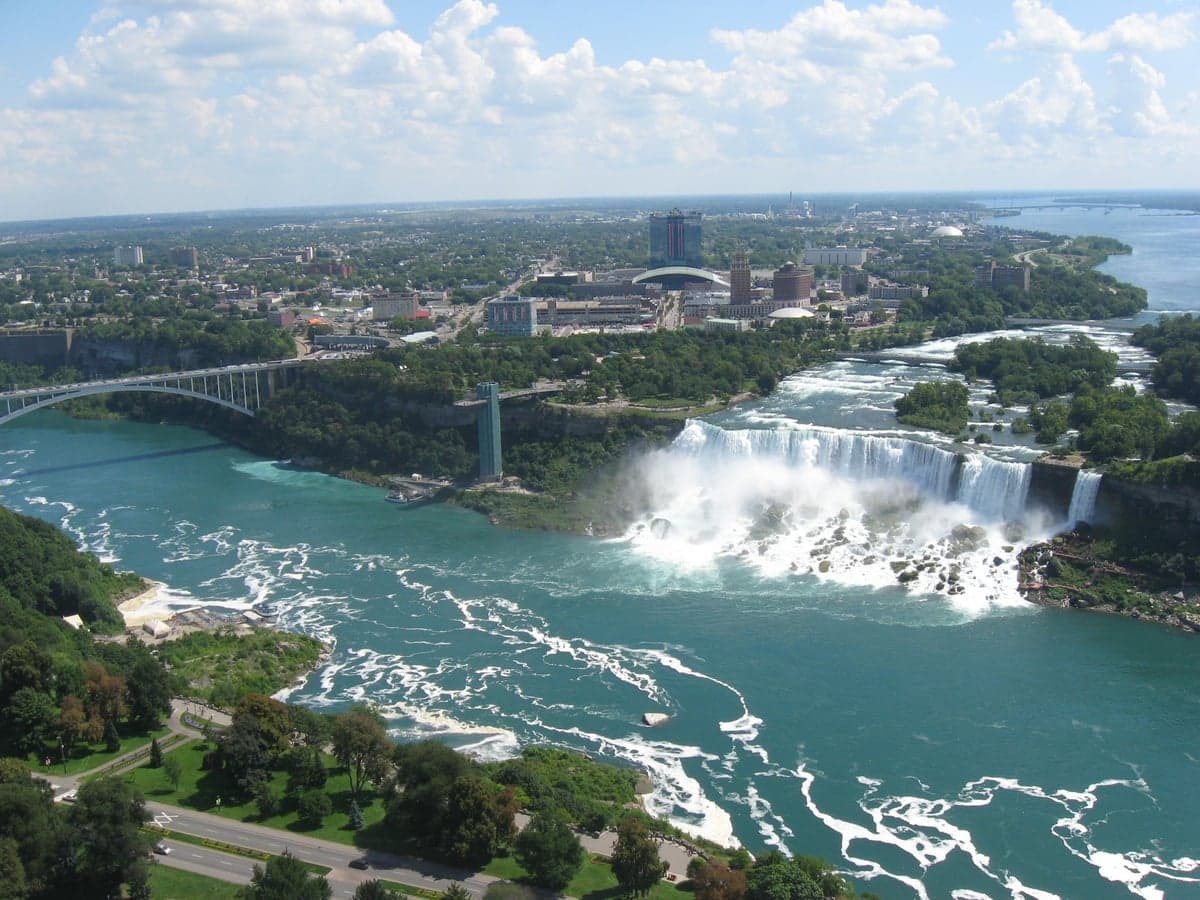
Photo: Wikipedia
Political ClimatePolitical Climate in Niagara Falls, NY
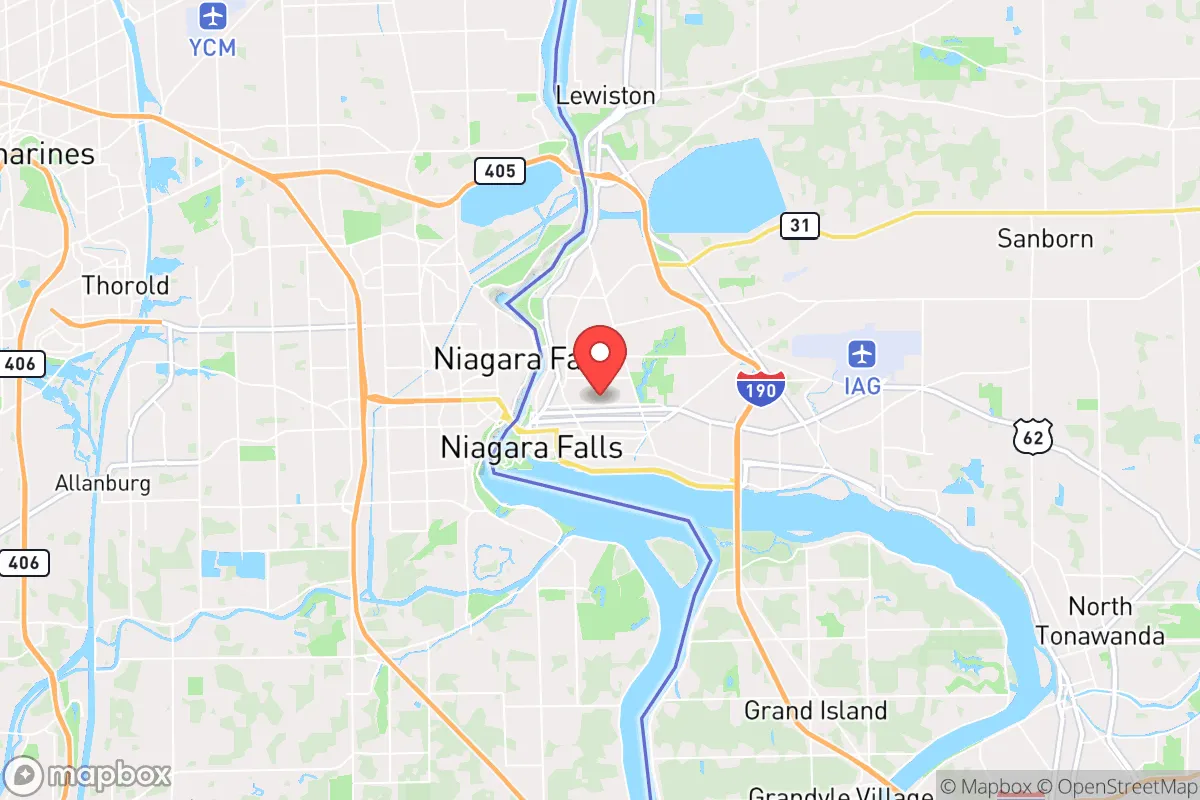
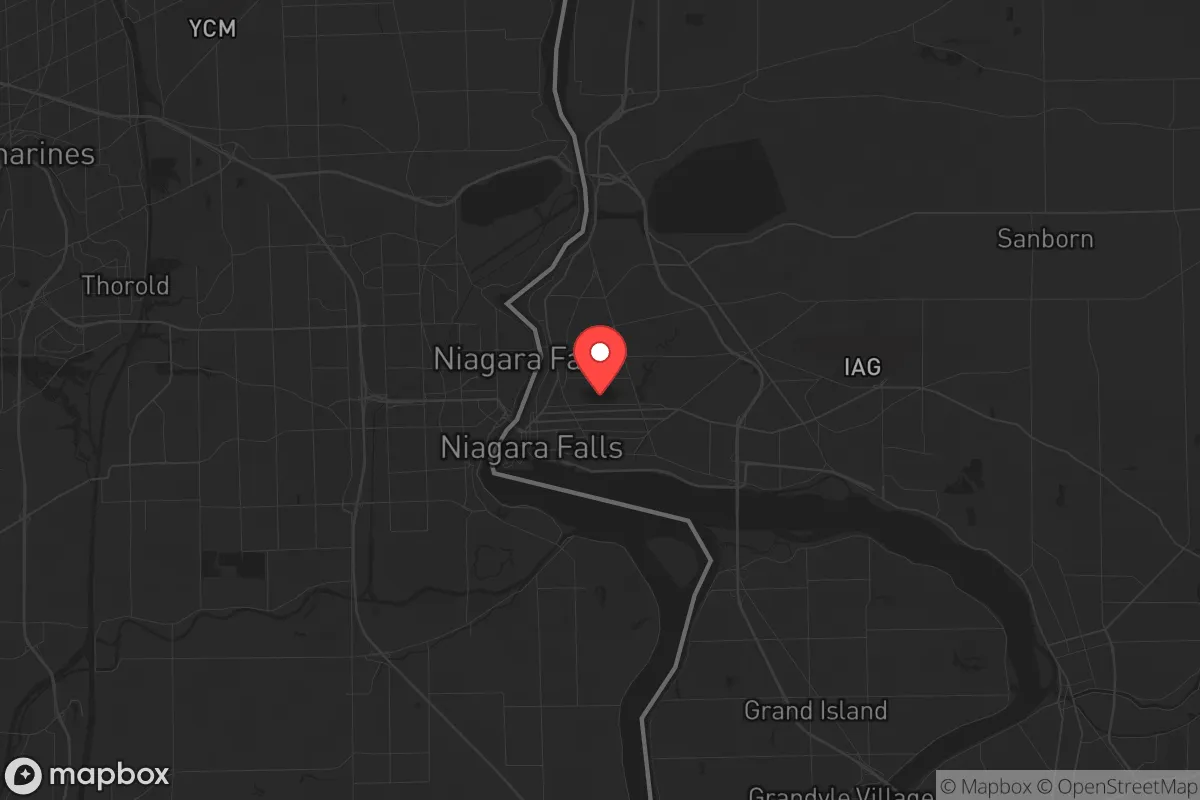
District shown is the primary district for this city’s centroid. Cities may span multiple districts.
Local Political AnalysisPolitical Analysis of Niagara Falls, NY
Niagara Falls, New York, leans heavily Democratic, with a Cook PVI of D+11, meaning the city votes about 11 points more Democratic than the national average. This has been the case for decades, but the shift in recent years has been less about traditional working-class values and more about progressive policies that many long-time residents find concerning. The city’s political trajectory has moved from a union-heavy, blue-collar Democratic stronghold to one increasingly influenced by state-level mandates and social agendas that feel disconnected from local life.
How it compares
To understand Niagara Falls’ politics, you have to look at the contrast with its neighbors. Just a few miles away, the town of Lewiston and the village of Youngstown lean more conservative, with many residents voting Republican in local and national elections. Across the Niagara River, the Canadian side of the falls is a whole different world politically, but even within New York, the difference is stark. The surrounding Niagara County as a whole is more purple, but the city itself is a Democratic stronghold. This creates a tension where city policies—like higher taxes and more regulations—often clash with the more libertarian-leaning attitudes of the rural and suburban areas just outside the city limits.
What this means for residents
For someone living here, the political climate means you’re dealing with a lot of government overreach into daily life. Property taxes are high, and state mandates on everything from energy to education can feel like they’re designed by people who’ve never set foot in a place like this. The push for progressive policies—like sanctuary city status or strict COVID-era lockdowns—has left many residents feeling like their voices don’t matter. You see it in the small businesses that struggle under red tape, and in the families who feel like their personal freedoms are being chipped away. The local government tends to follow the state’s lead, which means less local control and more top-down decision-making. It’s not uncommon to hear folks say they feel like they’re being governed by Albany, not by their own neighbors.
What daily life is like for families
For families, this political climate means you’re constantly weighing the cost of living against the quality of life. The schools are decent, but they’re under pressure from state curriculum changes that don’t always align with what parents want. The city’s reliance on tourism and state funding means that local politics often prioritize big projects over neighborhood concerns. You’ll see more focus on bike lanes and green initiatives than on fixing potholes or cutting crime. It’s a place where the government’s hand is felt in everything from your heating bill to your kids’ education, and that can wear on you if you value personal responsibility and local decision-making.
Culturally, Niagara Falls has a distinct identity that’s rooted in its industrial past and natural wonder, but the political direction is pushing it toward a more homogenized, progressive model. The city’s reliance on state grants and tourism dollars means it’s less independent than places like Lockport or North Tonawanda, which have more conservative leanings. In the long term, if this trend continues, you could see more families and small businesses moving to the suburbs or even out of state, leaving behind a city that’s increasingly dependent on government programs. It’s a tough spot—beautiful place, but the politics are making it harder for folks who just want to live their lives without a lot of interference.

State Political ClimatePolitical Climate in New York
State Political AnalysisPolitical Environment in the State
New York State has long been a Democratic stronghold, but the real story is far more complex than the statewide numbers suggest. Since the 1990s, the state has shifted from a competitive purple state to a deep blue one, driven almost entirely by New York City and its immediate suburbs. In 2024, Kamala Harris carried the state by roughly 12 points, but outside of the five boroughs and a handful of upstate cities, the political landscape is overwhelmingly red. For a conservative considering a move here, the key is understanding that New York is really two states: the downstate progressive machine and the rest of the state, which feels more like Pennsylvania or Ohio.
Urban vs. rural divide
The political map of New York is a textbook example of the urban-rural split. New York City alone accounts for about 40% of the state's vote, and its five boroughs—Manhattan, Brooklyn, Queens, the Bronx, and Staten Island—are overwhelmingly Democratic, with Staten Island being the only reliably Republican borough. The downstate suburbs, including Nassau County on Long Island and Westchester County north of the city, have trended blue in recent cycles, though they still have pockets of GOP strength in towns like Smithtown and Yorktown Heights. Meanwhile, upstate New York is a different world. Erie County (Buffalo) and Monroe County (Rochester) are blue due to their urban cores, but the surrounding rural counties—Allegany, Wyoming, Livingston, and Orleans—vote Republican by margins of 30 to 40 points. The Southern Tier, stretching from Jamestown to Binghamton, is solidly red, as is the North Country around Plattsburgh and Watertown. The Capital Region around Albany is a purple battleground, with the city itself blue but the surrounding suburbs and rural areas leaning red. The Hudson Valley is a mixed bag: Dutchess County is competitive, while Ulster County has become reliably blue. The bottom line: if you're looking for a conservative community, you'll find it in the vast majority of the state's landmass, but you'll be living under a state government that doesn't represent your values.
Policy environment
New York's policy environment is a cautionary tale for anyone who values limited government. The state has one of the highest combined state and local tax burdens in the nation, with income tax rates topping out at 10.9% and property taxes that are among the highest in the country. The property tax cap passed in 2011 has helped slow the bleeding, but it's constantly under attack from Albany. The regulatory posture is aggressive: the Climate Leadership and Community Protection Act (CLCPA) mandates a 70% renewable energy grid by 2030 and net-zero emissions by 2050, driving up energy costs and making it nearly impossible to build new housing or businesses without jumping through endless environmental hoops. Education policy is dominated by the teachers' unions, with school choice virtually nonexistent and charter schools capped. Healthcare is heavily regulated, with the state expanding Medicaid and pushing a single-payer system that hasn't passed yet but remains a goal. Election laws have been loosened significantly: no-excuse absentee voting was passed in 2021, and the state has automatic voter registration and early voting. The New York SAFE Act of 2013 remains the gold standard for restrictive gun laws, requiring background checks on all gun sales, banning assault weapons, and limiting magazine capacity. In 2022, the state passed the Concealed Carry Improvement Act (CCIA), which made it even harder to get a permit and created "sensitive locations" where guns are banned entirely. For a conservative, this is a state where the government is deeply involved in your daily life, from what you can drive to how you can protect your family.
Trajectory & freedom
New York is becoming less free by almost any measure, and the trend has accelerated since 2020. The CCIA mentioned above is a direct assault on the Second Amendment, and it's being challenged in court, but for now, it's the law. Parental rights have taken a hit with the passage of the Gender Expression Non-Discrimination Act (GENDA) and the state's refusal to allow parents to opt their children out of LGBTQ-inclusive curriculum. The Reproductive Health Act of 2019 codified abortion rights up to birth, and the state has become a sanctuary for out-of-state abortion seekers. Medical autonomy took a blow during COVID, when New York had some of the strictest lockdowns and vaccine mandates in the country, including a mandate for healthcare workers that led to thousands of resignations. Property rights are under constant threat from rent control laws that have been expanded to cover more units, and the Housing Stability and Tenant Protection Act of 2019 made it nearly impossible for landlords to evict problem tenants. On the positive side, the state has not passed any new broad-based tax increases since 2021, and the property tax cap remains in place, though it's been weakened by exemptions. The Bail Reform Act of 2019, which eliminated cash bail for most non-violent offenses, has been partially rolled back after a massive public backlash, but the system remains far more lenient than most conservatives would like. The trajectory is clear: Albany is moving left, and it's not slowing down.
Civil unrest & political movements
New York has been a flashpoint for political activism on both sides. The Black Lives Matter protests in 2020 were massive, particularly in New York City, where they lasted for months and led to the defunding of the NYPD by $1 billion. The anti-lockdown protests in 2020 were also significant, with large rallies in Albany, Buffalo, and on Long Island, where conservatives and libertarians pushed back against Governor Cuomo's emergency powers. The state's sanctuary city policies have made New York a magnet for illegal immigration, with the city spending billions on shelter and services for migrants, creating a major political flashpoint. The secession movement in upstate New York, while not serious, has gained some traction, with groups like the New York State of Mind pushing for a split between the city and the rest of the state. Election integrity has been a hot topic, with the 2020 election seeing massive mail-in voting and the state's refusal to clean voter rolls, leading to concerns about fraud. The 2022 gubernatorial election saw a surprisingly strong performance by Republican Lee Zeldin, who came within 6 points of winning, driven by a backlash against crime and the migrant crisis. For a new resident, the most visible flashpoint will be the homelessness and drug crisis in the cities, which is a direct result of the state's lenient policies. You'll see it on the streets of Albany, Rochester, and Syracuse, and it's a constant reminder of the consequences of progressive governance.
Projection
Over the next 5-10 years, New York is likely to continue its leftward drift, but the pace may slow. The demographic trends are not in the state's favor: New York has lost population every year since 2020, with the biggest losses coming from upstate and the suburbs. The people leaving are disproportionately conservative and middle-class, which means the remaining electorate is becoming even more Democratic. The in-migration is largely from international immigrants and people moving from other blue states, which reinforces the progressive tilt. However, the 2022 election showed that the GOP can still compete if they focus on crime, taxes, and education. The suburbs of New York City are the key battleground: if they continue to trend blue, the state will become a one-party state. If they swing back, the GOP could become competitive again. The state's fiscal situation is a ticking time bomb, with massive unfunded pension liabilities and a budget that relies on high-income earners who are increasingly leaving. At some point, the state will have to either raise taxes further or cut services, and neither option is popular. For a conservative moving in now, expect to see more of the same: higher taxes, more regulation, and a government that is increasingly hostile to traditional values. The best you can hope for is that the state's fiscal crisis forces some moderation, but don't count on it.
For a conservative considering a move to New York, the bottom line is this: you can find a great community in the upstate or suburban areas, with good schools, low crime, and like-minded neighbors. But you will be fighting an uphill battle against a state government that is actively working against your interests. Your property taxes will be high, your gun rights will be restricted, and your children will be exposed to a curriculum you may not agree with. If you're willing to be a political minority and fight for your values, New York can still be a great place to live. But if you're looking for a state that aligns with your political beliefs, you'd be better off looking at Florida, Texas, or Tennessee. New York is a beautiful state with a lot to offer, but it's not getting any more conservative.
* Values derived from national, state, county, city and local statistics and may differ in a specific area. Last updated: 2026-04-19T08:28:46.000Z
Narrative content on this page is AI-generated and may contain mistakes. Verify any details that matter before acting on them.
ReloMaps may earn a commission from affiliate links at no extra cost to you.

