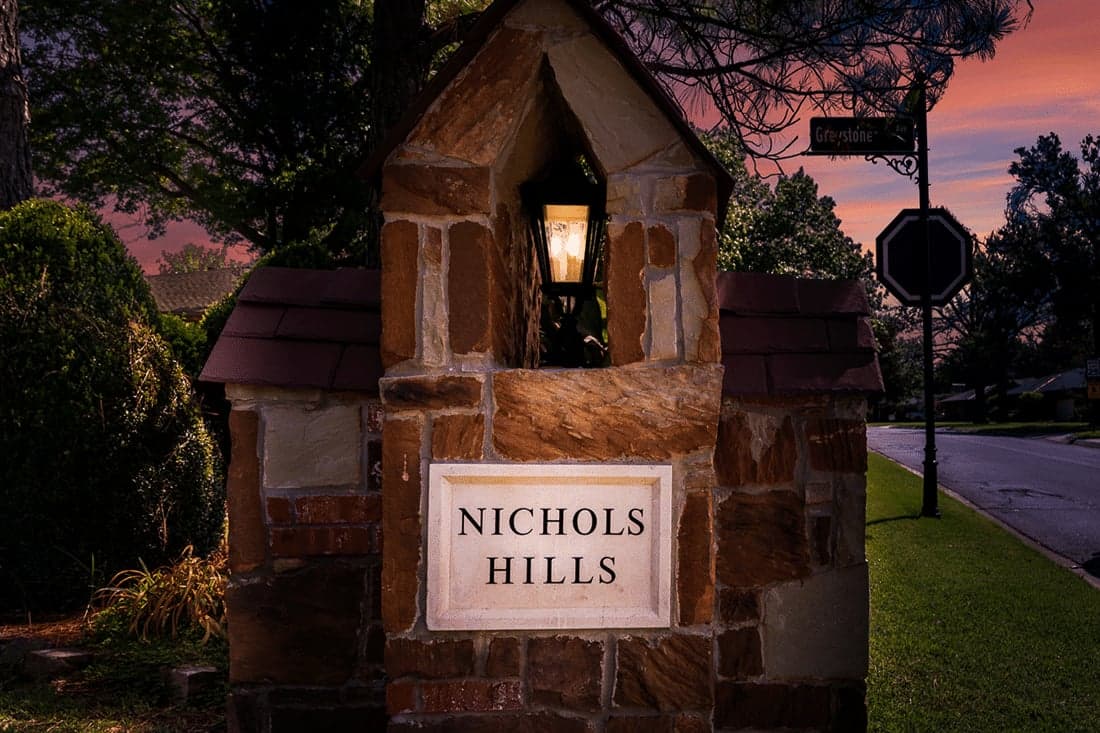
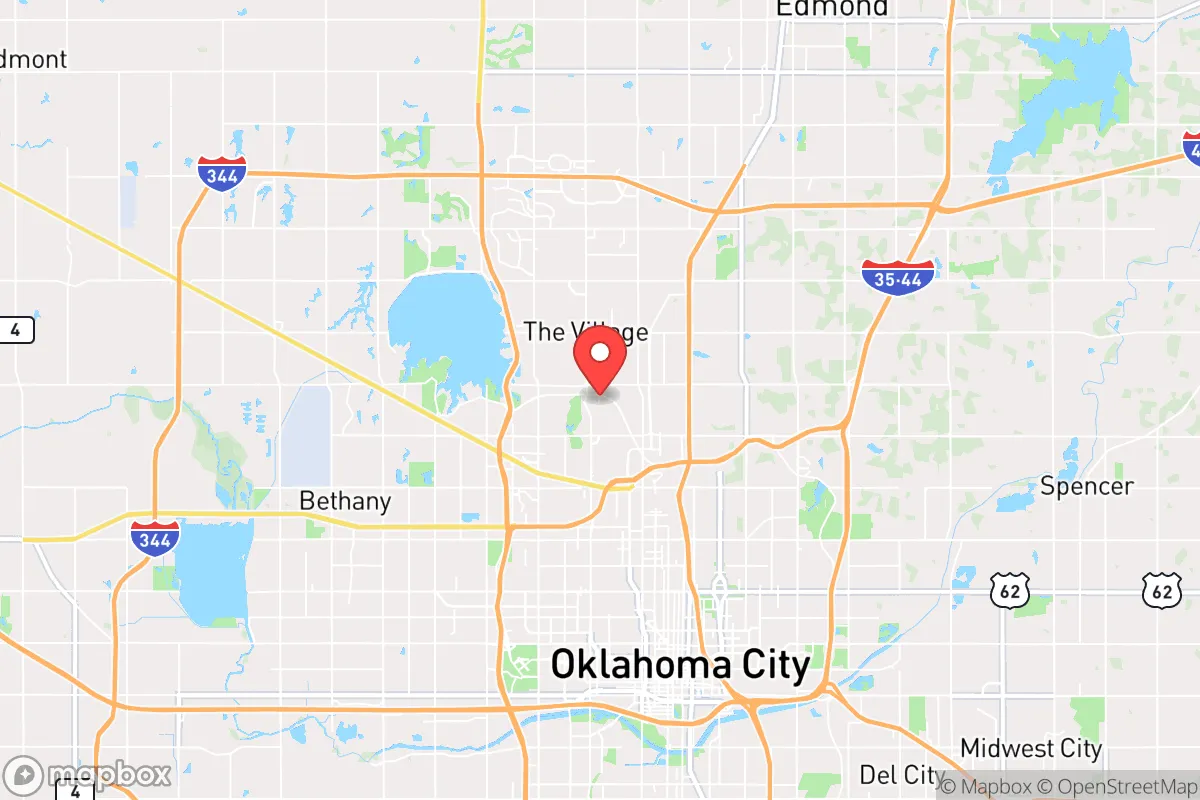
Demographics of Nichols Hills, OK
Affluence Level in Nichols Hills, OK
A wealthy area with high-earning, well-educated households. Incomes, home values, and educational attainment meaningfully outpace national averages.
People of Nichols Hills, OK
Nichols Hills, Oklahoma, is a small, affluent enclave of 3,838 residents characterized by its exceptionally high education levels (73.8% college-educated) and a population that is overwhelmingly White (86.6%). The city’s identity is rooted in old-money stability, low density, and a deliberate, planned exclusivity that has changed little since its founding. With a foreign-born population of just 0.2% and no Black or Indian subcontinent residents, Nichols Hills remains one of the most demographically homogeneous municipalities in the Oklahoma City metro area.
How the city was settled and grew
Nichols Hills was not a product of pioneer settlement or land runs. It was conceived in 1929 as a planned, restricted residential suburb by developer G.A. Nichols, who envisioned a wealthy, exclusively White enclave for Oklahoma City’s business and professional elite. The original plat included deed restrictions that explicitly prohibited non-White residents, a legal framework that shaped the city’s population for decades. The first wave of residents were oil executives, bankers, and attorneys who built large estates in the original Nichols Hills Addition, the historic core around Grand Boulevard and Wilshire Boulevard. The Classen Drive corridor became the spine of early development, with homes designed by prominent architects like John Duncan Forsyth. The city incorporated in 1929, and its population remained small—under 1,000 through the 1940s—as the Great Depression and World War II slowed construction. By the 1950s, the Huntington neighborhood (north of Wilshire) filled in with larger, custom-built homes for a second generation of oil and gas families, cementing the city’s reputation as a bastion of old money.
Modern era (post-1965)
The 1968 Fair Housing Act invalidated Nichols Hills’ original deed restrictions, but the city’s demographic trajectory barely shifted. Unlike many Sun Belt suburbs that experienced rapid diversification after 1965, Nichols Hills remained overwhelmingly White and wealthy. The Briarwood Addition, developed in the 1970s and 1980s, attracted corporate executives and physicians from Oklahoma City’s expanding medical and energy sectors—still overwhelmingly White. The city’s small Hispanic population (3.6%) is concentrated in service-industry households, many living in older, smaller homes near the Western Avenue commercial strip, but no distinct ethnic enclave formed. The East/Southeast Asian community (1.7%) is largely composed of professionals in energy and technology, scattered across the Nichols Hills Estates area near the Oklahoma City Golf & Country Club. The absence of Black residents (0.0%) and Indian subcontinent residents (0.0%) reflects not active exclusion but rather the city’s extreme housing costs—median home values exceed $600,000—and a social network that has historically recruited through elite private clubs and professional associations. The 2020 Census confirmed that Nichols Hills is one of the few Oklahoma municipalities where the White share actually increased slightly since 2010, as older homeowners aged in place and new buyers came from similar backgrounds.
The future
Nichols Hills is not homogenizing further—it is already at a demographic ceiling. The population has been essentially flat (3,838 in 2020 vs. 3,800 in 2010) and is projected to remain below 4,000 through 2035. The city’s age structure is skewing older, with a median age of 48, and younger families are increasingly priced out by rising property taxes and maintenance costs on aging mansions. The Hispanic and Asian shares are likely to grow slowly, but only as service and professional workers find housing in the Wilshire Village area, a small cluster of condos and townhomes near the city’s northern edge. No significant immigrant gateway is forming. The most likely demographic shift is a gradual thinning of the population as older homeowners sell to childless professionals or empty-nesters, reducing the already low number of school-age children. For a relocating conservative family, Nichols Hills offers extreme stability and safety but little diversity or growth—a place where the population is aging in place, not expanding or diversifying.
For a conservative-leaning individual or family moving to Nichols Hills today, the city represents a deliberate choice for homogeneity, low crime, and high property values in a state that is itself becoming more politically and culturally conservative. The population is not changing in any meaningful way; it is a closed loop of inherited wealth and professional success. New arrivals will find a community that looks and feels much as it did in 1970—White, wealthy, and insular—and that is precisely the appeal for those who can afford the entry price.

* Values derived from national, state, county, city and local statistics and may differ in a specific area. Last updated: 2026-04-27T14:18:29.000Z
Narrative content on this page is AI-generated and may contain mistakes. Verify any details that matter before acting on them.
ReloMaps may earn a commission from affiliate links at no extra cost to you.

