Photo: Wikipedia
Personal Sovereignty in Nitro, WV
Strong independent fundamentals that actively favor personal liberty and low regulation.
What does Personal Sovereignty tell us?
Personal Sovereignty measures your capacity for self-reliance and independence with minimal government friction. Higher scores mean fewer barriers between you and the way you want to live... but it assumes you have the space you need and good neighbors.
What does this tell us?
Personal Sovereignty measures your capacity for self-reliance and independence with minimal government friction. Higher scores mean fewer barriers between you and the way you want to live... but it assumes you have the space you need and good neighbors.
State Policy
Energy independence: Net exporter (200% of energy produced in-state)
Personal Liberty
Homesteading

Personal Liberty Analysis
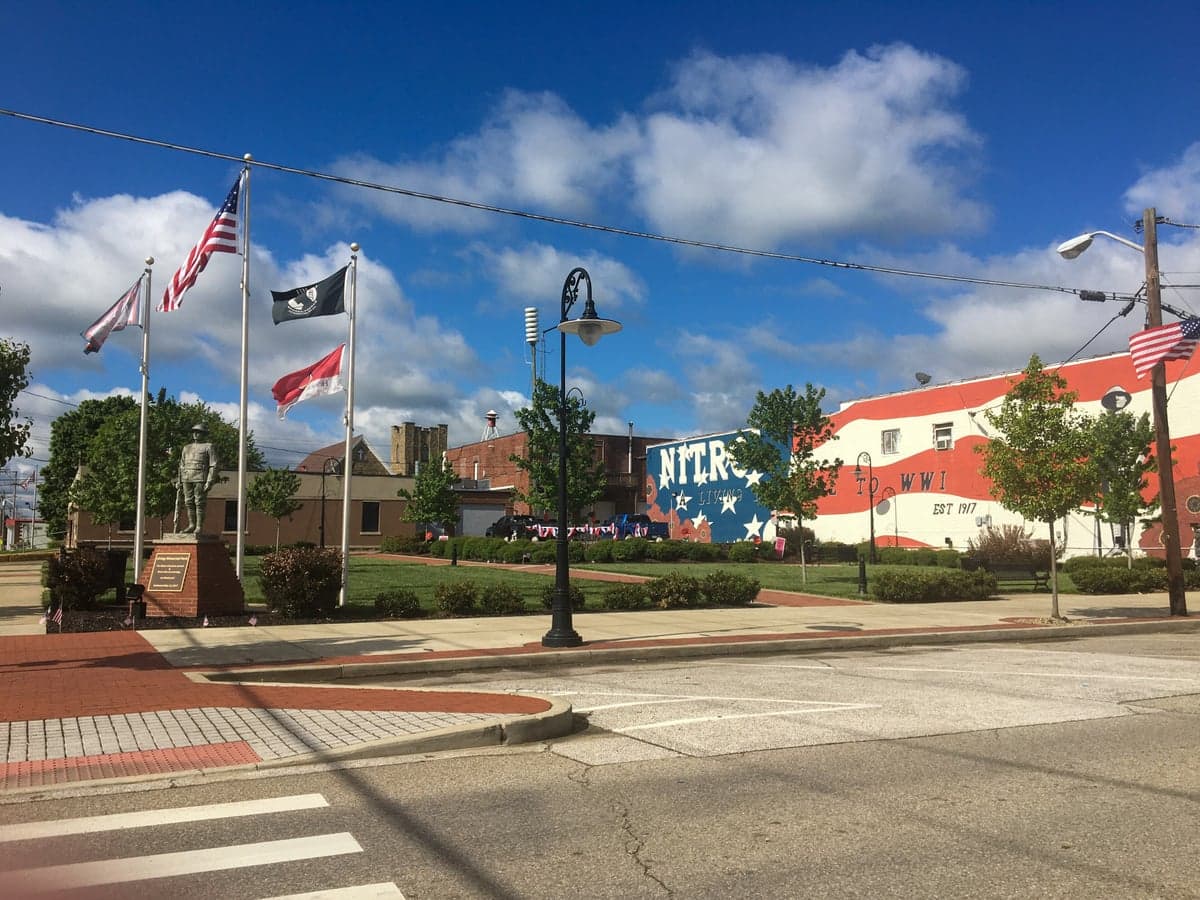
For the individual or family prioritizing personal sovereignty above all else, Nitro, West Virginia, offers a rare environment where state-level protections for self-determination meet a small-town, Appalachian ethos of self-reliance. While no location is a perfect fortress against federal overreach, Nitro sits within a state that has aggressively pushed back against federal mandates on everything from firearms to medical choice, creating a legal climate where the default assumption leans toward individual liberty rather than government permission. The town itself, a historic chemical manufacturing hub along the Kanawha River, has a blue-collar resilience that translates into a live-and-let-live culture, but the real sovereignty advantages here come from West Virginia's broader statutory framework and the practical realities of life in a low-density, low-regulation region.
Tax burden and regulatory posture: how West Virginia's fiscal and legal climate supports autonomy
West Virginia's tax structure is a net positive for those seeking to minimize government extraction from their earnings. The state has no gross receipts tax and no estate or inheritance tax, which directly protects wealth transfer and business income. The personal income tax is a graduated system with a top marginal rate of 5.12% on income over $60,000, but the state has been actively reducing rates—legislation passed in 2023 set a path toward eventual elimination. Property taxes are among the lowest in the nation, with effective rates averaging around 0.55% of assessed value, and West Virginia does not tax tangible personal property like machinery or inventory for most small-scale operations. On the regulatory front, the state has a right-to-work law, meaning no one can be forced to join a union as a condition of employment, and it has consistently ranked in the bottom third of states for regulatory burden according to the Mercatus Center. Permitting for home construction or small business operation is generally straightforward, especially in unincorporated areas around Nitro, where county-level oversight is minimal. For the prepper or homesteader, this means fewer layers of bureaucratic approval before you can build a workshop, install a rainwater catchment system, or start a home-based enterprise.
Self-defense and gun law specifics: what the Second Amendment looks like in practice in Nitro
West Virginia is a constitutional carry state, meaning no permit is required to carry a concealed firearm for anyone legally allowed to possess one. This went into full effect in 2016 and has not been rolled back. Nitro itself has no local ordinances that restrict firearm possession beyond state law, so the town is effectively a no-permit, no-waiting-period environment for handgun and long gun purchases from private sellers. The state also has strong preemption laws—municipalities like Nitro cannot pass their own gun bans or magazine capacity limits. Stand-your-ground laws are in place, with no duty to retreat in any place where a person is lawfully present. For the survivalist mindset, this means the legal framework supports carrying a sidearm for daily defense and keeping a rifle or shotgun for home protection without fear of running afoul of local gun boards or storage mandates. Background checks are required for purchases from Federal Firearms License (FFL) dealers, but private transfers between individuals are unregulated. Magazine capacity is not restricted, and there are no state-level bans on specific firearm types, including AR-15s or other modern sporting rifles. The state also has a strong castle doctrine, explicitly protecting the use of deadly force against an intruder in one's home or occupied vehicle.
Self-reliance and homesteading viability: lot sizes, zoning, and off-grid feasibility in the Nitro area
Nitro's residential landscape is a mix of older suburban lots and more rural parcels, particularly as you move away from the Kanawha River floodplain toward the hills. Standard residential lots in the town proper are often a quarter-acre to half-acre, but properties just outside the city limits—in areas like Cross Lanes or unincorporated Putnam County—can easily be one to five acres at prices well below national averages. Zoning in Nitro itself is relatively light, with no county-wide zoning in Putnam County, meaning you can generally keep livestock, build outbuildings, and operate a small farm without extensive permitting. Off-grid feasibility is high: West Virginia has no state-level prohibition on rainwater collection, and many rural properties have existing wells or access to spring water. Solar panel installation is unregulated at the state level, and net metering is available for grid-tied systems, but going fully off-grid is legally straightforward. Septic systems require county health department permits, but the process is not onerous for standard gravity-fed systems. For the prepper, this means you can realistically set up a property with solar power, a well, a garden, and a workshop without needing to navigate a dense web of environmental or building codes. The local climate supports a growing season from April to October, and deer hunting is accessible on public lands within a short drive.
Personal liberties: parental rights, medical autonomy, speech, and property protections
West Virginia has been a battleground for parental rights in education, with legislation passed in 2021 and 2023 that requires schools to notify parents of any medical or mental health services offered to students and to obtain parental consent before administering surveys on sensitive topics. The state also has a Parents' Bill of Rights law that affirms the fundamental right of parents to direct the upbringing, education, and care of their children. On medical autonomy, West Virginia passed a law in 2022 that prohibits any entity from requiring a COVID-19 vaccine as a condition of employment, education, or service, and the state has no general vaccine mandate for adults. The state also has a broad religious exemption for vaccinations. For the survivalist concerned about medical freedom, West Virginia does not have a state-level prescription drug monitoring program that is overly aggressive, and there is no state income tax on medical marijuana (though it is legal for qualifying patients). Free speech protections are robust, with no state-level hate speech laws that criminalize political expression, and property rights are strengthened by the state's strong eminent domain protections, which require a public use finding and just compensation. The overall legal posture is one of deference to the individual, with the state government generally acting as a shield against federal overreach rather than an additional layer of control.
In the broader landscape of American personal sovereignty, Nitro and its surrounding area in West Virginia rank among the most liberty-respecting environments east of the Mississippi. The combination of constitutional carry, low taxes, minimal zoning, strong parental rights, and a culture that values self-sufficiency creates a legal and social climate where the individual—whether a single prepper or a family building a homestead—can operate with fewer government entanglements than in nearly any neighboring state. While no location is immune from federal overreach or economic pressures, Nitro offers a practical, affordable base for those who prioritize keeping the government out of their personal decisions, their home, and their future.

* Values derived from national, state, county, city and local statistics and may differ in a specific area. Last updated: 2026-05-03T13:58:21.000Z
Narrative content on this page is AI-generated and may contain mistakes. Verify any details that matter before acting on them.
ReloMaps may earn a commission from affiliate links at no extra cost to you.

