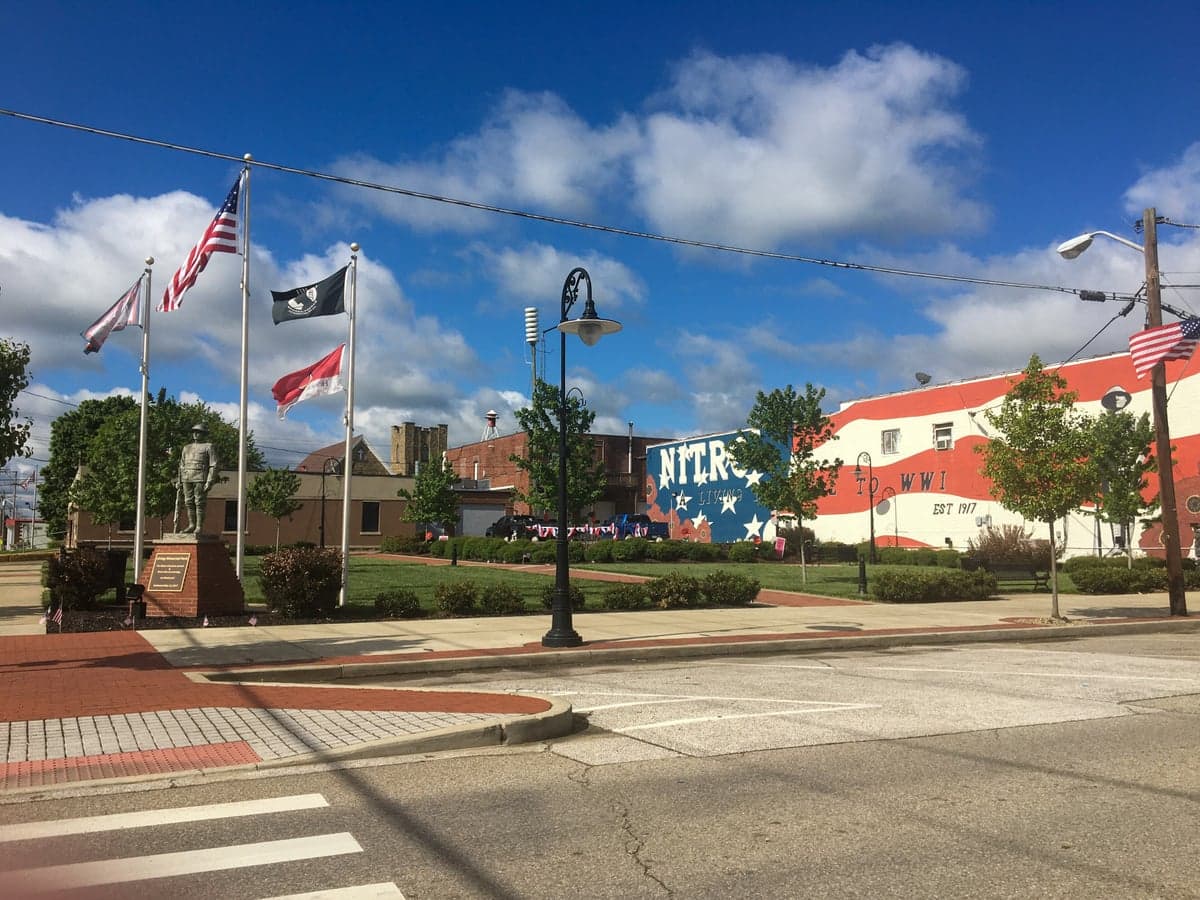
Photo: Wikipedia
Political ClimatePolitical Climate in Nitro, WV
District shown is the primary district for this city’s centroid. Cities may span multiple districts.
Local Political AnalysisPolitical Analysis of Nitro, WV
Nitro, West Virginia, is about as solidly conservative as it gets, with a Cook PVI of R+22 that tells you everything you need to know about the local voting patterns. This isn't a purple area that flips back and forth; it's a place where Republican candidates routinely win by double digits, and the political culture reflects a deep-seated belief in limited government, personal responsibility, and traditional values. The trajectory here has been steady for decades, though you can feel a growing unease as national progressive trends try to creep into local conversations, especially around school policies and property rights.
How it compares
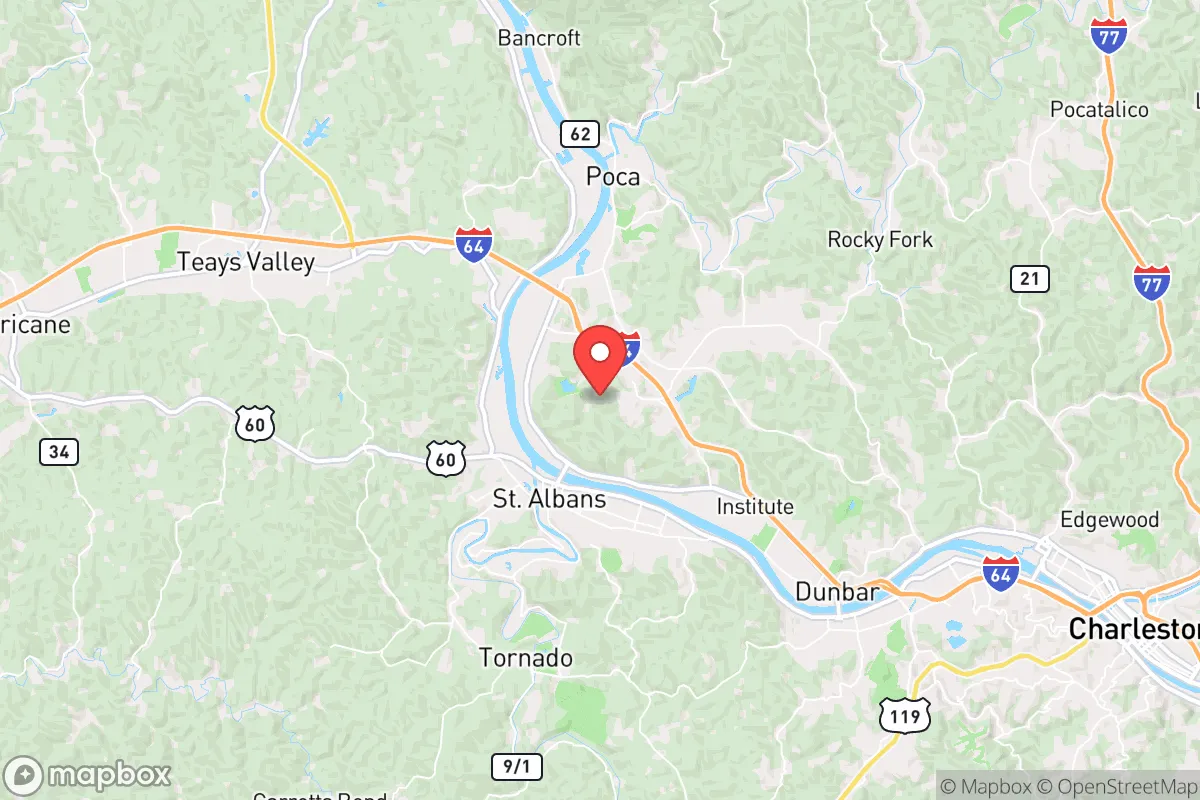
Drive twenty minutes north to Charleston, and you'll hit a different world entirely. The state capital leans more moderate-to-liberal, with a younger, more transient population and a university influence that pushes for bigger government programs and social experiments. Nitro, by contrast, feels like a holdout of common sense. Neighboring towns like St. Albans and Dunbar share a similar conservative bent, but Nitro's industrial history—built around the old powder plant and chemical manufacturing—gives it a grittier, more independent streak. People here remember when the federal government was the problem, not the solution, and that memory keeps the local politics anchored in skepticism of authority and a preference for local control over state or federal mandates.
What this means for residents
For the folks living in Nitro, the conservative climate means fewer headaches from overreaching regulations and a community that generally minds its own business. You won't see the same kind of zoning fights or school board battles over curriculum that plague more progressive areas. The local government tends to keep taxes low and stay out of your way, which is exactly how most residents want it. That said, there's a growing concern about outside money and influence seeping into local elections—PACs and national groups trying to push a progressive agenda under the radar. If you value your Second Amendment rights, your ability to run a small business without endless red tape, and your kids not being taught ideology in place of facts, Nitro's political climate is a breath of fresh air compared to what you'd find in many parts of the country.
One cultural distinction worth noting is the strong sense of self-reliance here. Nitro doesn't have the same kind of activist scene you'd see in Morgantown or even parts of Huntington. Instead, the community rallies around practical issues: keeping the water clean from legacy industrial pollution, maintaining local roads, and supporting the volunteer fire department. There's a wariness of any politician who promises too much, because people know that government solutions usually come with strings attached. The long-term outlook is cautiously optimistic, but only if the community stays vigilant against the kind of progressive overreach that's hollowed out other small towns. If you're looking for a place where your vote actually means something and your voice isn't drowned out by a noisy minority, Nitro is still that kind of place—for now.

State Political ClimatePolitical Climate in West Virginia
State Political AnalysisPolitical Environment in the State
West Virginia has long been one of the most reliably Republican states in the nation, but that wasn’t always the case. As recently as the 1990s, it was a Democratic stronghold at the state and local level, but a massive realignment over the past 20 years has flipped it deep red. In 2024, Donald Trump carried the state by nearly 40 points, and Republicans now hold supermajorities in both chambers of the legislature, all three U.S. House seats, and both U.S. Senate seats. The shift has been driven by cultural and economic populism, a backlash against national Democratic environmental and energy policies, and a steady exodus of union-aligned Democrats who have been replaced by conservative-leaning retirees and remote workers from places like Northern Virginia and Ohio.
Urban vs. rural divide
The political map of West Virginia is starkly divided between its small, struggling cities and its vast, deeply conservative rural areas. The largest metro, Charleston, is the only real blue dot in the state, with Kanawha County voting narrowly Democratic in recent presidential races thanks to a concentration of government workers, union households, and university-affiliated voters. Morgantown, home to West Virginia University, is a purple island—liberal-leaning on social issues but still more conservative than most college towns. Huntington and Wheeling lean Republican but have pockets of Democratic holdouts tied to the old coal and steel unions. Meanwhile, the rural counties—Mingo, Logan, McDowell, Pocahontas—routinely deliver 75-85% of their votes to Republicans. The divide isn’t just partisan; it’s cultural. Rural voters see the state’s small cities as outposts of coastal values, while city dwellers view the countryside as resistant to progress. For a new resident, the takeaway is clear: if you want a conservative environment, you’ll find it in the hills and hollows, not the downtowns.
Policy environment
West Virginia’s policy environment is aggressively conservative by national standards, though it still lags behind the most free-market states like Texas or Florida. The state has no personal income tax on Social Security benefits, and the corporate net income tax was cut from 6.5% to 6.0% in 2023, with a goal of full phase-out by 2028. Property taxes are among the lowest in the nation, capped by the state constitution at 1.5% of assessed value. On education, the state passed a universal school choice program in 2021—the Hope Scholarship—which allows any K-12 student to use state funds for private school, homeschooling, or tutoring. That law survived a court challenge in 2024ched. Healthcare is a mixed bag: the state expanded Medicaid under Obamacare, but Governor Jim Justice and the legislature have resisted further expansion of government-run options. Election laws are solid: voter ID is required, early voting is limited to 10 days, and no-excuse absentee voting was eliminated in 2021. There’s no ballot harvesting, and the state uses paper ballots with auditable results. For a conservative moving in, the policy environment is friendly but not yet fully deregulated—there’s still room for improvement on occupational licensing and property rights.
Trajectory & freedom
West Virginia is becoming more free in several key areas, but the trajectory is uneven. On gun rights, the state passed constitutional carry in 2022, allowing permitless carry of handguns for anyone 21 or older. That same year, the legislature passed a Second Amendment Preservation Act, which prohibits state enforcement of any future federal gun bans. On parental rights, the state enacted the "Parental Bill of Rights" in 2023, requiring schools to notify parents of any changes to a student’s health or emotional well-being and banning transgender medical procedures for minors. Medical autonomy took a hit, though: the state’s medical marijuana program is one of the most restrictive in the country, with no smokable flower allowed and a limited list of qualifying conditions. Property rights are generally strong, but the state’s heavy reliance on natural gas extraction means surface owners often have little say in drilling beneath their land. Taxation is trending in the right direction—the personal income tax was cut from 6.5% to 5.12% in 2023, with further cuts tied to revenue triggers. The biggest freedom concern for newcomers is the state’s occupational licensing regime, which still requires licenses for dozens of low-income occupations like barbers and manicurists. Overall, the state is moving in a libertarian-leaning direction, but it’s not there yet.
Civil unrest & political movements
West Virginia has a long history of labor unrest, but modern political movements are more focused on cultural and environmental battles. The 2018 teachers’ strike shut down every school in the state for nine days and forced a 5% pay raise, but it was a rare moment of left-wing mobilization. Since then, the energy has shifted rightward. The "Coal Country" movement, centered in Boone and Raleigh counties, has been vocal against the Green New Deal and federal mining regulations, with regular protests at the state capitol. Immigration politics are relatively quiet—the state has one of the smallest foreign-born populations in the country—but there’s strong support for border security and opposition to sanctuary cities. Election integrity is a live issue: after the 2020 election, the legislature passed a law requiring all ballots to be returned by Election Day and banning private funding of election administration. There have been no major secession or nullification movements, but the "State of Jefferson" rhetoric occasionally surfaces in the eastern panhandle, where Berkeley and Jefferson counties feel more aligned with Virginia’s Shenandoah Valley than with Charleston. For a new resident, the political landscape is stable but not sleepy—there’s a palpable sense of cultural defiance against coastal elites.
Projection
Over the next 5-10 years, West Virginia is likely to become even more conservative, but the demographic trends are concerning. The state is losing population faster than any other in the nation—down 3.2% since 2020—driven by an aging population and out-migration of young adults. The people moving in are mostly retirees and remote workers from high-tax states like New York, New Jersey, and California, who tend to be fiscally conservative but socially moderate. This could create a tension between the old guard of cultural conservatives and the new arrivals who prioritize low taxes over social issues. The eastern panhandle, particularly Jefferson County, is seeing the fastest growth and is already becoming more purple. Meanwhile, the southern coalfields continue to hollow out. The state’s political future will likely be shaped by whether the in-migration of remote workers accelerates or slows. If it continues, you’ll see a gradual moderation on social issues but a hardening on fiscal conservatism. If it stalls, the state will remain a deep-red, culturally traditionalist stronghold. Either way, the Republican supermajority is secure for the foreseeable future.
For a conservative considering a move to West Virginia, the bottom line is this: you’ll find a state that broadly shares your values on guns, taxes, education, and parental rights, but you’ll also encounter a struggling economy, limited job opportunities outside of healthcare and energy, and a population that’s older and less diverse than most of the country. The political climate is stable and friendly to your worldview, but don’t expect the dynamism of a fast-growing Sun Belt state. If you’re looking for a quiet, affordable place to raise a family or retire with like-minded neighbors, West Virginia delivers. Just be prepared for the trade-offs—lower taxes come with fewer services, and the cultural homogeneity can feel isolating if you’re used to more diversity. It’s a trade worth making for many, but it’s not for everyone.
* Values derived from national, state, county, city and local statistics and may differ in a specific area. Last updated: 2026-05-03T13:58:21.000Z
Narrative content on this page is AI-generated and may contain mistakes. Verify any details that matter before acting on them.
ReloMaps may earn a commission from affiliate links at no extra cost to you.

