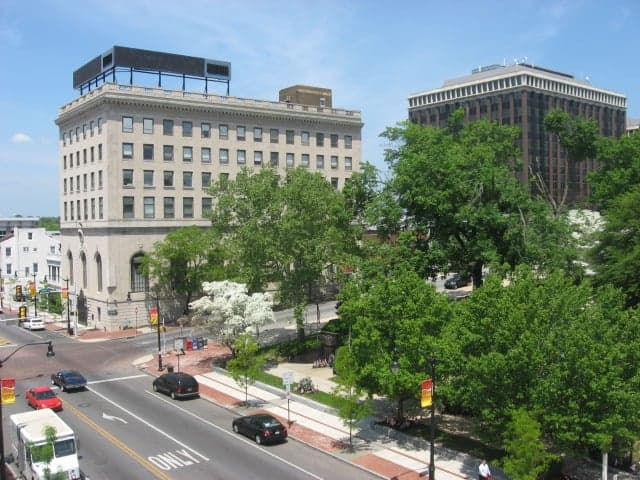
Photo: Wikipedia
Personal Sovereignty in Norristown, PA
Strong independent fundamentals that actively favor personal liberty and low regulation.
What does Personal Sovereignty tell us?
Personal Sovereignty measures your capacity for self-reliance and independence with minimal government friction. Higher scores mean fewer barriers between you and the way you want to live... but it assumes you have the space you need and good neighbors.
What does this tell us?
Personal Sovereignty measures your capacity for self-reliance and independence with minimal government friction. Higher scores mean fewer barriers between you and the way you want to live... but it assumes you have the space you need and good neighbors.
State Policy
Energy independence: Net exporter (150% of energy produced in-state)
Personal Liberty
Homesteading

Personal Liberty Analysis
Norristown, Pennsylvania, presents a mixed bag for those prioritizing personal sovereignty, with the weight of Montgomery County’s governance and Pennsylvania’s state-level policies creating a constrained environment for self-reliant living. As the county seat, Norristown is directly exposed to the regulatory and tax machinery of a suburban Philadelphia hub, meaning residents face higher compliance burdens and less autonomy than in more rural parts of the state. For a survivalist or prepper mindset, the core challenge here is that the local government’s proximity and density of oversight can feel like a constant friction against individual decision-making, from how you use your property to how you protect your family.
Tax burden and regulatory posture in Montgomery County
Pennsylvania’s flat state income tax of 3.07% is a relative bright spot, but Norristown’s local tax structure quickly erodes that advantage. The borough imposes a combined earned income tax of roughly 1% for residents, plus a 1% local services tax on those earning over $12,000 annually, and property taxes that are among the highest in the state due to Montgomery County’s well-funded school system and municipal services. The effective property tax rate in Norristown hovers around 2.5% of assessed value, which is double the national average. For a prepper, this means a significant portion of your income is siphoned before you can allocate it to supplies, land, or self-sufficiency projects. Regulatory posture is similarly dense: Norristown enforces strict zoning codes, building permits, and occupancy limits that make it difficult to modify a home for extended family living or to run a small home-based business without bureaucratic hurdles. The borough’s code enforcement is active, meaning visible modifications like sheds, chicken coops, or alternative energy setups can trigger inspections and fines. This is a location where the government’s hand is felt daily, not just at tax time.
Self-defense rights and Pennsylvania gun law specifics
Pennsylvania is a shall-issue state for concealed carry, and Norristown residents can obtain a License to Carry Firearms (LTCF) from the Montgomery County Sheriff’s Office with a clean background check and no requirement for a permit to purchase long guns. This is a solid foundation for self-defense, but the local environment introduces practical friction. Norristown is a densely populated borough with a high crime rate—violent crime per capita is roughly double the national average—which means carrying a firearm is a reasonable precaution, but the proximity of neighbors and public spaces limits the scenarios where you can lawfully use deadly force. The state’s Castle Doctrine applies, with no duty to retreat in your home, but it does not extend to vehicles or workplaces as broadly as in some other states. Additionally, Norristown’s local ordinances do not preempt state gun laws, but the borough’s police department is known for aggressive enforcement of related offenses like disorderly conduct or trespassing, which can be used to escalate minor interactions. For a prepper, the legal framework is permissive enough to carry and store firearms, but the urban setting and active law enforcement mean you must be meticulous about compliance—any mistake could lead to charges that a rural sheriff might overlook. The lack of constitutional carry (Pennsylvania requires a permit for concealed carry) is a point of frustration for those who view licensing as an infringement.
Self-reliance and homesteading viability in Norristown
Homesteading in Norristown is severely limited by lot sizes and zoning. The borough is built out with small residential lots averaging 0.1 to 0.25 acres, and the zoning code prohibits agricultural uses, livestock (including chickens in most districts), and even substantial gardening structures without permits. Off-grid feasibility is essentially zero: the borough requires connection to municipal water and sewer, and solar panel installations must comply with strict building codes and homeowner association rules in many neighborhoods. Rainwater collection is not explicitly banned, but the borough’s stormwater management ordinances create legal gray areas that discourage it. For a prepper seeking self-reliance, Norristown forces a reliance on the grid and the supply chain—you cannot raise your own food, store large quantities of water, or generate power without significant regulatory risk. The closest viable land for homesteading is in northern Montgomery County or adjacent Berks County, where 1- to 5-acre parcels are available and zoning is more permissive, but that requires a commute that defeats the purpose of living in Norristown. If self-reliance is a priority, this borough is a poor fit; it is designed for commuters and professionals who depend on external systems, not for those who want to insulate themselves from them.
Personal liberties: parental rights, medical autonomy, speech, and property
Pennsylvania’s state-level protections for parental rights are moderate—parents have the right to direct their child’s education and medical care, but the state mandates school attendance and vaccination requirements for public school enrollment, with limited religious or philosophical exemptions. Norristown Area School District, which serves the borough, has a reputation for progressive policies, including comprehensive sex education and LGBTQ+ inclusive curricula, which may conflict with conservative parental values. Medical autonomy is constrained by state licensing and insurance mandates; alternative treatments like off-label use of ivermectin or hydroxychloroquine are legally available but face practical barriers from local pharmacies and doctors who follow mainstream protocols. Free speech is protected under the First Amendment, but Norristown’s public spaces are limited, and the borough has ordinances against disorderly conduct that can be used to suppress protests or public gatherings. Property rights are the weakest link: Norristown’s zoning and code enforcement give the borough broad authority to dictate how you use your land, including restrictions on vehicle storage, home businesses, and even the color of your house in some historic districts. For a prepper, this means your property is not truly your own—the government can dictate what you build, what you park, and how you live, with fines for noncompliance. This is a location where personal liberties are secondary to municipal order.
Overall, Norristown ranks low on the personal sovereignty scale compared to other Pennsylvania locales. The tax burden, dense regulation, and lack of homesteading viability make it a place where self-reliance is difficult and government overreach is a daily reality. For a survivalist or prepper, the borough offers the bare minimum of gun rights but little else in terms of autonomy. If you must live in southeastern Pennsylvania for work or family, Norristown is a compromise that requires constant vigilance and compliance. For those who prioritize sovereignty, rural areas in the northern tier of the state or even neighboring Berks County provide far more breathing room—lower taxes, looser zoning, and a culture that respects individual decision-making over bureaucratic control. Norristown is a place to pass through, not to dig in.

* Values derived from national, state, county, city and local statistics and may differ in a specific area. Last updated: 2026-05-01T06:28:07.000Z
Narrative content on this page is AI-generated and may contain mistakes. Verify any details that matter before acting on them.
ReloMaps may earn a commission from affiliate links at no extra cost to you.

