Photo: Wikipedia
Political ClimatePolitical Climate in Norristown, PA
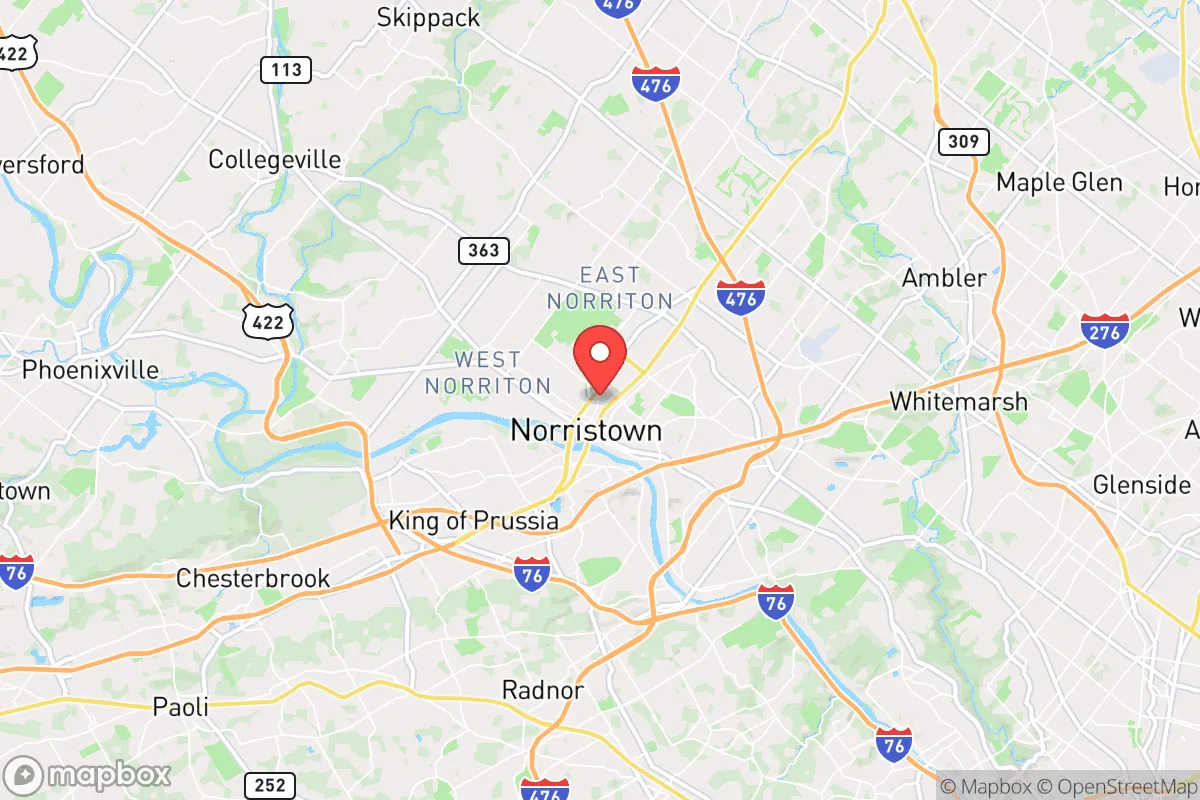
District shown is the primary district for this city’s centroid. Cities may span multiple districts.
Local Political AnalysisPolitical Analysis of Norristown, PA
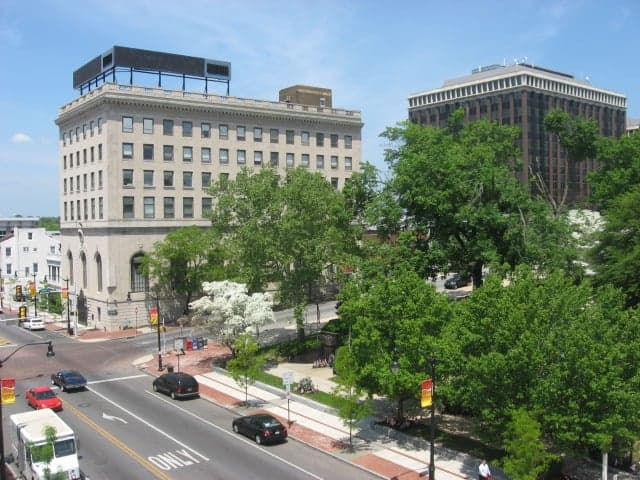
Norristown, Pennsylvania, has a political climate that leans heavily Democratic, with a Cook PVI of D+15, meaning it votes about 15 points more Democratic than the national average. This isn't a recent shift; the area has been trending blue for decades, but the pace has accelerated noticeably since the early 2000s. If you've lived here as long as I have, you've watched the local government steadily embrace more progressive policies, often at the expense of the kind of personal freedoms and fiscal restraint that used to define this community. The trajectory is clear: Norristown is becoming a one-party stronghold, and that rarely ends well for residents who value individual choice over government mandates.
How it compares
To understand Norristown's politics, you have to look at the surrounding towns. Just a few miles west, Bridgeport and King of Prussia lean more moderate, with a mix of Republican and independent voters who keep things balanced. Head north to East Norriton or Plymouth Meeting, and you'll find communities that still vote reliably red in local races, especially on issues like taxes and school board decisions. But Norristown itself is an island of deep-blue governance in a sea of purple. The contrast is stark: while nearby townships debate property tax caps and zoning reforms, Norristown's council has pushed through paid sick leave mandates, strict rental licensing, and a local minimum wage hike that small businesses here can barely afford. It's not just about party labels—it's about a governing philosophy that sees every problem as needing a new regulation or tax.
What this means for residents
For the average person living here, the political lean translates directly into daily life. Property taxes in Norristown are among the highest in Montgomery County, and they keep climbing to fund programs that often feel disconnected from what families actually need. The school board has become a battleground over curriculum and parental rights, with progressive majorities pushing policies that limit what parents can opt their kids out of. If you value the freedom to run a small business without endless paperwork, or the right to decide what your children learn, you'll find yourself increasingly at odds with local leadership. The police department has also faced defunding debates, though those have been less successful here than in larger cities—still, the rhetoric alone has hurt morale and recruitment. Voter turnout in local elections is low, often below 20%, which means a small, motivated progressive base controls most decisions.
One cultural distinction worth noting: Norristown has a strong sense of community identity, but it's increasingly split along political lines. The old-timers who remember when the town was a manufacturing hub with a more conservative, blue-collar ethos are being outnumbered by newcomers from Philadelphia who bring big-city progressive values. The result is a town that feels less like a cohesive community and more like two different places sharing the same ZIP code. If you're considering a move here, pay close attention to the local council meetings and school board votes—they'll tell you more about the next five years than any national election will. My honest advice: if you value limited government and personal autonomy, look at the townships just outside Norristown's borders, where the political climate is still more balanced and the tax burden lighter.

State Political ClimatePolitical Climate in Pennsylvania
State Political AnalysisPolitical Environment in the State
Pennsylvania is a classic purple state, but the purple is fading fast in a way that should concern anyone who values personal freedom and limited government. For decades, it was a bellwether with a slight Democratic lean in presidential years, but the 2024 election showed a decisive shift: Donald Trump won the state by roughly 2 points, flipping counties like Erie, Northampton, and Luzerne back to red after narrow losses in 2020. The state’s 19 electoral votes now hang on a knife’s edge, but the long-term trajectory is clear—working-class and rural voters are abandoning the Democratic Party in droves, while the Philadelphia suburbs and Pittsburgh’s core are becoming increasingly progressive. If you’re a conservative looking to relocate, Pennsylvania offers a mixed bag: low taxes in some areas, but a growing regulatory and cultural battle in the cities.
Urban vs. rural divide
The political map of Pennsylvania is a tale of two worlds. The southeastern corner, anchored by Philadelphia and its affluent suburbs like Montgomery County and Bucks County, is a Democratic stronghold that has shifted hard left over the past decade. These areas now vote 65-70% Democratic, driven by college-educated professionals and a growing minority population. Meanwhile, Pittsburgh’s Allegheny County is also reliably blue, but the surrounding southwestern counties—Washington, Westmoreland, and Greene—are deep red. The real battleground is the “T” shaped region: the I-81 corridor from Scranton to Harrisburg, and the northwestern counties like Erie and Crawford. Erie County, which voted for Obama twice, flipped to Trump in 2016 and 2024, driven by blue-collar manufacturing workers who feel abandoned by the national Democratic party. The rural center of the state—places like Centre County (home to Penn State) and Lycoming County—remain reliably Republican, but their population is stagnant or shrinking. The urban-rural divide is stark: Philadelphia and its suburbs cast about 40% of the state’s votes, while the rest of the state is increasingly conservative. If you want a conservative community, look to the central and northern tier counties, or the exurbs of Pittsburgh like Butler County, which voted 65% for Trump in 2024.
Policy environment
Pennsylvania’s policy environment is a frustrating mix of fiscal conservatism and creeping government overreach. On the plus side, the state has a flat income tax of 3.07%, one of the lowest in the Northeast, and no tax on Social Security benefits. Property taxes are high—averaging 1.5% of home value—but there are homestead exemptions for owner-occupied homes. The regulatory posture is mixed: the state has a right-to-work law? No, it doesn’t—Pennsylvania is one of the few Northeastern states without right-to-work, meaning union dues can be mandatory in many workplaces. That’s a red flag for anyone who values labor freedom. Education policy is a battleground: Governor Josh Shapiro has pushed for increased funding for public schools, but there’s a robust charter school system, and homeschooling is relatively easy with a simple affidavit requirement. Election laws are a sore spot: no voter ID requirement for in-person voting, and universal mail-in voting was expanded in 2019 under Act 77, which conservatives argue opened the door to fraud. The state’s gun laws are relatively permissive—no permit needed for open carry, and a shall-issue concealed carry system—but Philadelphia and Pittsburgh have enacted their own local restrictions, like bans on assault weapons in city limits, which the state legislature has tried to preempt. Healthcare is dominated by large systems like UPMC and Jefferson Health, which means high costs and limited competition. Overall, the state’s policy environment is a tug-of-war: low taxes and decent gun laws in rural areas, but progressive control in the cities that affects statewide regulations.
Trajectory & freedom
Pennsylvania is becoming less free, and the trend is accelerating. The most concerning recent legislation is Act 77 of 2019, which expanded no-excuse mail-in voting. Conservatives view this as a weakening of election integrity, and it’s led to ongoing legal battles over signature verification and drop box rules. On the Second Amendment front, the state legislature passed a preemption law in 2022 that blocks local governments from enacting their own gun restrictions, but Philadelphia and Pittsburgh have openly defied it, leading to lawsuits. The state’s response to COVID was a disaster: Governor Tom Wolf’s shutdown orders in 2020 were among the most aggressive in the nation, closing businesses and schools for months, and the state Supreme Court upheld his emergency powers. That led to a backlash, and in 2021, voters approved a constitutional amendment limiting the governor’s emergency powers to 21 days without legislative approval. That’s a win for freedom, but the damage was done. On parental rights, Pennsylvania has no statewide law protecting parents’ ability to opt their children out of sexually explicit materials in schools, and some districts like Lower Merion have adopted controversial curriculum. Medical freedom is a mixed bag: the state has no vaccine mandate for adults, but healthcare workers were required to be vaccinated during the pandemic. Property rights are generally strong, but there’s no statewide ban on rent control, and some cities like Philadelphia have considered it. The trajectory is clear: rural and suburban areas are pushing back against progressive overreach, but the cities are doubling down. If you move here, expect a constant battle between state-level conservative legislation and local progressive enforcement.
Civil unrest & political movements
Pennsylvania has seen its share of political flashpoints. The 2020 election aftermath was particularly heated: Trump’s campaign filed multiple lawsuits over mail-in ballot procedures, and there were protests outside the Pennsylvania Convention Center in Philadelphia during the vote count. The state was ground zero for the “Stop the Steal” movement, and election integrity remains a top concern for conservatives. On the left, the Black Lives Matter protests in Philadelphia in 2020 were large and sometimes violent, leading to looting and property damage. The city’s progressive district attorney, Larry Krasner, has been a lightning rod: he’s been criticized for a soft-on-crime approach, and his office has faced impeachment efforts from the state legislature. Immigration politics are less visible than in border states, but Philadelphia is a sanctuary city, meaning local police don’t cooperate with ICE detainers. That’s a concern for anyone who values rule of law. There’s also a growing secessionist sentiment in rural counties: in 2020, several counties in northern Pennsylvania passed resolutions calling for a “constitutional convention” to reassert local control, though nothing came of it. The most visible political movement is the rise of grassroots conservative groups like the Pennsylvania Freedom Caucus, which has pushed for election reform, school choice, and gun rights. If you move to a rural area, you’ll see Trump flags and “Don’t Tread on Me” banners. In the cities, you’ll see “Defund the Police” signs. The divide is real and visible.
Projection
Over the next 5-10 years, Pennsylvania is likely to become more polarized, but the conservative trend in the exurbs and rural areas may be enough to keep the state competitive. The key demographic shift is the outflow of young people from Philadelphia and Pittsburgh to lower-cost areas like Lancaster County and the Poconos, which are trending red. Meanwhile, the Philadelphia suburbs are becoming more diverse and more Democratic, driven by immigration from New Jersey and New York. The state’s population is aging, and older voters tend to be more conservative, but the youth vote is increasingly progressive. The wild card is election integrity: if the state doesn’t tighten its voting laws, conservatives may lose faith in the system entirely. The 2024 election showed that rural turnout can overcome urban margins, but it’s a narrow path. Expect more legal battles over mail-in voting, gerrymandering, and local preemption. The state’s economy is a bright spot for conservatives: low taxes and energy production (natural gas from the Marcellus Shale) are attracting businesses, but the regulatory environment could stifle growth if progressives gain control. For a new resident, the projection is this: if you move to a red county, you’ll find a community that shares your values, but you’ll be fighting a constant battle against state-level policies driven by Philadelphia and Pittsburgh. The state is not going to flip solid red anytime soon, but it’s also not going to become California. It’s a battleground, and your vote will matter.
Bottom line for a new resident: Pennsylvania is a state where your experience will depend almost entirely on where you live. If you choose a rural or exurban county like Butler, York, or Franklin, you’ll find low taxes, strong gun rights, and a community that values freedom. If you choose Philadelphia or its inner suburbs, you’ll face high taxes, progressive policies, and a government that doesn’t trust you to make your own decisions. The state’s political climate is a constant tug-of-war, and as a conservative, you’ll need to stay engaged. The good news is that your voice matters here—every election is close, and grassroots activism can make a difference. Just be prepared for a fight.
* Values derived from national, state, county, city and local statistics and may differ in a specific area. Last updated: 2026-05-01T06:28:07.000Z
Narrative content on this page is AI-generated and may contain mistakes. Verify any details that matter before acting on them.
ReloMaps may earn a commission from affiliate links at no extra cost to you.

