
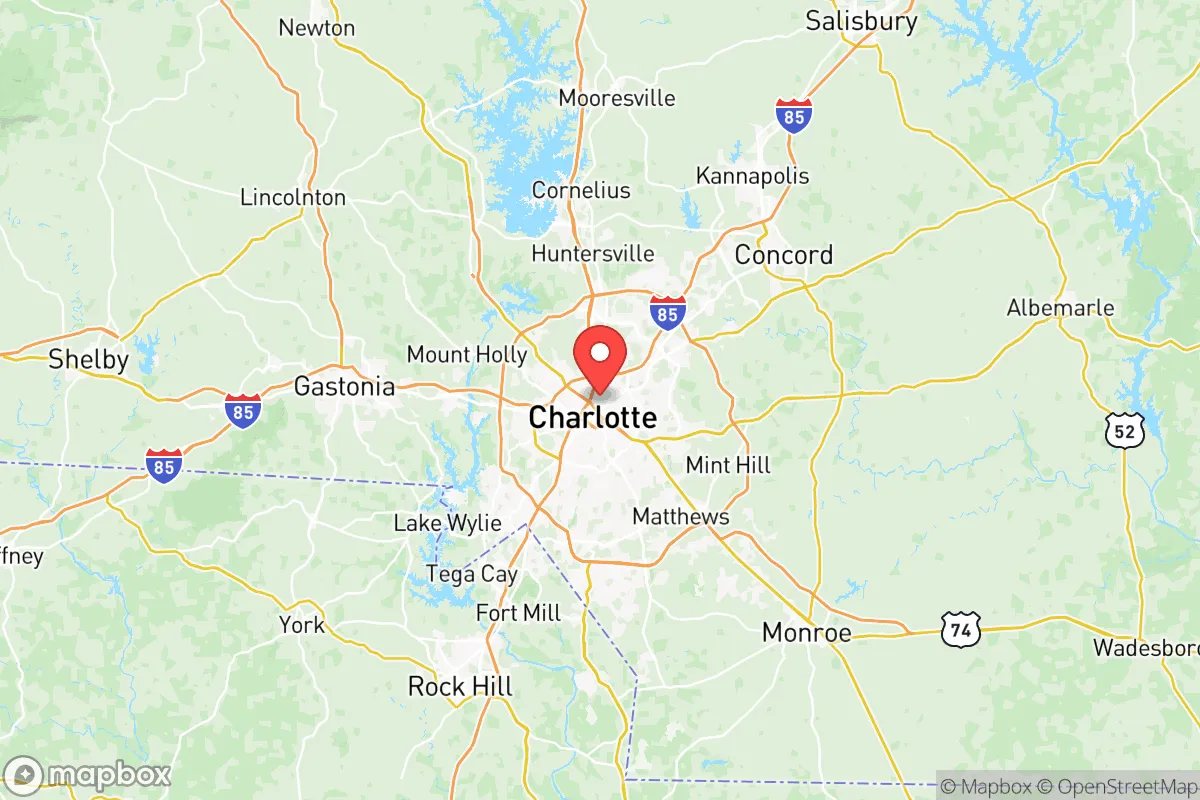
Photo: Wikipedia
Quality of Life in Mecklenburg County
A livable area that tracks near national norms for affordability, walkability, and neighborhood health.
What does Quality of Life tell us?
Quality of Life measures an area by evaluating factors like cost of living, nearby amenities, country club access, airport proximity, socioeconomic signals and neighborhood character. For large states, this is a general average — quality of life can vary dramatically between metro areas, suburbs, and rural communities within the same state.
What does this tell us?
Quality of Life measures an area by evaluating factors like cost of living, nearby amenities, country club access, airport proximity, socioeconomic signals and neighborhood character. For large states, this is a general average — quality of life can vary dramatically between metro areas, suburbs, and rural communities within the same state.
Cost of Living
31% above national average
79%
The Real Cost of Living in Mecklenburg County for 2026
| Tier | Individual | Family (4) |
|---|---|---|
| Survival | $24k | $46k |
| Comfortable | $72k | $106k |
| Luxury | $151k+ | $235k+ |
| Elite (Top 5%) | $215k+ | $333k+ |
Quality-of-Life Analysis
Mecklenburg County, North Carolina, offers a spectrum of quality-of-life options that ranges from the dense, fast-paced urban core of Charlotte to quiet, unincorporated rural pockets in its northern and eastern reaches. The county’s overall cost of living index sits at 131 (100 = U.S. average), with a median home value of $371,200 and median rent of $1,521, but these figures mask a wide spread between high-demand city neighborhoods and more affordable outlying communities. People drawn to the county include young professionals and corporate transplants seeking Charlotte’s job market, families looking for suburban school districts, and long-time residents who prefer the slower pace of areas like Mint Hill or the rural fringes near the Cabarrus County line.
Largest town(s) & population centers
Charlotte is the dominant population center, housing over 900,000 residents and serving as the region’s economic engine with major employers like Bank of America, Duke Energy, and Atrium Health. Daily life in Charlotte is defined by a 25.4-minute average commute, a robust light rail system (the LYNX Blue Line), and a dense concentration of dining, entertainment, and professional sports venues. Within Charlotte, neighborhoods like Uptown, South End, and Plaza Midwood offer walkable, high-amenity living with median home values well above the county average, while suburban areas such as Ballantyne and Steele Creek provide newer housing stock and top-rated schools. The city’s rapid growth has pushed development outward, but the urban core remains the primary draw for those seeking a 24-hour city lifestyle with direct access to Charlotte Douglas International Airport.
Smaller towns & rural pockets
Beyond Charlotte, Mecklenburg County includes several incorporated towns that retain distinct identities. Matthews (population ~30,000) is a family-oriented suburb with a historic downtown, strong public schools, and a median home value near $400,000. Mint Hill (population ~27,000) straddles the county’s eastern edge and offers a more laid-back atmosphere with larger lots and a small-town feel, though it still falls within the Charlotte-Mecklenburg school system. Cornelius, Davidson, and Huntersville — collectively known as the Lake Norman towns in the county’s north — attract water-oriented residents with lakefront properties, marinas, and a median home value closer to $500,000. Unincorporated areas like Newell and Paw Creek remain rural, with agricultural land, older homes, and fewer services; these pockets see median home values below $250,000 and offer a quieter alternative to the suburban sprawl.
Cost & lifestyle range
The cost of living and lifestyle options vary dramatically across the county. At the high end, Davidson and SouthPark (a Charlotte neighborhood) command median home values above $600,000, with a cost of living index exceeding 140. These areas offer premium amenities: Davidson’s college-town vibe with Davidson College, SouthPark’s luxury shopping and dining. At the moderate end, Matthews and Mint Hill provide a cost of living index around 125–130, with median home values in the $350,000–$400,000 range and good access to parks and schools. At the lower end, unincorporated areas like Newell and Paw Creek see cost of living indices near 115–120, with median home values under $250,000 and longer commutes (often 30–40 minutes) to Charlotte’s job centers. Rent follows a similar pattern: a one-bedroom in Uptown Charlotte averages $1,800, while a comparable unit in Mint Hill or Matthews rents for $1,200–$1,400. The county’s average commute of 25.4 minutes reflects the balance many residents strike between affordability and access, though those in the rural fringe often face longer drives.
Mecklenburg County is best suited for people who want the economic opportunities and cultural density of a major metro area but need flexibility in housing costs and pace of life. Young professionals and corporate employees thrive in Charlotte’s urban neighborhoods, while families and retirees find their niche in the lake towns or eastern suburbs. Those seeking the lowest cost of entry and a rural setting will gravitate toward the unincorporated pockets, accepting longer commutes for space and quiet. The county’s diversity of options — from high-rise condos to farmhouses on acre lots — means that most lifestyles can find a fit, provided the budget aligns with the chosen area’s premium.

Crime in Mecklenburg County
Crime rates similar to the national median for U.S. locations.
Violent CrimeViolent Crime Analysis
Property CrimeProperty Crime Analysis
Crime Analysis
Mecklenburg County, anchored by Charlotte, reports a violent crime rate of 299.4 per 100,000 residents and a property crime rate of 1,659.9 per 100,000. These figures place the county above the national average for both categories, though the violent crime rate is slightly below the North Carolina state average. The county's overall safety picture is heavily influenced by its urban core, with suburban and exurban towns often experiencing significantly lower crime rates.
Crime in context
Mecklenburg County's violent crime rate of 299.4 per 100,000 is roughly 15% below the national average of about 350 per 100,000 but remains a concern for residents. Property crime, at 1,659.9 per 100,000, exceeds both the national average (approximately 1,950) and the state average (around 2,100). These numbers reflect a county that is safer than many comparably sized urban centers in the Southeast, but where property crime—particularly vehicle theft and larceny—is a persistent issue. The Charlotte-Mecklenburg Police Department (CMPD) has reported upticks in auto thefts and break-ins in recent years, especially in areas near major highways like I-85 and I-77.
What residents experience
Daily life in Mecklenburg County varies dramatically by location. In Charlotte's urban neighborhoods like Uptown, NoDa, and Plaza Midwood, residents frequently encounter property crime, including package theft and vehicle break-ins. Violent crime is more concentrated in specific corridors, such as Beatties Ford Road and parts of West Charlotte, where gang-related activity and drug offenses drive higher rates. Suburban towns like Davidson, Cornelius, and Huntersville report far lower crime rates—often 50-60% below the county average—making them attractive for families. Matthews and Mint Hill also maintain low violent crime rates, though property crime in retail-heavy areas like Matthews' downtown can spike seasonally. The progressive policies of the Mecklenburg County District Attorney's office, which has emphasized diversion programs and reduced incarceration for non-violent offenders, have drawn criticism from law enforcement and some residents who argue these approaches lead to repeat offenses and a higher number of criminals on the street. This judicial philosophy, while intended to reduce recidivism, has been linked to a perception of leniency that some believe contributes to the county's property crime challenges.
Neighborhood-level variation is stark. Ballantyne and SouthPark in south Charlotte are among the safest areas, with violent crime rates below 100 per 100,000. In contrast, Grier Heights and Hidden Valley report rates exceeding 500 per 100,000. Property crime is more evenly distributed but still clusters near commercial corridors and transit hubs. The county's reliance on a single police jurisdiction (CMPD) for most unincorporated areas means response times and resource allocation can vary, with wealthier neighborhoods often receiving more proactive patrols. For prospective residents, choosing a specific town or neighborhood within Mecklenburg County is critical: a move to Davidson offers a markedly different safety profile than a move to Uptown Charlotte, even though both fall under the same county government and judicial system.
* Values derived from national, state, county, city and local statistics and may differ in a specific area. Last updated: 2026-05-11T21:46:51.000Z
Narrative content on this page is AI-generated and may contain mistakes. Verify any details that matter before acting on them.
ReloMaps may earn a commission from affiliate links at no extra cost to you.

