Photo: Wikipedia
Demographics of Wake County
Affluence Level in Wake County
An upper-middle-class area. Household wealth, education levels, and homeownership run ahead of national benchmarks.
People of Wake County
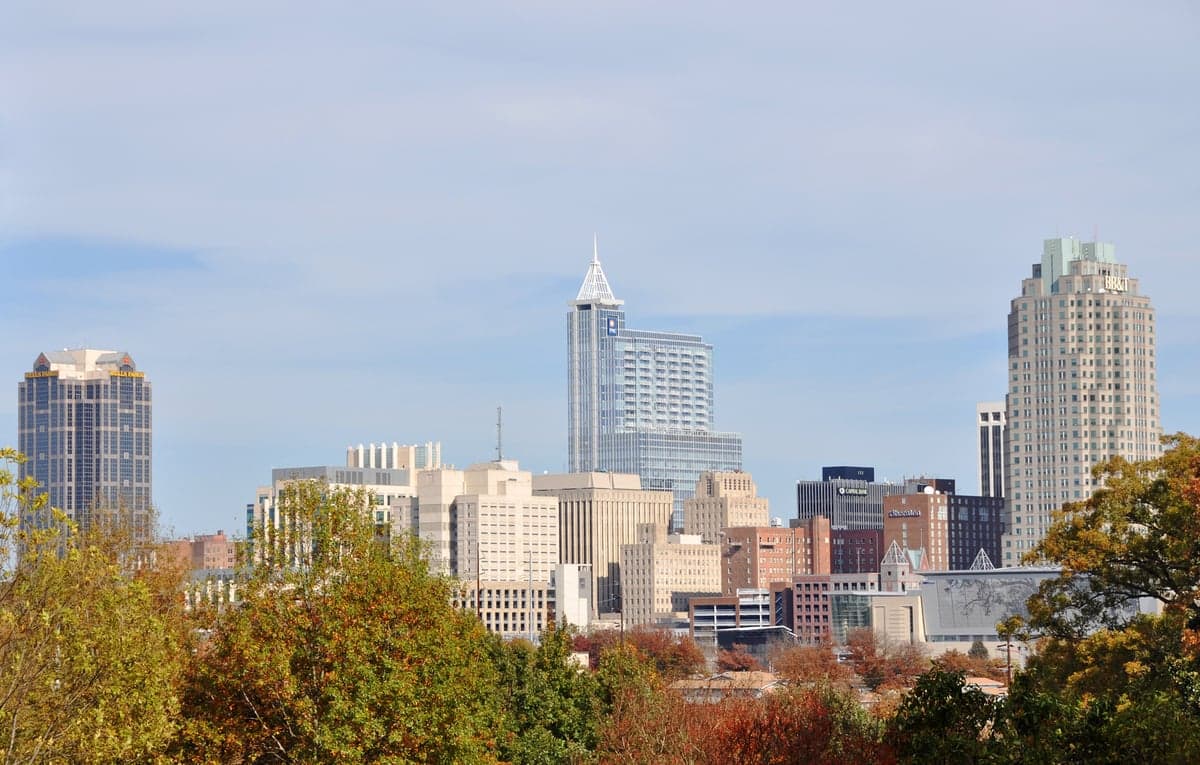
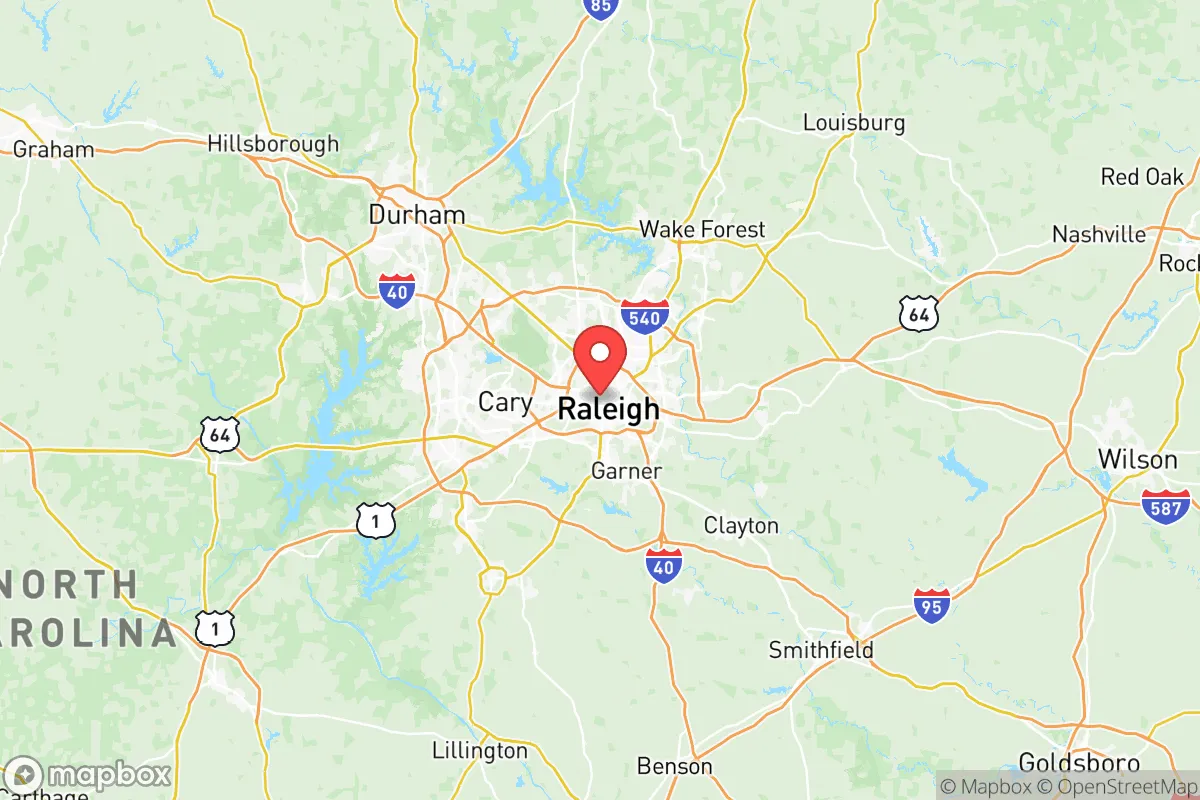
Wake County’s 1.15 million residents form one of the fastest-growing, most educated populations in the American South, defined by a blend of native-born Southerners, domestic migrants from the Rust Belt and Northeast, and a significant international community centered on technology and academia. The county is 57% white, 18.9% Black, 11.4% Hispanic, 5% Indian (subcontinent), and 3.1% East/Southeast Asian, with a foreign-born share of 7.8% and a striking 56.3% of adults holding a college degree. This is a place where the old agricultural Piedmont has been overlaid by a knowledge-economy corridor stretching from Raleigh through Cary and Morrisville, creating a culture that is simultaneously Southern-rooted, globally connected, and politically moderate-to-conservative in its suburban precincts.
Settlement & growth (pre-1960)
The land now called Wake County was originally inhabited by the Tuscarora and Occaneechi peoples, who lived in small villages along the Neuse River and its tributaries. European contact intensified after the Tuscarora War (1711–1715), which broke Tuscarora power and opened the interior to English and Scots-Irish settlers moving west from the coastal plantations. By the 1740s, Scots-Irish Presbyterians and English Anglicans were farming the rolling hills around what would become Raleigh, Wake Forest, and Garner, drawn by cheap land grants and the relative safety of the Piedmont compared to the war-torn frontier. The county was formally created in 1771 from parts of Cumberland, Johnston, and Orange counties, and named for Margaret Wake, the wife of colonial governor William Tryon.
Raleigh was established in 1792 as the state capital, a planned city chosen for its central location. Its early population was a mix of government officials, lawyers, merchants, and enslaved African Americans who built the city’s infrastructure and worked its tobacco fields. By 1860, enslaved people made up roughly one-third of Wake County’s population, concentrated on plantations in the eastern part of the county near Wendell and Zebulon. After the Civil War, many freedmen remained as sharecroppers and tenant farmers, forming the foundation of the county’s historically Black communities in Method, Fuquay-Varina, and southeast Raleigh.
The late 19th and early 20th centuries brought modest industrial growth. The establishment of the North Carolina State College of Agriculture and Mechanic Arts (now NC State) in 1887 in Raleigh drew faculty and students from across the state, mostly white and rural. Tobacco processing, textiles, and railroading provided jobs for Black and white workers alike. The Great Migration (1910–1970) saw tens of thousands of Black residents leave Wake County for Northern industrial cities, reducing the Black share of the population from roughly 40% in 1900 to about 25% by 1960. Meanwhile, the county’s white population grew slowly, anchored by small-town life in Apex, Cary, and Holly Springs, which remained farming hamlets until the post-war era.
Modern era (post-1965)
The 1965 Hart-Cellar Act, combined with the rise of Research Triangle Park (RTP) in the 1960s, fundamentally reshaped Wake County’s population. RTP, located in southern Durham County but drawing workers from across the region, became a magnet for highly skilled immigrants and domestic migrants. The first major wave was domestic: white and Black professionals from the Northeast and Midwest, fleeing Rust Belt decline for the Sun Belt’s lower taxes, cheaper housing, and growing tech sector. Cary became the epicenter of this migration, transforming from a town of 7,000 in 1970 to a city of 135,000 by 2010, earning the nickname “Containment Area for Relocated Yankees.”
International immigration accelerated after 1990. The Indian subcontinent community—now 5% of the county—grew rapidly as H-1B visa holders and their families settled near RTP employers like IBM, Cisco, and SAS. Morrisville and Cary developed into major Indian enclaves, with temples, grocery stores, and cultural centers along Chapel Hill Road and McCrimmon Parkway. East and Southeast Asian communities (3.1% of the county), including Chinese, Korean, and Vietnamese families, also concentrated in Cary and Raleigh, drawn by the same tech and academic opportunities. The Hispanic population (11.4%) grew through both immigration and domestic migration, with Mexican and Central American workers finding jobs in construction, landscaping, and food service; their largest concentrations are in Raleigh’s southeast side and Garner.
The Black population (18.9%) has seen a modest resurgence since 2000, driven by Black professionals moving from the Northeast and Midwest for jobs in RTP and state government. Historically Black neighborhoods in southeast Raleigh have gentrified, pushing many Black families to Knightdale, Zebulon, and Wendell, where new subdivisions offer more affordable housing. The white population (57%) remains the largest group, but its share has declined from over 70% in 1990 as immigration and domestic diversity have increased. Suburbanization has been relentless: Apex, Holly Springs, and Fuquay-Varina have each grown from small towns of a few thousand to cities of 40,000–60,000, filled with families seeking good schools and low crime.
The future
Wake County is not homogenizing; it is tribalizing into distinct enclaves by income, ethnicity, and lifestyle. The Indian and East/Southeast Asian communities are growing steadily through both immigration and high birth rates, and they are assimilating economically (high education and income) while maintaining strong cultural institutions in Cary and Morrisville. The Hispanic population is growing through both immigration and natural increase, but it remains more geographically dispersed and economically diverse, with a growing middle class in Garner and Raleigh. The Black population is stable in share but shifting geographically eastward, while the white population is becoming more concentrated in the outer-ring suburbs and exurbs like Rolesville and Wendell Falls.
In-migration from California, New York, and New Jersey continues to drive growth, but the pace has slowed from the 2010s peak. These newcomers tend to be younger, more educated, and more politically moderate than the native-born population, which has shifted Wake County from reliably Republican to a swing county in presidential elections. The next 10–20 years will likely see continued growth to 1.5–1.7 million residents, with the foreign-born share rising to 12–15% as tech and biotech expand. The cultural identity of the county will remain a blend of Southern tradition and global professionalism—a place where you can find a barbecue joint next to an Indian sweets shop, and where the public schools are among the best in the state.
For someone moving in now, Wake County offers a high-opportunity environment with strong schools, a robust job market, and a population that is diverse but not fractured. The key trade-off is cost: housing prices have doubled since 2015, and traffic on I-40 and US-1 is a daily reality. But for those who value education, safety, and economic dynamism, the county remains one of the most attractive destinations in the Sun Belt.

* Values derived from national, state, county, city and local statistics and may differ in a specific area. Last updated: 2026-05-08T06:59:30.000Z
Narrative content on this page is AI-generated and may contain mistakes. Verify any details that matter before acting on them.
ReloMaps may earn a commission from affiliate links at no extra cost to you.

