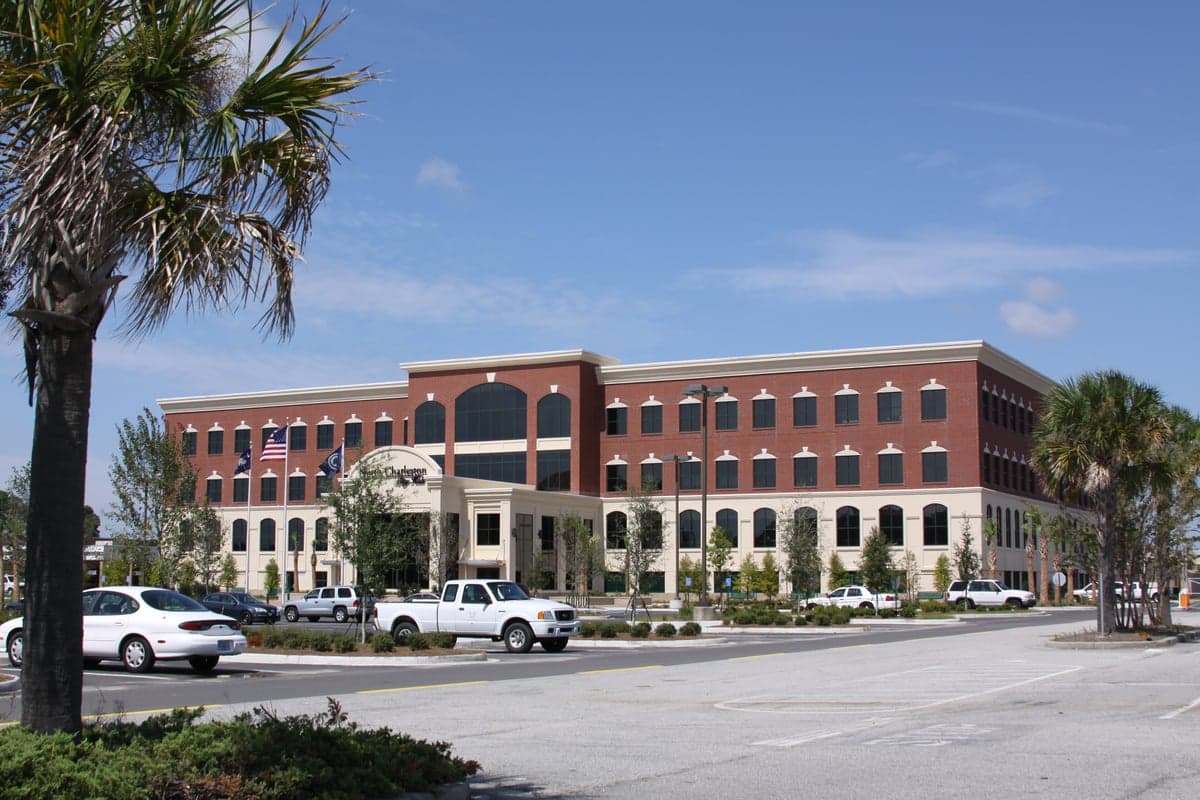
Photo: Wikipedia
Personal Sovereignty in North Charleston, SC
Viable for self-reliance. Generally workable, though some barriers may limit total independence.
What does Personal Sovereignty tell us?
Personal Sovereignty measures your capacity for self-reliance and independence with minimal government friction. Higher scores mean fewer barriers between you and the way you want to live... but it assumes you have the space you need and good neighbors.
What does this tell us?
Personal Sovereignty measures your capacity for self-reliance and independence with minimal government friction. Higher scores mean fewer barriers between you and the way you want to live... but it assumes you have the space you need and good neighbors.
State Policy
Energy independence: Importer (25% of energy produced in-state)
Personal Liberty
Homesteading

Personal Liberty Analysis
North Charleston, South Carolina, offers a mixed but generally favorable environment for personal sovereignty, particularly when compared to the heavily regulated Northeast or West Coast. While the city itself operates under municipal codes that can feel intrusive, the overarching legal framework of South Carolina provides a strong foundation for individual autonomy, especially in areas of self-defense, tax burden, and property rights. For the survivalist or prepper, the key is understanding where the state’s constitutional protections end and where city ordinances begin—because in North Charleston, the difference matters significantly.
Tax burden and regulatory posture: how South Carolina’s low-tax framework protects your wallet and choices
South Carolina is a low-tax state by design, and this directly benefits anyone seeking to minimize government extraction from their income. There is no state tax on Social Security benefits, and the state’s top marginal income tax rate is a flat 6.4% as of 2025, with a scheduled phase-down to 6.0% by 2026. Property taxes are among the lowest in the nation, with an effective rate around 0.57% of assessed value—roughly half the national average. For a prepper, this means more of your earnings stay in your hands for supplies, land, and equipment, rather than funding state programs you may not support. However, North Charleston itself imposes a local hospitality tax and a higher-than-average millage rate for city services, so your property tax bill will be slightly higher than in unincorporated parts of Charleston County. The regulatory posture is business-friendly overall, with no state-level rent control, no universal background checks on private firearm sales, and no state income tax on military retirement pay. The city’s zoning code is more restrictive than rural counties, but it still allows for backyard chickens, small gardens, and limited home-based businesses without the bureaucratic hoops common in blue states.
Self-defense and gun law specifics: what the Second Sanctuary state means for your carry rights and home protection
South Carolina is a strong Second Amendment state, and North Charleston residents benefit directly from that. The state is a “constitutional carry” state as of 2024, meaning any law-abiding adult 18 or older can carry a concealed firearm without a permit. Open carry is also legal without a permit. There is no state-level registry, no magazine capacity ban, and no “assault weapon” ban. The Castle Doctrine is codified in state law, giving you the legal right to use deadly force in your home, vehicle, or workplace without a duty to retreat. Stand Your Ground protections extend to any place you are lawfully present. For the survivalist, this is critical: you are not required to flee from a threat in your own home or on your property. The city of North Charleston does not have its own gun control ordinances that exceed state law—state preemption prevents that. However, be aware that Charleston County has a higher violent crime rate than the state average, so carrying is not just a right but a practical necessity. The only real friction point is that South Carolina does not honor all out-of-state permits equally, so if you move from a less restrictive state, you may need to apply for a South Carolina CWP to maintain reciprocity when traveling.
Self-reliance and homesteading viability: lot sizes, zoning, and off-grid feasibility in a suburban-industrial city
North Charleston is a mixed-use city with a heavy industrial and logistics base, so true off-grid homesteading is difficult within city limits. Most residential lots are small—typically 0.1 to 0.25 acres in older neighborhoods, with newer subdivisions offering slightly larger parcels but rarely exceeding half an acre. City zoning requires connection to municipal water and sewer, so well water and septic systems are generally not permitted. Rainwater collection is not explicitly prohibited, but the city’s building codes may complicate large-scale cistern systems. Backyard chickens are allowed with a permit and certain restrictions (no roosters, coop setbacks), but larger livestock like goats or pigs are not permitted on standard residential lots. For serious self-reliance, you would need to look at unincorporated Charleston County or neighboring Berkeley County, where acreage is cheaper and zoning is more permissive. The upside is that North Charleston’s industrial base—including the Port of Charleston, Boeing, and numerous warehouses—means you can stockpile supplies and equipment without raising eyebrows. The city’s proximity to rural areas (30 minutes to farmland in Dorchester County) makes it feasible to own a small homestead outside town while maintaining a city residence for work. Off-grid solar is technically allowed, but the city’s building department requires permits and inspections, and net metering with Dominion Energy is available if you stay grid-tied.
Personal liberties: parental rights, medical autonomy, speech, and property in a red-state city
South Carolina has strong protections for parental rights, codified in state law that affirms parents’ “fundamental right” to direct the upbringing, education, and healthcare of their children. This means no forced medical procedures on minors without parental consent, and school boards are generally responsive to conservative parents. The state passed a Parents’ Bill of Rights in 2023, which requires schools to notify parents of any changes in a child’s mental, emotional, or physical health. Medical autonomy is more nuanced: South Carolina has not expanded Medicaid under the ACA, which limits access for low-income individuals, but it also means less government entanglement in private healthcare decisions. There is no state vaccine mandate for adults, and COVID-era mandates were largely resisted at the state level. Free speech is protected under the First Amendment, and the city has not enacted any local ordinances restricting political speech or assembly. Property rights are strong, with no statewide rent control and relatively low eminent domain usage. However, the city does enforce strict nuisance ordinances—noise, junk vehicles, overgrown lots—that can feel like overreach if you prefer to keep a low profile. The HOA presence is moderate but growing in newer subdivisions, so if you value absolute control over your property, seek out older neighborhoods without HOAs or move to unincorporated areas.
Overall, North Charleston offers a solid baseline for personal sovereignty, especially in the areas of self-defense and taxation, but it is not a libertarian paradise. The city’s municipal codes and suburban density create friction for anyone wanting to live fully off-grid or operate without any government oversight. For the survivalist or prepper who values a low-tax, gun-friendly environment with strong parental rights, North Charleston is a viable option—provided you are willing to navigate the city’s regulatory layers or live just outside its limits. Compared to cities like Portland, Seattle, or Denver, North Charleston is a fortress of personal liberty. Compared to rural Montana or Idaho, it is still a city with rules. The smart move is to treat North Charleston as a base of operations, not a final retreat, and keep your serious prepping activities on acreage in the surrounding counties where the government footprint is lighter.

* Values derived from national, state, county, city and local statistics and may differ in a specific area. Last updated: 2026-04-29T23:25:22.000Z
Narrative content on this page is AI-generated and may contain mistakes. Verify any details that matter before acting on them.
ReloMaps may earn a commission from affiliate links at no extra cost to you.

