Photo: Wikipedia
Quality of Life in North Charleston, SC
Above-average quality of iife. The area offers a reasonable cost of living, decent mobility, and a mix of neighborhood amenities.
What does Quality of Life tell us?
Quality of Life blends cost of living, nearby amenities, socioeconomic signals, and neighborhood character. City-level scores represent the whole municipality; individual neighborhoods can differ.
What does this tell us?
Quality of Life blends cost of living, nearby amenities, socioeconomic signals, and neighborhood character. City-level scores represent the whole municipality; individual neighborhoods can differ.
Cost of Living
8% above national average
The Real Cost of Living in North Charleston, SC for 2026
| Tier | Individual | Family (4) |
|---|---|---|
| Survival | $22k | $41k |
| Comfortable | $52k | $76k |
| Luxury | $112k+ | $174k+ |
| Elite (Top 5%) | $132k+ | $205k+ |
82%
The Area Signal
A metric tracking the socioeconomic signals of the area.
Hobbies
Explore the areaGroceries
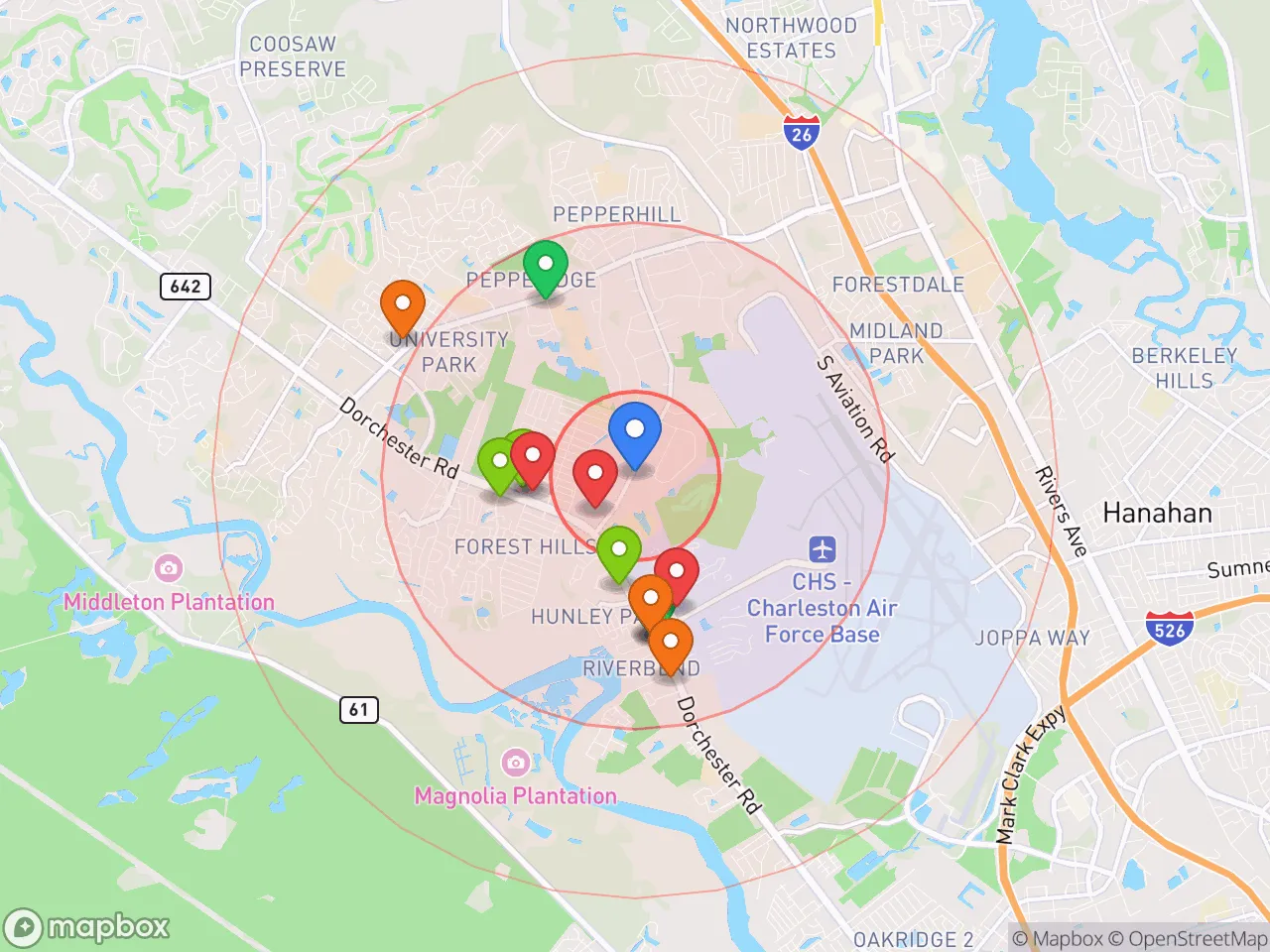
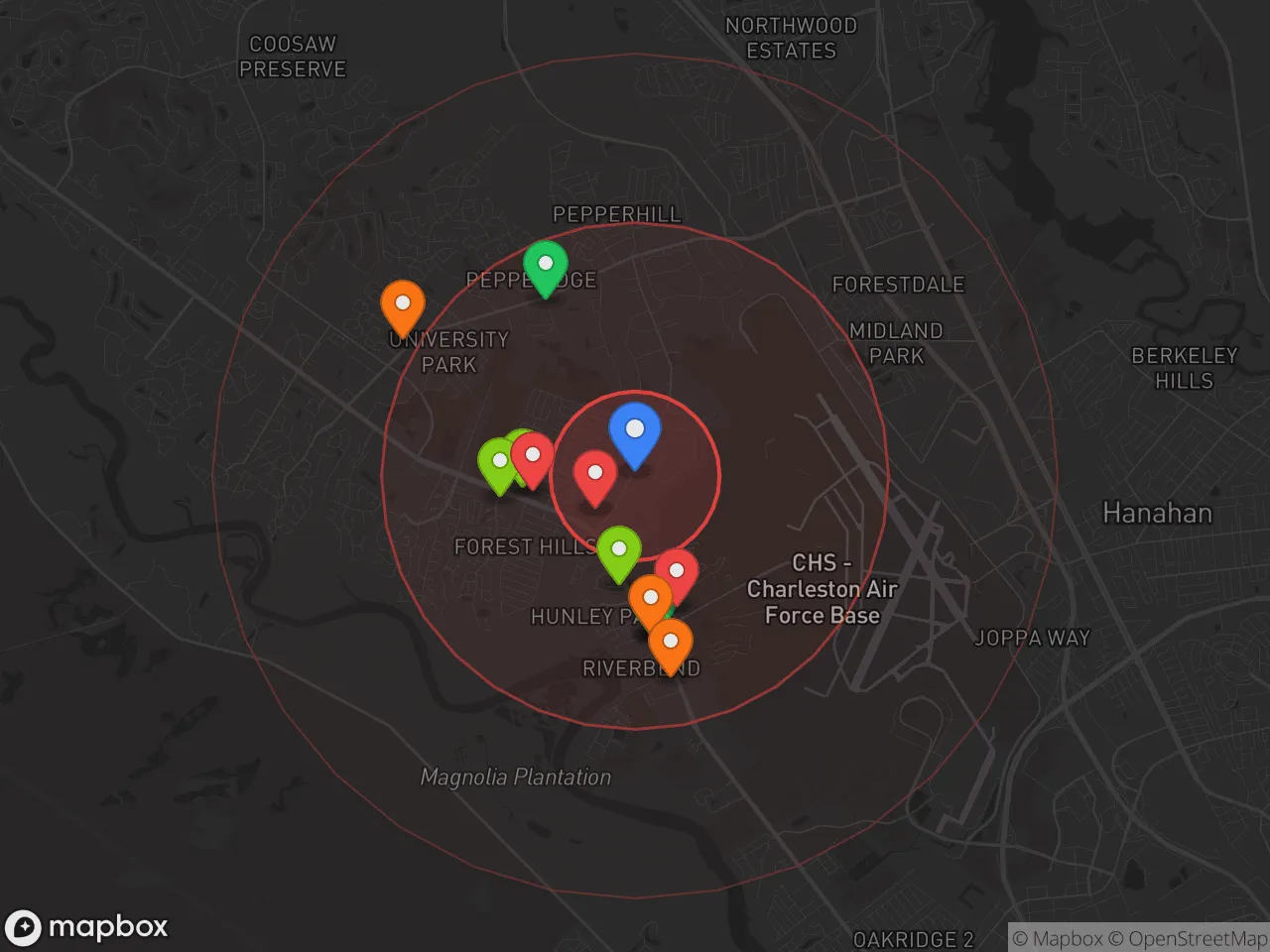
8 within 10 miles
Gas
20 within 10 miles
Hospital
13 within 20 miles
Airport
CLT — Charlotte Douglas International
Post Office
USPS — North Charleston, SC
Critical Amenities
Quality-of-Life Analysis
North Charleston presents a middle-market quality of life within the Charleston metro area, with a cost of living index of 108 (eight points above the national average) that places it between the high-priced peninsula and more affordable outlying suburbs. The area attracts a mix of aerospace and logistics workers, military families connected to Joint Base Charleston, and younger professionals priced out of downtown Charleston, creating a demographic blend that is more blue-collar and racially diverse than its wealthier neighbors to the south. While not an affluent enclave, North Charleston offers a pragmatic, work-oriented lifestyle with direct access to the region's economic engines.
Cost of living, housing affordability, and how it compares to nearby areas
North Charleston's housing market is the primary driver of its cost-of-living premium, though it remains significantly cheaper than downtown Charleston or Mount Pleasant. The median home value sits at $267,700, roughly $100,000 less than the Charleston metro average and about half the median of Mount Pleasant. Median rent of $1,364 is attainable for dual-income households but represents a stretch for single earners on the local median wage. Compared to Summerville or Goose Creek, North Charleston is slightly pricier but offers closer proximity to the region's major employment hubs, including Boeing, Mercedes-Benz Vans, and the Port of Charleston. Property taxes in Charleston County are moderate, though insurance costs—particularly flood and wind coverage—add a notable monthly expense that many newcomers underestimate. The average commute of 24.5 minutes is manageable and shorter than the regional average, thanks to the city's central location along Interstates 26 and 526, though traffic congestion on Rivers Avenue and Ashley Phosphate Road is a daily frustration.
Everyday amenities, schools, and what daily life feels like
Daily life in North Charleston revolves around practical convenience rather than coastal charm. The city is home to the Charleston International Airport, Tanger Outlets, and the North Charleston Coliseum, which hosts concerts and minor-league hockey. Grocery access is solid, with multiple Lidl, Publix, and Walmart locations, but the restaurant scene leans heavily toward chain establishments rather than the farm-to-table options found downtown. Public schools in Charleston County School District vary widely: magnet and charter options like the Academic Magnet High School (ranked among the top in the nation) are accessible via lottery, but zoned schools in North Charleston proper have lower performance metrics and higher student-teacher ratios. Parks and green space are adequate but not exceptional—Park Circle offers a walkable, revitalized hub with breweries and a farmers market, while the 200-acre Wannamaker County Park provides trails and a water park. The rhythm of life is car-dependent and suburban, with most errands requiring a drive, though the Park Circle neighborhood is an exception for those seeking a more pedestrian-friendly pocket.
North Charleston is best suited for people who prioritize job access and affordability over prestige or walkability. Aerospace and logistics professionals working at Boeing, the port, or the air base will find the commute and housing costs reasonable. Families willing to navigate the school choice system—or those who can afford private tuition—can access strong educational options while living in a lower-cost home. Retirees and luxury seekers should look elsewhere, as the city lacks the coastal amenities and high-end services of Mount Pleasant or Kiawah Island. For practical-minded movers who value a central location, a 24-minute commute, and a home under $300,000, North Charleston delivers a functional, no-frills quality of life within reach of Charleston's broader economy.

Crime in North Charleston, SC
Significantly higher crime rates than 76% of comparable U.S. locations.
Violent CrimeViolent Crime Analysis
Property CrimeProperty Crime Analysis
Crime Analysis
North Charleston, South Carolina, reports a violent crime rate of 666.4 incidents per 100,000 residents and a property crime rate of 3,431.4 per 100,000, placing it among the more dangerous cities in the Charleston metropolitan area. These figures significantly exceed both the national average and the South Carolina state average, indicating a persistent public safety challenge. The city's proximity to Charleston and its role as a major transportation and industrial hub contribute to a complex crime environment that residents and newcomers must evaluate carefully.
Crime in context
North Charleston's violent crime rate is roughly 80% higher than the national average and well above the South Carolina state average of approximately 540 per 100,000. Property crime, including theft, burglary, and motor vehicle theft, occurs at a rate nearly double the national benchmark. These statistics place North Charleston in the bottom percentile nationally for safety, comparable to other mid-sized cities in the Southeast with similar demographic and economic profiles. The city's crime index is consistently flagged by law enforcement databases as a high-risk area relative to peer municipalities.
What residents experience
Residents report that property crime—particularly vehicle break-ins and package theft—is a near-daily concern in many neighborhoods. Violent incidents, including aggravated assault and robbery, are concentrated in specific corridors such as Rivers Avenue, Ashley Phosphate Road, and the area around the former Northwoods Mall. The presence of a large interstate exchange (I-26 and I-526) facilitates transient criminal activity, and the city's status as a logistics hub means commercial properties are frequent targets. Local law enforcement has struggled with staffing shortages, and the judicial environment in Charleston County—influenced by progressive prosecutorial policies—has been criticized for lenient sentencing and high rates of pretrial release, which can lead to repeat offenses by the same individuals. This combination of high crime volume and a justice system perceived as soft on offenders creates a climate where residents often feel that reporting crimes yields limited accountability.
Neighborhood-level variation
Safety conditions vary dramatically within North Charleston. Park Circle, the historic district near the old Navy base, has seen significant reinvestment and generally reports lower crime rates, with a more active community policing presence. Conversely, areas around Dorchester Road, the Remount Road corridor, and the southern sections near the Charleston city line experience higher concentrations of both violent and property crime. Gated apartment complexes and newer subdivisions in the northern reaches, such as those near the Wando River, offer a relative buffer, but residents still advise against leaving vehicles unlocked or valuables visible. Anyone considering relocation should examine block-level crime maps and speak with local patrol officers, as the difference between a safe street and a high-risk block can be just a few hundred feet.
* Values derived from national, state, county, city and local statistics and may differ in a specific area. Last updated: 2026-04-29T23:25:22.000Z
Narrative content on this page is AI-generated and may contain mistakes. Verify any details that matter before acting on them.
ReloMaps may earn a commission from affiliate links at no extra cost to you.

