
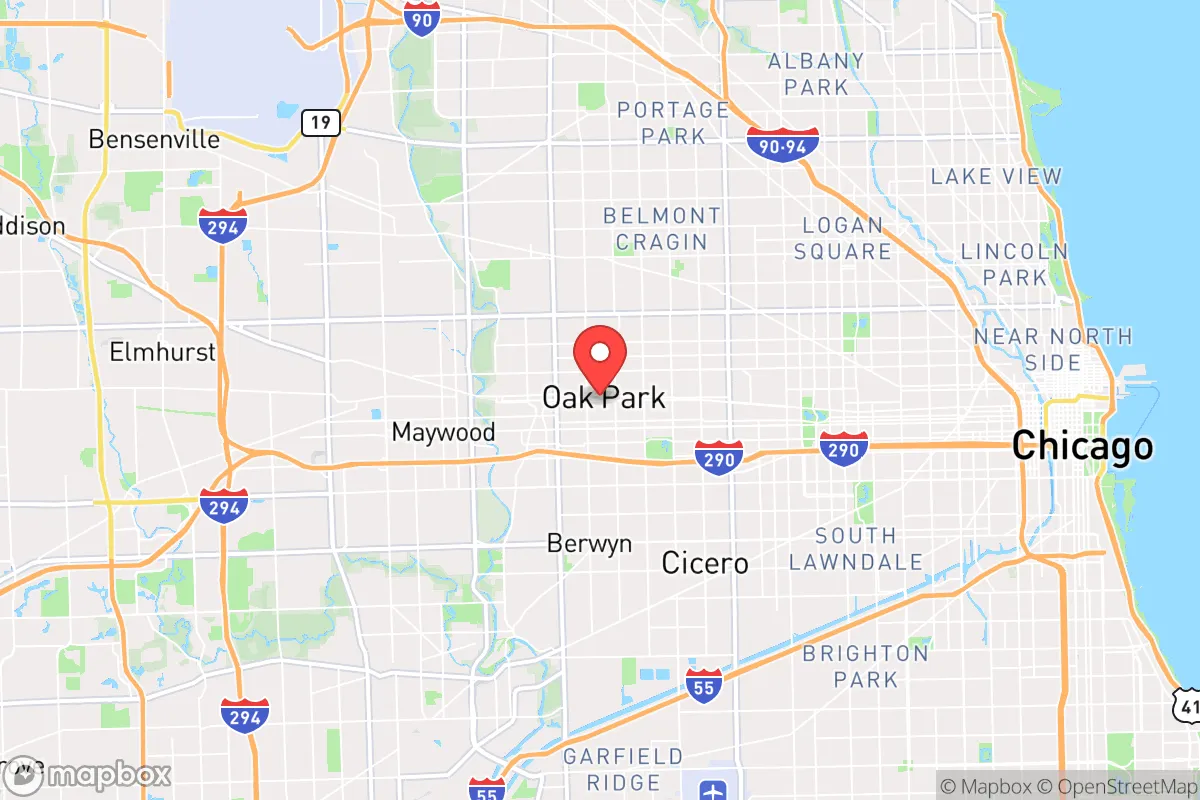
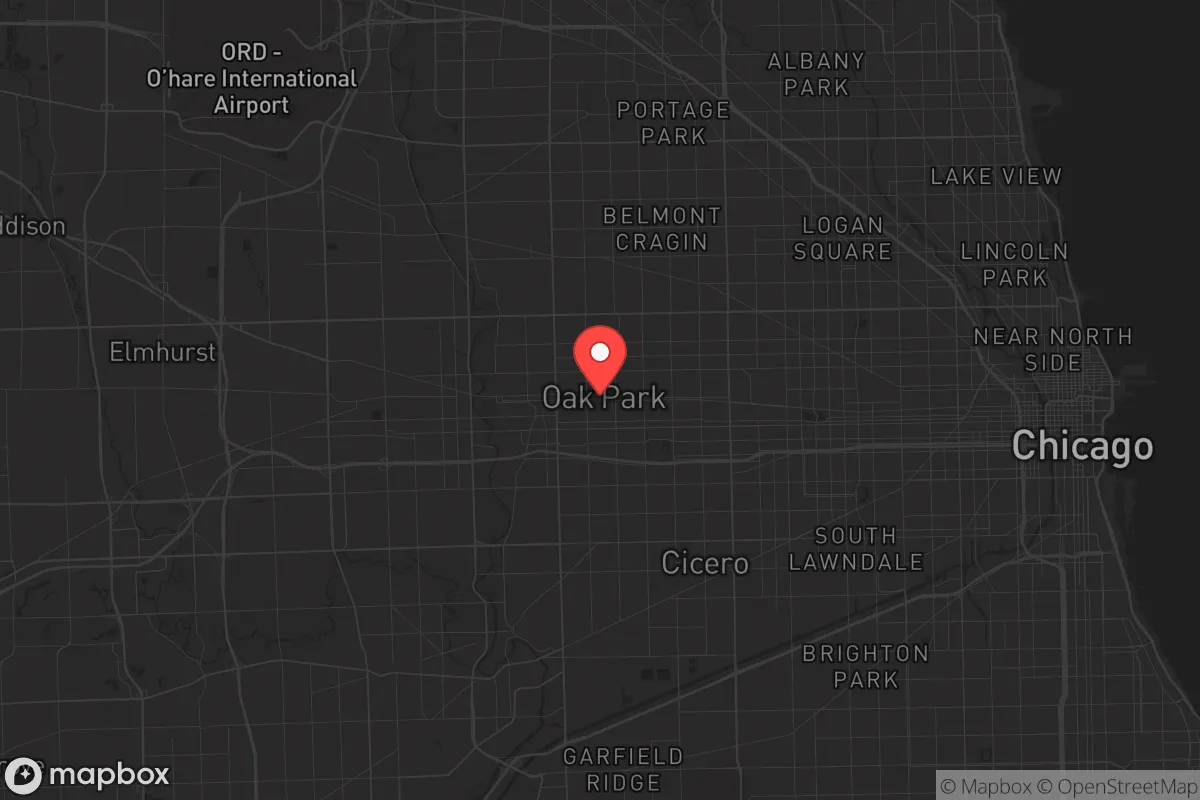
Photo: Wikipedia
Strategic Assessment of Oak Park, IL
Multiple tactical vulnerabilities. Population density, target proximity, or disaster risk are likely compounding. A retreat property and exit planning is required.
What does the Strategic Assessment tell us?
Our Strategic Assessment grades tactical survivability of an area. Major population centers, military targets, fallout zones, natural disasters, and border exposure all drive risk — lower exposure means a more defensible position in a crisis.
This is heavily inspired by Joel Skousen's Strategic Relocation book. Highly recommended you checkout the book ($)What does this tell us?
Our Strategic Assessment grades tactical survivability of an area. Major population centers, military targets, fallout zones, natural disasters, and border exposure all drive risk — lower exposure means a more defensible position in a crisis.
This is heavily inspired by Joel Skousen's Strategic Relocation book. Highly recommended you checkout the book ($)Strategic Pillars

Key Distances
Regional Safe Places
Below is our recommended "safe zones" in Illinois and the surrounding area based on our strategic heuristics. For most people, it's unrealistic to live in a “safe zone” full-time due to work, family or other personal reasons. They tend to be more rural. However, many of these areas are perfect for second homes and retreat properties that double as a vacation home or even a short-term rental.
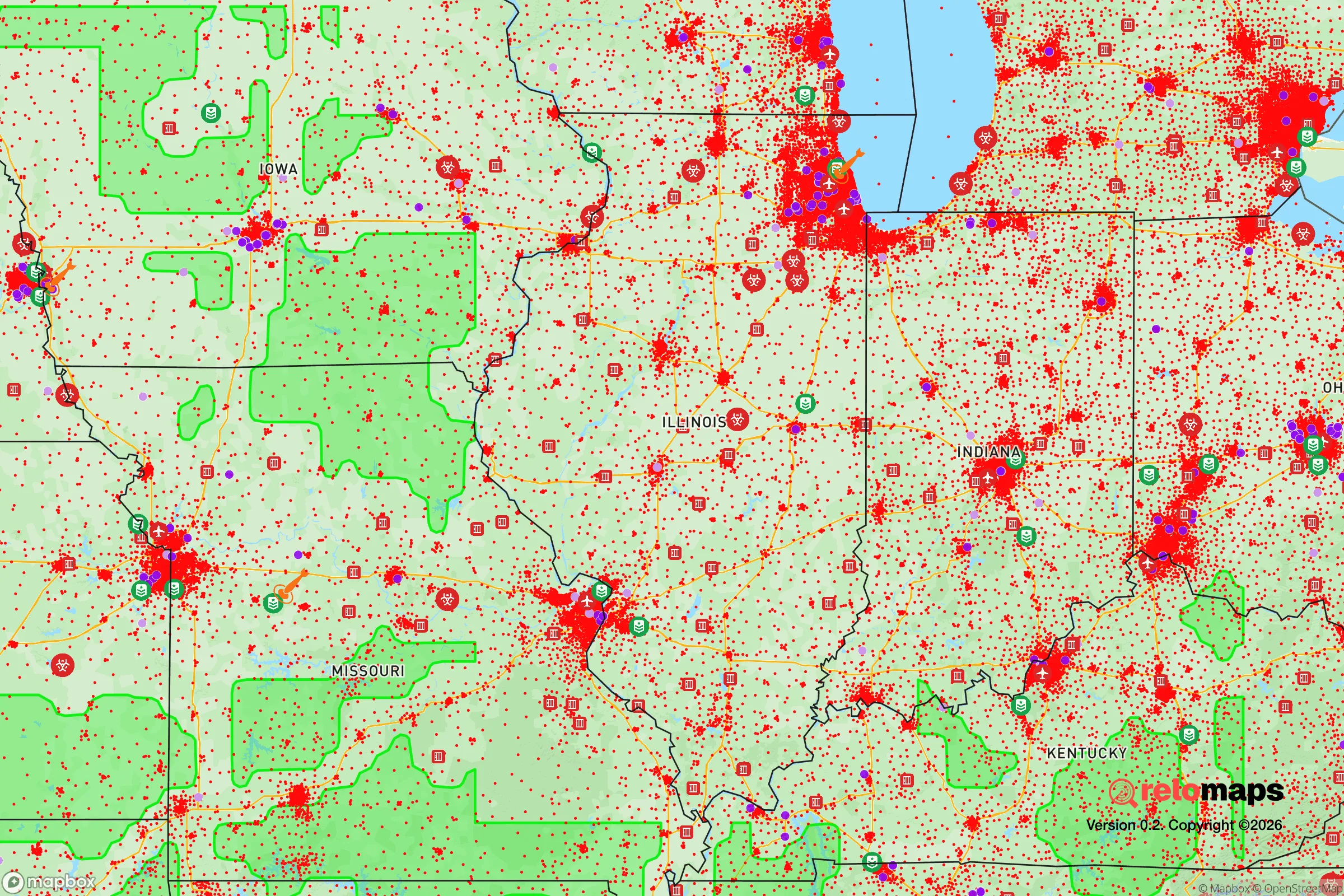
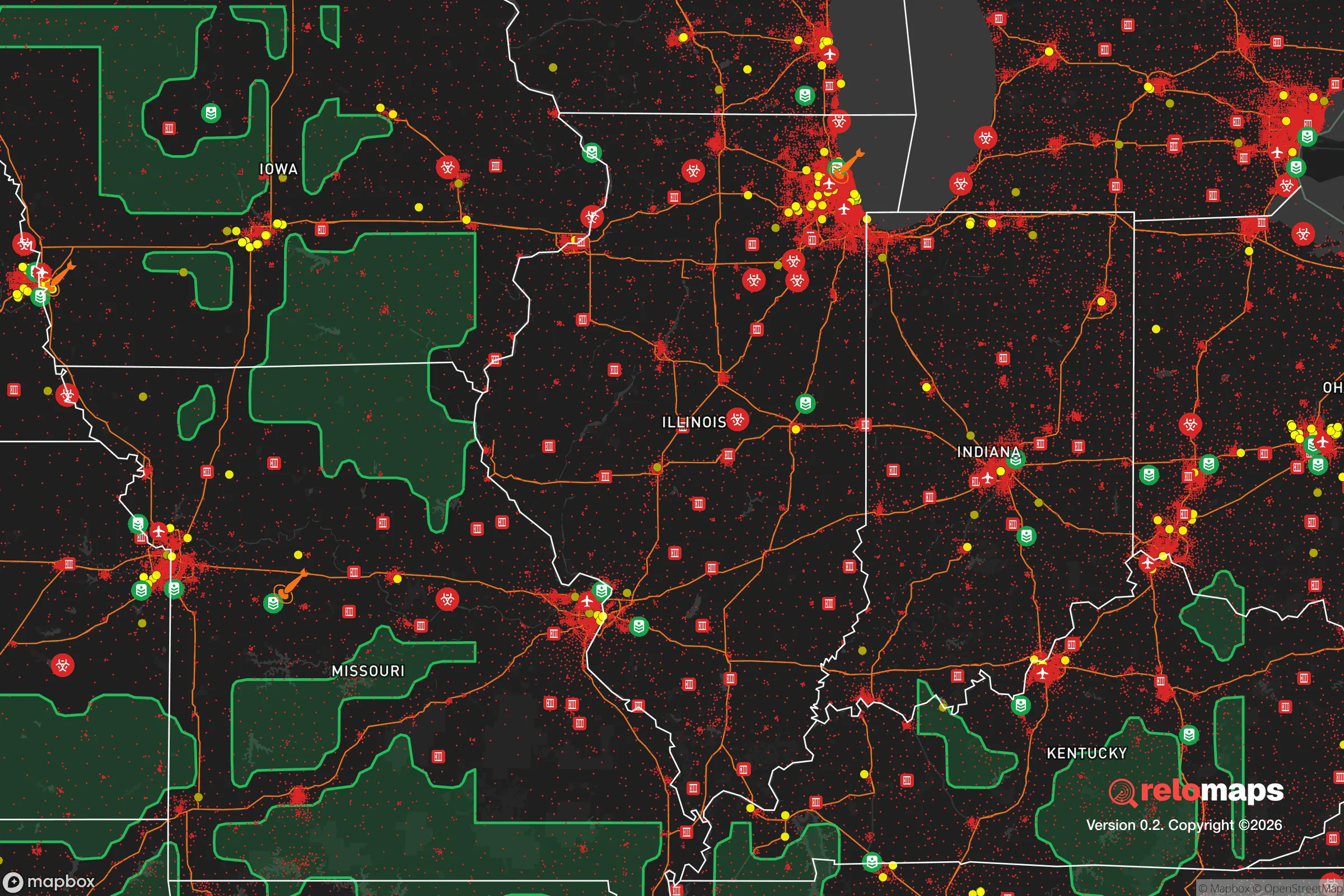


Important Note: For informational purposes only. This does not mean nothing bad ever happens in the green zones. Please use common sense. This is based on public data and modeled with AI. We tried to take a conservative approach but mistakes happen. We update this regularly as new information becomes available.
Solar Generator Recommendations
Backup power matters more here than in safer locations. We've picked three solar generators across budgets and capacity tiers — start with the budget unit if you only need a few essentials, or step up if you want to run a fridge and HVAC for days at a time.

Jackery Portable Power Station Explorer 300
Budget OptionPower on the Go: Weighing only 11 lbs, it's convenient to set up and store with book-sized foldable solar panels

BLUETTI Portable Power Station AC180
Designed for both indoor and outdoor scenarios, AC180 is highly capable as it has a robost capacity and continuous output power.

EF ECOFLOW DELTA Pro Ultra Power Station
Upgraded PickEcoFlow DELTA Pro Ultra is a whole-home energy system designed to grow with your family. Integrated with the Smart Home Panel 2, it scales to meet your evolving energy needs — keeping your home powered, intelligent, and secure through every stage of life.
We earn a commission, at no additional cost to you.
Strategic Assessment Analysis
Oak Park, Illinois, presents a deeply contradictory picture for the conservative prepper or strategic relocator. Its immediate advantages—dense tree canopy, a robust local food co-op, and a historically stable water supply from Lake Michigan—are real assets. However, these are almost entirely offset by its location as a dense, politically monolithic inner-ring suburb of Chicago, placing it directly in the path of any major civil unrest, supply chain collapse, or mass casualty event originating from the city. For someone prioritizing long-term survivability and strategic depth, Oak Park is a high-risk, moderate-reward location that demands a very specific and disciplined preparation strategy.
Geographic position and natural advantages: The Lake Michigan buffer and the urban heat island
Oak Park’s primary natural advantage is its access to Lake Michigan, which provides an essentially unlimited source of fresh water—provided the treatment infrastructure remains operational. The village sits on a relatively flat, well-drained glacial plain, which means flooding is a minor concern compared to riverine suburbs. The tree canopy is dense, offering some natural cooling and a degree of visual screening from aerial observation. However, the area’s position is a double-edged sword. It is less than 10 miles from downtown Chicago, placing it within the immediate fallout zone of any major urban disaster—whether a terrorist attack, a grid-down scenario, or a biological event. The prevailing westerly winds mean that smoke, chemical plumes, or fallout from the city would be carried directly over Oak Park. The terrain offers no natural defensibility; it is a flat grid of streets with no hills, ridges, or chokepoints to control movement. The Des Plaines River lies just to the west, but it is a slow-moving, polluted waterway, not a reliable source of potable water without heavy filtration.
Risks, exposures, and proximity to fallout-relevant landmarks: The Chicago problem
The single greatest risk factor for Oak Park is its proximity to Chicago. In any scenario involving civil unrest, mass casualty events, or a breakdown of order, the city’s population of 2.7 million will look to flee outward. Oak Park sits directly on major evacuation arteries—the Eisenhower Expressway (I-290) and the Blue Line CTA train—making it a natural funnel for panicked crowds. The village is also adjacent to the Cook County Forest Preserves, which, while offering some green space, would become contested ground for resources and shelter. Oak Park is within a 5-mile radius of the Fermi National Accelerator Laboratory (a high-energy physics facility) and within 15 miles of the Argonne National Laboratory. While these are not nuclear power plants, they are potential targets for state-actor sabotage or terrorist attack. The village itself has a population density of over 12,000 people per square mile, making it one of the densest suburbs in the nation. In a grid-down scenario, this density means that noise discipline, resource competition, and disease transmission become critical problems. The political and cultural homogeneity of the area—overwhelmingly progressive and Democratic—means that a conservative or prepper-minded individual will likely have few like-minded neighbors to form a mutual assistance group with.
Practical resilience for a relocator: Food, water, energy, and defensibility
For the relocator who is determined to make Oak Park work, the practical resilience picture is mixed. Water is the strongest asset: the village draws from the Lake Michigan system via the Chicago water supply, and a well-maintained backup generator at the local pumping station could keep water flowing for days. However, a long-term grid failure would shut down the pumps, and the village has no significant natural springs or wells. Rainwater collection is feasible but limited by flat roofs and local ordinances. Food security is a major weakness. Oak Park has a strong farmers’ market and a well-stocked co-op, but these are supply-chain dependent. In a crisis, grocery shelves will empty within 48 hours. The village has no significant agricultural land within its borders; the nearest farmland is 20 miles west in Kane County. Foraging in the forest preserves is possible but will be quickly exhausted. Energy resilience is poor. Oak Park’s housing stock is dominated by century-old Victorian and Craftsman homes with natural gas heating and electric wiring that is not designed for off-grid solar. Solar panel installation is possible but faces HOA and historic district restrictions in many neighborhoods. A wood-burning stove or fireplace is a significant asset here, as natural gas lines will likely fail in a prolonged outage. Defensibility is the hardest challenge. The village’s grid layout, with wide streets and alleys, makes it easy to patrol but also easy to penetrate. There are no natural barriers. The best defensive strategy is to create a hardened, low-profile home base with reinforced doors, window film, and a secure basement or root cellar. The proximity to the Eisenhower Expressway means that any major event will bring looters and refugees through the village within hours. A vehicle-based bug-out plan is risky because the expressway will be gridlocked; a bicycle or motorcycle is a more realistic option for moving to a secondary location west of the Fox River.
The overall strategic picture for Oak Park is one of calculated risk. It is not a location for a long-term, self-sufficient survival retreat. The density, proximity to Chicago, and lack of natural defensibility make it a high-risk zone for any major disaster. However, for the relocator who is willing to invest in a hardened urban home, maintain a deep pantry and water storage, and have a pre-planned bug-out route to a rural property in western Illinois or Wisconsin, Oak Park can serve as a viable base of operations for the short to medium term. The key is to treat it as a temporary staging ground, not a final destination. The village’s cultural and political climate will be a source of friction for a conservative prepper, but the practical assets—Lake Michigan water, a strong local food network in normal times, and a dense tree canopy—are not nothing. The honest assessment is this: if you are looking for a place to ride out the collapse of the current system, look further west. If you are looking for a place to live a normal life while maintaining a high state of readiness for a short-duration crisis, Oak Park can work—but only if you are prepared to leave at a moment’s notice.

* Values derived from national, state, county, city and local statistics and may differ in a specific area. Last updated: 2026-04-29T19:33:16.000Z
Narrative content on this page is AI-generated and may contain mistakes. Verify any details that matter before acting on them.
ReloMaps may earn a commission from affiliate links at no extra cost to you.

