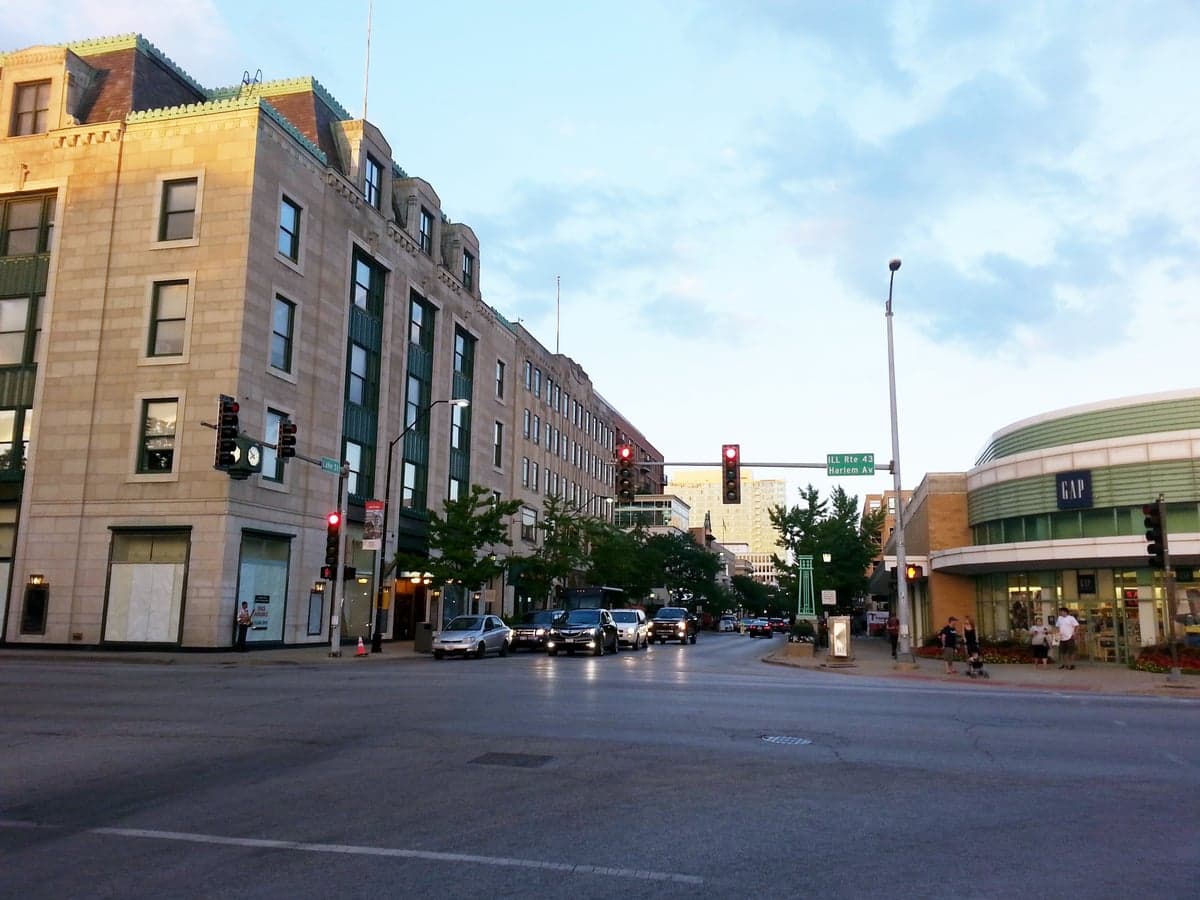
Photo: Wikipedia
Political ClimatePolitical Climate in Oak Park, IL
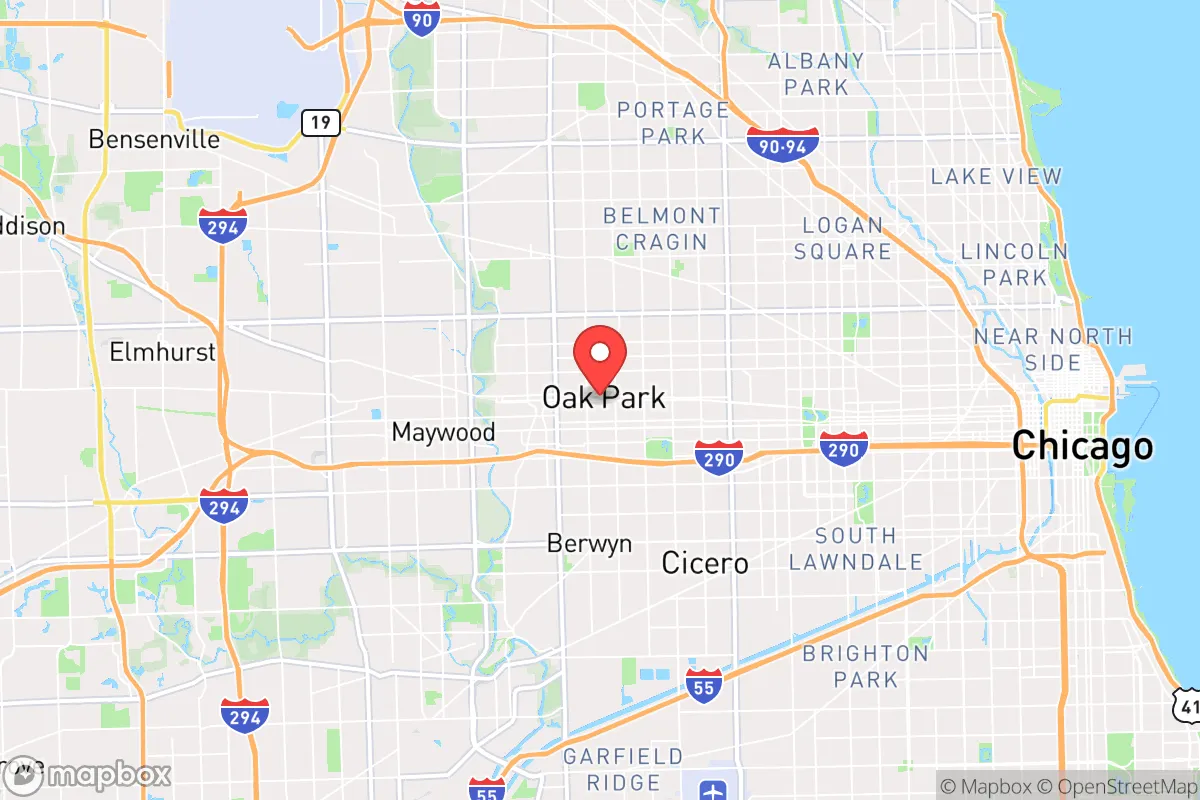
District shown is the primary district for this city’s centroid. Cities may span multiple districts.
Local Political AnalysisPolitical Analysis of Oak Park, IL
Oak Park, Illinois, is about as deep blue as a suburb gets, with a Cook PVI of D+34 that puts it in the top tier of Democratic strongholds nationwide. That number isn't just a statistic—it means the area has shifted hard left over the past couple of decades, and the change is visible in everything from local zoning rules to school board decisions. If you're looking at this area and wondering whether it's still the quiet, family-focused village it was in the 1990s, the honest answer is that it's become a laboratory for progressive policy, and that comes with both trade-offs and red flags for anyone who values personal freedom and limited government.
How it compares
To understand Oak Park's political climate, you have to look at the contrast with its neighbors. Head west a few miles to River Forest or Elmhurst, and you'll find communities that still lean Republican or are at least purple—places where property tax referendums get real debate and school boards aren't dominated by activist agendas. Oak Park, by contrast, has become a satellite of Chicago's progressive machine. The village board, school board, and park district are all controlled by officials who consistently vote for higher taxes, stricter land-use regulations, and policies that prioritize social engineering over practical governance. The D+34 rating means that in the 2024 presidential election, Oak Park voted roughly 67% Democratic to 33% Republican—a margin that's actually widened from 2020. Meanwhile, nearby Berwyn and Cicero are more working-class and moderate, but Oak Park's affluent, educated base has pushed it further left than almost any other suburb in the state.
What this means for residents
For a resident who values personal freedom, the biggest concern is the steady creep of government into daily life. Oak Park was an early adopter of rent control ordinances, which sound good on paper but have led to housing shortages and higher costs for anyone trying to buy. The village has also embraced "equity" zoning policies that give officials broad discretion over property use—meaning your ability to build a deck or run a small home business can get tangled in bureaucratic red tape. School funding is another sore spot: property taxes are among the highest in Cook County, yet the district keeps asking for more, with referendums that pass easily because the political culture discourages dissent. If you're the kind of person who thinks local government should stay out of your wallet and your backyard, Oak Park will feel increasingly suffocating. The long-term trajectory points toward more of the same—more regulations, more taxes, and a civic culture that treats skepticism as disloyalty.
Cultural and policy distinctions worth knowing
Oak Park has a proud history as a progressive enclave—it was Frank Lloyd Wright's home base and an early leader in racial integration. But that legacy has morphed into something more rigid. The village now has a "Welcoming Village" ordinance that limits cooperation with federal immigration enforcement, and the high school district has adopted curriculum mandates that prioritize political activism over academic rigor. For a conservative or libertarian-leaning resident, the social pressure to conform can be exhausting. Neighbors are quick to report code violations, and local Facebook groups are filled with debates over mask mandates and diversity initiatives that feel more like ideological enforcement than community problem-solving. If you're moving here, you'll find beautiful homes and great transit access to Chicago, but you'll also be paying a premium—in taxes and in personal freedom—for a political monoculture that shows no signs of moderating.

State Political ClimatePolitical Climate in Illinois
State Political AnalysisPolitical Environment in the State
Illinois has been a reliably blue state for decades, but its political landscape is far more complex than a simple partisan label suggests. The Democratic stronghold is powered almost entirely by the Chicago metropolitan area, while the rest of the state—particularly downstate and rural regions—votes overwhelmingly Republican. Over the last 10-20 years, the state has shifted further left on social and fiscal policy, driven by Chicago’s population weight and a legislature that has been under Democratic supermajority control since 2019. However, that dominance masks a growing urban-rural chasm, with many downstate counties seeing double-digit Republican margins while Cook County and its collar suburbs deliver massive Democratic majorities.
Urban vs. rural divide
The political map of Illinois is a textbook case of the urban-rural split. Cook County, home to Chicago, casts about 40% of the state’s total vote and reliably delivers 70-75% for Democratic candidates. The collar counties—DuPage, Lake, Kane, McHenry, and Will—have been trending blue over the past decade, especially in suburban areas like Naperville and Arlington Heights, as educated professionals and minority populations have shifted left. Meanwhile, downstate regions like the Metro East area (across from St. Louis), the Quad Cities, and the southern tip around Cairo remain deeply red. Counties like Effingham, Jasper, and Wayne routinely vote 75-80% Republican, and even larger downstate cities like Springfield and Peoria are more purple than blue. The divide is stark: drive 45 minutes west of Chicago’s O’Hare Airport into DeKalb County, and you’ll find a mix of college town liberalism and agricultural conservatism, but head another hour south to Bloomington-Normal, and the political tone shifts noticeably redder.
Policy environment
Illinois’s policy environment is a mixed bag that leans heavily toward progressive control, with significant implications for personal freedom. The state has a flat income tax rate of 4.95%, but property taxes are among the highest in the nation—averaging over 2% of home value statewide, with Cook County often exceeding 2.5%. This is a direct result of underfunded pension obligations and a legislature that has repeatedly kicked the can down the road. On education, Illinois mandates a comprehensive sex education curriculum and has expanded early childhood programs, but school choice remains limited—charter schools are capped, and private school vouchers are nonexistent. Healthcare policy is heavily regulated, with the state running its own health insurance exchange and expanding Medicaid under the Affordable Care Act. Election laws have been tightened in ways that concern conservatives: automatic voter registration, same-day registration, and no-excuse mail-in voting are all permanent fixtures, and the state has a “sanctuary” law (the TRUST Act) that limits local cooperation with federal immigration enforcement. Gun rights are heavily restricted—Illinois requires a Firearm Owner’s Identification (FOID) card, has a ban on “assault weapons” and high-capacity magazines passed in 2023, and imposes a 72-hour waiting period for long gun purchases. The regulatory environment is business-friendly in some sectors (agriculture, manufacturing) but hostile in others (energy, finance), with a complex permitting process that often favors established interests.
Trajectory & freedom
Over the past five years, Illinois has moved decisively in the direction of expanded government control, which many conservatives view as a contraction of personal liberty. The 2023 “assault weapons” ban (HB 5471) was a landmark moment, prohibiting the sale and possession of hundreds of commonly owned firearms models and magazines over 10 rounds. It was signed by Governor JB Pritzker and upheld by the Illinois Supreme Court, though federal challenges continue. On parental rights, the state has moved in the opposite direction of many red states: Illinois passed a law in 2023 that prohibits school boards from banning books based on “partisan or ideological” grounds, effectively overriding local control. Medical autonomy has been expanded in some areas—the state legalized recreational marijuana in 2019 and has strong protections for abortion access, including a 2023 law that shields providers from out-of-state lawsuits. But property rights have been weakened by a 2020 law that allows local governments to impose rent control, and the state’s estate tax exemption is only $4 million, hitting family farms and small businesses hard. The overall trajectory is clear: Illinois is becoming less free by traditional conservative metrics, with the state government increasingly preempting local decisions on guns, education, and land use.
Civil unrest & political movements
Illinois has seen its share of political flashpoints. The 2020 George Floyd protests in Chicago were among the largest and most destructive in the nation, with looting and arson in the Loop and along the Magnificent Mile. The city’s response—a mix of curfews and progressive prosecutor Kim Foxx’s lenient charging policies—became a national controversy. On the right, the “Illinois Freedom Caucus” formed in 2021 to push back against Democratic supermajorities, but it has limited legislative power. Immigration politics are a constant source of tension: Chicago’s sanctuary city status has led to a surge of bused-in migrants from Texas since 2022, overwhelming shelters and straining city budgets. In downstate areas like Murphysboro and Carbondale, there have been small but vocal “Second Amendment sanctuary” resolutions passed by county boards, though they carry no legal weight. Election integrity remains a hot-button issue—Illinois’s mail-in voting system was expanded permanently after 2020, and while no major fraud was proven, many conservatives remain skeptical of the state’s voter rolls, which include non-citizen drivers license holders (though they cannot vote). The most visible flashpoint for a new resident might be the constant political advertising: Illinois is a battleground for congressional races, and the airwaves are saturated with attack ads from both sides.
Projection
Looking ahead 5-10 years, Illinois’s political trajectory is likely to continue its leftward drift, but with growing internal friction. Demographic trends favor Democrats: Chicago’s population is stabilizing after a post-2020 dip, and the collar counties are becoming more diverse and liberal. However, downstate population loss is accelerating, with counties like Alexander and Pulaski losing 10-15% of their residents per decade. This means the state’s political center of gravity will shift even further toward Chicago and its suburbs. In-migration from blue states like California and New York is modest but noticeable in places like Naperville and Evanston, reinforcing the progressive tilt. The biggest wildcard is fiscal: Illinois’s unfunded pension liability is over $140 billion, and the state’s credit rating is the second-worst in the nation (only behind New Jersey). If a fiscal crisis hits—say, a recession that slashes income tax revenue—the state may be forced to raise taxes or cut services, which could accelerate out-migration of conservatives and businesses. For now, the Democratic supermajority shows no signs of cracking, and the state will likely continue to pass progressive legislation on guns, abortion, and labor rights. A new resident should expect the political environment to remain deeply polarized, with Chicago and its suburbs setting the agenda for the entire state.
For a conservative considering a move to Illinois, the bottom line is this: you will be living in a state where your vote in statewide elections is effectively meaningless, but your local community may still reflect your values. If you choose a downstate county like Effingham or a red-leaning suburb like McHenry, you can find like-minded neighbors and lower property taxes than in Cook County. But you will also be subject to state laws on guns, taxes, and education that you likely oppose. The trade-off is access to Chicago’s economic engine—jobs in finance, healthcare, and logistics are plentiful—and a cost of living that, outside of the Chicago metro, is lower than many coastal states. Just know that the political winds are blowing against you, and the state’s fiscal problems are not going away. If you value personal freedom above all else, Illinois is probably not your best bet. But if you have family ties or a job that keeps you here, you can carve out a good life by focusing on your local community and staying engaged in the fights that matter most to you.
* Values derived from national, state, county, city and local statistics and may differ in a specific area. Last updated: 2026-04-29T19:33:16.000Z
Narrative content on this page is AI-generated and may contain mistakes. Verify any details that matter before acting on them.
ReloMaps may earn a commission from affiliate links at no extra cost to you.

