 Popular
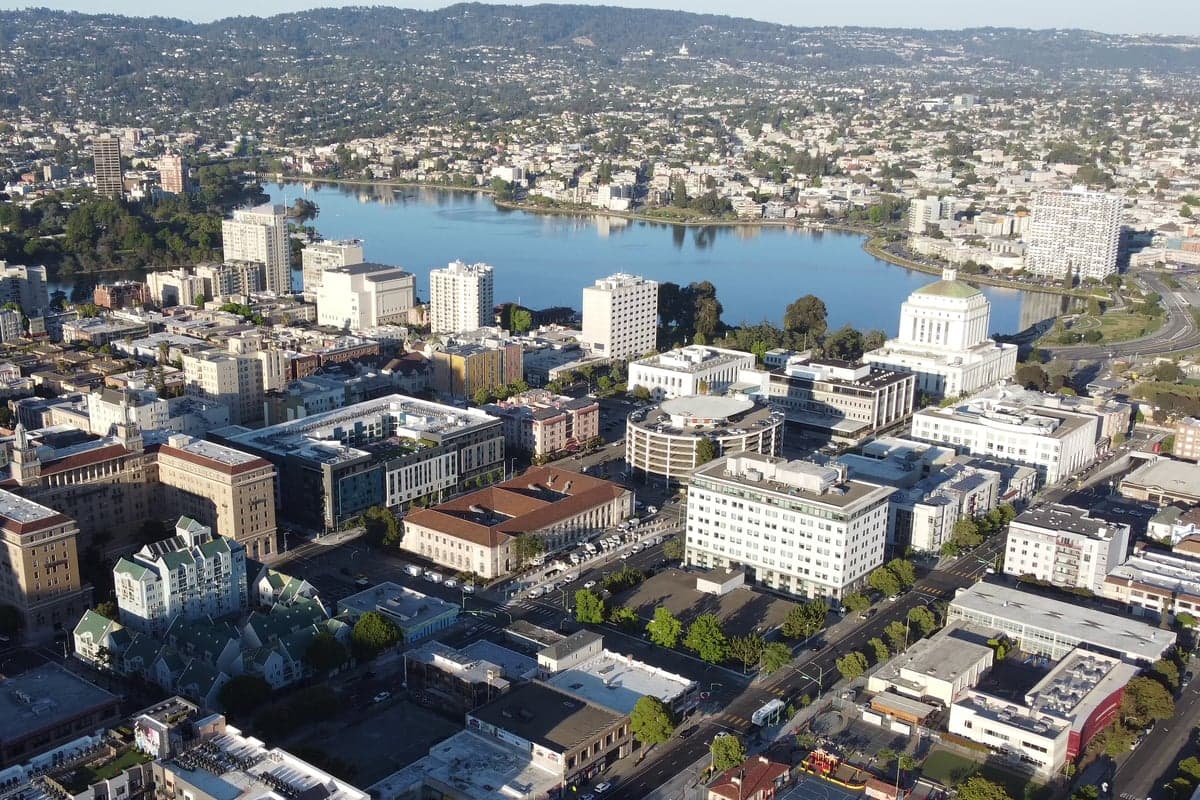
Photo: Wikipedia
Personal Sovereignty in Oakland, CA
Viable for self-reliance. Generally workable, though some barriers may limit total independence.
What does Personal Sovereignty tell us?
Personal Sovereignty measures your capacity for self-reliance and independence with minimal government friction. Higher scores mean fewer barriers between you and the way you want to live... but it assumes you have the space you need and good neighbors.
What does this tell us?
Personal Sovereignty measures your capacity for self-reliance and independence with minimal government friction. Higher scores mean fewer barriers between you and the way you want to live... but it assumes you have the space you need and good neighbors.
State Policy
Energy independence: Importer (33% of energy produced in-state)
Personal Liberty
Homesteading

Personal Liberty Analysis
Oakland, California presents a deeply challenging environment for personal sovereignty, particularly for those with a survivalist or prepper mindset who prioritize self-reliance and minimal government interference. The city’s political and regulatory climate, heavily influenced by state-level mandates, systematically erodes individual autonomy in favor of collective, top-down control. For a conservative-leaning individual or family seeking to maximize personal freedom—whether in self-defense, financial independence, or raising children without state overreach—Oakland ranks among the most restrictive urban areas in the nation. The trade-offs are stark: you gain proximity to progressive resources and a dense population, but you lose significant control over your own life, property, and security.
Tax burden and regulatory posture: How California’s fiscal and rule-making environment limits autonomy
California’s tax and regulatory framework is a primary obstacle to personal sovereignty in Oakland. The state imposes the highest marginal income tax rate in the nation at 13.3%, which directly reduces the capital available for self-reliant investments like land, supplies, or off-grid systems. Property taxes, while capped at 1% of assessed value under Proposition 13, are supplemented by high sales taxes—Oakland’s combined rate is 10.25%—and a slew of state-level fees on everything from vehicle registration to utilities. For a prepper, this means less disposable income for stockpiling, tools, or emergency funds. The regulatory posture is equally suffocating: California’s strict environmental and building codes make it nearly impossible to modify a property for self-sufficiency without extensive permits and inspections. For example, installing rainwater catchment systems or solar panels requires compliance with state and local ordinances that can take months to navigate. The state’s energy regulations also mandate grid-tied systems for most residential solar, limiting true off-grid independence. In short, Oakland’s tax burden and regulatory posture actively discourage the kind of autonomous living that preppers value, funneling resources away from individual preparedness and into state-controlled programs.
Self-defense and gun law specifics: What Oakland’s restrictions mean for personal security
For those serious about self-defense, Oakland’s gun laws are a major red flag. California has some of the strictest firearm regulations in the country, and Oakland enforces them aggressively. The state requires a 10-day waiting period, a background check, and a Firearm Safety Certificate for all purchases. Semi-automatic rifles with “assault weapon” features—like detachable magazines or pistol grips—are banned, and magazines are limited to 10 rounds. Concealed carry permits (CCWs) are issued on a “may-issue” basis, meaning local law enforcement has broad discretion to deny them. In practice, Alameda County (which includes Oakland) is notoriously restrictive: fewer than 1% of residents hold a CCW, and the process involves a lengthy application, a firearms safety course, and a “good cause” statement that is rarely approved for routine self-defense. This leaves law-abiding citizens with limited options for protecting themselves in a city where violent crime rates are high—Oakland’s homicide rate is roughly 4 times the national average. For a prepper, this creates a dangerous paradox: you are expected to rely on law enforcement, but police response times in Oakland can exceed 15 minutes for priority calls. The result is a system that disarms the responsible while doing little to deter criminals, undermining the core principle of personal sovereignty in self-defense.
Self-reliance and homesteading viability: Lot sizes, zoning, and off-grid feasibility in Oakland
Oakland’s urban density and zoning laws make traditional homesteading or off-grid living nearly impossible. The typical residential lot in Oakland is around 5,000 square feet, with many homes on lots under 3,000 square feet in denser neighborhoods like Downtown or West Oakland. Zoning codes prohibit keeping livestock like chickens or goats in most residential areas, and even backyard gardens are subject to city regulations on height, setbacks, and water use. For off-grid systems, the barriers are even higher: California’s building codes require grid interconnection for solar panels unless you obtain a rare “off-grid” permit, which involves proving the property has no access to utility lines. Rainwater harvesting is technically legal but limited to two 50-gallon barrels per property without a permit, and graywater systems require professional installation and city approval. The city’s water supply is controlled by the East Bay Municipal Utility District (EBMUD), which imposes strict usage limits and tiered pricing that penalizes high consumption. For a prepper seeking true self-reliance—growing food, storing water, generating power—Oakland’s zoning and regulatory environment is a dead end. You would need to look to outlying areas like the East Bay hills or Contra Costa County for larger lots and looser restrictions, but even there, state-level rules on water rights and building codes remain a hurdle.
Personal liberties: Parental rights, medical autonomy, speech, and property in Oakland
Personal liberties in Oakland are heavily constrained by state and local policies, particularly in areas that matter most to conservative families. Parental rights are significantly limited: California’s education code mandates that schools provide sex education and mental health services without parental consent, and Oakland Unified School District has policies that allow students to change their gender identity on school records without notifying parents. Medical autonomy is also restricted—California has some of the strictest vaccine mandates in the nation, including requirements for school attendance that leave little room for religious or philosophical exemptions. During the COVID-19 pandemic, Oakland enforced mask and vaccine mandates that were among the longest-lasting in the country, with fines for non-compliance. Free speech is legally protected but practically chilled by local ordinances that restrict public gatherings and protest activities, particularly in areas near government buildings or schools. Property rights are eroded by California’s rent control laws (Oakland has its own rent stabilization ordinance that caps annual increases at 60% of inflation) and by the state’s “builder’s remedy” that allows developers to bypass local zoning for affordable housing projects. For a prepper, this means you cannot fully control what happens on your own land—tenants have strong protections, and the city can mandate changes to your property for “public benefit.” Overall, Oakland’s personal liberties are subordinated to collective goals, making it a poor fit for those who prioritize individual decision-making in family, health, and property matters.
In the broader landscape of personal sovereignty, Oakland ranks near the bottom for conservative-leaning individuals and preppers. Compared to cities in Texas, Florida, or even rural parts of the Pacific Northwest, Oakland’s combination of high taxes, restrictive gun laws, limited homesteading potential, and constrained personal liberties creates an environment where self-reliance is actively discouraged. The city’s progressive governance model treats individual autonomy as secondary to state-directed outcomes, which is fundamentally at odds with a survivalist mindset. For those willing to trade freedom for access to urban amenities and a dense social network, Oakland might work—but for anyone serious about building a resilient, self-sufficient life, the math simply doesn’t add up. The best advice for a prepper considering Oakland is to look elsewhere, or to treat it as a temporary base while securing property in a more sovereignty-friendly jurisdiction.

* Values derived from national, state, county, city and local statistics and may differ in a specific area. Last updated: 2026-04-24T13:15:54.000Z
Narrative content on this page is AI-generated and may contain mistakes. Verify any details that matter before acting on them.
ReloMaps may earn a commission from affiliate links at no extra cost to you.

