 Popular
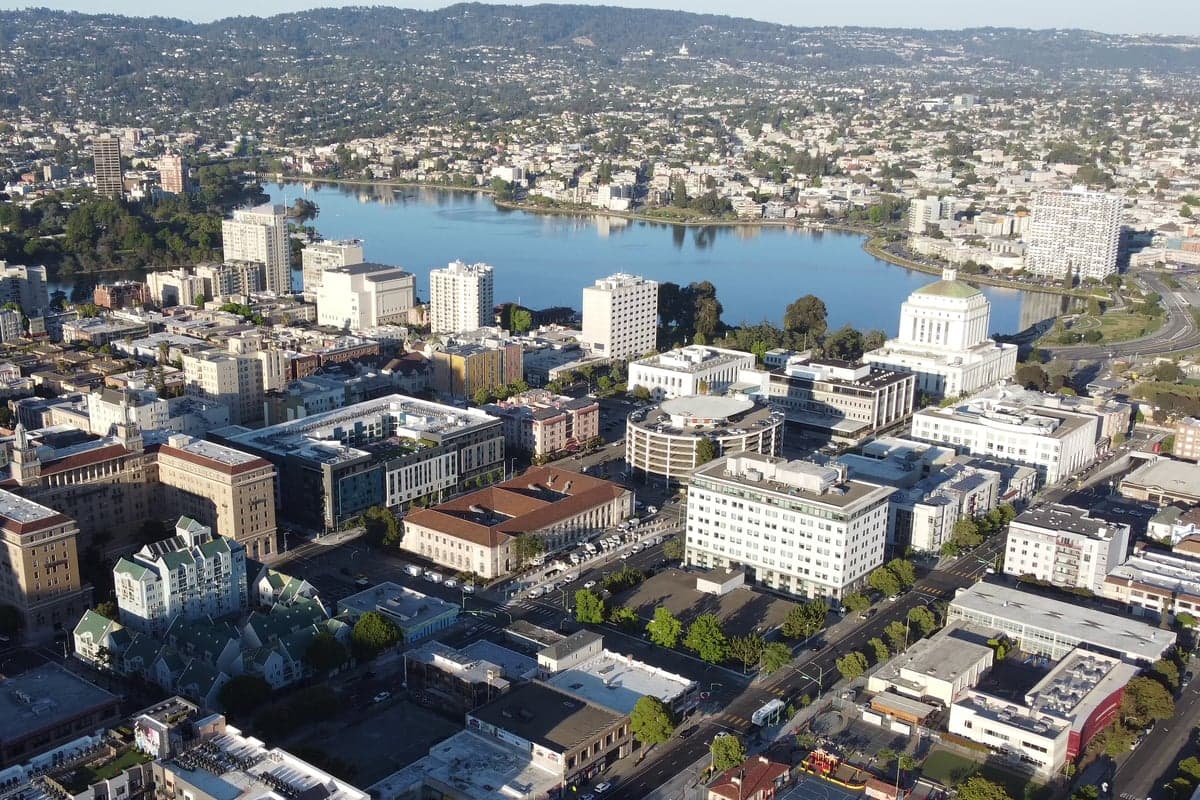
Photo: Wikipedia
Demographics of Oakland, CA
Affluence Level in Oakland, CA
An upper-middle-class area. Household wealth, education levels, and homeownership run ahead of national benchmarks.
People of Oakland, CA
The people of Oakland, California today form one of the most racially and economically diverse urban populations in the Bay Area, a city of 438,072 where no single ethnic group holds a majority. The city is characterized by its dense, walkable neighborhoods, a strong working-class and activist identity, and a notable concentration of college-educated professionals (47.9%) alongside long-standing Black and Hispanic communities. Distinctive markers include a vibrant arts and food scene rooted in its multicultural fabric, a history of political organizing, and a palpable tension between rapid gentrification and efforts to preserve affordable housing and cultural heritage.
How the city was settled and grew
Oakland’s population history begins with the Ohlone people, who lived in the area for thousands of years before Spanish colonization. The city’s modern growth was ignited by the 1869 completion of the transcontinental railroad, which made Oakland the western terminus and a major port and industrial hub. The original population was drawn by jobs in shipping, manufacturing, and the railroad itself. Irish, German, and Italian immigrants settled in working-class neighborhoods like West Oakland and Fruitvale, building the city’s early infrastructure. The 1906 San Francisco earthquake triggered a massive wave of refugees, many of whom stayed permanently, doubling Oakland’s population to over 150,000 by 1910. During World War II, the city’s shipyards and defense plants attracted a huge influx of African Americans from the South, who settled primarily in West Oakland and East Oakland, transforming the city’s demographic character. By 1950, Oakland’s Black population had grown to over 12%, and the city became a center of Black culture, business, and civil rights activism.
Modern era (post-1965)
The post-1965 era brought profound demographic shifts. The 1965 Hart-Cellar Immigration Act opened the door to new waves of immigrants, particularly from East and Southeast Asia. Vietnamese, Chinese, and Filipino communities established themselves in neighborhoods like East Oakland’s San Antonio district and the Chinatown area near downtown, creating vibrant ethnic enclaves. Simultaneously, the decline of manufacturing and the rise of the crack epidemic in the 1980s and 1990s led to significant Black out-migration to suburbs like Antioch and Stockton, as well as to the South. Oakland’s Black population peaked at roughly 47% in 1980 but has since fallen to 20.5% today. Meanwhile, Hispanic (primarily Mexican and Central American) populations grew steadily, now making up 28.9% of residents, with strong concentrations in Fruitvale and the International Boulevard corridor. The Indian subcontinent population, at 1.4%, is smaller but growing, with clusters in the Rockridge and Montclair hills. The White population, which had declined to under 20% by 1990, has rebounded to 27.9% as tech workers and professionals from San Francisco have moved in, driving gentrification in neighborhoods like Uptown, Downtown, and West Oakland.
The future
Oakland’s population trajectory points toward continued diversification and intensifying economic stratification. The city is not homogenizing but rather tribalizing into distinct enclaves along lines of income and race. The White and Asian populations are growing, particularly among college-educated newcomers, while the Black population continues a slow decline, and the Hispanic share is stabilizing. The foreign-born share, at 13.8%, is below the national average for a major city, suggesting that immigration is not the primary driver of change; instead, domestic in-migration from higher-cost San Francisco and out-migration of long-term Black residents are reshaping the city. Over the next 10-20 years, Oakland is likely to become more Asian and White, less Black, and slightly more Hispanic, with the Indian subcontinent community remaining a small but visible niche. The key question is whether the city can maintain its historic diversity and affordability, or whether it will follow San Francisco into becoming a predominantly wealthy, White and Asian enclave.
For someone moving in now, Oakland offers a dynamic, culturally rich urban environment with a strong sense of community and political engagement, but also faces serious challenges of housing costs, crime disparities, and racial tension. It is a city in transition, where the old working-class and activist identity is clashing with a new wave of affluent professionals. The bottom line: Oakland is becoming a more polarized place, where your experience will depend heavily on which neighborhood you choose and your income level.

* Values derived from national, state, county, city and local statistics and may differ in a specific area. Last updated: 2026-04-24T13:15:54.000Z
Narrative content on this page is AI-generated and may contain mistakes. Verify any details that matter before acting on them.
ReloMaps may earn a commission from affiliate links at no extra cost to you.

