 Popular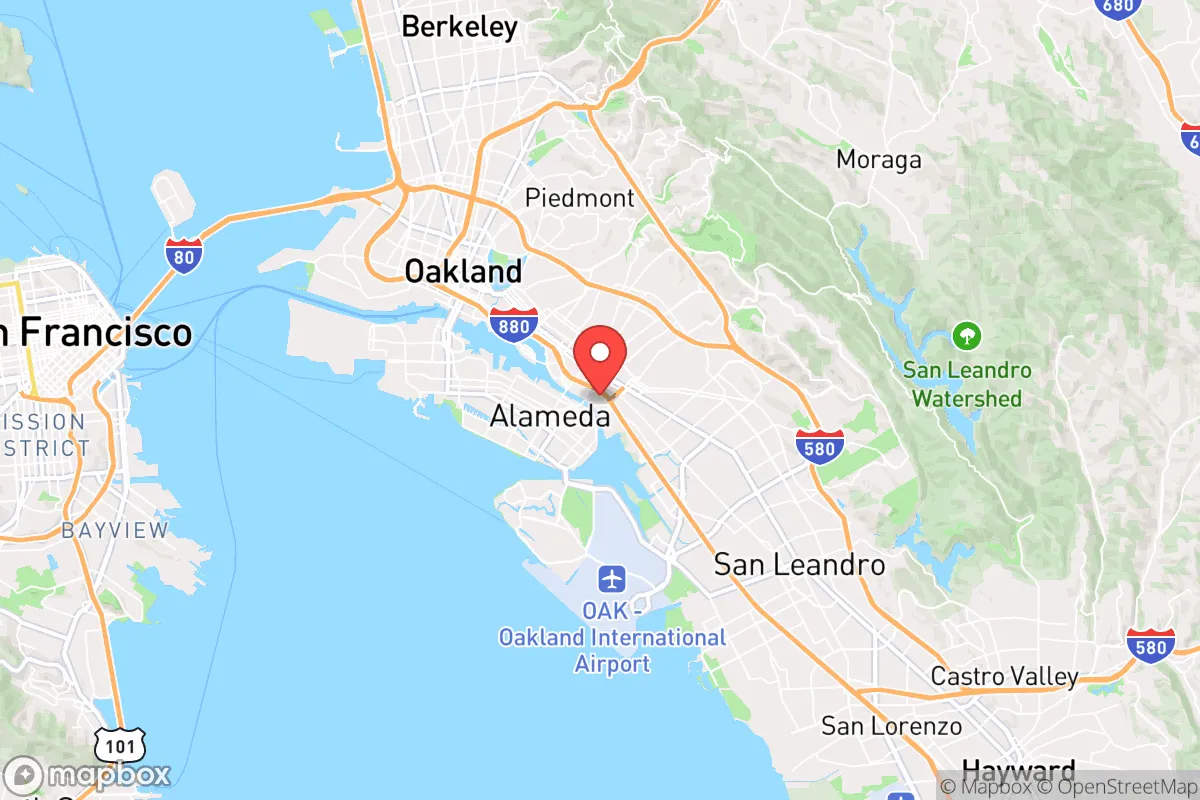
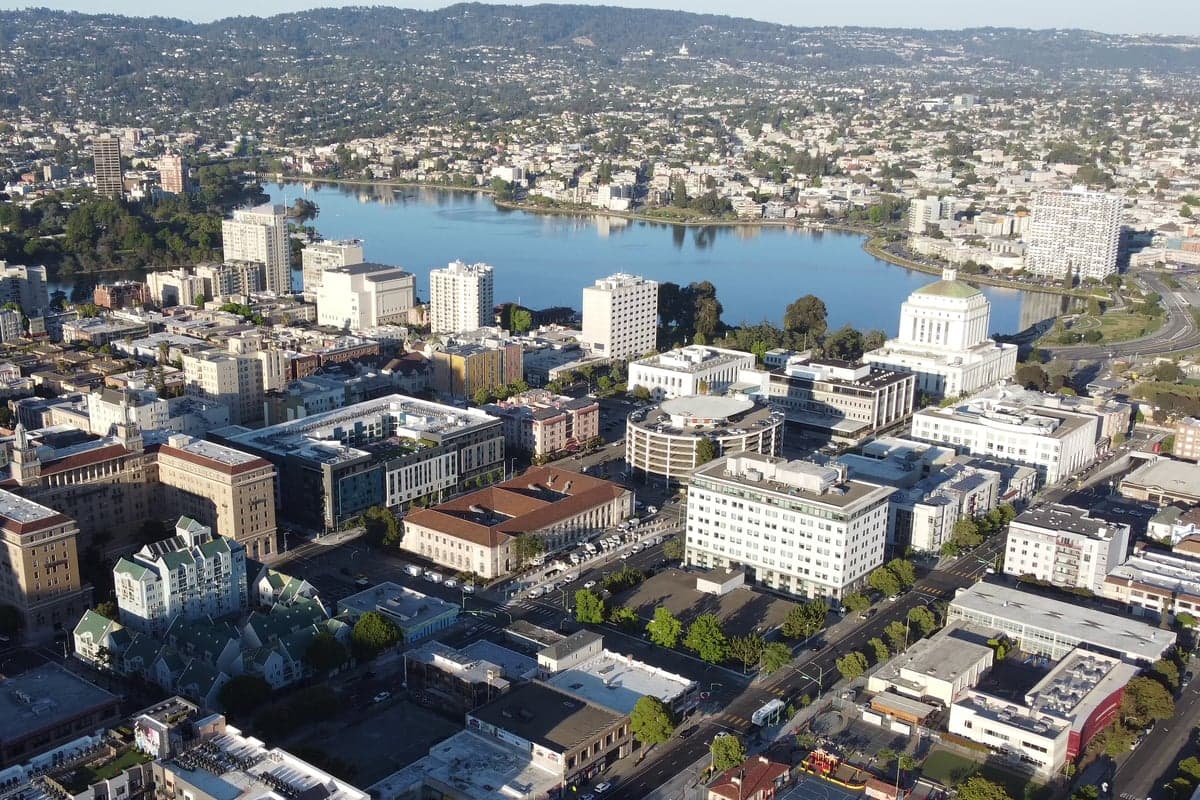
Photo: Wikipedia
Political ClimatePolitical Climate in Oakland, CA
District shown is the primary district for this city’s centroid. Cities may span multiple districts.
Local Political AnalysisPolitical Analysis of Oakland, CA
Oakland, California, is about as deep blue as it gets, with a Cook PVI of D+39, meaning the city votes nearly 40 points more Democratic than the national average. If you’re looking for a place where conservative or even moderate views get a fair hearing, this isn’t it. The political trajectory here has been a steady march leftward for decades, and honestly, it’s accelerated in the last ten years. You’ve got a city council that’s openly progressive, a mayor who’s aligned with the state’s most liberal policies, and a general vibe that government knows best—especially when it comes to taxes, regulations, and telling you how to live your life.
How it compares
Drive 15 minutes east to Walnut Creek or Danville, and you’ll find a completely different political world—those areas lean more moderate to conservative, with lower crime rates and a lot less tolerance for the kind of social experiments Oakland embraces. Even Piedmont, a tiny city completely surrounded by Oakland, votes more conservatively (relatively speaking) because its residents value local control over schools and property rights. The contrast is stark: in Oakland, the city government has pushed policies like defunding the police (which they tried, then partially reversed after crime spiked), rent control that’s so strict it discourages new housing, and business taxes that drive small shops out. Meanwhile, neighboring towns are actually adding police officers and cutting red tape for entrepreneurs. If you value personal freedom from government overreach, you’ll feel the difference the second you cross the city line.
What this means for residents
For the average person living here, the political climate translates into a lot of daily friction. Property crime is rampant—car break-ins, package thefts, and home burglaries are routine—because the district attorney and city council have made it clear that prosecuting low-level offenses isn’t a priority. You’ll pay some of the highest sales taxes in the state (over 10% in some parts), plus a gross receipts tax on businesses that gets passed right back to you in higher prices. And if you own a home, be ready for ever-increasing property taxes thanks to local bond measures that never seem to end. The city also banned natural gas in new construction, so you’re forced into electric appliances whether you like it or not. It’s a place where the government feels comfortable making decisions for you, from what you can build to how you heat your home.
Looking ahead, I don’t see the political winds shifting here anytime soon. The progressive machine is too entrenched, and the people who might push back have mostly moved to the suburbs or out of state. The long-term trend is more of the same: higher taxes, more regulations, and a government that prioritizes ideological goals over practical outcomes. If you’re considering a move to Oakland, just know you’re signing up for a place where personal freedoms take a backseat to collective mandates. It’s a beautiful city with amazing food and culture, but the political climate is something you’ll have to navigate every single day.

State Political ClimatePolitical Climate in California
State Political AnalysisPolitical Environment in the State
California is a one-party Democratic state where Republicans haven’t won a statewide election since 2006, and the legislature is dominated by a supermajority that can pass taxes and constitutional amendments without a single GOP vote. The dominant coalition is a mix of coastal progressives, Silicon Valley tech elites, and unionized public-sector workers, with a growing Latino electorate that leans left but is not monolithic. Over the last 20 years, the state has shifted from a purple battleground—where Arnold Schwarzenegger governed as a moderate Republican—to a deep blue fortress, driven by demographic change, voter registration gaps, and the exodus of moderate and conservative-leaning residents to Texas, Idaho, and Tennessee.
Urban vs. rural divide
The political map of California is a stark story of coastal blue versus inland red. The massive population centers of Los Angeles, San Francisco, San Diego, and San Jose produce overwhelming Democratic margins—Los Angeles County alone gave Biden 71% of the vote in 2020, while San Francisco hit 85%. These metros are the engine of the state’s progressive agenda. In contrast, the Central Valley and inland rural counties are deeply Republican. Bakersfield (Kern County) voted +16 for Trump in 2020, and Redding (Shasta County) went +34. Even in blue metros, there are conservative pockets: Orange County, once a GOP stronghold, flipped to Biden in 2020 and is now competitive, but cities like Huntington Beach and Yorba Linda remain reliably red. The divide is not just geographic—it’s cultural. Urban voters prioritize climate policy, housing density, and social justice, while rural voters focus on water rights, property taxes, and public safety. This split means that statewide policies often ignore the needs of the interior, fueling resentment and a slow-motion population drain.
Policy environment
California’s policy environment is defined by high taxes, heavy regulation, and a progressive social agenda. The state has the highest income tax rate in the nation (13.3% for top earners), a 7.25% sales tax that can exceed 10% with local add-ons, and some of the highest gas taxes in the country—over 80 cents per gallon. Property taxes are capped at 1% of assessed value under Proposition 13, but reassessment upon sale can hit new homeowners hard. The regulatory posture is aggressive: California has its own environmental standards (CARB), its own labor laws (AB 5 reclassifying gig workers as employees), and its own net neutrality rules. Education policy is dominated by the California Teachers Association, a powerful union that has blocked school choice and charter expansion. Healthcare is heavily regulated, with a state-run exchange (Covered California) and a push toward single-payer that has stalled due to cost. Election laws are among the most liberal: universal mail-in ballots, same-day registration, and no voter ID requirement. For a conservative-leaning resident, the policy environment feels like a constant expansion of government into daily life—from energy mandates to speech restrictions under the state’s hate speech laws.
Trajectory & freedom
California is becoming less free by nearly every measure of personal liberty, especially for conservatives. Recent legislation has contracted gun rights: the state now bans “assault weapons,” requires a 10-day waiting period, and in 2024 passed a law (SB 2) that effectively bans concealed carry in most public places. Parental rights have been eroded: California is a “sanctuary state” for transgender youth, meaning schools are not required to notify parents if a child changes their gender identity, and AB 1955 (2024) prohibits school districts from requiring parental notification. Medical autonomy is restricted: vaccine mandates for schoolchildren are among the strictest in the nation, and the state has criminalized “misinformation” by doctors. Property rights are under pressure from rent control (AB 1482) and a 2024 ballot measure that allows local governments to impose rent caps on single-family homes. Taxation is not just high—it’s aggressive, with the state taxing capital gains as ordinary income and pursuing a wealth tax on unrealized gains. The trajectory is clear: more mandates, less choice, and a government that sees itself as the arbiter of acceptable behavior.
Civil unrest & political movements
California has been a flashpoint for civil unrest and political movements on both sides. The 2020 George Floyd protests in Los Angeles and Oakland saw widespread looting and property destruction, with some estimates of damage exceeding $1 billion. The state’s sanctuary policies—SB 54, which limits local law enforcement cooperation with federal immigration authorities—have created tension between state and federal officials, and have been blamed for attracting illegal immigration. On the right, the “California exodus” movement has spawned organized efforts like the “Free California” campaign and a serious secession movement (Calexit) that gained ballot access in 2016 but failed. Election integrity is a major concern: the state’s universal mail-in system, lack of voter ID, and practice of counting ballots received days after Election Day have led to widespread distrust, especially in rural counties like Shasta, where the Board of Supervisors has clashed with the Secretary of State over election audits. Immigration politics are front and center: the state has spent billions on legal aid for undocumented immigrants and in 2024 expanded health coverage to all regardless of status. A new resident will notice visible homelessness in every major city, a direct result of policies that decriminalized drug use and camping, and a political movement to recall progressive district attorneys (like Chesa Boudin in San Francisco and George Gascón in Los Angeles) has gained traction but not yet reversed the trend.
Projection
Over the next 5-10 years, California will likely become more progressive, not less. Demographic trends favor the left: the state’s white population is shrinking, while Latino and Asian populations—which vote Democratic by wide margins—are growing. In-migration from other states is negative; the people leaving are disproportionately middle-class families and conservatives, while those arriving are often foreign-born or from other blue states. The legislature’s supermajority means there is no check on progressive policy, and the governor’s office is likely to remain Democratic. Expect more tax increases (a wealth tax is being debated), more housing mandates (SB 9 and 10 already override local zoning), and more restrictions on speech and gun rights. The one wild card is a potential economic downturn: if the state’s budget deficit (projected at $68 billion in 2024) forces cuts to popular programs, it could spark a backlash. But for now, the trajectory is toward a European-style social democracy, with less individual freedom and more government control.
For a new resident, the bottom line is this: California offers unmatched natural beauty, a strong economy, and cultural diversity, but at the cost of high taxes, heavy regulation, and a government that actively works against conservative values. If you value personal liberty—especially gun rights, parental control, and low taxes—this state will feel increasingly hostile. Many conservatives are choosing to relocate to Texas, Idaho, or Tennessee, where the policy environment is more aligned with their values. If you do move here, pick your county carefully: Huntington Beach or Bakersfield will feel different than San Francisco or Los Angeles, but you’ll still be subject to the same state-level laws. Be prepared to pay more, be told what to do more, and have less say in how your children are educated. It’s a trade-off that works for some, but it’s not getting better for those who lean right.
* Values derived from national, state, county, city and local statistics and may differ in a specific area. Last updated: 2026-04-24T13:15:54.000Z
Narrative content on this page is AI-generated and may contain mistakes. Verify any details that matter before acting on them.
ReloMaps may earn a commission from affiliate links at no extra cost to you.

