 Popular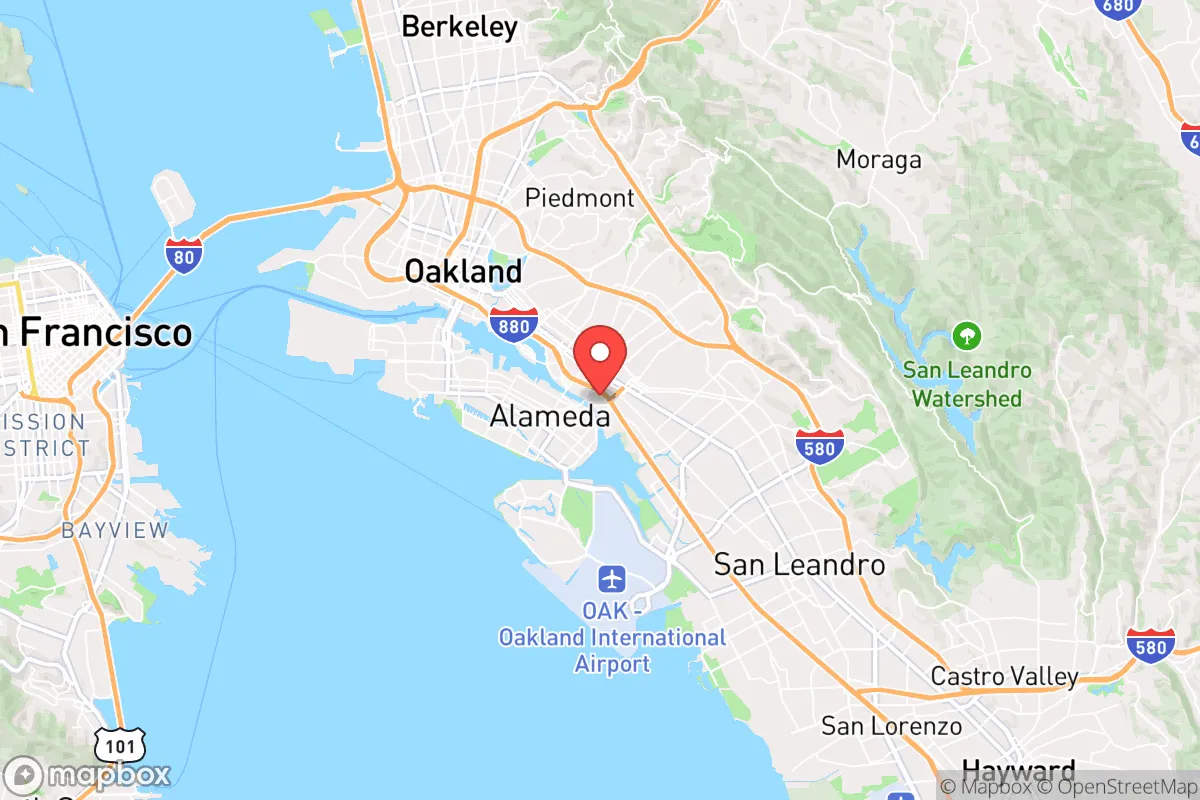
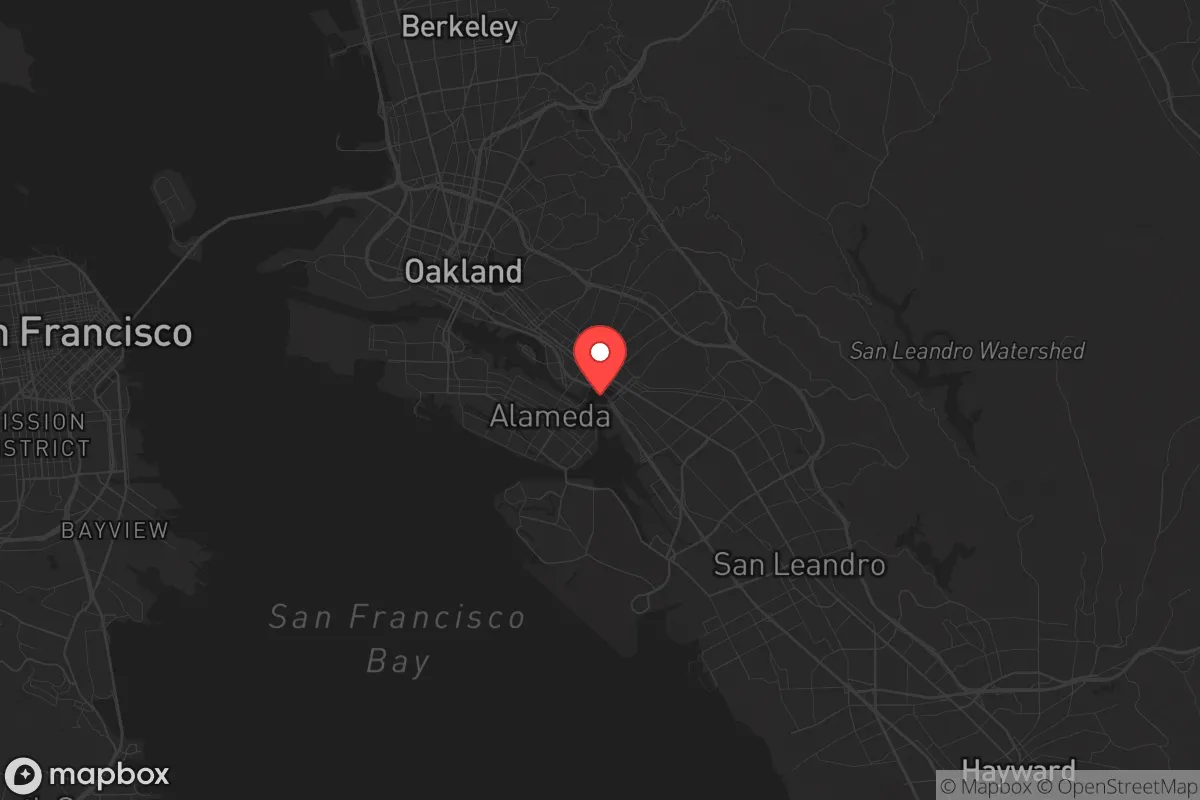
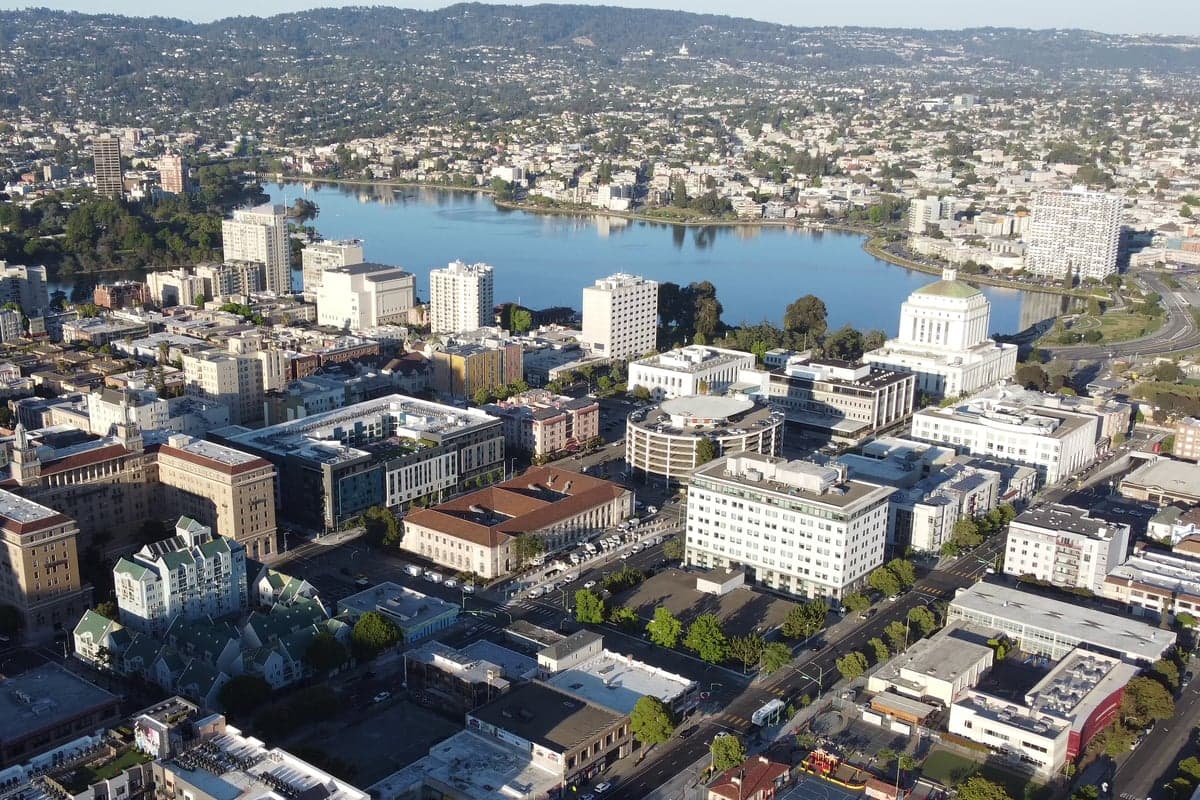
Photo: Wikipedia
Strategic Assessment of Oakland, CA
High tactical risk. This location is likely close to major population centers, strategic targets, or sits in a high-disaster corridor. A retreat property and careful exit planning is required.
What does the Strategic Assessment tell us?
Our Strategic Assessment grades tactical survivability of an area. Major population centers, military targets, fallout zones, natural disasters, and border exposure all drive risk — lower exposure means a more defensible position in a crisis.
This is heavily inspired by Joel Skousen's Strategic Relocation book. Highly recommended you checkout the book ($)What does this tell us?
Our Strategic Assessment grades tactical survivability of an area. Major population centers, military targets, fallout zones, natural disasters, and border exposure all drive risk — lower exposure means a more defensible position in a crisis.
This is heavily inspired by Joel Skousen's Strategic Relocation book. Highly recommended you checkout the book ($)Strategic Pillars

Key Distances
Regional Safe Places
Below is our recommended "safe zones" in California and the surrounding area based on our strategic heuristics. For most people, it's unrealistic to live in a “safe zone” full-time due to work, family or other personal reasons. They tend to be more rural. However, many of these areas are perfect for second homes and retreat properties that double as a vacation home or even a short-term rental.

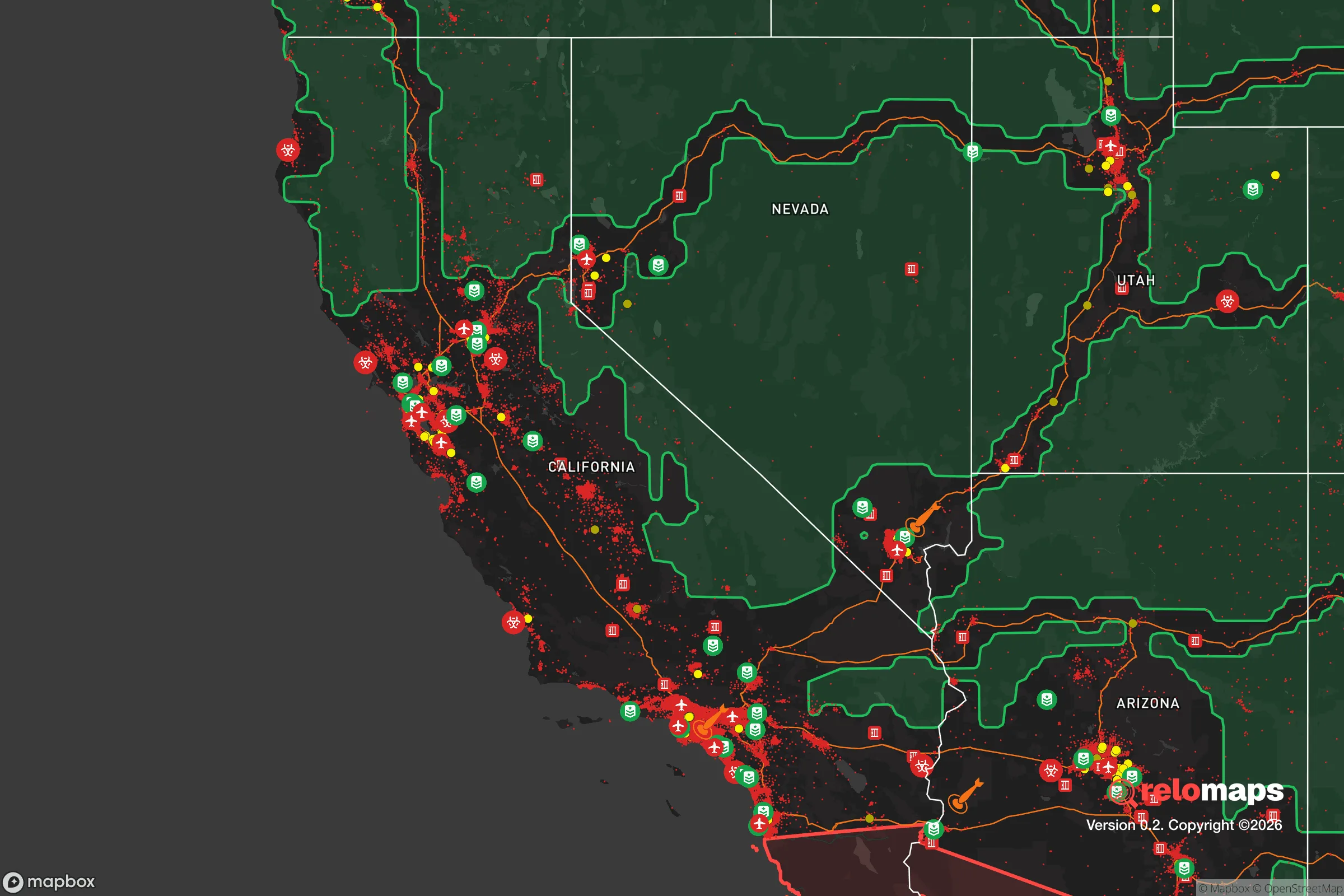


Important Note: For informational purposes only. This does not mean nothing bad ever happens in the green zones. Please use common sense. This is based on public data and modeled with AI. We tried to take a conservative approach but mistakes happen. We update this regularly as new information becomes available.
Solar Generator Recommendations
Backup power matters more here than in safer locations. We've picked three solar generators across budgets and capacity tiers — start with the budget unit if you only need a few essentials, or step up if you want to run a fridge and HVAC for days at a time.

Jackery Portable Power Station Explorer 300
Budget OptionPower on the Go: Weighing only 11 lbs, it's convenient to set up and store with book-sized foldable solar panels

BLUETTI Portable Power Station AC180
Designed for both indoor and outdoor scenarios, AC180 is highly capable as it has a robost capacity and continuous output power.

EF ECOFLOW DELTA Pro Ultra Power Station
Upgraded PickEcoFlow DELTA Pro Ultra is a whole-home energy system designed to grow with your family. Integrated with the Smart Home Panel 2, it scales to meet your evolving energy needs — keeping your home powered, intelligent, and secure through every stage of life.
We earn a commission, at no additional cost to you.
Strategic Assessment Analysis
Oakland, California, presents a deeply contradictory picture for the conservative-leaning prepper or survivalist. On one hand, its location on the eastern shore of San Francisco Bay offers significant natural advantages in terms of water access, temperate climate, and proximity to fertile agricultural regions. On the other, it sits at the epicenter of some of the most politically volatile, high-density, and infrastructure-strained urban environments in the United States. For a relocator prioritizing long-term resilience, self-sufficiency, and security, Oakland is not a destination in itself but a case study in what to avoid—and a potential logistical hub to be used only under specific, short-duration circumstances. The city’s strategic value is almost entirely negative: it is a high-risk, high-exposure zone that demands a clear-eyed assessment of its vulnerabilities before any serious relocation consideration.
Geographic position and natural advantages: A coastal hub with serious trade-offs
Oakland’s geography is a double-edged sword. It sits on a deep-water port, one of the busiest in the nation, which gives it direct access to global supply chains—a plus for trade but a massive target for disruption during civil unrest or a major supply chain collapse. The city is flanked by the San Francisco Bay to the west and the Oakland Hills to the east, providing a natural barrier that could theoretically slow an uncontrolled urban exodus. The climate is Mediterranean, meaning mild, wet winters and dry summers, which reduces the risk of extreme weather events like blizzards or hurricanes but does nothing to mitigate the region’s primary natural threat: earthquakes. The Hayward Fault runs directly through the eastern part of the city, and a major rupture would devastate infrastructure, including water, gas, and transportation lines. For a prepper, the Bay Area’s temperate climate is a genuine asset for year-round gardening and outdoor survival, but the seismic risk is a constant, non-negotiable liability. The surrounding hills offer some defensible terrain, but they are also prime wildfire zones, as seen in the 1991 Oakland firestorm and subsequent events. In short, the natural advantages are real but heavily outweighed by the region’s inherent instability.
Risks, exposures, and proximity to fallout-relevant landmarks
From a survivalist perspective, Oakland’s proximity to high-value, high-risk targets is its most damning feature. The city is within a 30-minute drive of San Francisco’s financial district, Silicon Valley’s tech campuses, and the Port of Oakland—all prime targets for cyberattacks, civil unrest, or even a coordinated mass casualty event. The Bay Area is home to multiple military installations, including Travis Air Force Base and the Naval Air Station Lemoore, which, while not in Oakland itself, are within a 100-mile radius and could become focal points during a national emergency. The region’s dense population—over 7 million in the Bay Area—means that any major disruption would trigger a chaotic, resource-depleting scramble for safety. Oakland’s own crime statistics are sobering: property crime rates are among the highest in the nation, and violent crime, while down from its 1990s peak, remains a persistent concern. For a relocator, the risk of being caught in a mass casualty event—whether from a targeted attack on a major bridge (the Bay Bridge and San Mateo Bridge are both nearby), a coordinated power grid failure, or a civil disturbance—is unacceptably high. The city’s political climate, with its progressive policies on policing, homelessness, and public safety, further erodes the sense of security that a conservative-leaning individual would seek. Simply put, Oakland is a high-exposure zone with multiple, overlapping vulnerabilities that make it a poor choice for long-term strategic relocation.
Practical resilience for a relocator: Food, water, energy, and defensibility
For the prepper evaluating Oakland’s practical resilience, the picture is grim. The city’s water supply is heavily dependent on the Hetch Hetchy system, a single aqueduct that crosses the Hayward Fault and is vulnerable to both earthquake damage and sabotage. A major seismic event would likely cut off water to the entire East Bay for weeks or months. Food security is equally fragile: while the Bay Area has some local farms and farmers’ markets, the vast majority of food is trucked in from the Central Valley and beyond. A fuel shortage or highway closure would empty grocery shelves within days. Energy infrastructure is similarly brittle—PG&E’s aging grid is prone to public safety power shutoffs (PSPS) during high-wind events, and a coordinated attack on substations could leave large swaths of the city dark for extended periods. Defensibility is poor: Oakland is a dense, sprawling urban environment with few natural chokepoints. The Oakland Hills offer some high ground, but they are also a fire trap and are already heavily developed. For a single individual or family, the best-case scenario is a well-stocked, fortified home in the hills with a backup water source, solar panels, and a defensible perimeter—but even that is a gamble given the city’s overall instability. The cost of real estate in Oakland is astronomical, meaning that the same budget would buy a far more resilient property in a lower-risk area like the Sierra Nevada foothills or the Pacific Northwest. For the relocator, Oakland’s practical resilience is a net negative: it is a place to pass through, not to settle.
The overall strategic picture for Oakland is clear: it is a high-risk, high-exposure urban environment that offers few genuine advantages for the conservative-leaning prepper or survivalist. Its natural assets—a temperate climate, water access, and fertile surroundings—are real but are overwhelmed by the region’s seismic vulnerability, political instability, and proximity to high-value targets. For a single individual or family prioritizing long-term resilience, self-sufficiency, and security, Oakland is not a viable destination. The city’s best use is as a logistical node for short-term supply runs or as a warning example of what happens when urban density, political dysfunction, and infrastructure fragility converge. If you are serious about strategic relocation, look inland, look uphill, and look away from the Bay Area’s fault lines and fault lines of a different kind. Oakland is a place to monitor, not to move to.

* Values derived from national, state, county, city and local statistics and may differ in a specific area. Last updated: 2026-04-24T13:15:54.000Z
Narrative content on this page is AI-generated and may contain mistakes. Verify any details that matter before acting on them.
ReloMaps may earn a commission from affiliate links at no extra cost to you.

