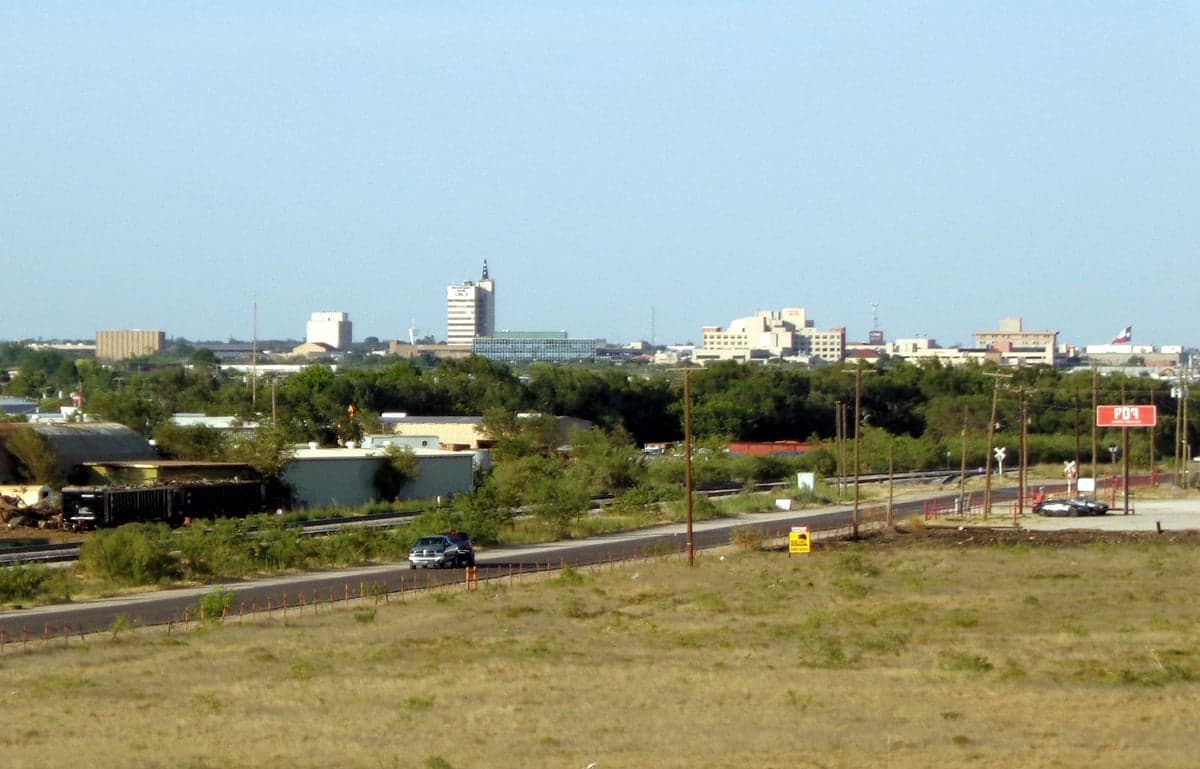
Photo: Wikipedia
Quality of Life in Odessa, TX
A high quality of life with strong walkability, manageable living costs, healthy neighborhood signals, and solid amenity access.
What does Quality of Life tell us?
Quality of Life blends cost of living, nearby amenities, socioeconomic signals, and neighborhood character. City-level scores represent the whole municipality; individual neighborhoods can differ.
What does this tell us?
Quality of Life blends cost of living, nearby amenities, socioeconomic signals, and neighborhood character. City-level scores represent the whole municipality; individual neighborhoods can differ.
Cost of Living
2% below national average
The Real Cost of Living in Odessa, TX for 2026
| Tier | Individual | Family (4) |
|---|---|---|
| Survival | $21k | $40k |
| Comfortable | $40k | $59k |
| Luxury | $118k+ | $182k+ |
| Elite (Top 5%) | $138k+ | $214k+ |
123%
The Area Signal
A metric tracking the socioeconomic signals of the area.
Hobbies
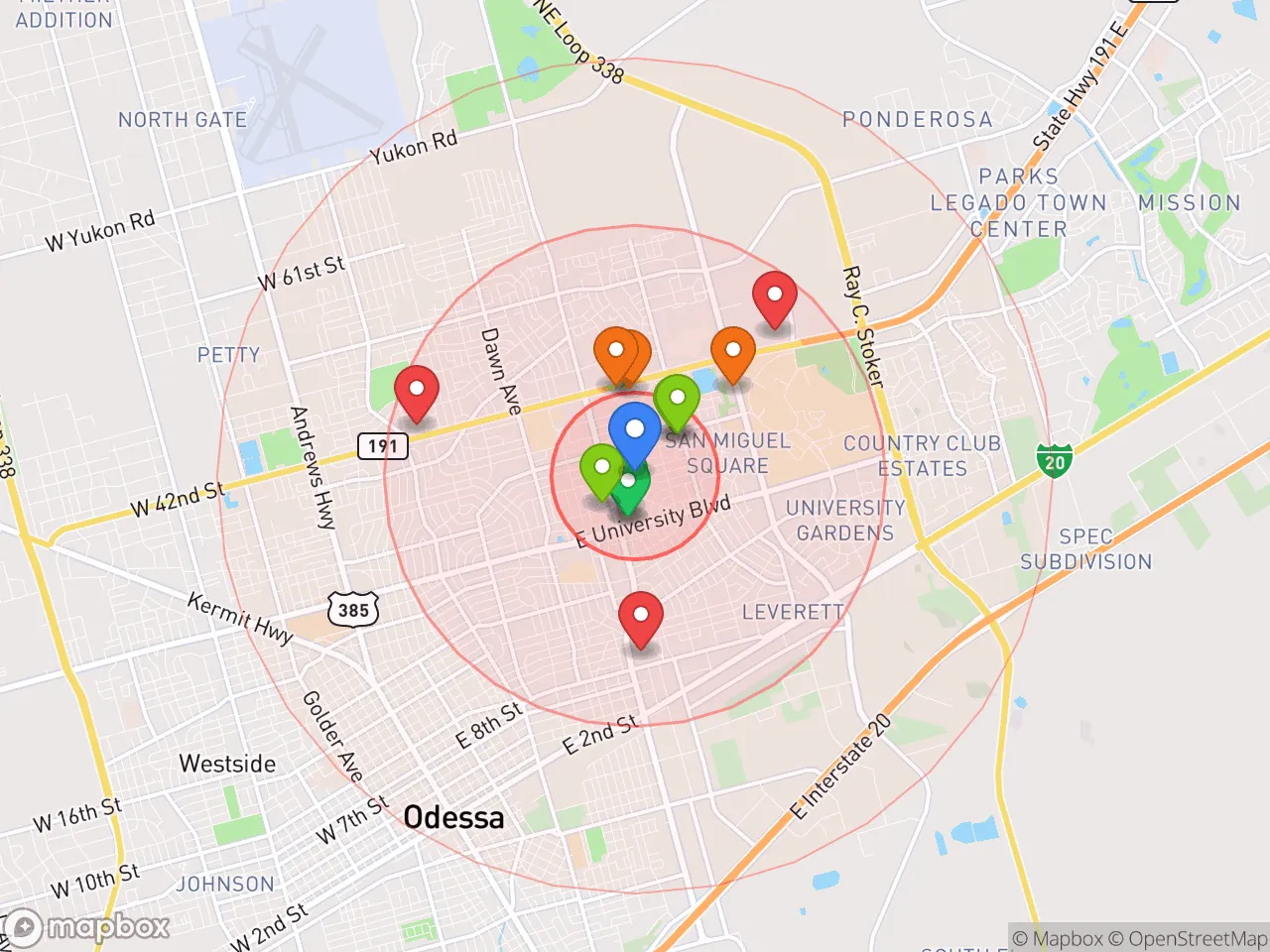
Explore the areaGroceries
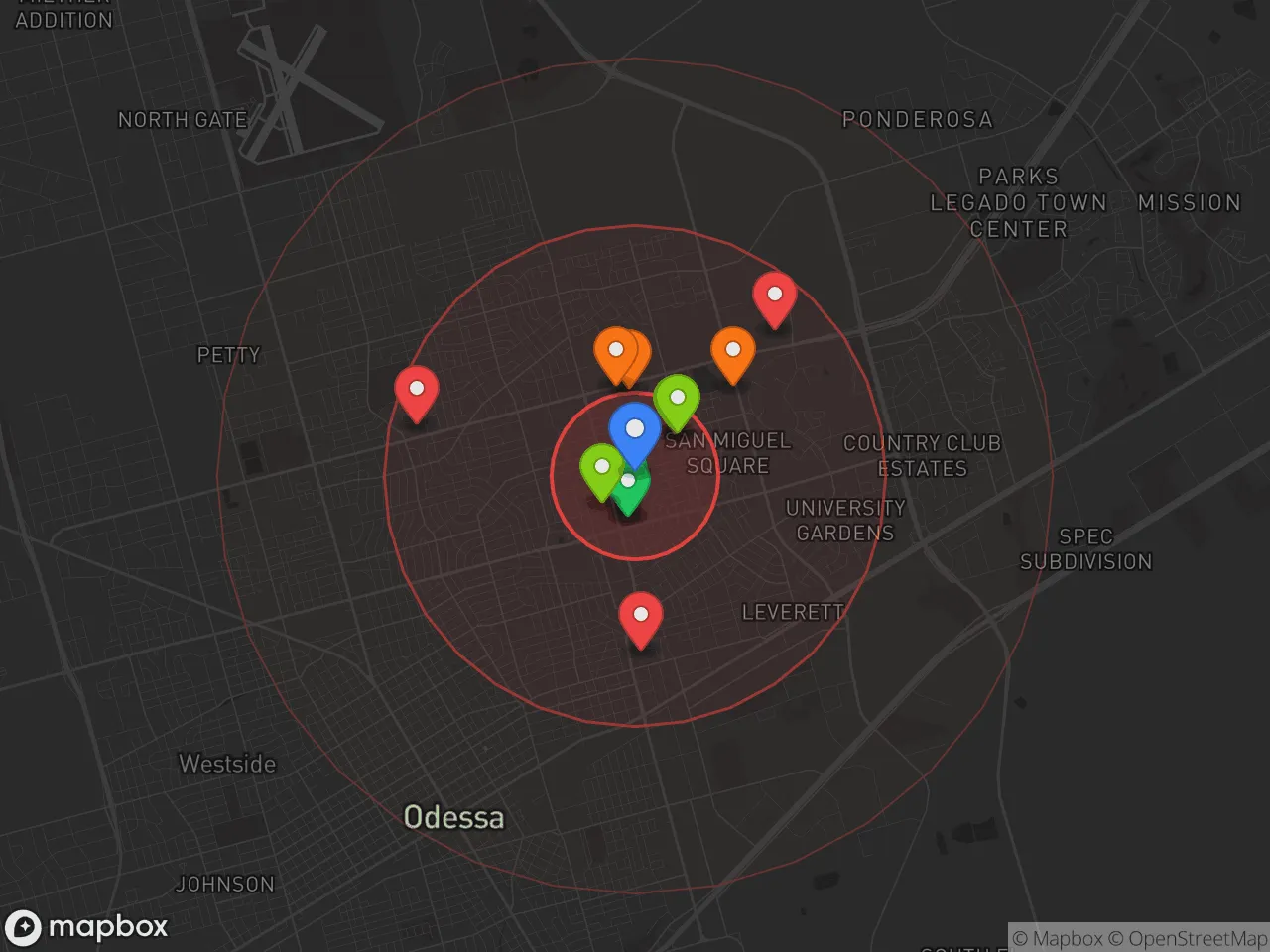
6 within 10 miles
Gas
20 within 10 miles
Hospital
9 within 20 miles
Airport
SAN — San Angelo Regional
Post Office
USPS — Odessa, TX
Critical Amenities
Quality-of-Life Analysis
Odessa, Texas, presents a quality of life defined by its role as the economic engine of the Permian Basin, attracting a workforce of oilfield professionals, engineers, and tradespeople who prioritize high earning potential over coastal amenities. With a cost of living index of 98—slightly below the U.S. average—the city offers a tangible financial advantage for those employed in the energy sector, though this affordability comes with trade-offs in public services and recreational infrastructure. The population skews younger and more transient than the state average, with a median age of 31, reflecting the influx of workers drawn by six-figure salaries in drilling and production. This is a community built around shift work, industrial schedules, and a no-nonsense ethos, where the boom-and-bust cycle of oil prices directly shapes daily life and long-term planning.
Cost of living, housing affordability, and how Odessa compares to Midland
Odessa’s cost of living index of 98 is deceptive: while it sits below the national baseline, housing costs have risen sharply since 2020, driven by oil-driven demand. The median home value of $208,000 is roughly 30% lower than neighboring Midland’s median of $295,000, making Odessa the more attainable entry point for first-time buyers and rental households. Median rent of $1,322 is about $200 less than in Midland, though it still consumes roughly 28% of the median household income of $57,000—a ratio that strains budgets when oil prices dip. Property taxes in Ector County average 2.1% of assessed value, slightly higher than the Texas median, which adds roughly $4,400 annually to the cost of a median-priced home. Compared to larger Texas metros like Austin (COL index 130) or Dallas (105), Odessa remains a relative bargain, but the gap is narrowing as new apartment complexes and subdivisions struggle to keep pace with population growth.
What daily life is like for families: schools, amenities, and local rhythm
Daily life in Odessa revolves around the oilfield schedule, with many residents working 12-hour shifts on a two-weeks-on, one-week-off rotation. The Ector County Independent School District serves roughly 34,000 students, with Odessa High School and Permian High School—immortalized in Friday Night Lights—anchoring community identity through football. However, the district’s overall rating on GreatSchools is 4 out of 10, with only two elementary schools (Goliad and Noel) scoring above 7, prompting many families to consider private options like St. Mary’s Catholic School or Trinity School of Midland. Amenities are utilitarian: the Odessa Marriott Hotel and Convention Center hosts trade events, while the Ellen Noël Art Museum and the Presidential Museum offer modest cultural outlets. The city’s park system includes 22 parks, but the standout is the 42-acre McKinney Park with its splash pad and disc golf course. For outdoor recreation, residents drive 30 minutes to Monahans Sandhills State Park or 90 minutes to Big Bend National Park—a trade-off for the flat, arid landscape. The restaurant scene leans heavily toward Tex-Mex and steakhouse chains, with local favorites like La Margarita and the Barn Door providing reliable options for post-shift dinners.
Odessa is best suited for individuals and families who prioritize financial stability and career growth in energy over cultural diversity or walkable urbanism. The city rewards those who can tolerate extreme heat (average 100°F in July), limited public transit, and a social calendar dominated by high school sports and church events. Retirees may find the low cost of living appealing, but the lack of specialized healthcare—the nearest Level I trauma center is in Lubbock, 120 miles away—is a drawback. Young professionals in the oil and gas supply chain, along with tradespeople in welding and heavy equipment operation, will find the strongest economic fit. For anyone seeking a slower pace with direct access to six-figure incomes and a tight-knit community, Odessa delivers—provided they accept that the nearest Whole Foods is 300 miles away in Dallas.

Crime in Odessa, TX
Generally safer than 57% of comparable U.S. locations.
Violent CrimeViolent Crime Analysis
Property CrimeProperty Crime Analysis
Crime Analysis
Odessa, Texas, reports a violent crime rate of 282.6 incidents per 100,000 residents and a property crime rate of 1,147.8 per 100,000, according to the most recent FBI Uniform Crime Reporting data. While these figures place Odessa below the national average for violent crime, the property crime rate is notably higher than both the Texas and U.S. averages. The overall safety picture is mixed: residents face a lower risk of violent offenses like homicide and aggravated assault compared to many peer cities, but property crimes—particularly theft and burglary—are a persistent concern that shapes daily life.
Crime in context
When measured against state and national benchmarks, Odessa’s violent crime rate of 282.6 per 100,000 is approximately 20% lower than the national average of roughly 380 per 100,000. However, the property crime rate of 1,147.8 per 100,000 exceeds the national average by about 10% and is significantly above the Texas statewide average of roughly 2,500 per 100,000 (though Texas property crime rates vary widely by region). The city’s crime profile reflects its status as a mid-sized oil-patch hub in the Permian Basin, where economic booms and busts can influence theft and vandalism patterns. It is important to note that Odessa is not part of a large, liberal-leaning metropolitan area with progressive prosecutors; the Ector County District Attorney’s office operates under a conservative judicial philosophy that emphasizes enforcement and victim advocacy, which may contribute to the lower violent crime figures relative to similarly sized cities in more progressive jurisdictions.
What residents experience
For Odessa residents, property crime is the most tangible safety issue. Vehicle burglaries, package theft, and residential burglaries are the most commonly reported offenses, particularly in areas near major thoroughfares like Interstate 20 and East 8th Street. Violent crime, while less frequent, tends to be concentrated in specific contexts—domestic disputes and arguments escalating into assaults—rather than random stranger attacks. The Odessa Police Department maintains a visible presence through community policing initiatives and a dedicated crime analysis unit, which has helped keep clearance rates for violent offenses above the state median. Residents in newer subdivisions on the west side of town generally report fewer incidents than those in older, denser neighborhoods near downtown or the industrial corridors.
Neighborhood-level variation is pronounced. Areas west of Grandview Avenue and north of 42nd Street, including the Stonegate and Mission Village subdivisions, consistently report lower crime rates. In contrast, the central corridor along Andrews Highway and sections near the University of Texas Permian Basin campus see higher volumes of property crime, though violent incidents remain rare. The city’s relatively compact geography means that most residents can avoid high-crime pockets by choosing housing in the growing western or southern fringes. Overall, Odessa offers a safety profile that is favorable for a Texas city of its size, provided newcomers take standard precautions against property crime.
* Values derived from national, state, county, city and local statistics and may differ in a specific area. Last updated: 2026-10-10T16:28:34.000Z
Narrative content on this page is AI-generated and may contain mistakes. Verify any details that matter before acting on them.
ReloMaps may earn a commission from affiliate links at no extra cost to you.

