Photo: Wikipedia
Strategic Assessment of Odessa, TX
Workable tactical position. Some exposure to population density or targets, but generally defensible in a crisis.
What does the Strategic Assessment tell us?
Our Strategic Assessment grades tactical survivability of an area. Major population centers, military targets, fallout zones, natural disasters, and border exposure all drive risk — lower exposure means a more defensible position in a crisis.
This is heavily inspired by Joel Skousen's Strategic Relocation book. Highly recommended you checkout the book ($)What does this tell us?
Our Strategic Assessment grades tactical survivability of an area. Major population centers, military targets, fallout zones, natural disasters, and border exposure all drive risk — lower exposure means a more defensible position in a crisis.
This is heavily inspired by Joel Skousen's Strategic Relocation book. Highly recommended you checkout the book ($)Strategic Pillars

Key Distances
Regional Safe Places
Below is our recommended "safe zones" in Texas and the surrounding area based on our strategic heuristics. For most people, it's unrealistic to live in a “safe zone” full-time due to work, family or other personal reasons. They tend to be more rural. However, many of these areas are perfect for second homes and retreat properties that double as a vacation home or even a short-term rental.

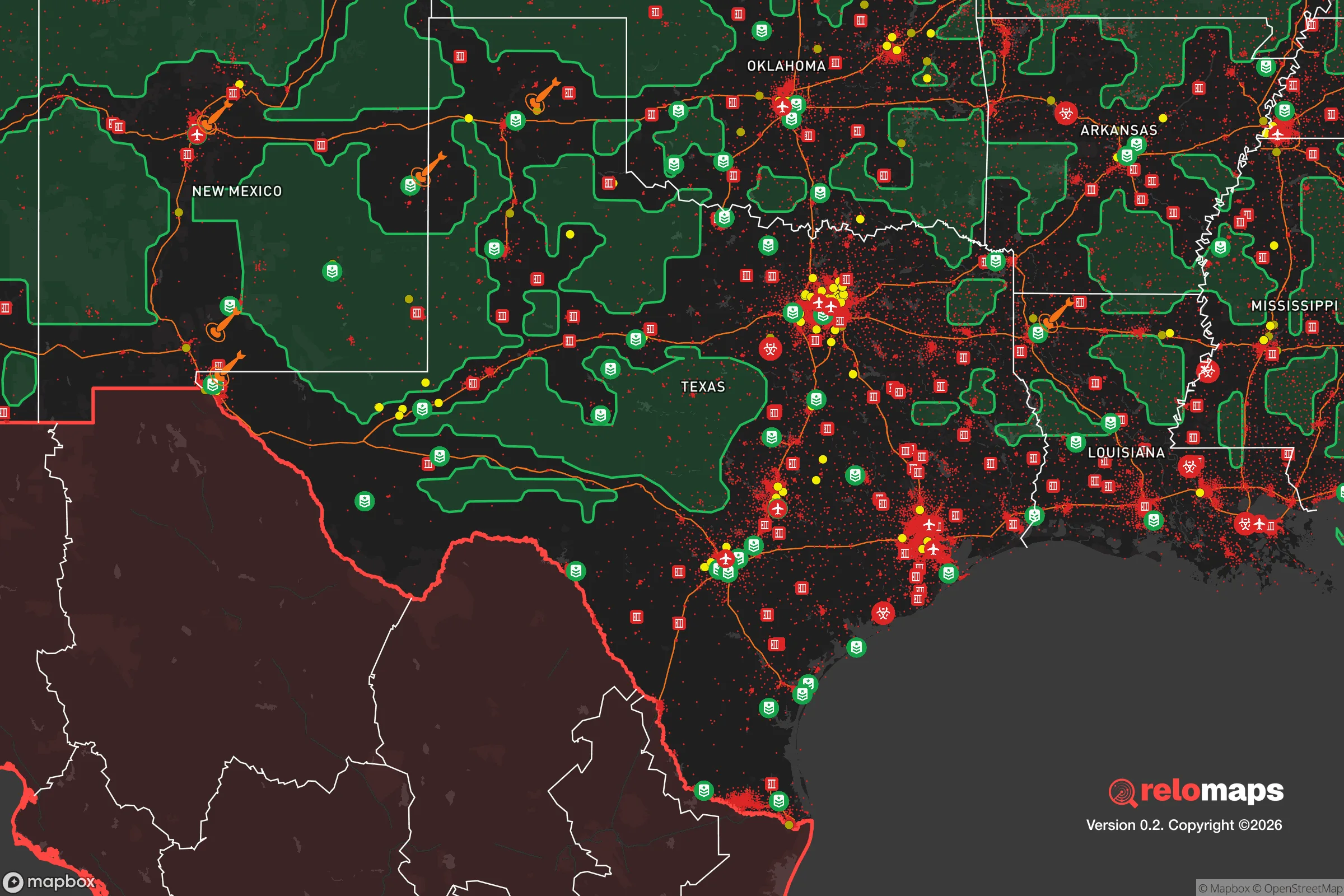


Important Note: For informational purposes only. This does not mean nothing bad ever happens in the green zones. Please use common sense. This is based on public data and modeled with AI. We tried to take a conservative approach but mistakes happen. We update this regularly as new information becomes available.
Solar Generator Recommendations
Backup power matters more here than in safer locations. We've picked three solar generators across budgets and capacity tiers — start with the budget unit if you only need a few essentials, or step up if you want to run a fridge and HVAC for days at a time.

Jackery Portable Power Station Explorer 300
Budget OptionPower on the Go: Weighing only 11 lbs, it's convenient to set up and store with book-sized foldable solar panels

BLUETTI Portable Power Station AC180
Designed for both indoor and outdoor scenarios, AC180 is highly capable as it has a robost capacity and continuous output power.

EF ECOFLOW DELTA Pro Ultra Power Station
Upgraded PickEcoFlow DELTA Pro Ultra is a whole-home energy system designed to grow with your family. Integrated with the Smart Home Panel 2, it scales to meet your evolving energy needs — keeping your home powered, intelligent, and secure through every stage of life.
We earn a commission, at no additional cost to you.
Strategic Assessment Analysis
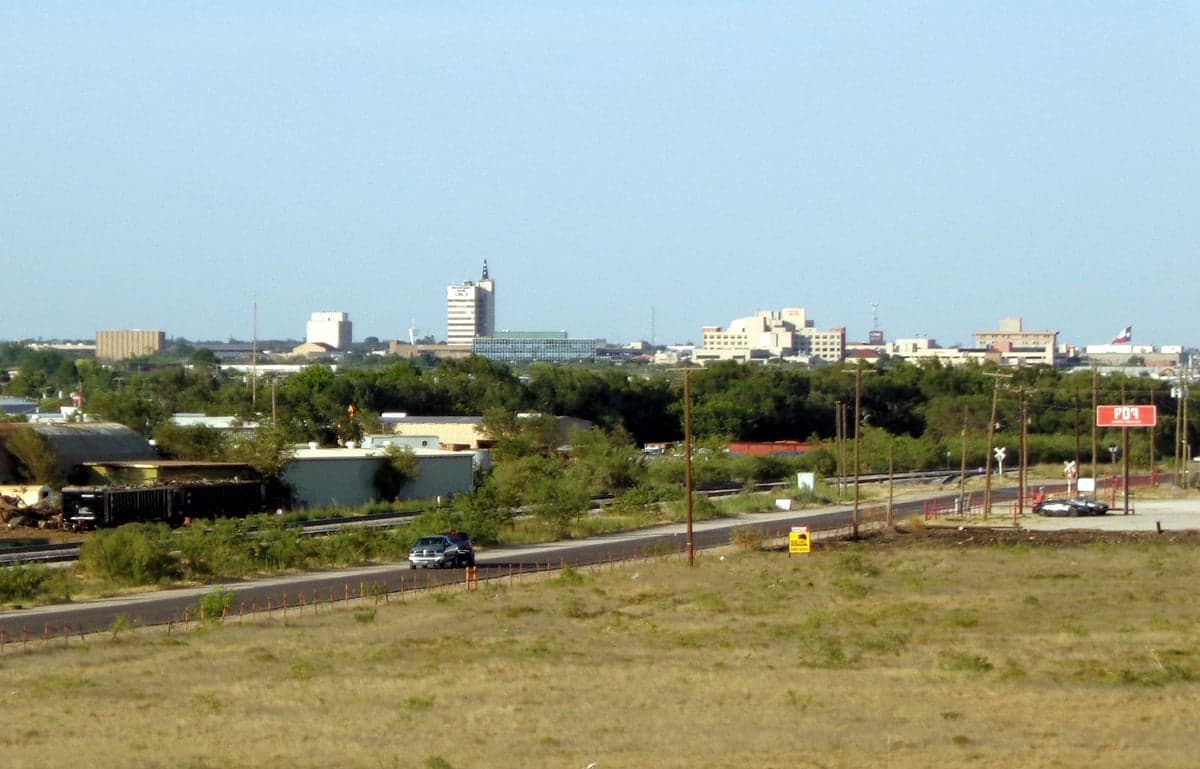
Odessa, Texas, occupies a strategic position in the Permian Basin that offers a distinct set of advantages for those prioritizing resilience and self-sufficiency in an uncertain future. Its location roughly 300 miles inland from the Gulf Coast, combined with a semi-arid climate and low population density relative to major metros, creates a buffer against many of the cascading failure modes that threaten coastal and urban centers. For a relocator assessing long-term survivability—whether from economic collapse, civil unrest, or large-scale natural disasters—Odessa presents a mixed but ultimately compelling case: strong on energy independence and geographic isolation, but with real exposure risks tied to its industrial base and proximity to critical infrastructure.
Geographic position and natural advantages for long-term survival
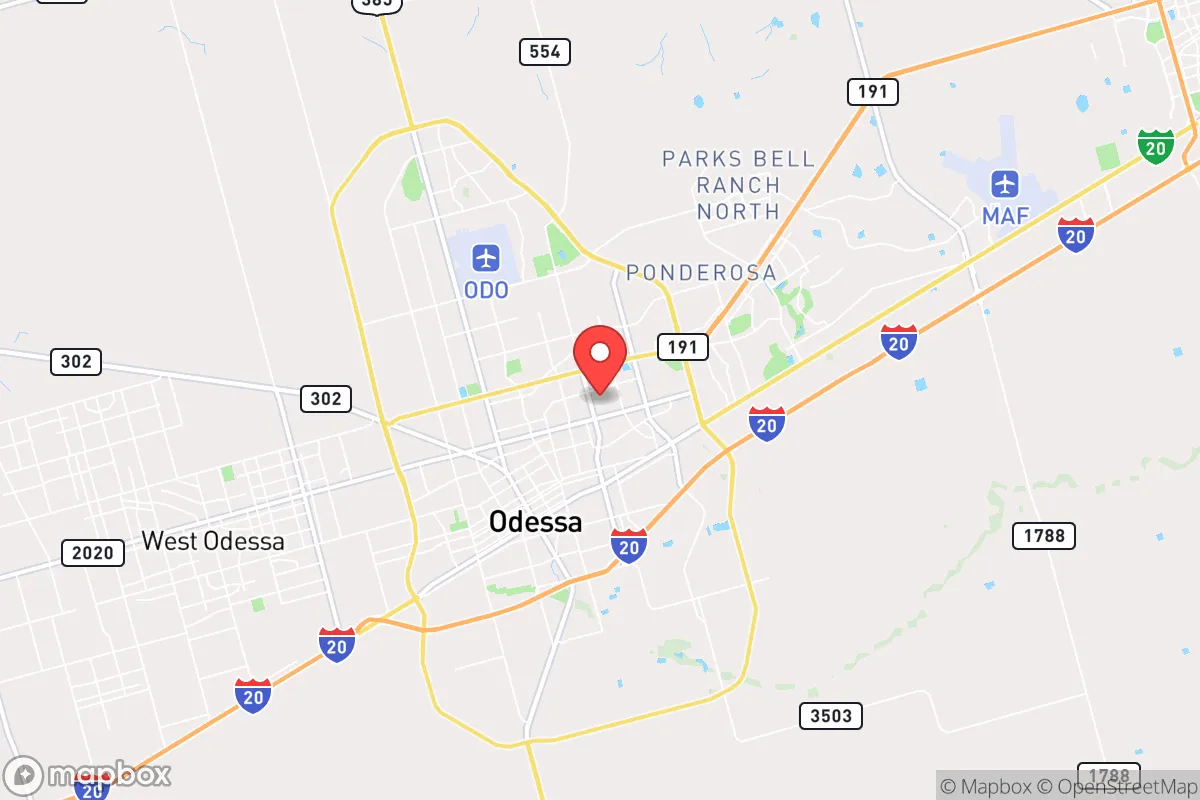
Odessa’s primary resilience asset is its location. Situated in the high plains of West Texas, the city sits atop the Permian Basin, one of the most productive oil and natural gas fields in the world. This isn’t just an economic fact—it’s a survival hedge. In a scenario where national supply chains falter, the region’s energy production capacity means local fuel availability is likely to remain higher than almost anywhere else in the continental United States. The area’s semi-arid climate, with an average of less than 15 inches of rainfall per year, reduces risks from flooding, hurricanes, and mold-related infrastructure decay that plague Gulf Coast and Eastern Seaboard locations. The flat, open terrain also provides long sightlines, which is a tactical advantage for property defense and situational awareness. The nearest major population centers—El Paso (300 miles west), Dallas-Fort Worth (330 miles east), and San Antonio (280 miles southeast)—are far enough away that a collapse in those cities would not immediately spill over into Odessa. The city’s population of roughly 120,000 is small enough to avoid the worst of urban chaos, yet large enough to maintain essential services like hospitals, law enforcement, and grocery distribution under normal conditions.
Risks, exposures, and proximity to fallout-relevant landmarks
No strategic assessment is honest without confronting the downsides. Odessa’s industrial character is a double-edged sword. The Permian Basin is a national-level critical infrastructure target. In a conflict scenario—whether foreign or domestic—the concentration of oil and gas extraction, refining, and pipeline hubs makes the region a plausible target for sabotage, cyberattack, or kinetic strikes. The nearby Pantex Plant in Amarillo (about 300 miles north) is the nation’s primary nuclear weapon assembly and disassembly facility. While not close enough to be in a direct blast zone, a major incident there could produce fallout patterns that, depending on wind, might affect West Texas. Additionally, the Permian Basin’s extensive network of injection wells and pipelines presents a non-trivial risk of industrial accidents—chemical releases, fires, or explosions—that could temporarily render parts of the area uninhabitable. The city’s water supply, drawn largely from the Ogallala Aquifer and local reservoirs, is finite and subject to depletion, a concern that grows with drought cycles. For the prepper mindset, the proximity to Midland (20 miles east) means that any major event at Midland International Air & Space Port—a regional hub for military and energy-sector flights—could create secondary risks from air traffic or security responses.
Practical resilience for a relocator: food, water, energy, and defensibility
For a single individual or family looking to establish a resilient homestead, Odessa offers several concrete advantages. Energy is abundant and cheap. The local grid is served by the Electric Reliability Council of Texas (ERCOT), which, despite its well-publicized failures during Winter Storm Uri in 2021, has since seen significant investment in winterization and distributed generation. Many homes in the area already have natural gas hookups, and solar panel installation is viable given the region’s high solar insolation—over 5.5 peak sun hours per day on average. Water is the critical vulnerability. The Ogallala Aquifer is being drawn down faster than it recharges, and municipal water supplies are subject to the same pressures. A relocator should plan for rainwater catchment (average 12–15 inches/year) and deep-well drilling if on rural acreage. The soil is caliche-heavy and not ideal for traditional gardening, but raised beds with imported soil and drip irrigation can produce vegetables through the long growing season (March through November). Defensibility is mixed: the flat terrain offers good visibility but limited natural cover. A property on the outskirts—say, west of Highway 385 or south of I-20—provides more isolation and room for perimeter security than in-town lots. The local gun culture is strong, with multiple ranges and gun shops, and Texas law is favorable for concealed and open carry. For community resilience, Odessa has a robust network of churches, volunteer fire departments, and a local chapter of the Texas State Guard, all of which can serve as mutual-aid nodes in a crisis.
The overall strategic picture for Odessa is one of trade-offs. It is not a bug-out paradise—the industrial exposure and water constraints are real liabilities. But for someone who wants to be within a day’s drive of major medical and logistical hubs while maintaining a low profile in a resource-rich, politically conservative environment, it is a strong candidate. The city’s economy is cyclical with oil prices, which means a relocator should have a plan for downturns—whether through remote work, a trade skill, or a paid-off property. The cultural and political climate aligns with a self-reliant, firearms-friendly, community-oriented worldview. If you can secure a water source, harden your home against the occasional dust storm and heat wave, and accept that the nearest Whole Foods is 300 miles away, Odessa offers a realistic foundation for weathering the storms ahead—both literal and societal.

* Values derived from national, state, county, city and local statistics and may differ in a specific area. Last updated: 2026-10-10T16:28:34.000Z
Narrative content on this page is AI-generated and may contain mistakes. Verify any details that matter before acting on them.
ReloMaps may earn a commission from affiliate links at no extra cost to you.

