Photo: Wikipedia
Political ClimatePolitical Climate in Odessa, TX
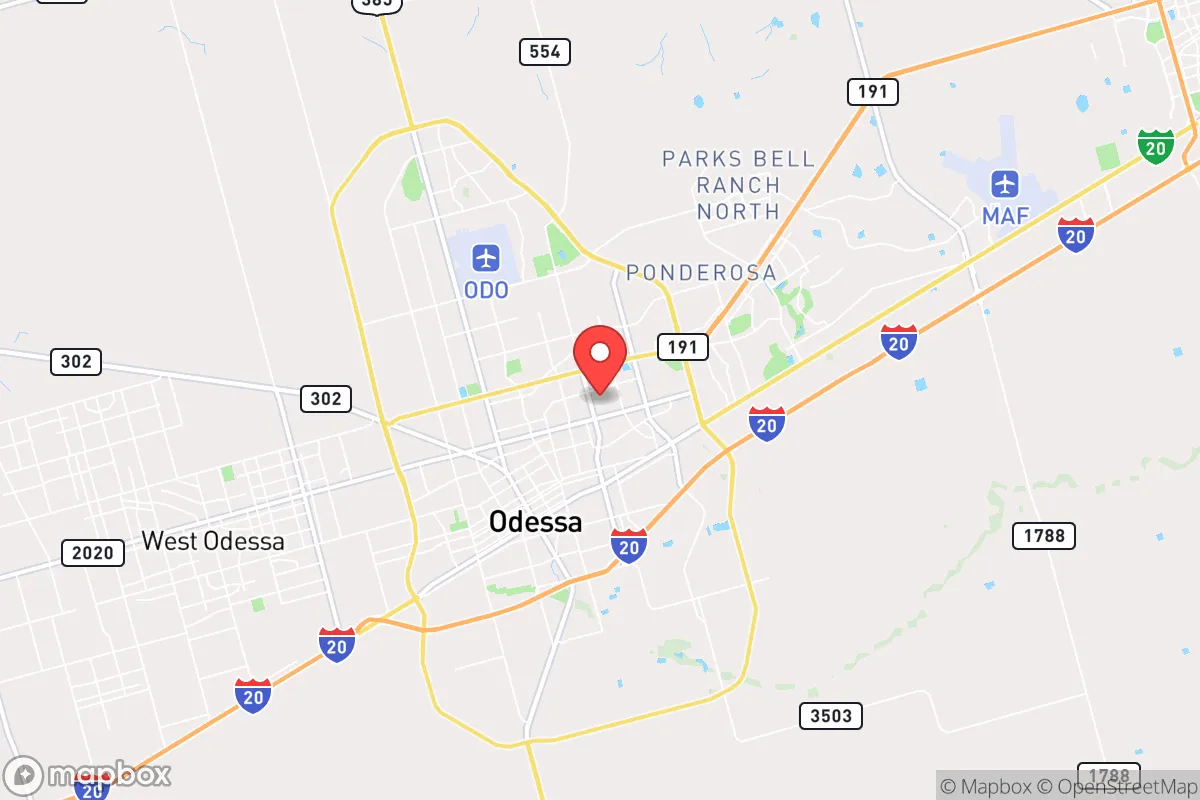
District shown is the primary district for this city’s centroid. Cities may span multiple districts.
Local Political AnalysisPolitical Analysis of Odessa, TX
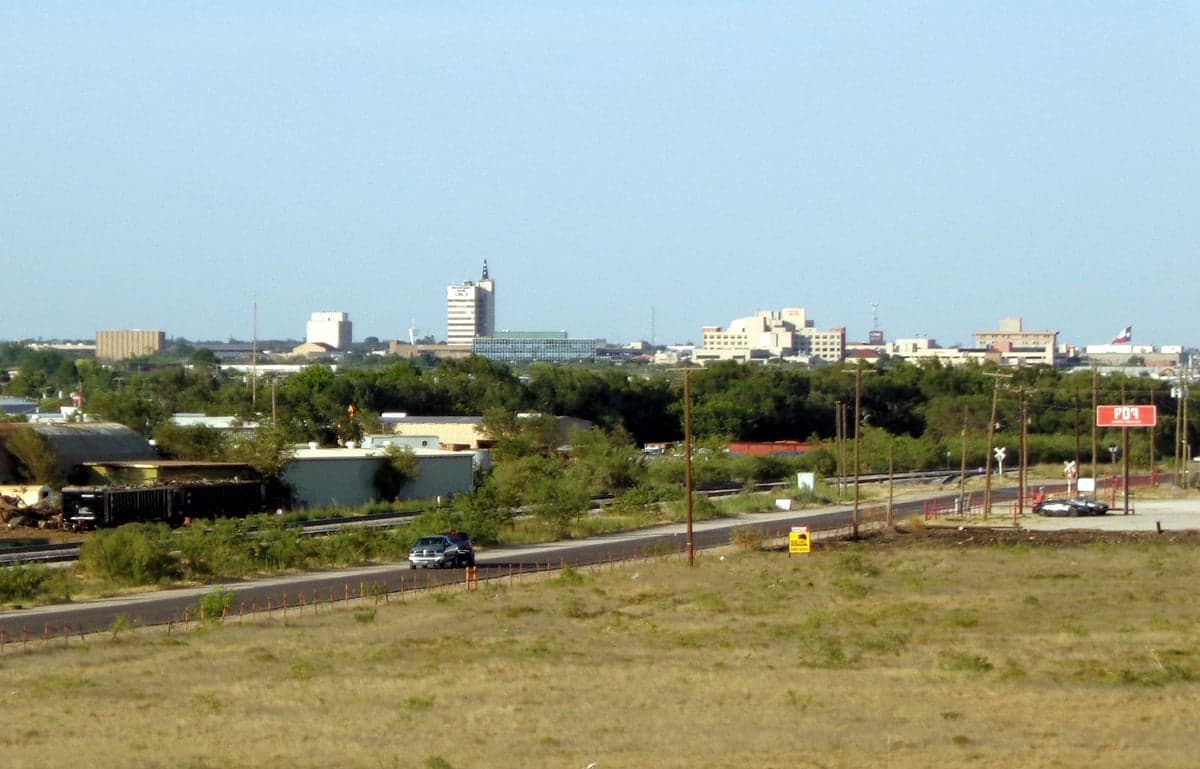
Odessa, Texas, sits deep in the heart of the Permian Basin, and politically, it’s about as red as the dirt out here. The Cook Partisan Voting Index (PVI) clocks it at R+22, which means the district is 22 points more Republican than the national average. That’s not a fluke—it’s a reflection of generations of folks who believe in limited government, personal responsibility, and keeping Washington out of our oil fields and our backyards. If you’ve lived here a while, you’ve watched the town hold steady through boom-and-bust cycles, and the political compass hasn’t budged much. But lately, there’s a quiet undercurrent of concern: some of the younger transplants from blue states are bringing ideas that don’t quite fit the local grain, and a few city council races have gotten a little too close for comfort. The trajectory is still solidly conservative, but it’s not automatic anymore—you have to pay attention.
How it compares
Drive 20 miles east to Midland, and you’ll find a similar vibe—R+22 there too—but Midland’s politics feel a bit more polished, more corporate, with a Chamber of Commerce sheen. Odessa is grittier, more blue-collar, and frankly, more suspicious of anyone telling us how to live. Head south to Fort Stockton or west to Pecos, and you’re in even deeper red territory, but those towns are smaller and less diverse. The real contrast is if you go north to Lubbock or east to Abilene—those are conservative, sure, but they’ve got a more suburban, college-town feel. Odessa is still the place where a man’s word and a handshake matter more than a government mandate. The surrounding Ector County votes reliably Republican, but we’ve seen a few precincts near the university shift left in recent cycles, which is a warning sign if you ask me. That’s where the progressive ideas tend to creep in—through the academic crowd and the oilfield newcomers who don’t understand why we don’t want more regulations on everything from drilling to school curriculum.
What this means for residents
For the average Odessan, the political climate means you can still live your life without a lot of government interference—for now. Property taxes are a sore spot, but that’s a Texas-wide issue, not a local one. The real concern is the slow erosion of local control. We’ve seen attempts to bring in “equity” programs in the schools and zoning changes that sound like they’re about “affordable housing” but really just open the door for more government oversight of private property. If you’re a gun owner, a small business operator, or just someone who doesn’t want a mask mandate or a vaccine passport, Odessa is still a safe harbor. But you can’t take it for granted. The city council has held the line on most issues, but every election cycle brings a new slate of candidates who talk about “diversity and inclusion” in ways that sound an awful lot like top-down social engineering. Long-term, if the oil industry keeps attracting workers from California and Colorado, we could see a slow shift. It won’t happen overnight, but it’s something to keep an eye on.
Culturally, Odessa still flies the flag high—literally and figuratively. You’ll see more American flags than rainbow flags, and the local churches are still the social backbone. The policy distinctions that matter here are things like the Second Amendment sanctuary resolution the county passed a few years back, and the school board’s refusal to adopt critical race theory curricula. There’s a strong sense that the government closest to the people is the best government, and any move toward state or federal overreach is met with pushback. The Permian Basin is the engine of the Texas economy, and Odessa knows it. That gives us a certain leverage, but it also makes us a target for outside interests who want to change the way we live. If you’re looking for a place where your freedoms are still respected and your voice still counts, Odessa is it—but don’t expect it to stay that way without staying involved.

State Political ClimatePolitical Climate in Texas
State Political AnalysisPolitical Environment in the State
Texas remains a solidly Republican state, but the margins have tightened noticeably over the past decade. In 2024, Donald Trump carried the state by roughly 9 points, down from 11 points in 2020 and 16 points in 2016. The dominant coalition is still conservative—rural voters, suburban families, and energy-sector workers—but explosive growth in the blue-leaning metros of Austin, Dallas, and Houston is slowly reshaping the map. The long arc is a slow drift from deep red to lean red, with the state’s political future hinging on whether the suburbs hold or flip.
Urban vs. rural divide
The political geography of Texas is a tale of two worlds. The vast rural expanse—places like Lubbock, Abilene, and the Panhandle—votes overwhelmingly Republican, often by 70-80% margins. Meanwhile, the major urban cores are solidly Democratic. Harris County (Houston) went for Biden by 13 points in 2020, Dallas County by 16, and Travis County (Austin) by a staggering 50 points. The real battleground is the suburbs: Collin County (north of Dallas) voted for Trump by just 5 points in 2024, down from 14 in 2016. Tarrant County (Fort Worth) flipped to Biden in 2020 and stayed close in 2024. The Rio Grande Valley, once reliably Democratic, has shifted right—Hidalgo County went from +40 Clinton in 2012 to +8 Biden in 2020, a dramatic realignment driven by conservative Hispanic voters. El Paso remains a Democratic stronghold, but its influence is shrinking relative to the booming I-35 corridor.
Policy environment
Texas offers a policy environment that is broadly friendly to conservative priorities, though not without friction. The state has no income tax, a major draw for relocating families and businesses. Property taxes are high—averaging about 1.6% of assessed value—but the state’s homestead exemption and appraisal caps provide some relief. The regulatory posture is light: no state-level occupational licensing for many trades, and a business-friendly tort system that caps noneconomic damages in lawsuits. Education policy is a flashpoint: the state funds schools primarily through local property taxes, leading to wide disparities between wealthy suburbs and poorer rural districts. School choice legislation has been debated for years but has not passed, though a voucher-like program for special needs students was enacted in 2023. Healthcare is a mixed bag: Texas has the highest uninsured rate in the nation (about 17%), and the state has refused Medicaid expansion under the ACA. Election laws have tightened since 2021’s SB 1, which banned 24-hour and drive-through voting, added ID requirements for mail ballots, and gave partisan poll watchers more access. Abortion is effectively banned after six weeks under the 2021 Heartbeat Act (SB 8), with no exceptions for rape or incest. The state’s constitutional carry law (HB 1927, 2021) allows permitless carry of handguns for adults 21 and older.
Trajectory & freedom
On balance, Texas has expanded personal liberty in several key areas over the past five years, but there are worrying signs of government overreach. The 2021 permitless carry law was a clear win for gun rights. The 2023 parental rights law (HB 900) restricted sexually explicit content in school libraries and required parental consent for student pronoun changes. The 2023 ban on gender-affirming care for minors (SB 14) was another assertion of parental authority over medical decisions. However, the state has also moved aggressively on other fronts: the 2021 election law (SB 1) was criticized by some as a solution in search of a problem, adding bureaucratic hurdles to voting. The state’s near-total abortion ban has drawn national controversy and created a patchwork of enforcement that some residents find intrusive. Property rights remain strong—Texas has no state-level rent control, and eminent domain protections are robust—but rising property taxes have become a de facto constraint on homeownership. The state’s response to COVID-19 was notably hands-off: no statewide mask or vaccine mandates, and a 2021 executive order banned local governments from imposing them. This approach resonated with many conservatives, but it also highlighted the tension between local control and state preemption.
Civil unrest & political movements
Texas has seen its share of political flashpoints. The 2020 protests in Austin and Houston over George Floyd’s death were large but largely peaceful, though property damage occurred in downtown Austin. The 2021 winter storm blackouts sparked a political crisis, with Governor Greg Abbott facing criticism for the state’s isolated power grid (ERCOT). Immigration politics are a constant: the state has bused over 100,000 migrants to Democratic-led cities since 2022, and Operation Lone Star has deployed state troopers and National Guard to the border. The 2023 SB 4 law, which would allow state police to arrest and deport migrants, is currently tied up in court. Secession rhetoric is mostly fringe—the Texas Nationalist Movement has little mainstream support—but the idea of nullification has surfaced in debates over federal gun laws and environmental regulations. Election integrity remains a live issue: the 2020 election in Texas was widely seen as secure, but the 2022 primary saw some local disputes over ballot drop boxes and poll watcher access. A new resident would notice the heavy presence of political signage in suburban yards, the frequency of campaign mailers, and the occasional protest at the state capitol.
Projection
Over the next 5-10 years, Texas will likely remain Republican-controlled at the state level, but the margin will continue to shrink. The key demographic driver is in-migration: roughly 1,000 people move to Texas every day, many from blue states like California and New York. These newcomers tend to be younger, more diverse, and more moderate-to-liberal than the native population. The suburbs of Dallas-Fort Worth, Houston, and San Antonio are the battlegrounds—if they continue to shift left, statewide races could become competitive by 2030. The state’s growing Hispanic population is not a monolith: many are conservative on social issues but lean Democratic on economics, creating a volatile swing bloc. The Republican Party is likely to double down on cultural issues (abortion, transgender rights, school choice) to hold its base, while Democrats will focus on healthcare, education funding, and voting access. A new resident moving in now should expect a state that remains broadly conservative but is increasingly polarized, with the political temperature rising every election cycle.
For a new resident, the bottom line is this: Texas offers a low-tax, light-regulation environment with strong protections for gun rights and parental authority, but you’ll also contend with high property taxes, a strained healthcare system, and a political landscape that is becoming more contested. If you value personal freedom and limited government, you’ll find much to like—but don’t expect the political tranquility of a deep-red state. The culture wars are real here, and they’re fought in school boards, county commissions, and the state legislature. Choose your county carefully: Collin County feels different from Travis County, and the difference will only grow.
* Values derived from national, state, county, city and local statistics and may differ in a specific area. Last updated: 2026-10-10T16:28:34.000Z
Narrative content on this page is AI-generated and may contain mistakes. Verify any details that matter before acting on them.
ReloMaps may earn a commission from affiliate links at no extra cost to you.

