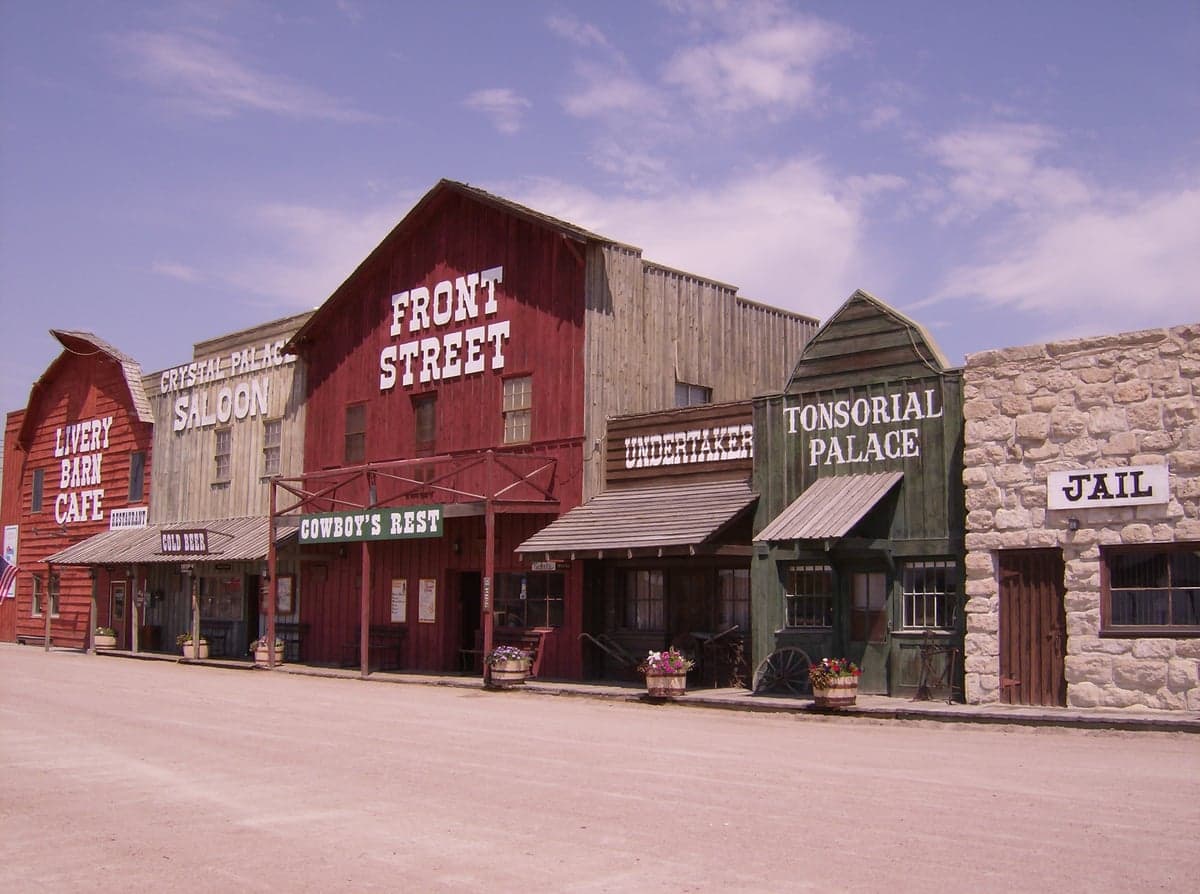
Photo: Wikipedia
Political ClimatePolitical Climate in Ogallala, NE
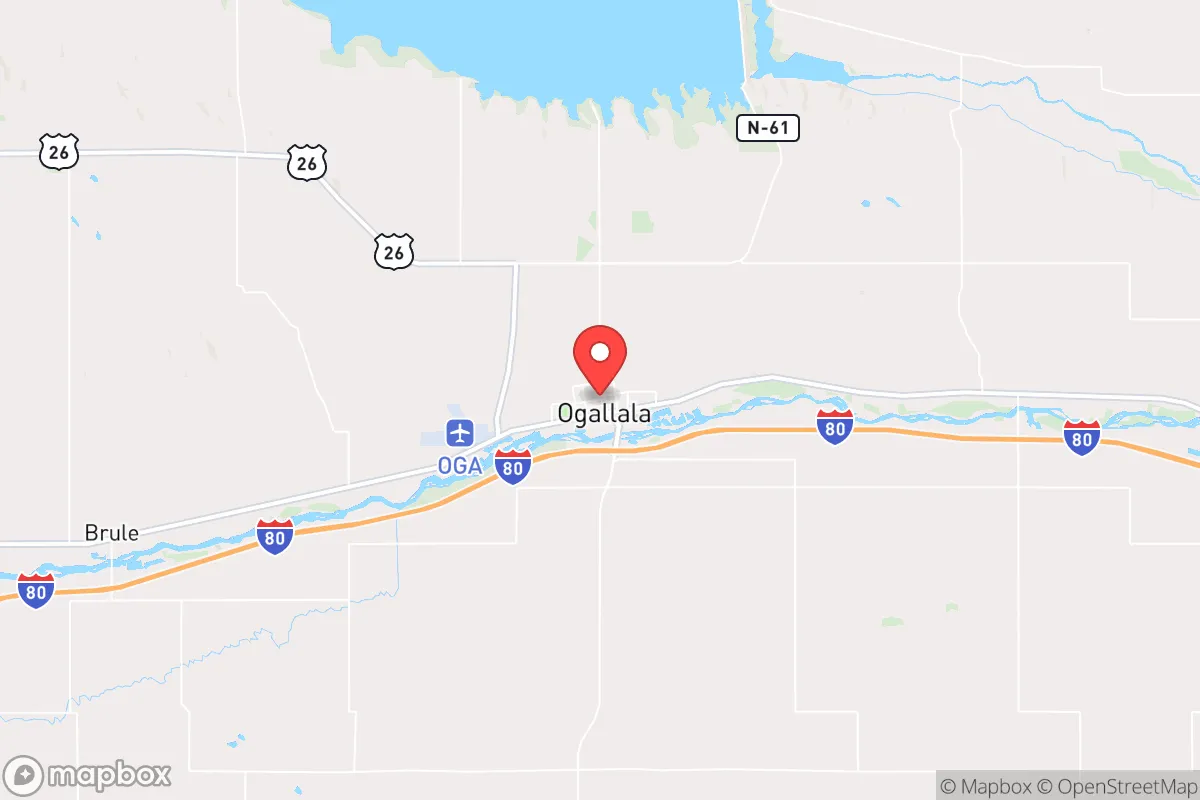
District shown is the primary district for this city’s centroid. Cities may span multiple districts.
Local Political AnalysisPolitical Analysis of Ogallala, NE
Ogallala is about as solidly conservative as it gets in Nebraska, with a Cook PVI of R+27 that puts it deep in the red column. That number isn't just a statistic—it reflects a community where traditional values and personal freedoms are still taken seriously, and where folks have a long memory of how things used to be before the government started poking its nose into every corner of life. The political trajectory here has been steady, with no real signs of shifting left, though you'll hear some grumbling about outside influences creeping in from places like Lincoln or Omaha.
How it compares
Compared to the rest of the state, Ogallala stands out as a conservative anchor. Drive east to North Platte, about 50 miles away, and you'll find a similar vibe—R+20 or so—but it's not quite as rock-ribbed. Head further east to Lincoln, and you're in a whole different world, where progressive policies on taxes and regulations have made life more complicated for working folks. Out here in the Panhandle, places like Scottsbluff and Chadron lean conservative too, but Ogallala feels more insulated from the coastal-style politics that have infected some of Nebraska's bigger towns. The contrast is stark: while Lincoln debates bike lanes and diversity initiatives, Ogallala is focused on keeping property taxes low and the Second Amendment intact.
What this means for residents
For residents, the political climate here means less government overreach in daily life. You won't see the kind of zoning battles or mask mandates that have plagued other parts of the country. The local county commission and city council are stacked with folks who understand that the best government is the one that stays out of your way. Property taxes are a perennial concern—everyone gripes about them—but compared to the tax-and-spend approach in places like Omaha, Ogallala is a breath of fresh air. The downside? If you're hoping for progressive shifts on things like renewable energy mandates or gun control, you'll be disappointed. That's not a bug; it's a feature for most of us who moved here to escape the chaos.
One cultural distinction worth noting is how Ogallala handles the tension between tradition and change. The town has a strong agricultural and ranching base, and that means a deep respect for private property rights and self-reliance. You'll see it in the way folks talk about land use—nobody wants the feds telling them what to do with their acreage. There's also a quiet but firm resistance to any hint of progressive ideology in the schools or local government. If a school board candidate starts talking about "equity" or "critical race theory," they get a polite but clear message: that stuff doesn't fly here. The long-term outlook is stable, but there's a watchful eye on the horizon. If the state legislature in Lincoln ever tries to push through more red tape or infringements on personal freedoms, you can bet Ogallala will be leading the charge to push back.

State Political ClimatePolitical Climate in Nebraska
State Political AnalysisPolitical Environment in the State
Nebraska has long been a reliably conservative state, but its political landscape is more layered than the simple "red state" label suggests. The state’s overall partisan lean is solidly Republican, with Donald Trump carrying the state by 19 points in 2020 and by a similar margin in 2024, but the real story is the growing urban-rural fissure and the quiet demographic shifts that could reshape the state over the next decade. For a conservative considering relocation, Nebraska still offers a strong foundation of fiscal restraint and traditional values, but the cracks are showing—especially in the state’s two major metro areas.
Urban vs. rural divide
The political map of Nebraska is a textbook case of the urban-rural split. The eastern third of the state, anchored by Omaha (Douglas County) and Lincoln (Lancaster County), is where the Democratic vote is concentrated. Douglas County went for Joe Biden in 2020 by about 8 points, and Lancaster County flipped blue in 2020 after voting Republican in 2016. These two counties alone account for roughly half the state’s population, and their leftward drift is driven by younger professionals, university faculty at the University of Nebraska-Lincoln, and a growing service-sector workforce. Meanwhile, the rest of the state—from the Sandhills to the Panhandle—is deeply red. Scottsbluff in the west and Norfolk in the northeast are reliably conservative, with Trump winning Scotts Bluff County by 40 points in 2020. The rural counties along the Platte River, like Hall County (Grand Island), are also solidly Republican, though Grand Island itself has a growing Hispanic population that is beginning to shift local politics slightly toward the center. The real outlier is Sarpy County, just south of Omaha, which is a fast-growing suburban stronghold that voted for Trump by 12 points in 2020—a margin that has held steady as new housing developments draw families from Omaha. If you’re looking for a place where conservative values still dominate the local culture, Sarpy County or the smaller towns like Kearney and Columbus are your best bets.
Policy environment
Nebraska’s policy environment is a mixed bag for conservatives. On the plus side, the state has no income tax on Social Security benefits, a flat state income tax rate of 5.58% (with a scheduled reduction to 3.99% by 2027 under LB 754), and no estate tax. Property taxes are high—among the top ten in the nation—but the state has a homestead exemption for seniors and veterans. The regulatory climate is generally business-friendly, with a right-to-work law on the books and a low unionization rate. Education policy is a bright spot: Nebraska has a robust school choice movement, with the state’s first tax-credit scholarship program (LB 753) passed in 2023, allowing donations to scholarship-granting organizations. However, the state’s public schools remain heavily funded by local property taxes, which keeps the debate over school funding alive. On healthcare, Nebraska expanded Medicaid under the Affordable Care Act in 2020 via a ballot initiative, which was a blow to conservatives who opposed the expansion. Election laws are relatively secure: Nebraska requires a photo ID to vote (implemented in 2024), has no same-day registration, and uses paper ballots with post-election audits. The state also has a unique unicameral, nonpartisan legislature, which often frustrates partisan activists but does produce more moderate legislation than in many other states.
Trajectory & freedom
Nebraska’s trajectory on personal freedom is a tale of two trends. On the positive side for conservatives, the state has expanded gun rights significantly. In 2023, Nebraska passed a constitutional carry law (LB 77), allowing permitless concealed carry for anyone 21 or older. The state also has a strong preemption law that prevents local governments from enacting their own gun restrictions. Parental rights were bolstered in 2023 with the passage of the "Parents’ Bill of Rights" (LB 705), which requires schools to notify parents about curriculum changes and allows them to opt their children out of certain instruction. On the concerning side, the state’s medical autonomy took a hit in 2024 when a ballot initiative to legalize medical marijuana was narrowly defeated, but a separate measure to legalize recreational marijuana failed to make the ballot. The biggest red flag for conservatives is the growing influence of Omaha’s progressive city council, which in 2023 passed a non-discrimination ordinance that includes protections for sexual orientation and gender identity—a move that some conservatives see as government overreach into private business decisions. The state’s abortion law is currently a 12-week ban (passed in 2023), which is more restrictive than many neighboring states but still a compromise that frustrates both sides. Overall, Nebraska is becoming more free on gun rights and parental rights, but less free on taxation and local government overreach in the metro areas.
Civil unrest & political movements
Nebraska has not seen the kind of large-scale civil unrest that has hit coastal states, but there have been notable flashpoints. In 2020, Omaha experienced several nights of protests following the death of George Floyd, with some property damage and a heavy police presence. The city’s progressive activist scene is small but vocal, centered around the University of Nebraska-Omaha and the North Omaha community. On the right, the Nebraska Republican Party has been increasingly influenced by the "MAGA" wing, with the 2022 primary seeing a challenge to incumbent Governor Pete Ricketts from a more conservative candidate. The state’s immigration politics are relatively calm, with no sanctuary city policies and a state law (LB 403) that requires local law enforcement to cooperate with federal immigration authorities. There have been no serious secession or nullification movements, though some rural counties have passed symbolic resolutions opposing state mandates on COVID-19 and gun control. Election integrity has been a hot topic, with the 2020 election in Nebraska’s 2nd Congressional District (Omaha) being one of the closest in the nation—Biden won it by just 6,500 votes—leading to ongoing debates about the state’s unique system of splitting its electoral votes by congressional district. A new resident would notice that political signs are common in yards, but the tone is generally civil, with most disagreements playing out in letters to the editor rather than street confrontations.
Projection
Over the next 5-10 years, Nebraska’s political trajectory will be shaped by two forces: the continued growth of Omaha and Lincoln, and the aging of the rural population. The Omaha metro area is projected to add another 100,000 residents by 2030, driven by the expansion of the University of Nebraska Medical Center and the insurance industry. This growth will likely push Douglas and Lancaster counties further left, potentially making the 2nd Congressional District a permanent swing seat. Meanwhile, rural counties are losing population, which will dilute their electoral power. The state’s unicameral legislature, which is currently split 32-17 in favor of Republicans, could see that margin narrow to 28-21 by 2030. For conservatives, the key battleground will be the suburbs of Omaha—places like Elkhorn and Papillion—where new residents are often fiscally conservative but socially moderate. If these suburbs hold the line, Nebraska will remain a reliably red state; if they flip, the state could become a purple battleground. The most likely scenario is that Nebraska stays red but becomes less conservative on social issues, with the legislature passing more compromise bills on abortion and education.
For a conservative moving to Nebraska, the bottom line is this: you’ll find a state that still respects gun rights, parental authority, and fiscal discipline, but you’ll need to be strategic about where you settle. Stick to Sarpy County, the smaller cities like Kearney or Columbus, or the rural towns in the west, and you’ll be in a community that shares your values. Avoid the core of Omaha and Lincoln if you want to avoid the creeping influence of progressive policies on local government and schools. The state’s tax burden is manageable, and the regulatory environment is light, but keep an eye on property taxes and the ongoing fight over school funding. Nebraska is still a good bet for a conservative family, but it’s not immune to the national trends—so choose your county wisely.
* Values derived from national, state, county, city and local statistics and may differ in a specific area. Last updated: 2026-05-03T20:29:58.000Z
Narrative content on this page is AI-generated and may contain mistakes. Verify any details that matter before acting on them.
ReloMaps may earn a commission from affiliate links at no extra cost to you.

