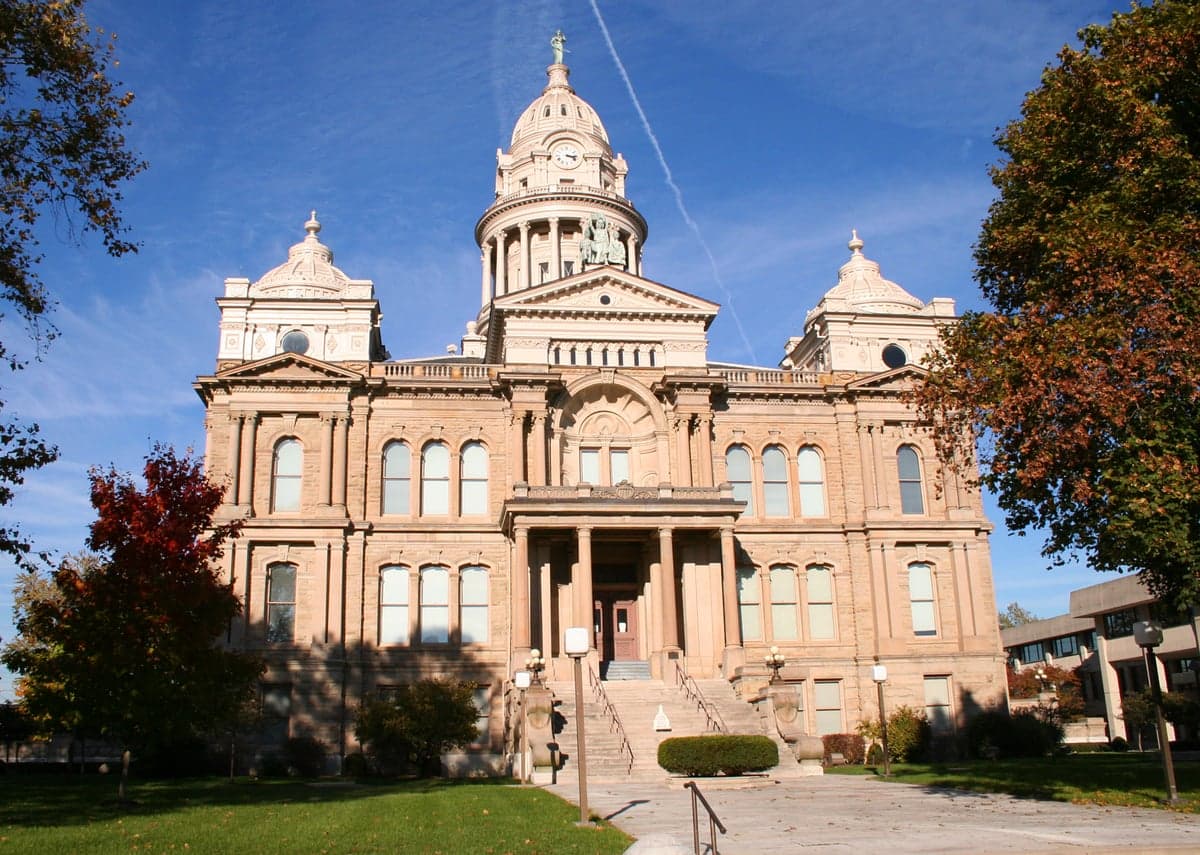
Photo: Wikipedia
Quality of Life in Miami County
A livable area that tracks near national norms for affordability, walkability, and neighborhood health.
What does Quality of Life tell us?
Quality of Life measures an area by evaluating factors like cost of living, nearby amenities, country club access, airport proximity, socioeconomic signals and neighborhood character. For large states, this is a general average — quality of life can vary dramatically between metro areas, suburbs, and rural communities within the same state.
What does this tell us?
Quality of Life measures an area by evaluating factors like cost of living, nearby amenities, country club access, airport proximity, socioeconomic signals and neighborhood character. For large states, this is a general average — quality of life can vary dramatically between metro areas, suburbs, and rural communities within the same state.
Cost of Living
22% below national average
124%
The Real Cost of Living in Miami County for 2026
| Tier | Individual | Family (4) |
|---|---|---|
| Survival | $15k | $28k |
| Comfortable | $41k | $60k |
| Luxury | $119k+ | $184k+ |
| Elite (Top 5%) | $139k+ | $216k+ |
Quality-of-Life Analysis
Miami County, Ohio, offers a quality-of-life spectrum that ranges from the walkable, historic river town of Troy to the agricultural quiet of unincorporated communities like Phoneton and Casstown, attracting everyone from young professionals commuting to Dayton to retirees seeking small-town affordability. With a cost of living index of 78 (22% below the U.S. average), a median home value of $209,200, and a median rent of $942, the county provides tangible financial breathing room. The average commute of just over 21 minutes means residents can live in a rural pocket or a compact town center without sacrificing reasonable access to regional employment hubs.
Largest town(s) & population centers
Troy, the county seat, is the largest population center and the county’s commercial and cultural anchor. Daily life here centers around the historic downtown square, the Great Miami River Recreation Trail, and a mix of local retailers and regional chains. The city supports a strong employment base anchored by Hobart Brothers (welding equipment) and the Upper Valley Medical Center. Piqua, the second-largest city, offers a similar historic downtown feel along the Miami River and is home to major employers like French Oil Mill Machinery and the Piqua Campus of Edison State Community College. Both Troy and Piqua provide walkable neighborhoods, public parks, and community events such as Troy’s Strawberry Festival and Piqua’s Heritage Festival. Tipp City, a smaller but fast-growing town along I-75, blends small-town charm with commuter convenience, featuring a well-preserved downtown and a strong local school system. These three towns form the county’s urbanized core, where median home values cluster near the county average and rental options are most plentiful.
Smaller towns & rural pockets
Outside the main population centers, Miami County is dotted with villages and unincorporated communities that offer a quieter, more land-based lifestyle. Covington, in the county’s western portion, is a tight-knit village of about 2,500 residents with a historic downtown and access to the Stillwater River. West Milton and Ludlow Falls sit along the county’s southern edge, offering small schools, local diners, and easy access to the Dayton metro area. Pleasant Hill and Laura, in the northern reaches, are true rural hamlets where agriculture dominates the landscape and homes often sit on acreage. Unincorporated places like Phoneton (a former telephone relay hub) and Casstown consist of scattered houses, a church or two, and little else — appealing to those who want maximum privacy and minimal municipal services. These areas typically have lower property taxes and more land per dollar, but require longer drives for groceries, healthcare, and entertainment.
Cost & lifestyle range
The cost-of-life spread across Miami County is significant. At the lower end, Piqua offers the most affordable housing stock, with many older homes and rental units priced below the county median; a two-bedroom apartment here can rent for under $800, and fixer-upper houses occasionally sell for under $150,000. At the higher end, Troy’s historic district and newer subdivisions near the Troy Country Club command prices above $300,000, while Tipp City’s desirable school district and proximity to Dayton push its median home value closer to $260,000. Rural properties in Pleasant Hill or Laura can vary wildly — a 3-bedroom farmhouse on two acres might sell for $180,000, while a modern build on 10 acres could exceed $400,000. Lifestyle amenities follow the same gradient: Troy and Piqua offer multiple grocery chains, medical clinics, and dining options, while residents of Casstown or Phoneton typically drive 15–20 minutes to reach a supermarket or pharmacy. The county’s overall low cost of living means even the pricier neighborhoods remain accessible compared to national averages.
Miami County is best suited for people who value a moderate pace of life, affordable homeownership, and the ability to choose between a walkable small city and a secluded rural homestead. Families drawn to strong school districts (Troy, Tipp City, and Covington all rate well), commuters who work in Dayton or Piqua’s industrial sector, and retirees seeking lower taxes and quieter streets all find a niche here. The county’s mix of historic downtowns, farmland, and river recreation means that whether a resident wants a coffee shop within walking distance or a barn with a view, the trade-offs are clear and the price is right.

Crime in Miami County
Crime rates similar to the national median for U.S. locations.
Violent CrimeViolent Crime Analysis
Property CrimeProperty Crime Analysis
Crime Analysis
Miami County, Ohio, reports a violent crime rate of 268 incidents per 100,000 residents and a property crime rate of 1,369.9 per 100,000, placing it slightly above national averages but below many urban Ohio counties. The county’s safety profile is shaped by a mix of small cities like Troy, Piqua, and Tipp City, each with distinct crime patterns, and a judicial system that leans conservative, which tends to prioritize public safety over progressive sentencing reforms. While no area is crime-free, the county’s overall risk is moderate, with property offenses—particularly theft and vehicle break-ins—driving most of the concern for residents and newcomers.
Crime in context
Miami County’s violent crime rate of 268 per 100,000 is roughly 15% higher than the national average of 232 per 100,000 but significantly lower than Ohio’s major urban centers like Dayton (which reports over 1,000 per 100,000) or Cincinnati. Property crime at 1,369.9 per 100,000 is about 10% above the national rate of 1,245 per 100,000, though it remains well below the state’s highest-risk counties such as Montgomery or Cuyahoga. The county benefits from a relatively low population density and a strong local economy anchored by manufacturing and agriculture, which helps keep desperation-driven crime in check. However, the presence of Interstate 75 running through the county facilitates transient property crime, including thefts from vehicles and retail theft in commercial corridors like those in Troy and Piqua.
What residents experience
For most residents, the primary safety concern is property crime rather than violent encounters. Burglaries and larcenies account for nearly 80% of all reported incidents, with unlocked vehicles and unattended packages being common targets in suburban neighborhoods like those in Tipp City and West Milton. Violent crime, while less frequent, is concentrated in specific areas: Piqua, the county’s largest city, sees a disproportionate share of aggravated assaults and robberies, often linked to domestic disputes or drug-related activity. Troy, the county seat, maintains a lower violent crime rate but experiences periodic spikes in theft from construction sites and retail establishments. The county’s judicial system, overseen by the Miami County Prosecutor’s Office and Common Pleas Court, is known for a conservative approach to sentencing, with minimal use of diversion programs or progressive bail reforms that have been criticized in larger Ohio counties like Franklin or Cuyahoga. This means offenders are more likely to face incarceration, which some residents view as a deterrent that keeps recidivism lower than in jurisdictions with lenient district attorneys.
Neighborhood-level variation
Safety varies notably across Miami County’s communities. Tipp City and West Milton consistently report the lowest crime rates, with violent crime nearly absent and property crime limited to occasional thefts, making them attractive for families and retirees. Troy offers a balanced profile—safer than Piqua but with more commercial activity that attracts opportunistic crime. Piqua, with its older housing stock and higher poverty rate, has the highest crime concentration, particularly in areas near the downtown core and along the Great Miami River. Covington and Bradford, smaller villages, see very low crime but lack the amenities that draw newcomers. For those relocating, the safest bets are the suburban and rural townships—like Concord Township or Staunton Township—where crime rates are a fraction of the county average, though residents should still practice standard precautions like locking vehicles and securing outbuildings.
* Values derived from national, state, county, city and local statistics and may differ in a specific area. Last updated: 2026-08-19T02:46:19.000Z
Narrative content on this page is AI-generated and may contain mistakes. Verify any details that matter before acting on them.
ReloMaps may earn a commission from affiliate links at no extra cost to you.

