 Popular
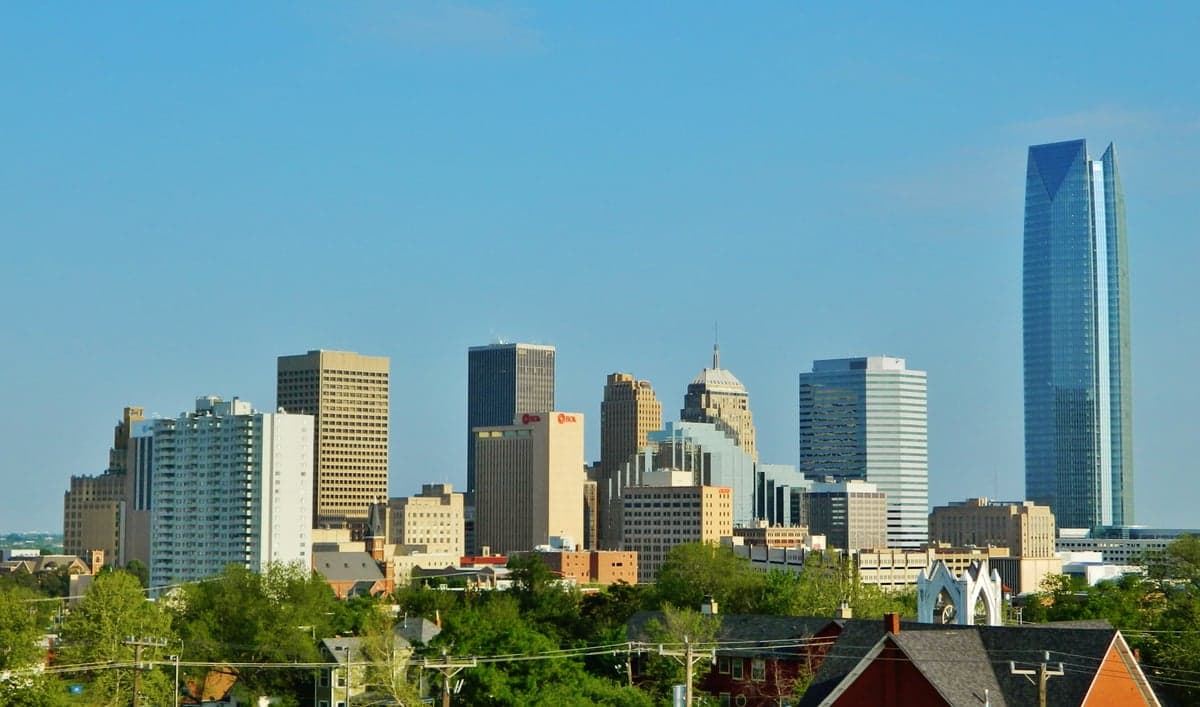
Photo: Wikipedia
Personal Sovereignty in Oklahoma City, OK
Strong independent fundamentals that actively favor personal liberty and low regulation.
What does Personal Sovereignty tell us?
Personal Sovereignty measures your capacity for self-reliance and independence with minimal government friction. Higher scores mean fewer barriers between you and the way you want to live... but it assumes you have the space you need and good neighbors.
What does this tell us?
Personal Sovereignty measures your capacity for self-reliance and independence with minimal government friction. Higher scores mean fewer barriers between you and the way you want to live... but it assumes you have the space you need and good neighbors.
State Policy
Energy independence: Net exporter (180% of energy produced in-state)
Personal Liberty
Homesteading

Personal Liberty Analysis
Oklahoma City offers one of the strongest environments for personal sovereignty in the central United States, a fact that resonates deeply with those who view government overreach as a growing threat to individual liberty. For the survivalist or prepper, this isn't just about low taxes—it's about a legal and cultural framework that actively resists federal encroachment and prioritizes the autonomy of the individual over the state. The city's posture is one of deliberate restraint, creating a buffer zone where a person can live, work, and defend themselves with minimal interference from authorities, a stark contrast to the regulatory density found on either coast.
Tax burden and regulatory posture: How much of your income and freedom is left alone
Oklahoma's tax structure is designed to leave money in your pocket, a critical factor for anyone building self-reliance. The state levies a flat income tax of 4.75%, with no progressive brackets that penalize success, and there are serious legislative efforts to push this to zero. Property taxes are among the lowest in the nation, averaging roughly 0.85% of assessed value in Oklahoma County, meaning a $300,000 home carries an annual tax bill around $2,550—far less than in Texas or Colorado. Sales tax in Oklahoma City is 8.625% (state + local), but groceries are exempt, and the state has no estate or inheritance tax, ensuring your assets pass to your family or survival group intact. On the regulatory front, Oklahoma City operates under a "right-to-work" law and has aggressively preempted local ordinances that would restrict business or property use. The city council has consistently rejected zoning overlays that mimic federal green mandates, and the state legislature has passed laws prohibiting local bans on natural gas appliances or internal combustion engines. For the prepper, this means fewer bureaucratic hurdles when building a workshop, storing supplies, or running a home-based business—the government largely stays out of your way.
Self-defense and gun law specifics: What you can carry, where, and without permission
Oklahoma City sits in a state with some of the most permissive firearm laws in the country, a non-negotiable for anyone serious about personal sovereignty. Oklahoma is a constitutional carry state—since 2019, any law-abiding adult 21 or older can carry a handgun openly or concealed without a permit, background check, or training requirement. There is no state-level registry, no waiting period for private sales, and no "red flag" law that allows confiscation without due process. The state preempts all local gun ordinances, so Oklahoma City cannot impose its own magazine bans or storage requirements. Stand-your-ground law is fully codified, with no duty to retreat in any place you are lawfully present. For the survivalist, this extends to long guns: suppressors, short-barreled rifles, and machine guns (with federal tax stamps) are legal under state law, and the state has passed a Second Amendment Sanctuary resolution that directs local law enforcement not to enforce any future federal bans. The practical effect is that you can defend your home, your vehicle, and your person with the full force of state law behind you, and the city's police department generally respects this right without harassment.
Self-reliance and homesteading viability: Lot sizes, zoning, and off-grid feasibility
For those looking to reduce dependence on fragile supply chains, Oklahoma City's land-use policies are a major asset. Within the city limits, residential lots in many neighborhoods range from a quarter-acre to half-acre, and in the outer wards—especially near the rural fringe like Harrah, Choctaw, or the far northwest side—you can find acreage parcels of 1 to 5 acres zoned for single-family use. The city's zoning code allows for "accessory dwelling units" (granny flats) and detached workshops without excessive permitting, and there are no HOA requirements in unincorporated areas or many older subdivisions. Off-grid feasibility is high: Oklahoma has no state-level ban on rainwater collection, and while the city requires a connection to municipal water and sewer for new construction within the urban service area, properties on the outskirts can legally use private wells and septic systems. Solar panels face no HOA restrictions in most areas, and net metering is available, though the state's energy policy is shifting toward deregulation. For the serious prepper, you can legally raise chickens, goats, and even small livestock on parcels over one acre within city limits, and the county extension office provides free soil testing and canning resources. The biggest limitation is the lack of a state preemption for building codes—Oklahoma City enforces the International Residential Code, so a completely unpermitted cabin is not feasible inside city limits, but the surrounding unincorporated county offers near-total freedom.
Personal liberties: Parental rights, medical autonomy, speech, and property
Oklahoma has become a national battleground for parental rights, and the laws reflect a strong presumption in favor of family autonomy. The state passed the "Parents' Bill of Rights" in 2022, which requires schools to notify parents of any medical or mental health services offered to minors and prohibits school personnel from withholding information about a child's well-being. Curriculum transparency laws mandate that all instructional materials be posted online, and parents can opt their children out of any lesson they find objectionable. On medical autonomy, Oklahoma has some of the strictest vaccine mandates exemptions in the country—philosophical exemptions are allowed for school attendance, and the state has banned any COVID-19 vaccine requirement for employment or public accommodation. The state also passed a law prohibiting the enforcement of any federal public health emergency order that would restrict individual movement or commerce. Free speech protections are robust: Oklahoma City has no "hate speech" ordinances, and the state has a law prohibiting the government from requiring "compelled speech" on social media platforms. Property rights are secured by a strong eminent domain statute that requires "public use" (not just public benefit) and full market value compensation, plus a right-to-farm law that protects agricultural operations from nuisance lawsuits. For the prepper, this means you can stockpile supplies, homeschool your children, refuse medical mandates, and speak your mind about government corruption without fear of legal retaliation.
Compared to other relocation destinations, Oklahoma City offers a rare combination: the tax freedom of a red state, the gun laws of a constitutional carry stronghold, and the land availability of a prairie city without the regulatory creep of Texas or the coastal mandates of the West. The trade-offs are real—summer heat, tornado risk, and a state government that is sometimes more performative than effective—but for someone whose primary concern is preserving personal sovereignty against a federal system that increasingly views self-reliance as a threat, this metro area provides the legal and cultural space to live on your own terms. It is not a libertarian utopia, but it is a place where the government still remembers that it works for you, not the other way around.

* Values derived from national, state, county, city and local statistics and may differ in a specific area. Last updated: 2026-04-25T13:49:21.000Z
Narrative content on this page is AI-generated and may contain mistakes. Verify any details that matter before acting on them.
ReloMaps may earn a commission from affiliate links at no extra cost to you.

