 Popular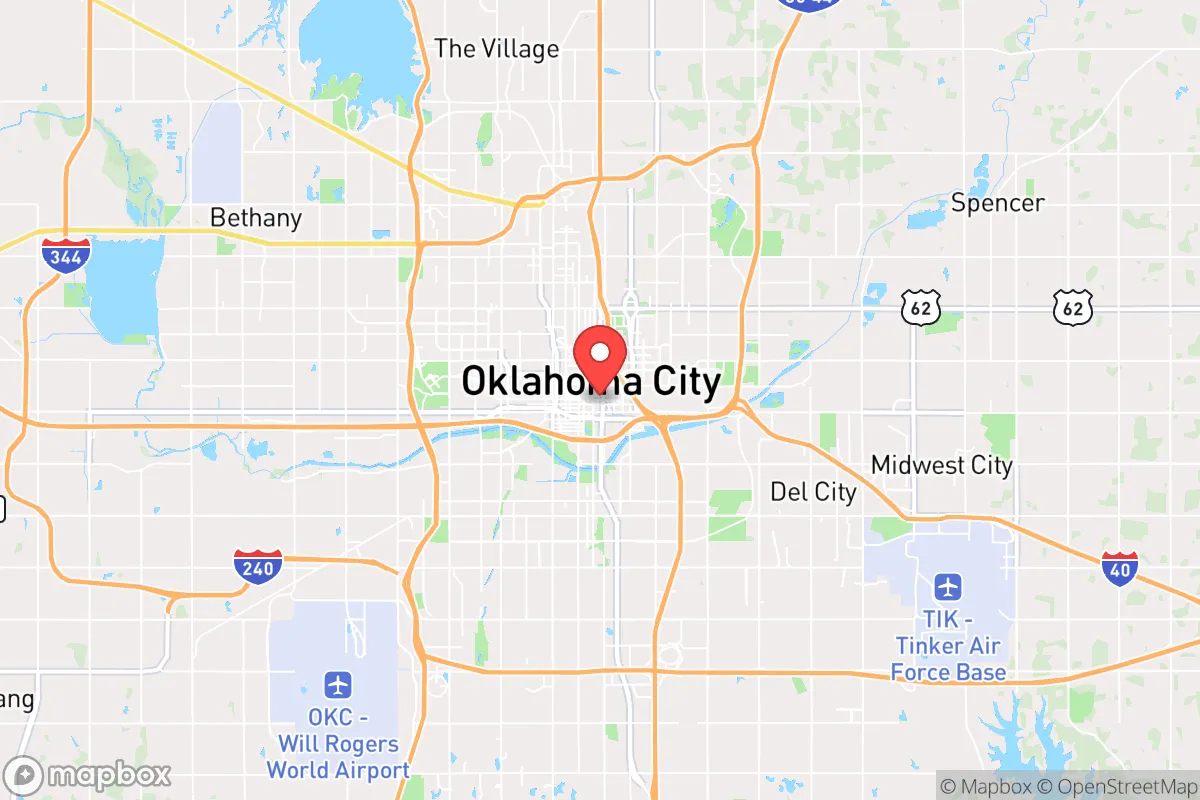
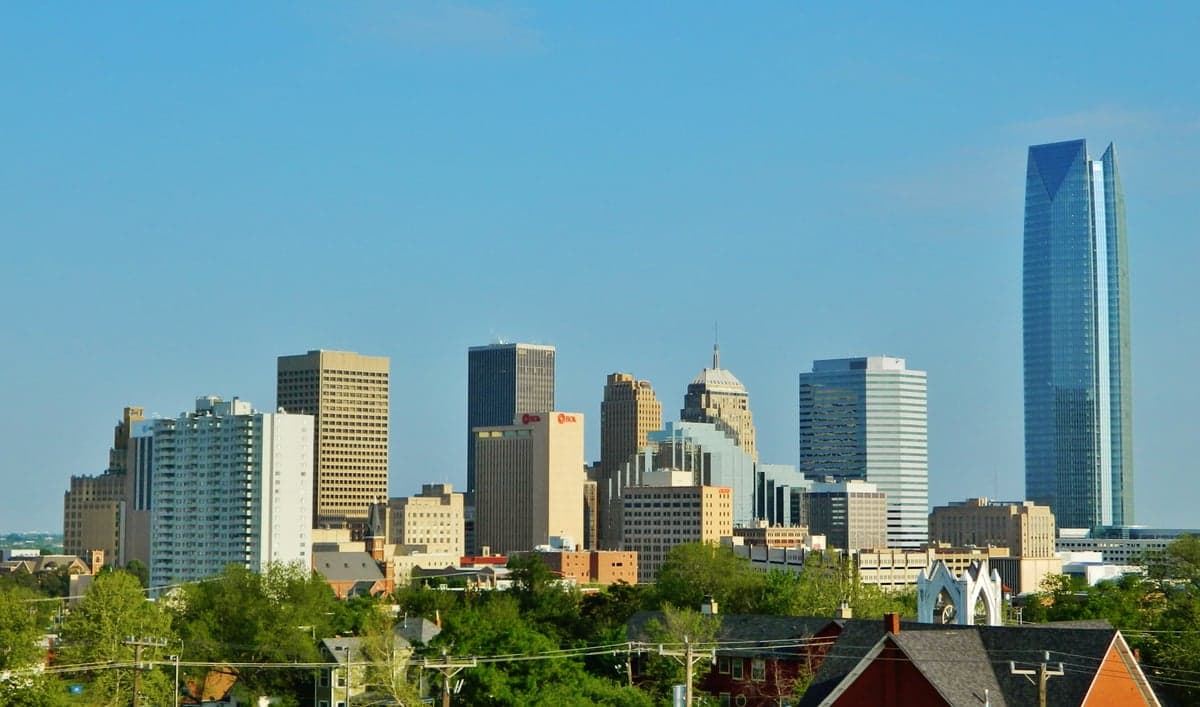
Photo: Wikipedia
Political ClimatePolitical Climate in Oklahoma City, OK
District shown is the primary district for this city’s centroid. Cities may span multiple districts.
Local Political AnalysisPolitical Analysis of Oklahoma City, OK
Oklahoma City has long been a reliably conservative place, and the numbers back that up with a Cook PVI of R+9, meaning the area is nine points more Republican than the national average. But if you’ve lived here as long as I have, you’ve seen the political ground shift under your feet. It’s not that the city has gone blue—far from it—but there’s a noticeable tension between the old-school, limited-government values that built this place and a creeping progressive influence, especially in the core neighborhoods and among younger transplants. The trajectory isn’t a hard turn left, but more like a slow drift that has folks like me watching the local elections a little closer every cycle.
How it compares
Drive thirty minutes north to Edmond or head west to Yukon, and you’ll find communities that are still solidly red—places where the county commission races are decided in the Republican primary and where the idea of a property tax hike for a bike lane would get laughed out of a town hall. Oklahoma City itself is a different animal. The urban core, particularly around the Plaza District and Midtown, has seen an influx of out-of-state professionals and younger families who bring a more progressive set of priorities. Compare that to the surrounding towns like Moore or Mustang, where the political conversation still centers on Second Amendment rights, school choice, and keeping the tax burden low. The contrast is real: the city votes more moderately than its suburbs, and that gap has widened since the early 2010s. It’s not a blue island, but it’s definitely a purple patch in a deep red sea.
What this means for residents
For those of us who value personal freedom and want government to stay out of our wallets and our lives, the biggest concern is the slow creep of overreach. You see it in zoning fights where city planners push for density mandates that override what neighborhoods actually want. You see it in the push for more public spending on light rail and homeless services—noble ideas on paper, but they come with tax increases and a heavier regulatory hand. The good news is that the county-level government and the state legislature still lean heavily conservative, which acts as a brake on the city council’s more ambitious plans. For now, a resident can still enjoy low property taxes, a strong gun culture, and a school system that hasn’t been fully captured by progressive curriculum changes. But if you’re the type who gets uneasy when the city starts talking about “equity” initiatives or “sanctuary” policies, you’re right to keep an eye on the next few election cycles. The long-term trend depends on who shows up to vote in the primaries.
Culturally, Oklahoma City still feels like a place where a handshake matters and where the local news leads with a high school football score, not a protest. But there’s a growing divide between the old guard and the new arrivals, especially around issues like police funding and land use. The city has avoided the worst of the coastal policy experiments—no defund movements here, no rent control—but the rhetoric is creeping in. If you’re looking for a place where your rights as a property owner and a gun owner are still respected, this is still one of the better bets in the region. Just don’t expect it to stay that way without paying attention. The political climate here is still conservative, but it’s not immune to the winds blowing from the coasts, and the only thing that keeps it grounded is a community that remembers what freedom actually costs to protect.

State Political ClimatePolitical Climate in Oklahoma
State Political AnalysisPolitical Environment in the State
Oklahoma has long been one of the most reliably Republican states in the nation, with a deep-red partisan lean that has only intensified over the past two decades. The state hasn’t voted for a Democratic presidential candidate since 1964, and in 2024, Donald Trump carried it by over 34 points. The dominant coalition is a mix of rural conservatives, evangelical Christians, and oil-and-gas interests, though a growing libertarian streak is reshaping the conversation around personal freedom. Over the last 10-20 years, the trajectory has been steadily rightward, with the state legislature passing some of the most conservative laws in the country on abortion, gun rights, and education, even as a few urban pockets push back.
Urban vs. rural divide
The political map of Oklahoma is a textbook study in urban-rural polarization. Oklahoma City and Tulsa are the two major metros, and they lean Republican but with significant blue islands. Oklahoma City’s core, especially around the Paseo Arts District and Midtown, votes Democratic, but the sprawling suburbs like Edmond, Norman, and Moore are solidly red. Norman, home to the University of Oklahoma, is the most liberal city in the state, consistently voting Democratic in statewide races. Tulsa’s downtown and the Kendall-Whittier neighborhood lean left, but the surrounding suburbs like Broken Arrow, Jenks, and Bixby are deeply conservative. The real engine of Oklahoma’s red dominance is the vast rural expanse. Counties like Texas County in the Panhandle, Custer County in the west, and McCurtain County in the southeast routinely deliver 80%+ Republican margins. The only reliably blue counties are Oklahoma County (Oklahoma City), Tulsa County, and a handful of small, historically Democratic-leaning Native American areas like Adair County. The divide is stark: drive 20 minutes outside any city center, and you’re in deep-red territory where Trump signs still dot the landscape.
Policy environment
Oklahoma’s policy environment is aggressively conservative, with a strong emphasis on low taxes and limited government. The state has a flat income tax rate of 4.75%, which is being phased down to 4.5% by 2027, and no tax on Social Security benefits. Property taxes are among the lowest in the nation, averaging about 0.9% of home value. The regulatory posture is business-friendly, especially for energy and agriculture, with minimal red tape for oil and gas drilling. Education policy has been a flashpoint: the state passed a universal school voucher program in 2024, allowing parents to use public funds for private or homeschool expenses. This was a major win for school choice advocates. Healthcare is more mixed—Oklahoma expanded Medicaid under the 2020 ballot initiative State Question 802, which passed despite strong legislative opposition, but the state has some of the strictest abortion laws in the country, banning the procedure at conception with no exceptions for rape or incest. Election laws are tight: voter ID is required, and the state purges inactive voters regularly. There’s no early voting by mail without an excuse, though in-person absentee voting is allowed. Overall, the policy environment is designed to maximize personal freedom in economic and educational choices, but with heavy government intervention in social and medical matters.
Trajectory & freedom
Oklahoma is becoming more free in several key areas, but the trajectory is uneven. On the plus side, the state passed Constitutional Carry (permitless concealed carry) in 2019, allowing any adult who can legally own a firearm to carry it without a license. In 2023, the legislature expanded this to include open carry without a permit. Parental rights were strengthened with the Parental Bill of Rights (HB 1440) in 2022, giving parents explicit authority over their children’s education, medical decisions, and records. The Save Women’s Sports Act (SB 2) passed in 2022, banning biological males from competing in women’s sports. Medical autonomy took a hit with the near-total abortion ban, but the state also passed the Medical Freedom Act in 2021, prohibiting vaccine mandates by private employers and government entities. Property rights are strong, with no statewide zoning in most rural areas, though cities like Oklahoma City have imposed some land-use restrictions. Taxation is trending downward, with the income tax rate dropping from 5% to 4.75% in 2024 and further cuts planned. The biggest concern for freedom-minded residents is the state’s heavy-handed approach to drug policy—Oklahoma still has some of the harshest penalties for marijuana possession outside the medical program, and the state’s medical marijuana industry is heavily regulated. Overall, the state is moving toward more personal liberty on guns, education, and vaccines, but remains restrictive on abortion and drugs.
Civil unrest & political movements
Oklahoma has seen relatively little civil unrest compared to coastal states, but there have been notable flashpoints. The 2020 George Floyd protests in Oklahoma City and Tulsa were large but mostly peaceful, though Tulsa saw some property damage and arrests. The Tulsa Race Massacre centennial in 2021 drew national attention, with activists pushing for reparations and historical recognition, but the state legislature resisted. Immigration politics are less heated than in border states, but Oklahoma passed a strict anti-sanctuary city law in 2018, requiring local law enforcement to cooperate with federal immigration authorities. There’s been a growing nullification movement on federal gun laws, with several counties passing Second Amendment sanctuary resolutions. The Oklahoma Freedom Caucus has become a powerful force in the legislature, pushing for further tax cuts, school choice, and restrictions on federal overreach. Election integrity has been a hot topic since 2020, with the state passing HB 2663 in 2021, which requires proof of citizenship to register to vote and bans ballot drop boxes. No major election fraud scandals have emerged, but the issue remains a rallying point for conservative activists. The most visible political movement is the Moms for Liberty chapter in Edmond, which has been active in school board meetings over library books and curriculum. Overall, the political climate is stable but with a growing grassroots conservative energy that can be felt at local government meetings.
Projection
Over the next 5-10 years, Oklahoma is likely to become even more conservative, driven by demographic shifts and in-migration patterns. The state is seeing an influx of retirees from California and Colorado, many of whom are fleeing high taxes and progressive policies. These newcomers tend to be fiscally conservative and socially moderate, but they are settling in red suburbs like Edmond, Bixby, and Mustang, reinforcing the existing political structure. The rural population is declining, but the rural vote is becoming more intense in its conservatism. The biggest wildcard is the growing Native American population, which has been leaning more Democratic in recent cycles, especially in counties like Adair, Cherokee, and Delaware. If this trend continues, it could flip a few state House seats in northeastern Oklahoma. The state’s Hispanic population is growing fast, particularly in Oklahoma City’s south side and the Panhandle, but this group is not monolithic—many are conservative on social issues and could shift the GOP coalition. The most likely scenario is that Oklahoma remains a deep-red state, with the legislature continuing to push tax cuts, school choice, and gun rights. The only real threat to this trajectory is if urban growth in Oklahoma City and Tulsa outpaces rural turnout, but that’s a decade or more away. For now, expect more of the same: low taxes, limited government, and a strong cultural conservatism.
For a new resident, the bottom line is this: Oklahoma offers a high degree of personal freedom on guns, education, and economic matters, but with significant government overreach on social issues like abortion and drugs. The political climate is stable and predictable, with no real risk of flipping blue anytime soon. If you value low taxes, school choice, and a culture that respects traditional values, you’ll feel at home. Just be prepared for the summer heat and the occasional tornado warning—that’s the trade-off for living in one of the most conservative states in the union.
* Values derived from national, state, county, city and local statistics and may differ in a specific area. Last updated: 2026-04-25T13:49:21.000Z
Narrative content on this page is AI-generated and may contain mistakes. Verify any details that matter before acting on them.
ReloMaps may earn a commission from affiliate links at no extra cost to you.

