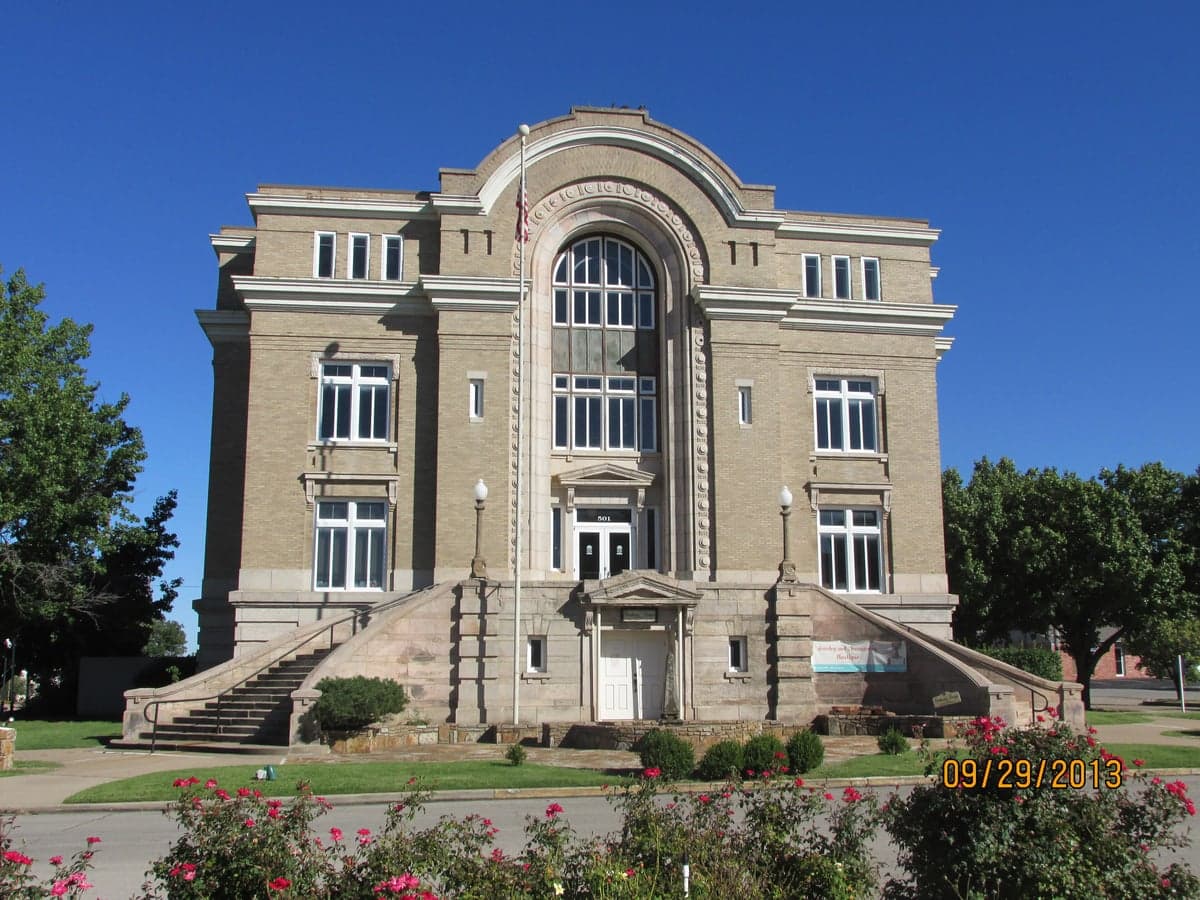
Photo: Wikipedia
Demographics of Washington County
Affluence Level in Washington County
A below-average socioeconomic profile. Incomes, home values, and educational attainment trail the U.S., with higher poverty and unemployment.
People of Washington County
Today, Washington County, Oklahoma is home to roughly 52,900 residents, a population that is predominantly white (70.9%) with a small but growing Hispanic community (6.7%) and a very low foreign-born share of just 2.0%. The county’s character is shaped by its position as a rural-to-suburban transition zone, anchored by the city of Bartlesville, which provides a mix of oil-industry heritage, a modest college-educated workforce (30.5%), and a quiet, family-oriented lifestyle. Distinctive identity markers include a strong sense of local history tied to the Osage Nation and the oil boom, a conservative political leaning, and a population density that feels more small-town than suburban despite proximity to Tulsa.
Settlement & growth (pre-1960)
Long before European settlement, the area that is now Washington County was part of the ancestral and historic territory of the Osage Nation. The Osage controlled a vast region across present-day Oklahoma, Kansas, and Missouri, and they maintained a significant presence along the Caney River and the Verdigris River. In the early 19th century, the U.S. government forcibly removed the Cherokee Nation to this area under the Indian Removal Act, and Washington County was originally part of the Cherokee Nation’s Cooweescoowee District. The first permanent non-Native settlers were primarily Cherokee and mixed-blood Cherokee families who established farms and trading posts in the 1830s and 1840s, with early settlements forming around what is now Bartlesville and Ramona.
The defining event for Washington County’s population history was the discovery of oil. In 1897, the Nellie Johnstone No. 1 well struck oil near Bartlesville, marking the first commercial oil well in what would become the vast Mid-Continent oil field. This triggered a classic boomtown cycle. Between 1900 and 1920, the county’s population surged as thousands of white, native-born Americans—many from the Midwest and the South—poured in seeking work in the oil fields, refineries, and supporting industries. Bartlesville became the corporate home of Phillips Petroleum (founded in 1917), which attracted a wave of engineers, managers, and skilled laborers, many of whom were of German, English, and Scots-Irish descent. Smaller towns like Dewey, Ochelata, and Copan also grew as service centers for the oil economy. The county’s population peaked at around 52,000 in the 1930 census, driven almost entirely by the oil industry.
During the Dust Bowl and Great Depression of the 1930s, Washington County saw a modest influx of displaced farmers from the Oklahoma Panhandle and Texas Panhandle—the so-called “Okies” and “Texies”—but the county’s oil economy provided more stability than the agricultural regions further west. After World War II, the county experienced a second wave of growth as the petrochemical industry expanded. Bartlesville’s population grew steadily through the 1950s and 1960s, with new subdivisions filling in around the city. The county’s African American population, which had been small but present since the early 1900s (many working as domestic laborers and in the oil fields), remained concentrated in a few neighborhoods in Bartlesville, such as the historic “East Side” area. By 1960, the county was overwhelmingly white, native-born, and economically tied to oil, with a population of about 42,000.
Modern era (post-1965)
The 1965 Hart-Cellar Act had a minimal direct impact on Washington County, as the region never became a major destination for post-1965 immigration. The foreign-born share today is just 2.0%, far below the national average. The small immigrant population that does exist is primarily composed of Hispanic workers (6.7% of the total population) who began arriving in the 1990s and 2000s, drawn by jobs in construction, agriculture, and the service industry. These families have concentrated in Bartlesville, particularly in the western and southern parts of the city, and in the town of Dewey. A very small East/Southeast Asian community (1.5%) and an even smaller Indian-subcontinent community (0.6%) are present, largely consisting of professionals working at ConocoPhillips (the successor to Phillips Petroleum) and at the local hospital and university.
The most significant demographic shift since 1965 has been domestic rather than international. The county’s population has remained remarkably stable, hovering between 48,000 and 53,000 for the past 50 years. This stability masks a slow suburbanization trend: Bartlesville has grown modestly while the surrounding unincorporated areas and smaller towns like Ramona and Vera have seen slight declines. The county has not experienced the rapid Sun Belt growth seen in nearby Tulsa or Oklahoma City, largely because the oil industry has become more capital-intensive and less labor-intensive over time. The African American population has declined slightly as younger generations have moved to larger cities for more opportunities. The white population, while still the overwhelming majority, has aged, with a median age of about 40, reflecting an outmigration of young adults seeking education and careers elsewhere.
The future
Washington County’s population is projected to remain relatively flat over the next 10 to 20 years, with slow growth or even a slight decline. The county is becoming slightly more diverse, driven primarily by the growth of the Hispanic population, which is expected to rise from 6.7% to perhaps 10-12% by 2040, as younger Hispanic families have higher birth rates and continued in-migration for service-sector jobs. The East/Southeast Asian and Indian communities are likely to remain small but stable, tied to the professional workforce at ConocoPhillips and the local medical sector. The white population will continue to age, and without a significant influx of new residents, the county’s overall population may dip below 50,000 by 2035.
Culturally, the county is likely to remain conservative and family-oriented, with a strong sense of local identity rooted in the oil heritage and the Osage and Cherokee histories. New residents are most likely to be retirees from the Midwest or Texas seeking a lower cost of living, or remote workers attracted by Bartlesville’s relatively affordable housing and small-town amenities. The county is not expected to become a major destination for international immigration or for domestic migrants from coastal cities, given its distance from major metropolitan areas and its limited job growth outside the energy sector.
For someone moving in now, Washington County offers a stable, quiet, and affordable place to live with a strong sense of community, but it is not a place of rapid demographic change or economic dynamism. The population is aging, slowly diversifying, and deeply rooted in its oil-and-ranching past. The kind of person who will thrive here is someone who values small-town life, conservative values, and a slower pace, and who is comfortable with a community that looks and feels much like it did 40 years ago, with only gradual shifts on the horizon.

* Values derived from national, state, county, city and local statistics and may differ in a specific area. Last updated: 2026-07-28T21:26:50.000Z
Narrative content on this page is AI-generated and may contain mistakes. Verify any details that matter before acting on them.
ReloMaps may earn a commission from affiliate links at no extra cost to you.

