Photo: Wikipedia
Demographics of Omaha, NE
Affluence Level in Omaha, NE
A middle-class area roughly in line with national averages across income, home values, education, and employment.
People of Omaha, NE
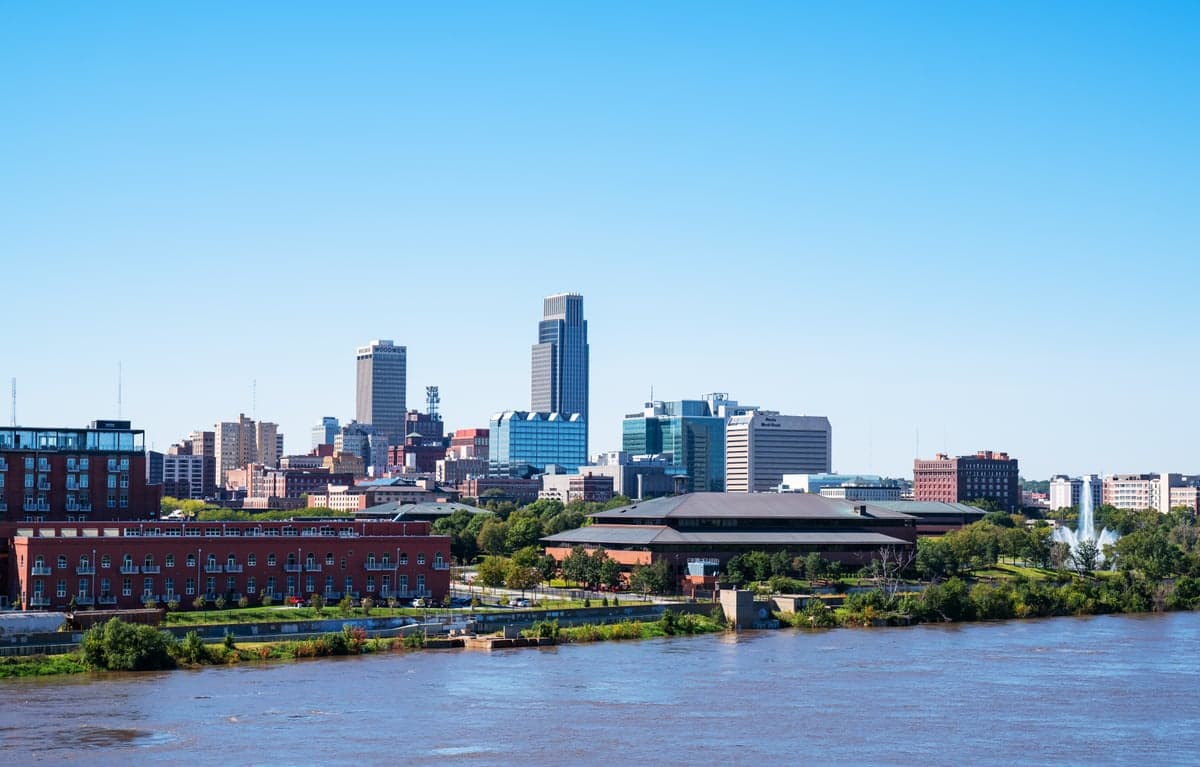
The people of Omaha, Nebraska today form a moderately diverse, Midwestern urban population of 488,197, characterized by a strong white plurality (64.2%) alongside significant Hispanic (15.6%) and Black (11.5%) communities, with smaller but growing East/Southeast Asian (2.6%) and Indian-subcontinent (1.4%) populations. The city’s identity is shaped by its history as a railroad and meatpacking hub, producing a pragmatic, working-class ethos that persists even as the economy shifts toward finance, insurance, and healthcare. Omaha is denser and more ethnically varied than the rest of Nebraska, yet it retains a distinctly Midwestern sensibility—neighborly, family-oriented, and politically moderate to conservative in many precincts, particularly in the western suburbs.
How the city was settled and grew
Omaha was founded in 1854 as a speculative river town on the Missouri River’s western bank, its growth driven by the 1863 decision to make it the eastern terminus of the Union Pacific Railroad, part of the transcontinental railroad. The first major population wave was of Yankee and German Protestant settlers, who established the city’s commercial core in the Old Market district and the surrounding downtown. A second, larger wave of Irish and German Catholic immigrants arrived in the 1870s and 1880s to work in the Union Pacific shops and the burgeoning meatpacking plants along the river, settling in neighborhoods like Sheelytown (near the stockyards) and Little Italy (around 10th and Pierce Streets). By 1900, Omaha was a boomtown of 102,000, with a substantial Black population drawn by railroad and packinghouse jobs, concentrated in the Near North Side (north of downtown), which became the cultural heart of the city’s African American community. Eastern European Jews, Poles, and Czechs followed in the early 1900s, forming enclaves in South Omaha, a working-class district that remains a gateway for immigrant groups today.
Modern era (post-1965)
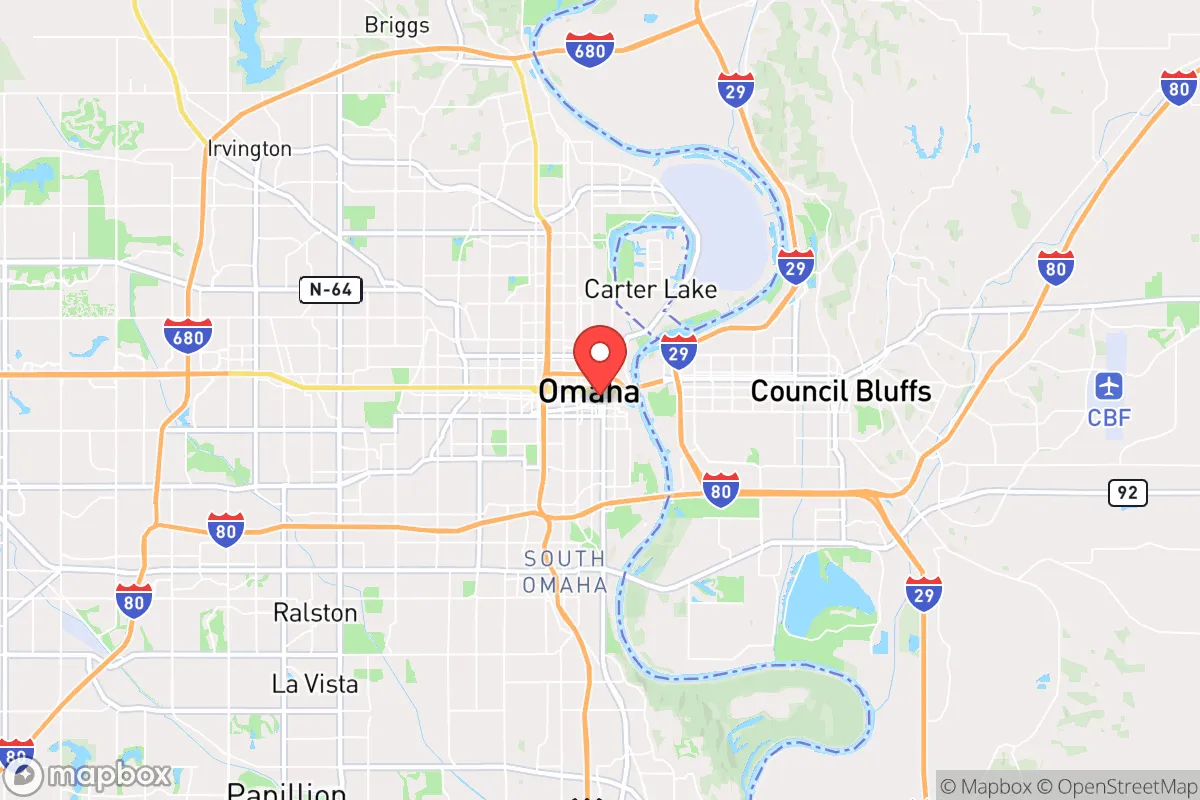
The 1965 Hart-Cellar Act reshaped Omaha’s demographics by opening immigration from Asia and Latin America. The most visible change has been the growth of the Hispanic population, which rose from under 3% in 1980 to 15.6% today, driven by Mexican and Central American immigrants working in meatpacking, construction, and food processing. South Omaha (roughly south of Interstate 80) is now the city’s primary Hispanic hub, with a dense corridor of Mexican bakeries, taquerias, and bodegas along 24th Street. The Black population, which peaked at roughly 13% in the 1990s, has held steady at 11.5%, with many families remaining in the North Omaha neighborhoods north of Cuming Street, though suburbanization has pushed some to Elkhorn and western Douglas County. East/Southeast Asian communities (2.6%)—primarily Vietnamese and Burmese refugees—have clustered in South Omaha and parts of Millard, often near low-cost housing and entry-level jobs. The Indian-subcontinent population (1.4%) is newer, largely post-2000, and more dispersed, with professionals working in tech and healthcare settling in west Omaha suburbs like Westside and Papillion. Domestic in-migration has been modest; most growth comes from natural increase and foreign-born arrivals (7.0% of the population).
The future
Omaha’s population is projected to grow slowly, reaching roughly 520,000 by 2035, with the Hispanic share likely rising to 20-22% as younger families and continued immigration offset an aging white population. The city is not homogenizing but rather tribalizing into distinct enclaves: South Omaha will become more heavily Hispanic, North Omaha will remain predominantly Black, and the western suburbs (Elkhorn, Millard) will stay overwhelmingly white and conservative. The East/Southeast Asian and Indian-subcontinent communities are small but growing, with the Indian population expected to double as the University of Nebraska Medical Center and tech firms like Hudl and Flywheel attract skilled immigrants. Assimilation patterns vary: Hispanic families in South Omaha are slowly integrating into the broader economy, while Indian professionals in west Omaha are highly assimilated into white-collar networks. The city’s political character will likely remain moderate-conservative in the suburbs and more liberal in the urban core, with no single group dominating the electorate.
For someone moving to Omaha now, the city offers a stable, affordable Midwestern environment with clear neighborhood identities. The west side is safe, family-oriented, and politically conservative, while the urban core and South Omaha provide more diversity and lower housing costs. The population is slowly diversifying, but the city’s fundamental character—pragmatic, hardworking, and community-focused—remains intact. New residents should expect a place where change is gradual and neighborhood choice strongly shapes daily life.

* Values derived from national, state, county, city and local statistics and may differ in a specific area. Last updated: 2026-04-15T23:39:28.000Z
Narrative content on this page is AI-generated and may contain mistakes. Verify any details that matter before acting on them.
ReloMaps may earn a commission from affiliate links at no extra cost to you.

