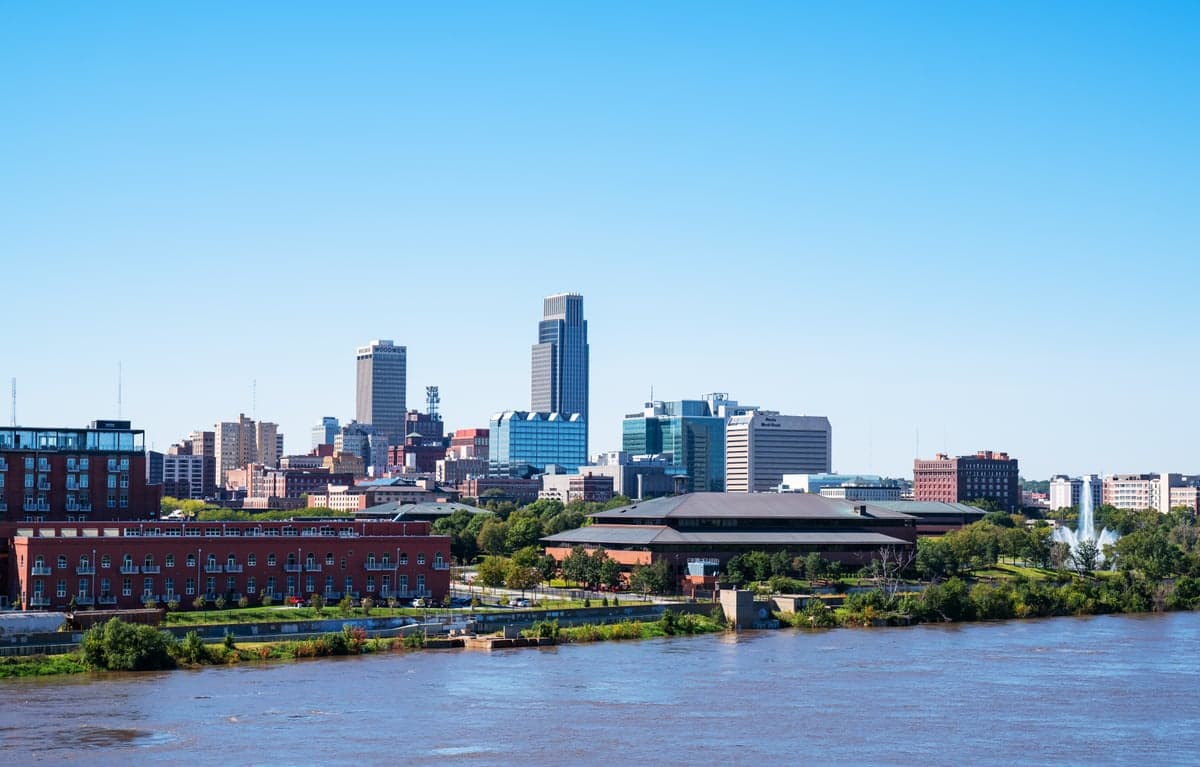
Photo: Wikipedia
Political ClimatePolitical Climate in Omaha, NE
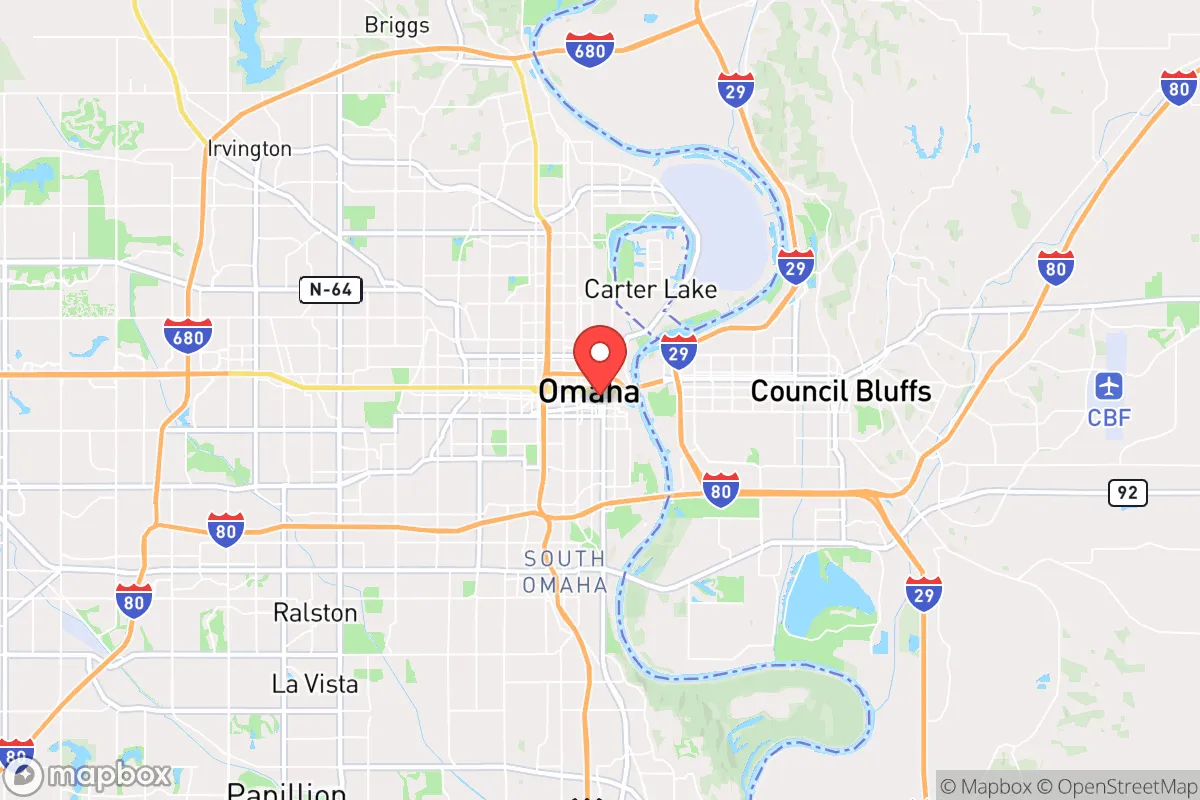
District shown is the primary district for this city’s centroid. Cities may span multiple districts.
Local Political AnalysisPolitical Analysis of Omaha, NE
Omaha, Nebraska, has a Cook PVI of D+3, meaning it leans about three points more Democratic than the national average, but don't let that number fool you into thinking it's a solid blue stronghold. This city has a long history of being a pragmatic, middle-of-the-road place where folks valued common sense over party lines, but over the last decade, you've seen a real shift. The old Omaha, the one I grew up in, was a place where your vote was your own business and the government stayed out of your garage and your backyard. Now, there's a growing push from city hall and the county board toward progressive policies that feel more like they're coming from the coasts than the heartland.
How it compares
To really get the picture, you have to look at what's around Omaha. Drive 20 minutes west to Elkhorn or further out to Bennington, and you're in deep red territory where the talk is about property rights and school choice. Head south to Bellevue or Papillion, and you'll find a more conservative, military-minded crowd that keeps things grounded. But inside the city limits, especially in the core and midtown areas, the political energy is all about expanding government programs, pushing diversity initiatives in schools, and adopting California-style housing regulations. The contrast is stark: the suburbs are holding the line on taxes and personal freedoms, while Omaha proper seems to be chasing a progressive agenda that many of us see as a direct threat to the individual liberties we used to take for granted.
What this means for residents
For a long-time resident like me, the biggest concern is how this shift affects your day-to-day life. You're seeing more city ordinances that tell you what you can do with your own property, from rental restrictions to noise complaints that go way beyond reasonable. The push for higher property taxes to fund pet projects and social programs is a real red flag—it's a slow erosion of your right to keep what you earn. The school board has become a battleground, with some members pushing curriculum that feels more about social engineering than reading, writing, and arithmetic. If you value your Second Amendment rights, you've noticed the city council flirting with local gun control measures that would never fly in the rest of the state. It's a creeping overreach that makes you wonder if Omaha is still the place where you could live your life without the government breathing down your neck.
The cultural and policy distinctions here are becoming sharper every year. Omaha used to be a place where the biggest political fights were about potholes and snow removal. Now, you've got city leaders pushing for sanctuary city policies and defunding the police rhetoric, even if the actual votes haven't gone that far yet. The long-term trajectory is concerning: if the current trend holds, Omaha could become an island of progressive governance in a sea of conservative Nebraska, which means more regulations, higher taxes, and a loss of the personal freedoms that made this a great place to raise a family. For those of us who remember when Omaha was a quiet, independent-minded city, it feels like we're being pushed into a future we never asked for.

State Political ClimatePolitical Climate in Nebraska
State Political AnalysisPolitical Environment in the State
Nebraska has long been a reliably conservative state, but its politics are more nuanced than a simple red-state label suggests. The state has voted Republican in every presidential election since 1968, and its current congressional delegation is split 3-1 Republican, with the governorship and both legislative chambers firmly in GOP hands. However, the past 10-20 years have seen a slow but steady shift, driven by a growing urban-rural divide and the influx of new residents to the Omaha and Lincoln metros, which has made the state’s 2nd Congressional District (Omaha) a perennial battleground. For a conservative-leaning individual or family, Nebraska still offers a strong foundation of fiscal responsibility and traditional values, but the political landscape is not static, and the direction of change is worth watching closely.
Urban vs. rural divide
The political map of Nebraska is a textbook example of the urban-rural split. The eastern third of the state, anchored by Omaha (Douglas County) and Lincoln (Lancaster County), is where the Democratic vote is concentrated. Omaha’s 2nd Congressional District has been a swing seat for over a decade, flipping between Republican and Democratic control and awarding one electoral vote to Joe Biden in 2020. Lincoln, home to the University of Nebraska, leans left but is not as reliably blue as Omaha. In contrast, the rest of the state is deeply red. Grand Island, Kearney, and North Platte are solidly conservative, with the rural Panhandle counties often voting 80%+ Republican. The suburban ring around Omaha—places like Papillion and Gretna in Sarpy County—has been a key battleground, trending more Republican in recent cycles as families flee the city proper. The 2024 election saw Sarpy County shift further right, helping to offset Democratic gains in Omaha proper.
Policy environment
Nebraska’s policy environment is generally favorable for conservatives, but with some notable wrinkles. The state has no income tax on Social Security benefits and a flat state income tax rate of 5.84% (with a scheduled reduction to 5.5% by 2027). Property taxes are a persistent pain point, among the highest in the region, and have been a major legislative focus. The unicameral, nonpartisan legislature is unique—no party labels appear on the ballot, though caucuses operate informally. This structure can produce unpredictable outcomes, as seen with the 2023 passage of a 12-week abortion ban after years of filibuster battles. Education policy is a bright spot: Nebraska has a robust school choice movement, with the passage of LB 753 in 2023 creating a dollar-for-dollar tax credit for donations to scholarship-granting organizations, effectively a private school voucher program. Election integrity is strong—voter ID was enacted in 2023 (LB 514), and the state maintains a clean voter roll. However, the state’s medical marijuana initiative, which passed in 2024, signals a libertarian streak that sometimes clashes with social conservatism.
Trajectory & freedom
On balance, Nebraska has been moving in a direction that expands personal freedom in several key areas, though not without setbacks. The 2023 passage of constitutional carry (LB 77) was a major win for gun rights, allowing law-abiding citizens to carry concealed firearms without a permit. The same bill also preempted local gun ordinances, preventing cities like Omaha from enacting stricter rules. Parental rights were strengthened with the 2024 passage of the Parents’ Bill of Rights (LB 1409), which requires schools to notify parents of any changes to a student’s health or well-being and prohibits instruction on gender identity and sexual orientation in grades K-3. On the downside, the state’s COVID-19 emergency powers were used aggressively by Governor Pete Ricketts in 2020-2021, including a controversial 36-hour wait period for abortions that was later struck down. The 2024 medical marijuana law, while popular, creates a tension with federal law that some conservatives find concerning. Property rights remain strong, with no statewide rent control and limited eminent domain abuse.
Civil unrest & political movements
Nebraska has not seen the level of civil unrest seen in coastal states, but there have been flashpoints. The 2020 George Floyd protests in Omaha turned violent, with looting and fires in the downtown area, leading to a heavy National Guard presence. This event galvanized conservative voters in the suburbs, contributing to the GOP’s strong showing in Sarpy County in subsequent elections. The Nebraska Republican Party has been internally divided between establishment and more populist factions, with the latter gaining ground in recent years. Immigration politics are relatively quiet, though the state has seen a significant influx of refugees and immigrants in South Sioux City and Omaha, leading to some localized tensions. There is no sanctuary city policy in Nebraska; in fact, a 2023 law (LB 648) requires law enforcement to cooperate with federal immigration authorities. Election integrity has been a hot topic, with the 2020 and 2022 cycles seeing intense scrutiny of mail-in voting procedures, though no major fraud was uncovered. The Nebraska Freedom Coalition and Moms for Liberty chapters are active, particularly in school board races in Lincoln and Omaha.
Projection
Over the next 5-10 years, Nebraska’s political trajectory is likely to be a tug-of-war between the growing urban centers and the rural conservative base. The Omaha metro is expected to continue growing, driven by the University of Nebraska Medical Center and tech sector expansion, which will bring in more moderate and left-leaning voters. This could make the 2nd Congressional District a permanent swing seat, and possibly flip the state’s electoral vote allocation in presidential races. However, the rural areas are not shrinking as fast as in some other Plains states, thanks to strong agricultural prices and the growth of data centers and renewable energy projects in places like Columbus and Norfolk. The state legislature is likely to remain conservative, but the nonpartisan structure means that single-issue coalitions (e.g., on property tax relief or school choice) can produce unexpected results. The biggest wildcard is in-migration: if Nebraska attracts more remote workers and retirees from blue states, the political balance could shift faster. For now, the state is a solid conservative bet, but the foundation is not as rock-solid as it was 20 years ago.
For a conservative family or individual moving to Nebraska, the bottom line is this: you will find a state that largely respects your values on taxes, guns, and parental rights, but you should be aware that the political winds are shifting in the Omaha and Lincoln metros. If you want the most stable conservative environment, look to the smaller cities like Kearney, Grand Island, or the Sarpy County suburbs. If you prefer a more dynamic, competitive environment, the Omaha area offers a front-row seat to the political battles that will define the state’s future. Either way, Nebraska remains a place where your vote counts and your voice can be heard—for now.
* Values derived from national, state, county, city and local statistics and may differ in a specific area. Last updated: 2026-04-15T23:39:28.000Z
Narrative content on this page is AI-generated and may contain mistakes. Verify any details that matter before acting on them.
ReloMaps may earn a commission from affiliate links at no extra cost to you.

