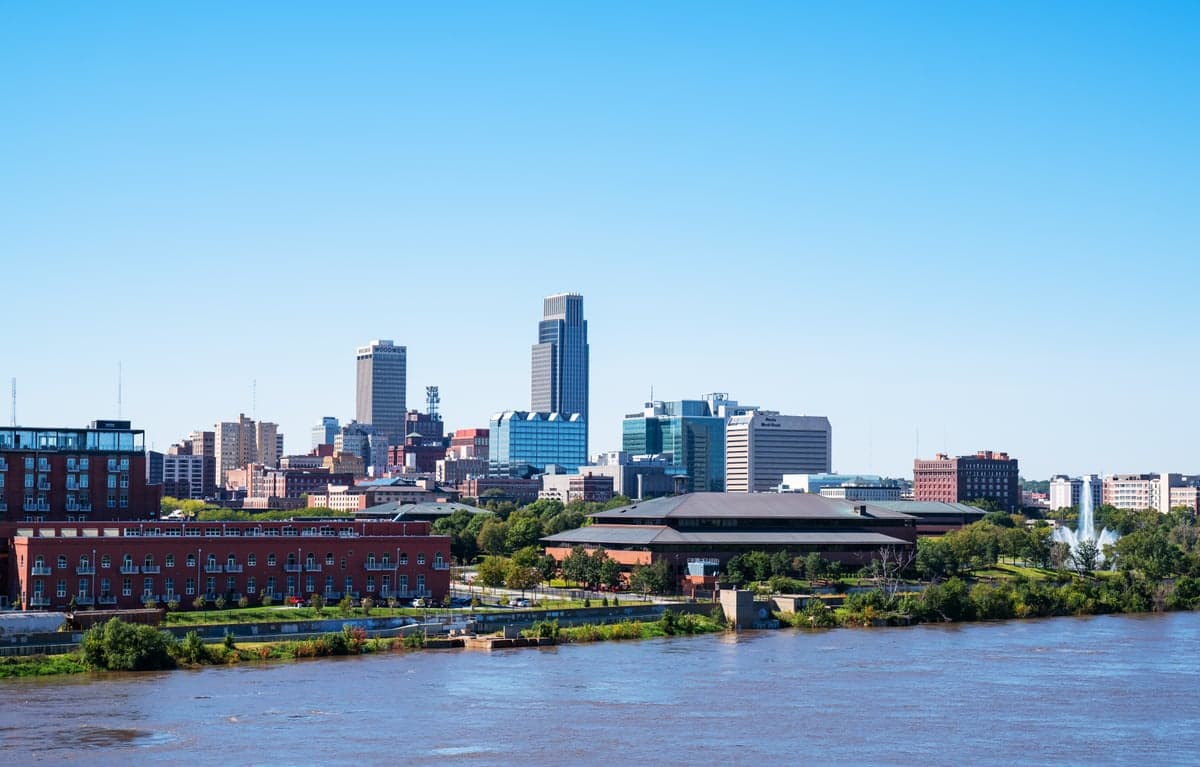
Photo: Wikipedia
Personal Sovereignty in Omaha, NE
Viable for self-reliance. Generally workable, though some barriers may limit total independence.
What does Personal Sovereignty tell us?
Personal Sovereignty measures your capacity for self-reliance and independence with minimal government friction. Higher scores mean fewer barriers between you and the way you want to live... but it assumes you have the space you need and good neighbors.
What does this tell us?
Personal Sovereignty measures your capacity for self-reliance and independence with minimal government friction. Higher scores mean fewer barriers between you and the way you want to live... but it assumes you have the space you need and good neighbors.
State Policy
Energy independence: Importer (35% of energy produced in-state)
Personal Liberty
Homesteading

Personal Liberty Analysis
Omaha, Nebraska, offers a mixed bag for those prioritizing personal sovereignty, with a state-level legal framework that generally respects individual rights but a local governance structure in Douglas County that can lean more interventionist. For the survivalist or prepper, the key takeaway is that Nebraska’s constitutional protections and tax policies provide a solid foundation, but you’ll need to navigate Omaha’s specific ordinances and urban density to fully secure your autonomy. The city’s position as a regional economic hub means more regulatory oversight than rural Nebraska, but it also offers resources and networks that can bolster self-reliance if you play your cards right.
Tax burden and regulatory posture for the self-reliant
Nebraska’s tax climate is a double-edged sword for those seeking to minimize government reach. The state has a flat individual income tax rate of 5.84% as of 2026, which is moderate but not low, and property taxes are among the highest in the nation, averaging around 1.7% of home value in Douglas County. This means your land and improvements—critical for any homesteading setup—are heavily taxed annually, eating into resources you could otherwise reinvest in supplies or infrastructure. On the plus side, Nebraska has no inheritance tax and a relatively simple sales tax structure (7% in Omaha, including city and county levies), which reduces bureaucratic friction. The regulatory posture in Omaha is more burdensome than in the surrounding rural counties: building permits, zoning variances, and business licenses require more paperwork and fees. For a prepper, this means you’ll need to budget for compliance costs or consider locating just outside city limits—like in Sarpy County to the south—where regulations are looser and property taxes slightly lower.
Self-defense and gun law specifics in Omaha
Nebraska is a shall-issue state for concealed carry permits, and as of 2023, it became a constitutional carry state, meaning law-abiding adults 21 and older can carry a concealed handgun without a permit. This is a significant win for personal sovereignty. However, Omaha has its own municipal code that restricts firearms in city-owned buildings, parks, and public gatherings—a local overreach that preppers should note. The city also enforces a 72-hour waiting period for handgun purchases from licensed dealers, which can be a nuisance if you’re stocking up. Private sales between individuals are not subject to this waiting period, so building a network of like-minded locals is advisable. Stand-your-ground laws apply statewide, and there is no duty to retreat in your home or vehicle. For long guns, no permit is needed for purchase or carry, but Omaha’s noise ordinances and discharge restrictions mean you cannot legally fire a weapon within city limits except at a licensed range. If self-defense is a priority, consider a property in an unincorporated area of Douglas County or a neighboring county where you can train and store firearms without municipal interference.
Self-reliance and homesteading viability: lot sizes, zoning, and off-grid feasibility
Omaha’s urban core is hostile to serious homesteading. Standard residential lots in the city are typically 6,000 to 10,000 square feet, with zoning that restricts livestock, large gardens, and outbuildings. The city’s municipal code explicitly bans chickens in most residential zones and limits beekeeping to a few designated areas. For a prepper looking to grow food, raise animals, or install off-grid systems, Omaha proper is a non-starter. However, the outer ring of Douglas County—areas like Elkhorn, Waterloo, and Valley—offers larger parcels (1 to 5 acres) with agricultural zoning that permits chickens, goats, and even small-scale farming. Off-grid feasibility is limited by Nebraska’s net metering laws, which require grid-tied solar systems for any home connected to the power grid; true off-grid living is technically legal but practically difficult due to building codes that mandate utility connections for new construction. Water rights are another consideration: Nebraska follows prior appropriation, meaning you need a permit for any significant groundwater use, and Omaha’s municipal water supply is tightly controlled. For a serious homesteader, the best bet is to buy land in Saunders or Cass County, just outside Omaha’s commuting range, where zoning is minimal and off-grid setups are more tolerated.
Personal liberties: parental rights, medical autonomy, speech, and property
Nebraska has strong legal protections for parental rights, with a state statute that affirms parents’ authority over their children’s education, healthcare, and upbringing. This is a major plus for conservative families concerned about government overreach in schools. Omaha Public Schools, however, have implemented policies on social-emotional learning and diversity initiatives that some parents view as ideological overreach, so homeschooling or private schooling is common among sovereignty-minded families. Medical autonomy is a mixed bag: Nebraska has no vaccine mandate for adults, but COVID-era restrictions in Omaha (mask mandates, business closures) were enforced more aggressively than in rural areas. The state also has a right-to-farm law that protects agricultural operations from nuisance lawsuits, which can shield homesteaders from complaints about noise or smell. Free speech is protected under the state constitution, and Omaha has no local ordinances that suppress political expression beyond standard time-place-manner restrictions. Property rights are generally strong, but Omaha’s eminent domain authority has been used for urban redevelopment projects, such as the Crossroads Mall redevelopment, which displaced some small property owners. For a prepper, this means avoiding properties in designated redevelopment zones is wise.
Overall, Omaha’s personal sovereignty environment is a compromise. The state provides a solid legal backbone for gun rights, parental control, and property ownership, but the city’s regulatory appetite and tax burden chip away at that autonomy. Compared to a place like rural Idaho or Texas, Omaha falls short for the hardcore prepper, but it beats coastal cities like Portland or Chicago hands down. For a single individual or family willing to live on the urban fringe and navigate local codes, Omaha offers a viable base with access to jobs, healthcare, and supply chains—just don’t expect to go full off-grid without a fight from city hall. The real sovereignty here is in choosing your location within the metro area wisely: stick to the outer suburbs or unincorporated land, and you can carve out a self-reliant life without constant government interference.

* Values derived from national, state, county, city and local statistics and may differ in a specific area. Last updated: 2026-04-15T23:39:28.000Z
Narrative content on this page is AI-generated and may contain mistakes. Verify any details that matter before acting on them.
ReloMaps may earn a commission from affiliate links at no extra cost to you.

