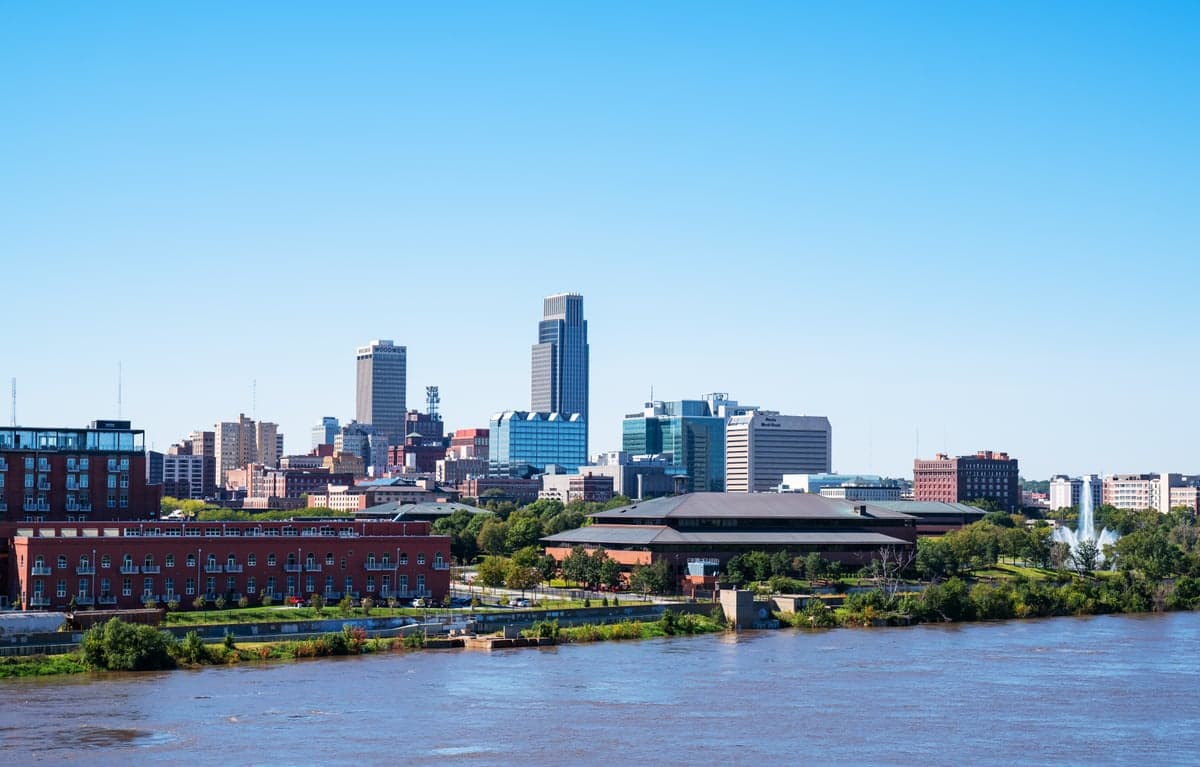
Photo: Wikipedia
Strategic Assessment of Omaha, NE
Multiple tactical vulnerabilities. Population density, target proximity, or disaster risk are likely compounding. A retreat property and exit planning is required.
What does the Strategic Assessment tell us?
Our Strategic Assessment grades tactical survivability of an area. Major population centers, military targets, fallout zones, natural disasters, and border exposure all drive risk — lower exposure means a more defensible position in a crisis.
This is heavily inspired by Joel Skousen's Strategic Relocation book. Highly recommended you checkout the book ($)What does this tell us?
Our Strategic Assessment grades tactical survivability of an area. Major population centers, military targets, fallout zones, natural disasters, and border exposure all drive risk — lower exposure means a more defensible position in a crisis.
This is heavily inspired by Joel Skousen's Strategic Relocation book. Highly recommended you checkout the book ($)Strategic Pillars

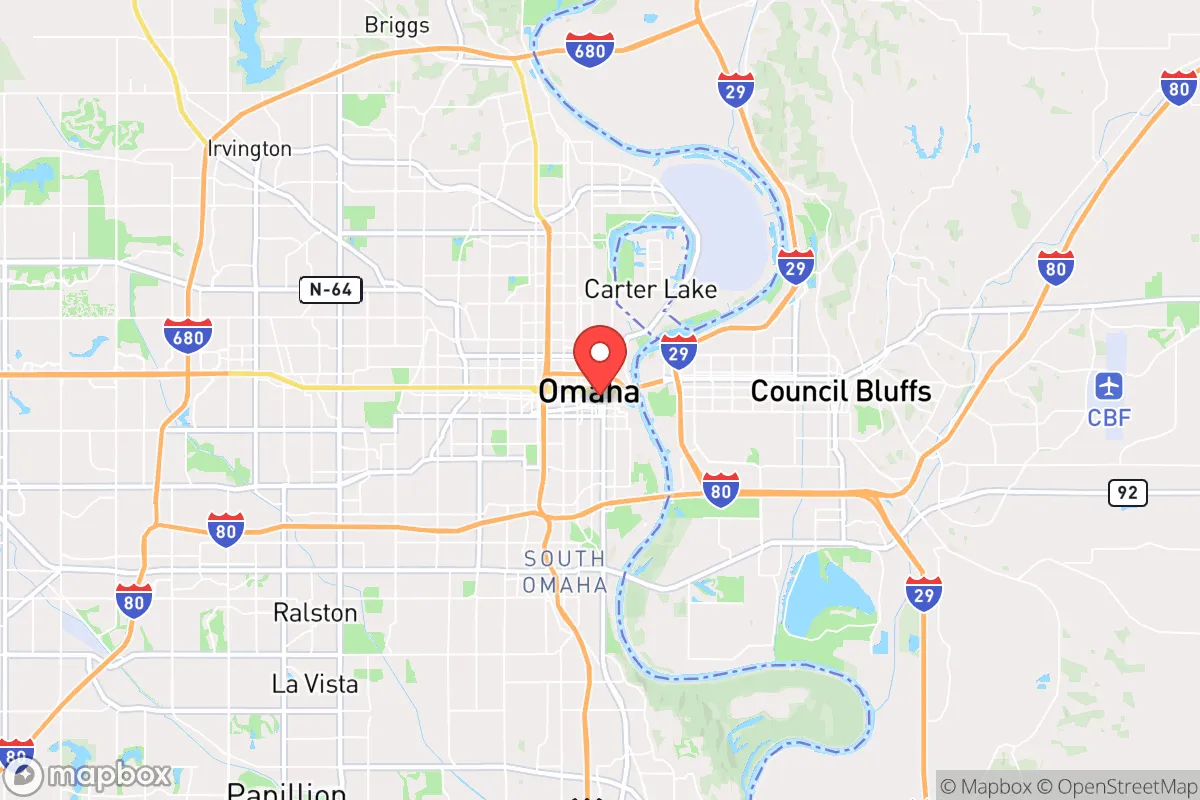
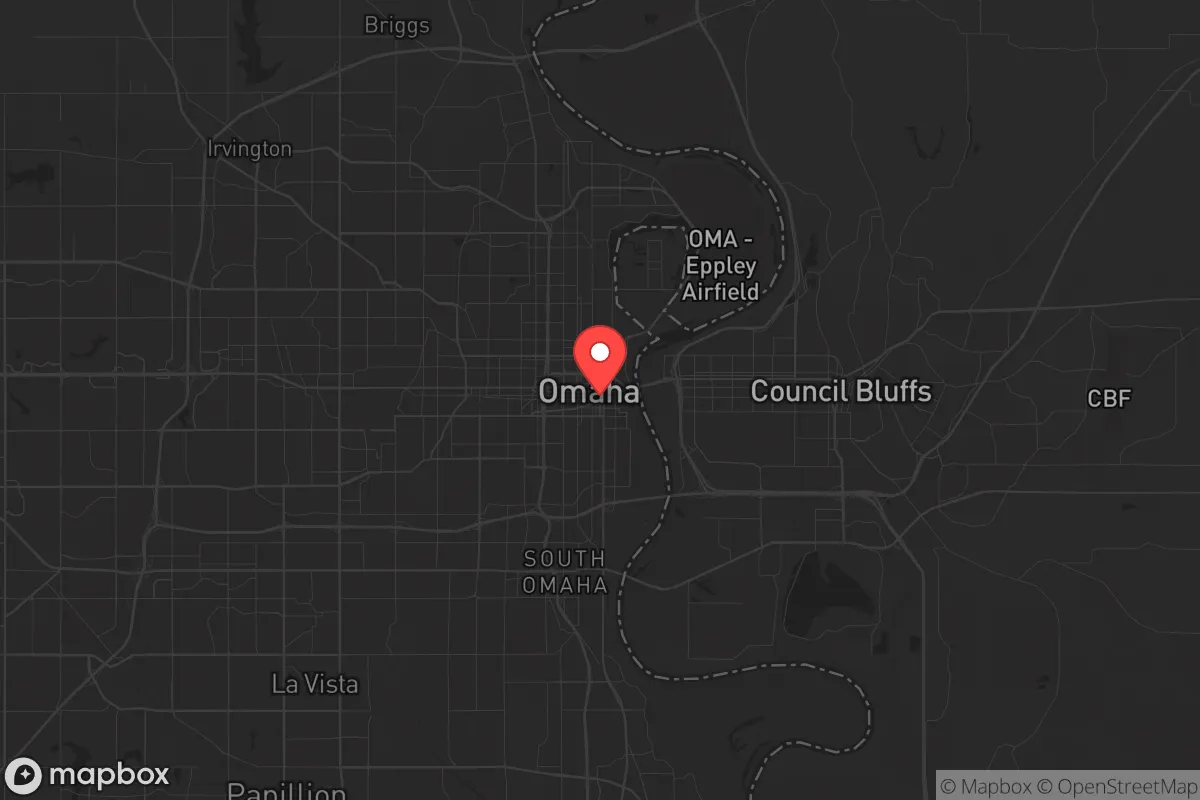
Key Distances
Regional Safe Places
Below is our recommended "safe zones" in Nebraska and the surrounding area based on our strategic heuristics. For most people, it's unrealistic to live in a “safe zone” full-time due to work, family or other personal reasons. They tend to be more rural. However, many of these areas are perfect for second homes and retreat properties that double as a vacation home or even a short-term rental.
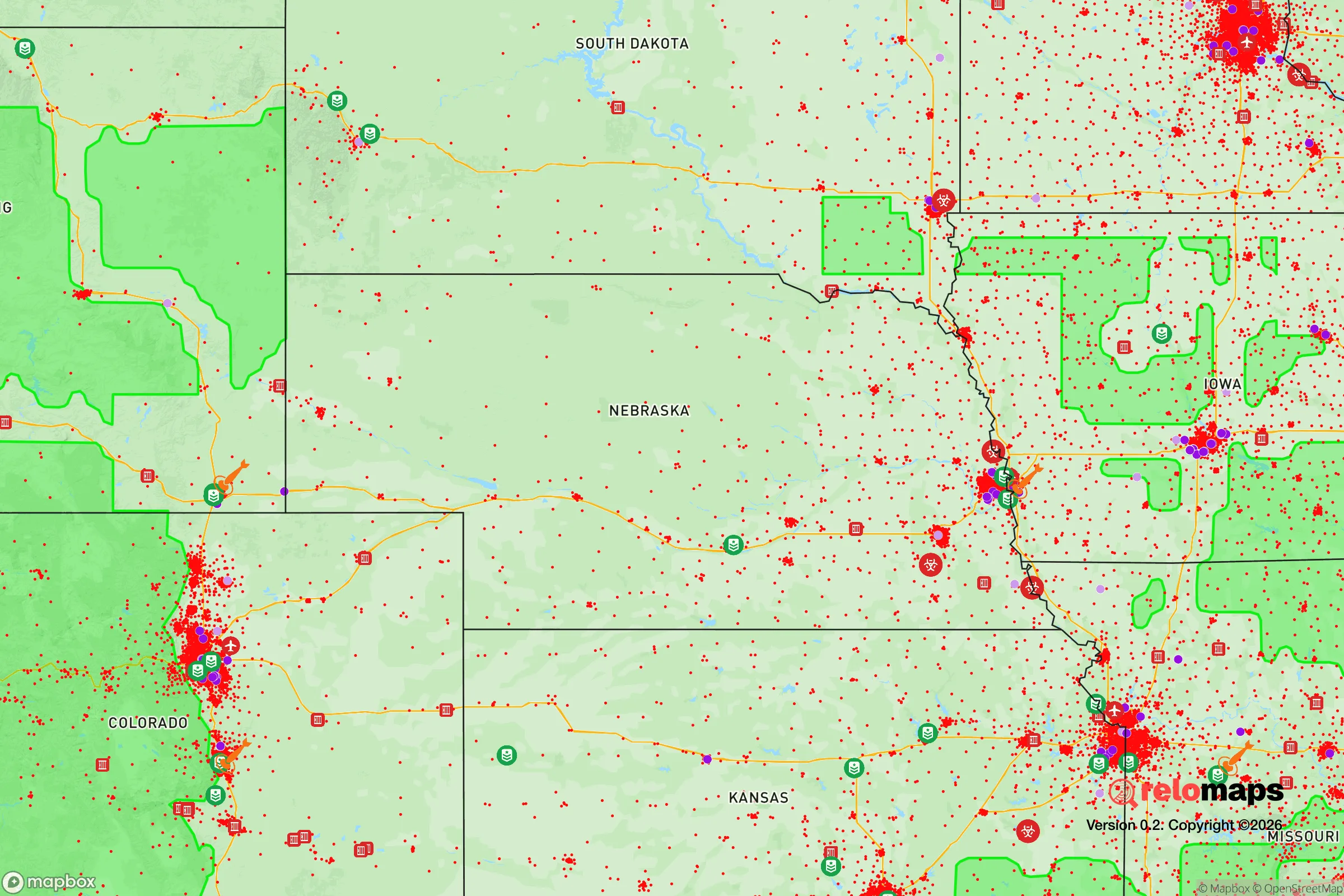
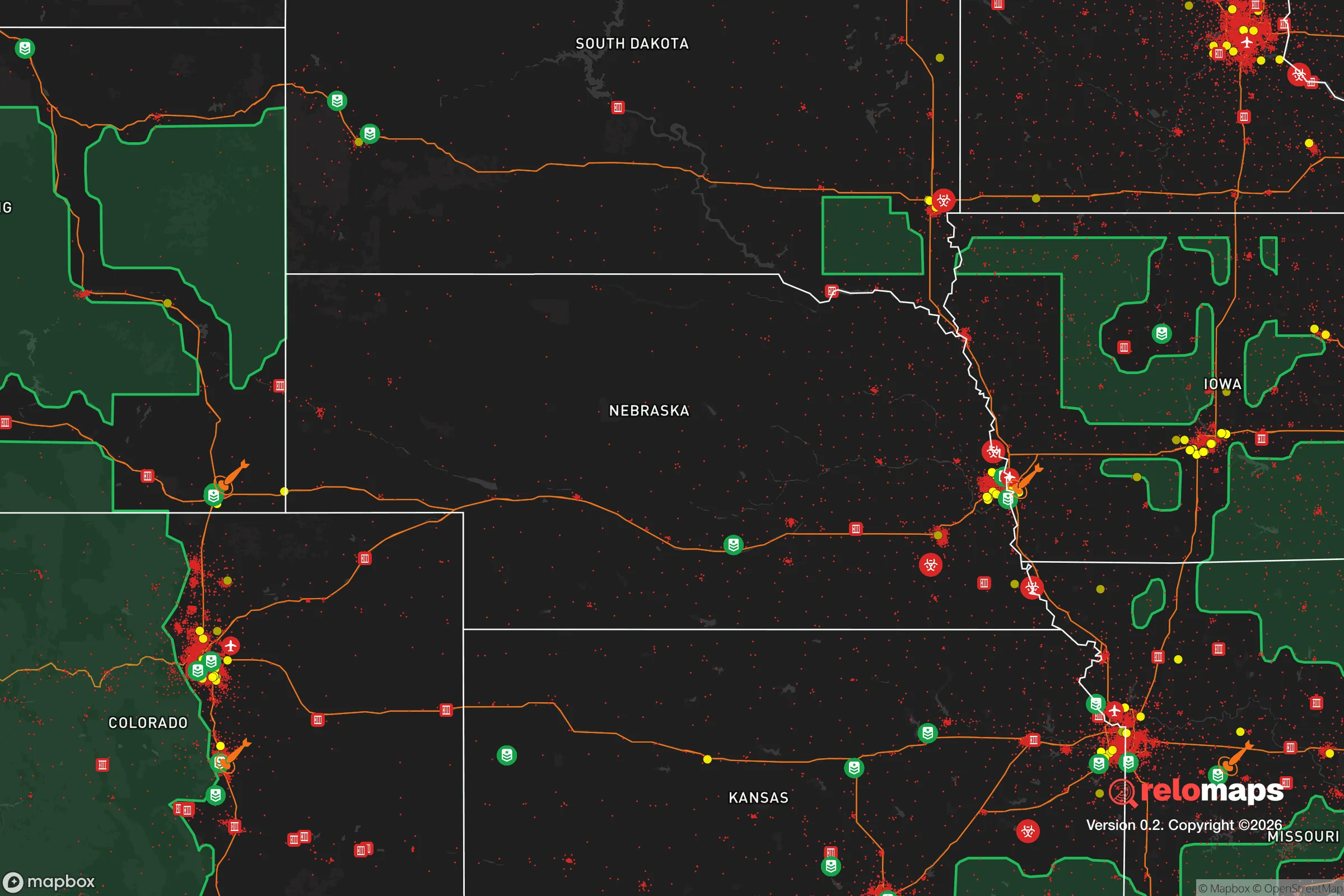


Important Note: For informational purposes only. This does not mean nothing bad ever happens in the green zones. Please use common sense. This is based on public data and modeled with AI. We tried to take a conservative approach but mistakes happen. We update this regularly as new information becomes available.
Solar Generator Recommendations
Backup power matters more here than in safer locations. We've picked three solar generators across budgets and capacity tiers — start with the budget unit if you only need a few essentials, or step up if you want to run a fridge and HVAC for days at a time.

Jackery Portable Power Station Explorer 300
Budget OptionPower on the Go: Weighing only 11 lbs, it's convenient to set up and store with book-sized foldable solar panels

BLUETTI Portable Power Station AC180
Designed for both indoor and outdoor scenarios, AC180 is highly capable as it has a robost capacity and continuous output power.

EF ECOFLOW DELTA Pro Ultra Power Station
Upgraded PickEcoFlow DELTA Pro Ultra is a whole-home energy system designed to grow with your family. Integrated with the Smart Home Panel 2, it scales to meet your evolving energy needs — keeping your home powered, intelligent, and secure through every stage of life.
We earn a commission, at no additional cost to you.
Strategic Assessment Analysis
Omaha, Nebraska, occupies a strategic position that deserves serious consideration for anyone prioritizing long-term stability and resilience. Its location on the western edge of the Missouri River places it at a natural crossroads, but more importantly, it sits far enough from the coasts to avoid the immediate fallout of a major port disruption or a nuclear strike on a coastal megacity. The city’s economic anchor—the presence of U.S. Strategic Command (STRATCOM) at Offutt Air Force Base—means the area is a high-value target in a worst-case scenario, but it also means the region is wired with hardened communications infrastructure, redundant power grids, and a population accustomed to security-minded operations. For a conservative-leaning relocator thinking about civic unrest, mass casualty events, or a general breakdown of order, Omaha offers a mix of industrial capacity, agricultural access, and relative isolation from the chaos of the coasts—but it’s not without serious trade-offs.
Geographic position and natural advantages for long-term stability
Omaha’s geography is its strongest card. The city sits on the eastern edge of the Great Plains, with the Missouri River providing a reliable freshwater source and the Loess Hills offering some natural terrain shielding to the west. The surrounding region is some of the most productive agricultural land in the world—within a 100-mile radius, you’ve got corn, soybeans, cattle, and enough grain elevators to feed the state for years. That’s not theoretical; it’s a tangible buffer against food supply chain disruptions. The climate is continental, with hot summers and cold winters, but it’s not prone to hurricanes, earthquakes, or wildfires. Tornadoes are the primary natural threat, and they’re real—Nebraska averages 50+ tornadoes a year—but they’re localized and survivable with a basement or storm shelter, which most homes here have. The city’s elevation (roughly 1,000 feet above sea level) and inland position mean it’s not a target for storm surge or sea-level rise. For a prepper, the key takeaway is that Omaha has direct access to the Missouri River for water and transport, proximity to the Ogallala Aquifer for groundwater, and a surrounding agricultural belt that could sustain a reduced population indefinitely.
Risks, exposures, and proximity to fallout-relevant landmarks
Here’s where the analysis gets uncomfortable. Omaha’s biggest liability is its own strategic importance. Offutt Air Force Base is the headquarters of U.S. Strategic Command, which controls the nation’s nuclear arsenal. In a peer-level conflict or a major escalation, this facility is a top-tier target. A single warhead on Offutt would produce a fireball and fallout plume that could render much of the Omaha metro area uninhabitable for weeks or months, depending on wind direction. The base is located in Bellevue, just south of downtown, so the entire city is within the high-risk zone. Additionally, the city is a major transportation hub—Interstate 80, the Union Pacific rail yards, and the Eppley Airfield all converge here. In a mass evacuation scenario, these chokepoints would become gridlocked within hours. The proximity to Lincoln (50 miles southwest) and Kansas City (180 miles south) means that any regional unrest or cascading failure would ripple through quickly. For a relocator, the calculus is stark: Omaha’s strategic value makes it a high-probability target in a nuclear exchange, and the city’s population density (roughly 500,000 in the city, 1 million metro) creates a vulnerability to disease outbreaks and civil disorder that a smaller town would not face.
Practical resilience for a relocator: food, water, energy, and defensibility
On the practical side, Omaha has real strengths for someone willing to prepare. The water supply is robust—the Missouri River is a massive, year-round source, and the city’s treatment infrastructure is modern. For a prepper, drilling a private well in the surrounding counties (Sarpy, Douglas, or Washington) is feasible and affordable, with water tables at 50-150 feet. Food security is excellent: the Omaha Farmers Market operates seasonally, but more importantly, the region is dotted with small-scale producers, CSAs, and bulk food co-ops. The Nebraska Food Cooperative and local butcher shops like Just Good Meat provide direct access to locally raised beef and pork. Energy is a mixed bag. Omaha Public Power District (OPPD) runs a mix of coal, natural gas, and nuclear (the Fort Calhoun plant, though decommissioned in 2016, still has spent fuel on site). The grid is stable but not hardened against EMP—no civilian grid is. For defensibility, Omaha is flat and open, which makes it hard to secure a perimeter but easy to observe approaching threats. The city’s suburban fringe (Elkhorn, Gretna, Bennington) offers more space for a homestead with a well, solar panels, and a root cellar. The biggest practical advantage is the concentration of medical infrastructure—the Nebraska Medical Center and CHI Health system are world-class, and in a mass casualty event, that’s a lifeline. But the trade-off is that you’re competing with a million other people for those resources when things go sideways.
The overall strategic picture for Omaha is one of high potential paired with high risk. If you’re looking for a place that combines industrial resilience, agricultural access, and a conservative-leaning population that values self-reliance, this region checks many boxes. The local culture is rooted in Midwestern pragmatism—people here are generally armed, community-oriented, and skeptical of federal overreach. The state’s gun laws are favorable (constitutional carry, no state-level red flag law), and property taxes are high but the cost of living is still below the national average. However, the proximity to a primary nuclear command center means that in a worst-case scenario, Omaha is not a safe haven—it’s a target. For a single individual or a family willing to invest in a rural property within a 30- to 60-minute drive of the city (think places like Blair, Wahoo, or Plattsmouth), you can get the benefits of the city’s infrastructure while maintaining a bug-out location that’s defensible and self-sufficient. The smart play here is to treat Omaha as a hub for supplies, medical care, and community networking, but not as your primary residence in a collapse scenario. If you can afford a dual-property setup—a suburban home with a well and solar, plus a rural retreat farther west—Omaha’s strategic value becomes a net positive. If you’re looking for a single location to ride out the storm, you’d be better served by a smaller town in the Nebraska Sandhills or the Black Hills of South Dakota. Omaha is a fortress with a bullseye on it—useful, but only if you know how to use it without being caught in the blast.

* Values derived from national, state, county, city and local statistics and may differ in a specific area. Last updated: 2026-04-15T23:39:28.000Z
Narrative content on this page is AI-generated and may contain mistakes. Verify any details that matter before acting on them.
ReloMaps may earn a commission from affiliate links at no extra cost to you.

