
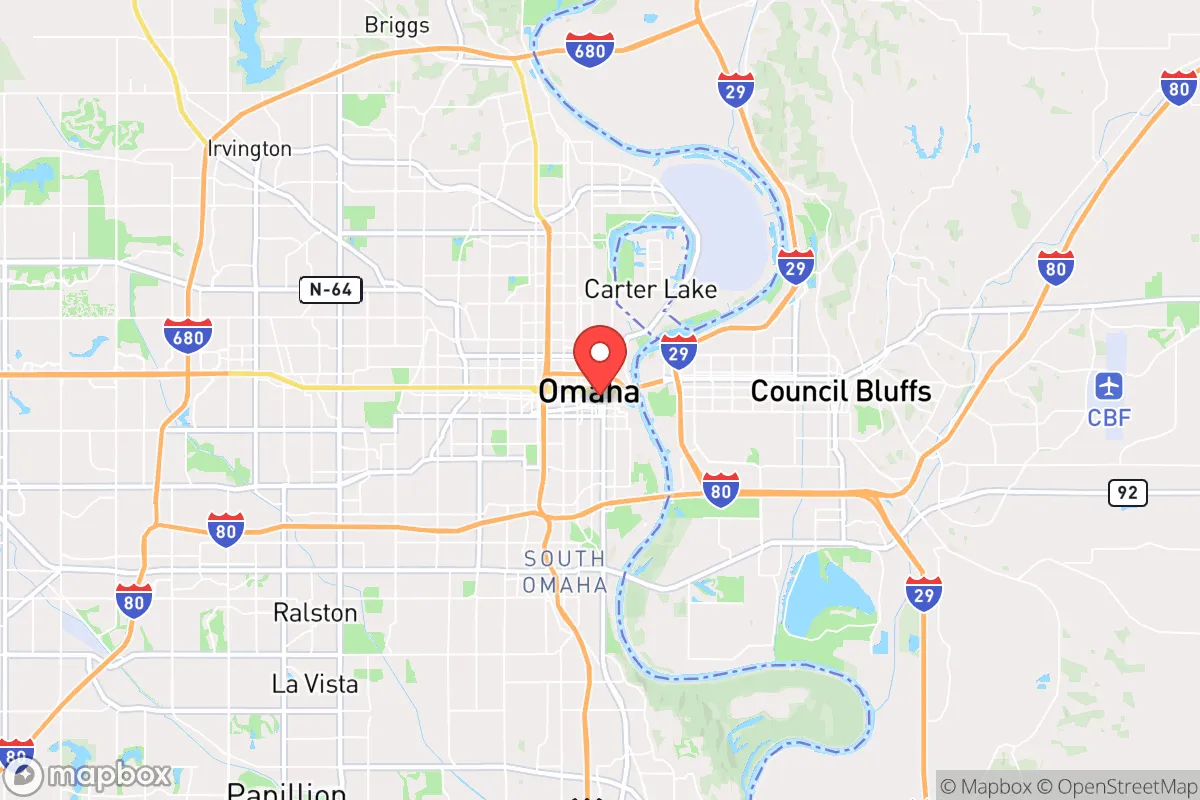
Photo: Wikipedia
Quality of Life in Omaha, NE
Above-average quality of iife. The area offers a reasonable cost of living, decent mobility, and a mix of neighborhood amenities.
What does Quality of Life tell us?
Quality of Life blends cost of living, nearby amenities, socioeconomic signals, and neighborhood character. City-level scores represent the whole municipality; individual neighborhoods can differ.
What does this tell us?
Quality of Life blends cost of living, nearby amenities, socioeconomic signals, and neighborhood character. City-level scores represent the whole municipality; individual neighborhoods can differ.
Cost of Living
8% below national average
The Real Cost of Living in Omaha, NE for 2026
| Tier | Individual | Family (4) |
|---|---|---|
| Survival | $18k | $35k |
| Comfortable | $45k | $66k |
| Luxury | $131k+ | $204k+ |
| Elite (Top 5%) | $173k+ | $268k+ |
111%
The Area Signal
A metric tracking the socioeconomic signals of the area.


Hobbies
Explore the areaGroceries
5 within 10 miles
Gas
0 within 10 miles
Hospital
3 within 20 miles
Airport
MCI — Kansas City International
Post Office
USPS — Omaha, NE
Critical Amenities
Quality-of-Life Analysis
Omaha, Nebraska, presents a quality of life defined by Midwestern stability, a growing economy, and a cost of living that consistently undercuts national averages. The city’s 1.4 million residents in the metro area include a mix of young professionals drawn to the insurance and finance sectors, families seeking affordable homeownership, and retirees attracted to the region’s low crime rates and accessible healthcare. With a cost of living index of 92 (100 = U.S. average), Omaha offers a tangible financial advantage over peer cities like Des Moines or Kansas City, while maintaining a slower, more predictable daily rhythm than coastal metros.
Cost of living, housing affordability, and how Omaha compares to nearby cities
Omaha’s affordability is its strongest draw. The median home value sits at $230,100, roughly 30% below the national median, while the median rent of $1,150 is similarly accessible. This places Omaha well below Lincoln (median home value ~$260,000) and far under Denver or Minneapolis, where comparable homes often exceed $400,000. The average commute of 19.6 minutes is among the shortest for a metro of this size, meaning residents spend less time in traffic and more time at home or on local errands. Property taxes in Douglas County hover around 1.8% of assessed value, which is moderate for the region, though slightly higher than in neighboring Sarpy County. For renters, the market remains balanced: a one-bedroom in the popular Dundee or Blackstone neighborhoods averages $1,000–$1,300, while suburban options in Papillion or Elkhorn often dip below $1,100. Overall, a household earning the metro’s median income of roughly $70,000 can comfortably afford a mortgage on a three-bedroom home, a feat increasingly rare in larger U.S. cities.
What daily life is like for families: schools, amenities, and neighborhood rhythm
Daily life in Omaha centers on a network of well-regarded public schools, extensive parks, and a surprisingly robust cultural scene. The Omaha Public Schools district offers magnet programs and International Baccalaureate options, while suburban districts like Millard and Elkhorn consistently rank among Nebraska’s top performers. The city’s Henry Doorly Zoo and Aquarium, consistently rated one of the world’s best, anchors family outings, while the Old Market district provides walkable dining, independent bookstores, and live music. Commute times under 20 minutes mean parents can drop kids at school, reach an office downtown or in West Omaha, and return for evening activities without the grind seen in Chicago or St. Louis. The city’s 1,200+ acres of parkland, including the extensive Fontenelle Forest and the paved Keystone Trail system, support biking, running, and kayaking on the Missouri River. Winters are cold (average January high of 31°F) but manageable, with most neighborhoods plowed efficiently. The lack of major natural disasters—no hurricanes, earthquakes, or wildfires—adds a layer of predictability that families and retirees find reassuring.
Omaha is best suited for those who prioritize financial stability, short commutes, and a strong sense of community over the high-energy bustle of coastal cities. Young professionals in finance, insurance, and healthcare will find ample opportunity at employers like Berkshire Hathaway, Mutual of Omaha, and the University of Nebraska Medical Center. Families will appreciate the affordable housing and top-tier schools, while retirees benefit from low crime rates and accessible medical facilities. The city’s trade-off is a quieter social scene and fewer extreme outdoor adventures than Denver or Portland, but for anyone seeking a balanced, low-stress environment where a dollar goes further, Omaha delivers consistently.

Crime in Omaha, NE
Higher crime rates than 58% of comparable U.S. locations.
Violent CrimeViolent Crime Analysis
Property CrimeProperty Crime Analysis
Crime Analysis
Omaha presents a mixed safety profile for potential residents. The city’s violent crime rate of 345.6 per 100,000 residents is notably higher than the national average, while its property crime rate of 2,775.8 per 100,000 significantly exceeds both state and national benchmarks. These figures place Omaha in a category where crime is a tangible concern, particularly when considering the broader context of the metro area’s justice system.
Crime in context
When compared to Nebraska’s statewide violent crime rate of roughly 250 per 100,000, Omaha’s rate is about 38% higher. The property crime rate is even more stark: the state average hovers around 1,900 per 100,000, making Omaha’s rate nearly 46% above the state norm. Nationally, the 2023 violent crime rate was approximately 380 per 100,000, placing Omaha slightly below that mark, but its property crime rate is roughly 60% higher than the U.S. average of about 1,700 per 100,000. These disparities are amplified by the progressive judicial philosophy prevalent in Douglas County. Liberal district attorneys and judges in the Omaha metro area often prioritize rehabilitation over incarceration, which critics argue leads to shorter sentences and more offenders returning to the streets. This approach, while sympathetic to offenders, directly contributes to higher recidivism and undermines public safety, as repeat property and violent offenders cycle through the system with limited consequences.
What residents experience
For daily life, the high property crime rate is the most immediate concern. Auto theft, burglary, and larceny are common, with property crime occurring at a rate of nearly 8 incidents per 1,000 residents per year. Residents report that package theft and vehicle break-ins are routine in many neighborhoods, especially near downtown and midtown. Violent crime, while less frequent, is concentrated in specific areas and often involves disputes among individuals known to each other, but random acts of violence do occur. The progressive justice system’s focus on “restorative justice” and diversion programs means that many offenders avoid jail time for non-violent property crimes, a policy that frustrates victims and emboldens repeat offenders. This creates a perception that the system is lenient, which can erode trust in law enforcement and community safety initiatives.
Neighborhood-level variation is significant. West Omaha, including areas like Elkhorn and Millard, generally sees lower crime rates, with violent crime often below 200 per 100,000 and property crime closer to the national average. In contrast, North Omaha and parts of South Omaha experience violent crime rates exceeding 600 per 100,000, with property crime also elevated. The downtown core and areas near the University of Nebraska at Omaha have moderate crime levels, but property crime remains a persistent issue. Prospective residents should research specific zip codes and consult local crime maps, as the difference between a safe block and a high-risk one can be just a few streets. The overarching influence of progressive judicial policies means that even in lower-crime neighborhoods, the risk of property crime is elevated compared to similarly sized cities in more conservative judicial districts.
* Values derived from national, state, county, city and local statistics and may differ in a specific area. Last updated: 2026-04-15T23:39:28.000Z
Narrative content on this page is AI-generated and may contain mistakes. Verify any details that matter before acting on them.
ReloMaps may earn a commission from affiliate links at no extra cost to you.

