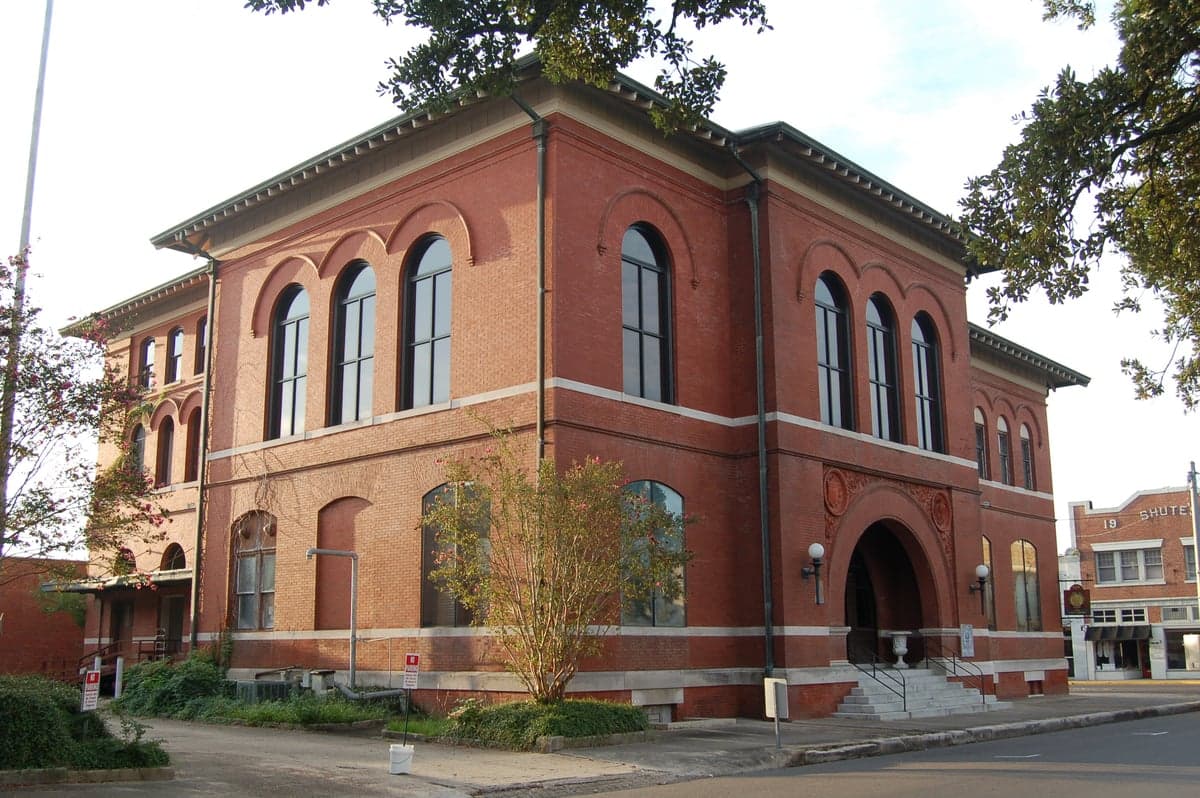
Photo: Wikipedia
Demographics of Opelousas, LA
Affluence Level in Opelousas, LA
A low-income area with significant economic hardship. Household wealth and educational attainment are well below national averages.
People of Opelousas, LA
Opelousas, Louisiana, is a small, deeply historic city where the population today is overwhelmingly Black (78.5%) and native-born (99.5% U.S.-born), with a white population of 16.1% and a tiny Hispanic share of 2.6%. The city’s character is defined by its Creole and Cajun roots, a strong sense of place, and a population density of roughly 1,200 people per square mile that gives it a compact, walkable feel. With only 10.9% of adults holding a college degree, the workforce is heavily blue-collar, tied to agriculture, healthcare, and local government. Opelousas is a place where family history runs deep, and the population is both stable and slowly declining.
How the city was settled and grew
Opelousas was founded in the 1720s as a French colonial trading post, making it one of the oldest settlements in Louisiana. The original European settlers were French and Acadian (Cajun) farmers who established homesteads along Bayou Teche and the surrounding prairie. The Faubourg district, the city’s oldest neighborhood, was built by these early French and Creole families, with its narrow streets and shotgun houses reflecting a mix of French and African architectural influences. By the early 1800s, the region’s cotton and sugar plantations drew enslaved Africans, who became the foundation of the Black population that still dominates today. After the Civil War, freedmen established the South City neighborhood, a historically Black area centered around Church Street and the St. Landry Parish courthouse, where many descendants still live. A second wave of European immigration came in the late 1800s, with Italian and German families settling in the North City district, working as merchants, grocers, and farmers. The city’s growth plateaued after World War II, as the agricultural economy mechanized and younger generations began moving to larger cities like Lafayette and Baton Rouge.
Modern era (post-1965)
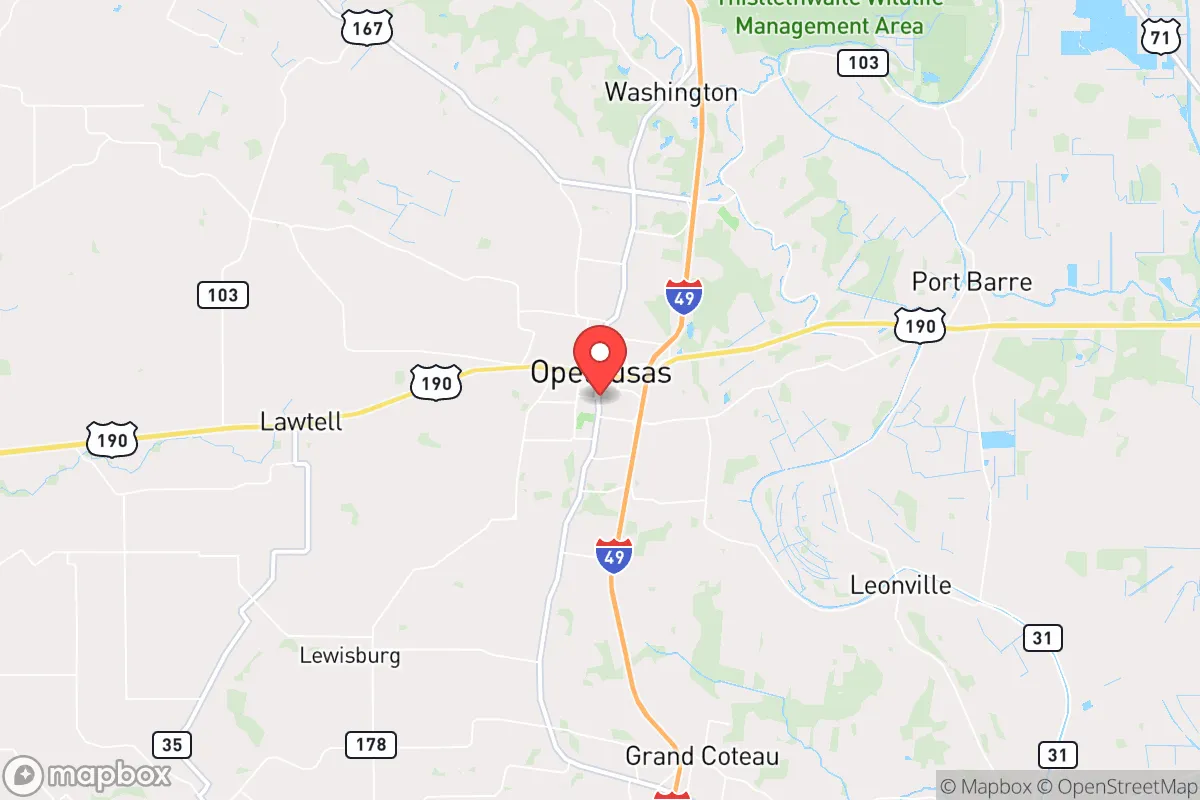
After the 1965 Hart-Cellar Act, Opelousas saw virtually no new international immigration—the foreign-born share today is just 0.5%, and East/Southeast Asian and Indian-subcontinent populations are both at 0.0%. Instead, the city’s demographic story since the 1970s has been one of domestic out-migration and racial consolidation. White families, who once made up a majority, began leaving for suburban areas like Sunset and Grand Coteau in the 1980s and 1990s, a pattern common across rural Louisiana. This white flight concentrated the remaining white population (16.1%) in the Eastgate subdivision, a newer, more affluent area near the Opelousas General Hospital. Meanwhile, the Black population grew to its current 78.5% share as families moved from rural farms into the city’s core neighborhoods—South City and Faubourg—for better access to schools and healthcare. The Hispanic population, at 2.6%, is a recent arrival, primarily Mexican and Central American laborers working in the region’s crawfish and rice farms, settling in the West End area near Highway 190. The city’s population has declined from a peak of roughly 23,000 in 1980 to 15,662 today, reflecting a broader rural exodus.
The future
Opelousas is likely to continue its slow population decline, with the Black share remaining dominant and the white share shrinking further as older residents pass away and younger families leave for job markets in Lafayette (30 miles south) or Houston. The Hispanic population, though small, is the only group showing growth, and it may double to 5-6% over the next decade as agricultural labor demand persists. The city is not tribalizing into new enclaves; instead, it is homogenizing as the Black population consolidates in the historic core neighborhoods, while the remaining white and Hispanic residents cluster in Eastgate and the West End, respectively. No significant immigrant communities are expected to form, given the lack of economic pull factors and the low college attainment rate. The next 10-20 years will likely see Opelousas become an even more uniformly Black, older, and poorer city, with a population that may dip below 14,000.
For someone moving in now, Opelousas offers a deeply rooted, affordable community with a strong Creole identity, but it is a city in demographic contraction. New residents will find a place where family ties matter, housing is cheap, and the pace is slow—but where economic opportunity is limited and the population is not diversifying. It is best suited for those seeking a quiet, low-cost life in a historically rich setting, rather than for those looking for growth or a multicultural mix.

* Values derived from national, state, county, city and local statistics and may differ in a specific area. Last updated: 2026-05-01T04:12:49.000Z
Narrative content on this page is AI-generated and may contain mistakes. Verify any details that matter before acting on them.
ReloMaps may earn a commission from affiliate links at no extra cost to you.

