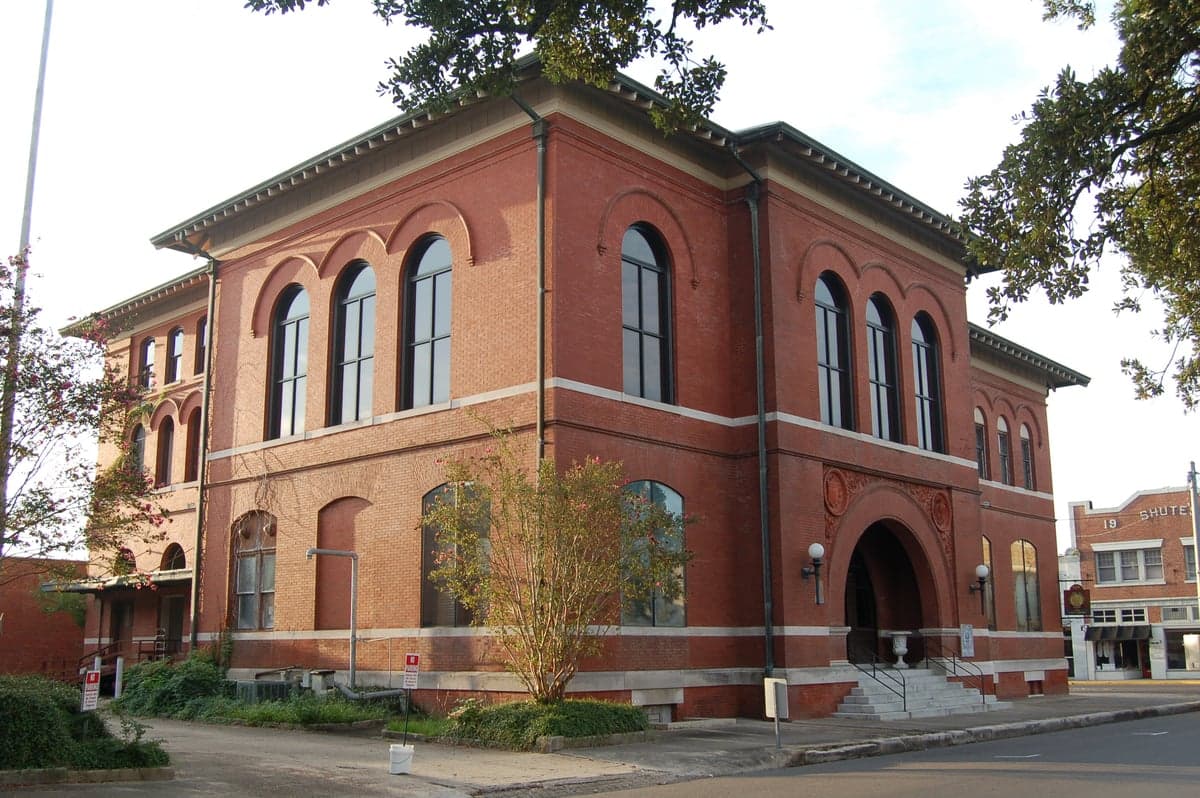
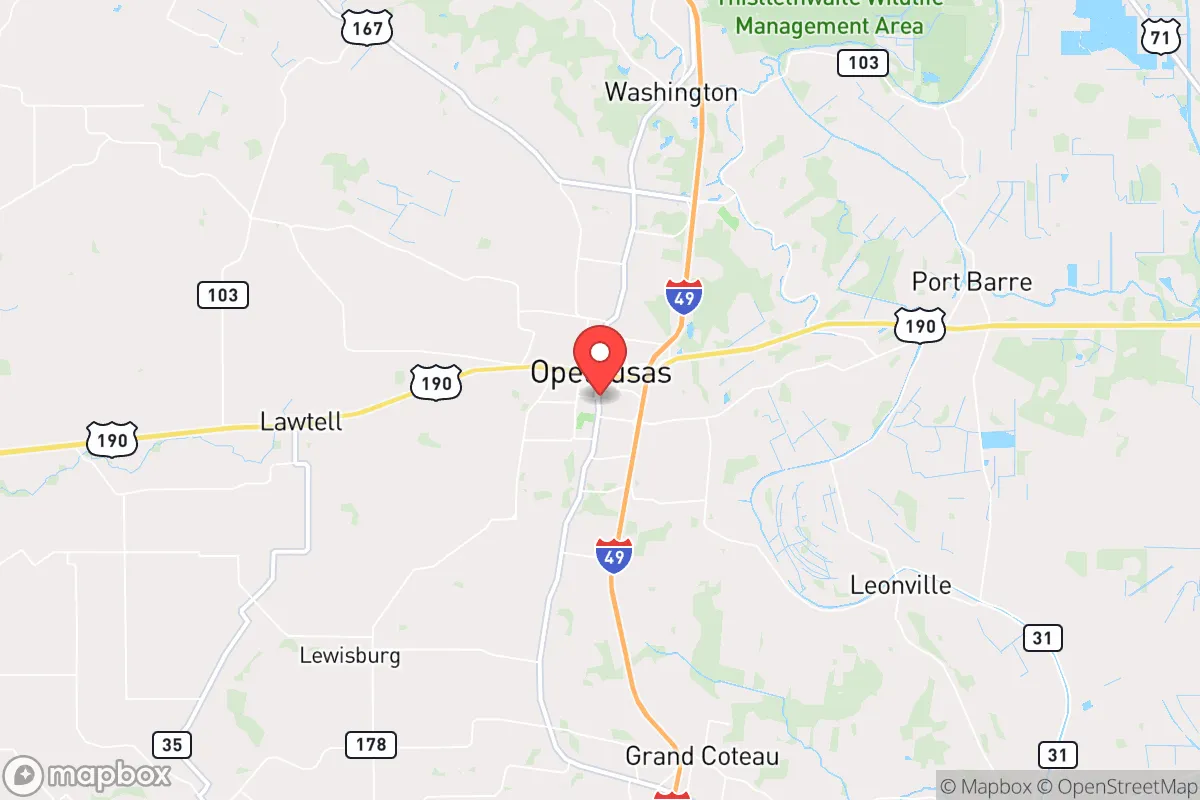
Photo: Wikipedia
Strategic Assessment of Opelousas, LA
Meaningful friction. Expect exposure to either population pressure, blast zones, or natural disaster risk. Consider buying a retreat property.
What does the Strategic Assessment tell us?
Our Strategic Assessment grades tactical survivability of an area. Major population centers, military targets, fallout zones, natural disasters, and border exposure all drive risk — lower exposure means a more defensible position in a crisis.
This is heavily inspired by Joel Skousen's Strategic Relocation book. Highly recommended you checkout the book ($)What does this tell us?
Our Strategic Assessment grades tactical survivability of an area. Major population centers, military targets, fallout zones, natural disasters, and border exposure all drive risk — lower exposure means a more defensible position in a crisis.
This is heavily inspired by Joel Skousen's Strategic Relocation book. Highly recommended you checkout the book ($)Strategic Pillars

Key Distances
Regional Safe Places
Below is our recommended "safe zones" in Louisiana and the surrounding area based on our strategic heuristics. For most people, it's unrealistic to live in a “safe zone” full-time due to work, family or other personal reasons. They tend to be more rural. However, many of these areas are perfect for second homes and retreat properties that double as a vacation home or even a short-term rental.

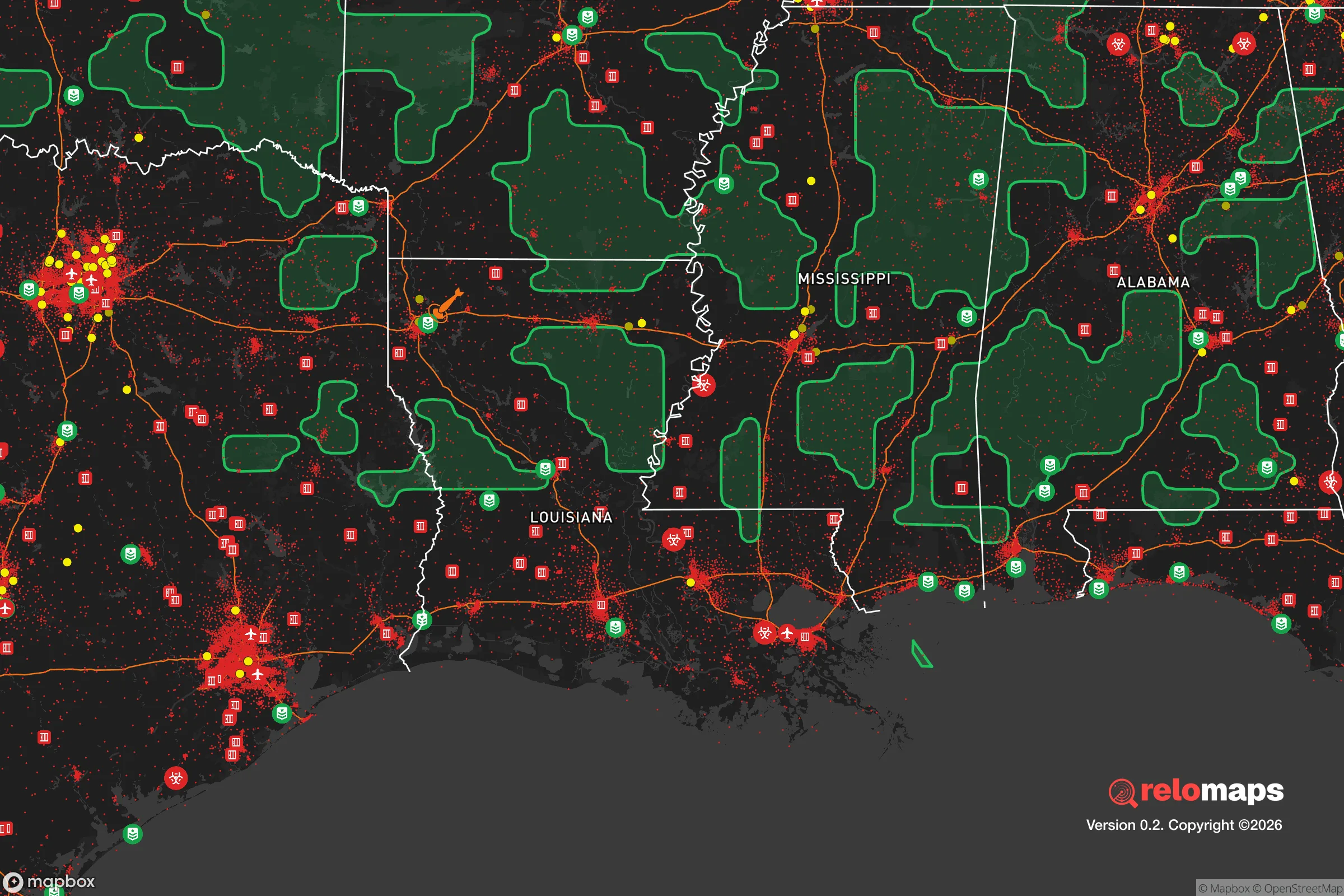


Important Note: For informational purposes only. This does not mean nothing bad ever happens in the green zones. Please use common sense. This is based on public data and modeled with AI. We tried to take a conservative approach but mistakes happen. We update this regularly as new information becomes available.
Solar Generator Recommendations
Backup power matters more here than in safer locations. We've picked three solar generators across budgets and capacity tiers — start with the budget unit if you only need a few essentials, or step up if you want to run a fridge and HVAC for days at a time.

Jackery Portable Power Station Explorer 300
Budget OptionPower on the Go: Weighing only 11 lbs, it's convenient to set up and store with book-sized foldable solar panels

BLUETTI Portable Power Station AC180
Designed for both indoor and outdoor scenarios, AC180 is highly capable as it has a robost capacity and continuous output power.

EF ECOFLOW DELTA Pro Ultra Power Station
Upgraded PickEcoFlow DELTA Pro Ultra is a whole-home energy system designed to grow with your family. Integrated with the Smart Home Panel 2, it scales to meet your evolving energy needs — keeping your home powered, intelligent, and secure through every stage of life.
We earn a commission, at no additional cost to you.
Strategic Assessment Analysis
Opelousas, Louisiana, sits in a part of the country that is often overlooked by the prepper and survivalist community, but that neglect might be its greatest strategic asset. Located in St. Landry Parish, roughly halfway between the larger population centers of Lafayette and Alexandria, this small city of about 15,000 offers a mix of geographic isolation and practical infrastructure that makes it worth a hard look for anyone serious about long-term resilience. The area’s position on the I-49 corridor provides a decent evacuation route north, while its distance from the Gulf Coast reduces—though does not eliminate—exposure to hurricane storm surge and the chaos that follows a major landfall event.
Geographic position and natural advantages for long-term survival
Opelousas sits on the southwestern edge of the Mississippi River Alluvial Plain, a region characterized by flat, fertile land and a network of bayous and rivers that historically made travel difficult—which is exactly what you want when thinking about defensibility and retreat. The area is not a major transportation hub, meaning it avoids the choke points and target value of cities like Baton Rouge or New Orleans. The Atchafalaya Basin, one of the largest swamp ecosystems in the country, lies to the east, creating a natural barrier that would slow any large-scale movement of people or vehicles in a crisis. To the north, the Kisatchie National Forest offers a vast, sparsely populated buffer zone that could serve as a fallback area if things get really bad. The climate is humid subtropical, with long growing seasons that support year-round gardening and small-scale agriculture—a critical advantage for anyone planning to produce their own food. The average annual rainfall is around 60 inches, which means water availability is generally not a concern, though you’ll want to plan for proper drainage and flood mitigation on any property you acquire.
Risks, exposures, and proximity to fallout-relevant landmarks
No place is perfect, and Opelousas has its share of vulnerabilities that a serious relocator needs to account for. The most obvious risk is hurricane-related flooding and wind damage. While the city is about 60 miles inland, it is still within the cone of uncertainty for major storms that make landfall along the Louisiana coast. Hurricane Laura in 2020 and Hurricane Ida in 2021 both caused significant tree damage and power outages in the area, even though the worst winds stayed south. Flooding is a real concern in low-lying parts of St. Landry Parish, particularly along Bayou Teche and the surrounding drainage basins. You’ll want to check FEMA flood maps carefully before buying land—elevation matters here more than in many other parts of the country. On the man-made risk side, Opelousas is about 90 miles from the Louisiana Chemical Corridor (often called "Cancer Alley") along the Mississippi River between Baton Rouge and New Orleans. That corridor is packed with refineries, chemical plants, and LNG terminals that are prime targets for sabotage, terrorism, or industrial accidents. A major event at one of those facilities could send a toxic plume or cause a cascading infrastructure failure that would affect the entire region. The city is also about 120 miles from the River Bend Nuclear Station near St. Francisville, which is a single-unit reactor that, while not a high-risk design, is still a potential target in a widespread conflict scenario. Proximity to I-49 is a double-edged sword: it gives you an evacuation route, but it also means that in a mass evacuation event, that highway could become a parking lot or a chokepoint for looters and refugees moving north.
Practical resilience for a relocator: food, water, energy, and defensibility
For someone looking to set up a sustainable homestead or retreat, Opelousas offers a surprisingly solid foundation. The soil in St. Landry Parish is generally good for gardening, with a mix of silt loam and clay that supports vegetables, fruit trees, and even rice if you have the right low-lying land. The growing season runs from March to November, giving you a solid eight months of production. Local farmers’ markets and feed stores are common, and the rural culture means that most people already have some level of self-sufficiency skills—hunting, fishing, canning, and basic animal husbandry are normal here, not fringe activities. Water is abundant from rainfall and shallow groundwater, but you should plan on drilling a well and installing a rainwater catchment system as a primary source, since municipal water treatment could fail in a prolonged grid-down scenario. The area is not particularly well-suited for solar power compared to the Southwest—cloud cover and frequent storms reduce average insolation—but a properly sized solar array with battery storage can still meet most household needs. Backup generators running on propane or diesel are common and advisable. Defensibility is a mixed bag. The flat terrain and open agricultural fields mean that a property with a clear line of sight and a good perimeter fence is possible, but you won’t have the natural cover of mountainous terrain. The local population is predominantly rural and conservative, which generally means a higher density of firearm ownership and a culture of mutual aid among neighbors—both positive factors for community resilience. However, Opelousas itself has a higher-than-average crime rate for a small city, with property crime being the main concern. That means you’ll want to avoid living inside the city limits and instead look at the surrounding unincorporated areas or small towns like Ville Platte, Eunice, or Washington, where the population density drops and the sense of community tightens.
The overall strategic picture for Opelousas is one of cautious opportunity. It is not a perfect retreat location—the hurricane risk and proximity to industrial targets are real downsides—but it offers a combination of affordable land, abundant water, a long growing season, and a culturally aligned population that is hard to find in other parts of the country. For a single individual or a family looking to relocate with a prepper mindset, the key is to buy outside the city, get elevation data, and build a network with local homesteaders and farmers before you need them. The area’s isolation from major population centers is its strongest card, and in a world where the coasts are becoming increasingly unstable—both politically and environmentally—that isolation is worth a premium. If you can handle the humidity and the occasional hurricane scare, Opelousas deserves a spot on your short list.

* Values derived from national, state, county, city and local statistics and may differ in a specific area. Last updated: 2026-05-01T04:12:49.000Z
Narrative content on this page is AI-generated and may contain mistakes. Verify any details that matter before acting on them.
ReloMaps may earn a commission from affiliate links at no extra cost to you.

