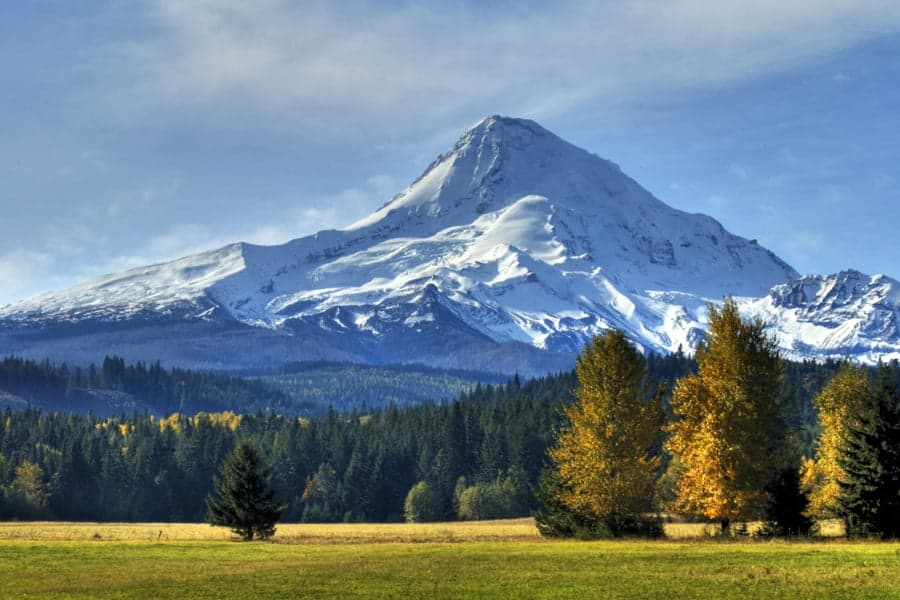
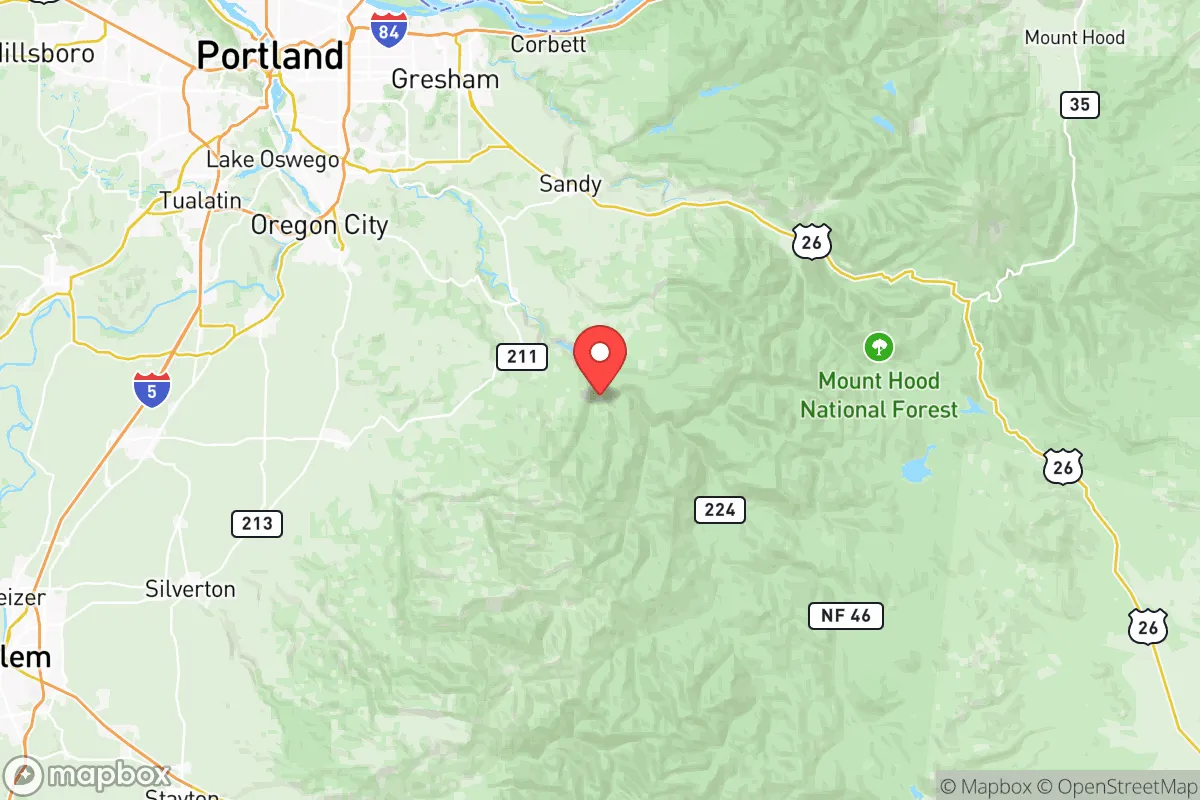
Photo: Wikipedia
Personal Sovereignty in Clackamas County
Viable for self-reliance. Generally workable, though some barriers may limit total independence.
What does Personal Sovereignty tell us?
Personal Sovereignty measures your capacity for self-reliance and independence with minimal government friction. Higher scores mean fewer barriers between you and the way you want to live... but it assumes you have the space you need and good neighbors.
What does this tell us?
Personal Sovereignty measures your capacity for self-reliance and independence with minimal government friction. Higher scores mean fewer barriers between you and the way you want to live... but it assumes you have the space you need and good neighbors.
State Policy
Energy independence: Importer (35% of energy produced in-state)
Personal Liberty
Homesteading

Personal Liberty Analysis
Clackamas County, Oregon, presents a complex and often contradictory environment for personal sovereignty, where the promise of rural self-reliance clashes with the expanding reach of state-level mandates from Portland and Salem. While the county itself offers more breathing room than neighboring Multnomah County, residents must navigate a state government that has increasingly centralized control over taxation, land use, and personal liberties. For the individual or family seeking to maximize autonomy—whether through self-defense, off-grid living, or resisting government overreach—the key is understanding where within the county the regulatory grip loosens and where it tightens. The difference between living in the unincorporated foothills near Estacada versus the suburban sprawl of Happy Valley is not just a matter of commute time; it is a fundamental difference in the daily experience of freedom.
Tax burden and regulatory posture: How Clackamas County compares to Portland and Salem
Oregon’s tax structure is a significant constraint on personal sovereignty, and Clackamas County is not exempt. The state has no sales tax, but it compensates with the third-highest combined state and local income tax rate in the nation, peaking at nearly 10% for top earners. Property taxes in Clackamas County are moderate by Oregon standards, averaging around 1.0% of assessed value, but the state’s Measure 5 and Measure 50 caps create a complex system where older homes are taxed far less than newer ones—a hidden trap for newcomers. The regulatory posture is where the real friction lies. Oregon’s Land Use Planning System (Senate Bill 100) strictly controls development, making it difficult to subdivide land or build additional structures without lengthy permitting processes. In towns like Molalla and Canby, the county’s more rural character offers some relief, but even there, the state’s Statewide Planning Goals limit what you can do with your property. For the prepper or homesteader, this means that buying a large lot in Colton or Beavercreek does not guarantee the freedom to build a workshop, a second dwelling, or a root cellar without navigating a bureaucracy that often favors environmental preservation over individual autonomy.
Self-defense and gun law specifics: Navigating Oregon’s shifting landscape
Oregon’s gun laws have become a flashpoint for personal sovereignty, and Clackamas County sits in the middle of the battle. The state’s Measure 114, passed in 2022 but currently tied up in court, would require a permit to purchase a firearm, a waiting period, and a ban on magazines over ten rounds. As of 2026, the measure remains blocked, but the uncertainty has driven many residents to stockpile magazines and train heavily. Clackamas County itself is a Second Amendment sanctuary county, with the sheriff’s office publicly stating it will not enforce unconstitutional gun laws. This creates a practical buffer: in towns like Sandy and Estacada, gun culture is strong, with multiple gun shops, ranges, and training facilities. However, the state’s red flag law (Extreme Risk Protection Order) remains in effect, allowing family members or law enforcement to petition a court to temporarily remove firearms from an individual deemed a risk. For the sovereignty-minded, this is a direct threat to due process. The key takeaway: while Clackamas County offers a more gun-friendly environment than Portland, the legal landscape is fragile. Residents must stay informed and politically active to preserve the right to keep and bear arms without government interference.
Self-reliance and homesteading viability: Lot sizes, zoning, and off-grid feasibility
For those seeking true self-reliance, Clackamas County offers pockets of viability, but the state’s land use laws create significant hurdles. In unincorporated areas like Eagle Creek and Rhododendron, lot sizes of 5 to 20 acres are common, and the county’s Exclusive Farm Use (EFU) zoning allows for agricultural activities, including livestock and crop production. However, off-grid living is heavily restricted. Oregon’s building codes require permits for any permanent structure, and the state’s Department of Environmental Quality (DEQ) mandates strict septic system standards that can cost $10,000 to $30,000 to install. Solar panels are allowed, but net metering policies are controlled by the state’s investor-owned utilities, like Portland General Electric, which can limit your ability to disconnect from the grid entirely. Rainwater collection is legal but regulated, and wells require permits and testing. The most viable areas for homesteading are the foothills of the Cascade Range, near Welches and Government Camp, where the population is sparse and enforcement is less aggressive. But even there, the state’s Wildfire Hazard Maps and Defensible Space Requirements impose additional regulations on vegetation management and building materials. For the serious prepper, Clackamas County offers a compromise: you can achieve a high degree of self-sufficiency, but you will always be operating within a state framework that prioritizes collective safety over individual freedom.
Personal liberties: Parental rights, medical autonomy, speech, and property
Personal liberties in Clackamas County are a mixed bag, heavily influenced by state-level policies. Parental rights have been a battleground, with Oregon’s Student Success Act and Equity in Education mandates giving schools broad authority over curriculum and student health decisions. In more conservative towns like Molalla and Canby, school boards have pushed back against state overreach, but parents must remain vigilant. Medical autonomy is similarly constrained: Oregon has no religious or philosophical exemptions for childhood vaccinations, and the state’s Death with Dignity Act and Measure 110 (drug decriminalization, partially repealed in 2024) reflect a government that intervenes heavily in personal health choices. Free speech is protected under the Oregon Constitution, but the state’s Bias Crime Laws and Hate Speech statutes can be used to prosecute speech deemed threatening or harassing, creating a chilling effect for those who hold unpopular opinions. Property rights are the most constrained: Oregon’s Land Use Board of Appeals (LUBA) can overturn local zoning decisions, and the state’s Environmental Protection Laws allow for restrictions on logging, mining, and development that can devalue private land. In Clackamas County, the tension is palpable: you can own land, but you cannot always do what you want with it.
Overall, Clackamas County offers a relative haven for personal sovereignty compared to Portland or Salem, but it is far from a libertarian paradise. The state’s heavy hand in taxation, land use, and health mandates means that true autonomy requires constant vigilance and a willingness to engage in local politics. For the individual or family willing to navigate these constraints, areas like Estacada, Sandy, and Molalla provide a stronger foundation for self-reliance than most of the Willamette Valley. But for those seeking maximum sovereignty, the rural counties east of the Cascades—or even neighboring Washington’s more gun-friendly and tax-averse areas—may offer a better long-term fit. Clackamas County is a compromise: a place where you can carve out a life of independence, but only if you are prepared to fight for every inch of it.

* Values derived from national, state, county, city and local statistics and may differ in a specific area. Last updated: 2026-05-12T14:40:46.000Z
Narrative content on this page is AI-generated and may contain mistakes. Verify any details that matter before acting on them.
ReloMaps may earn a commission from affiliate links at no extra cost to you.

