Photo: Wikipedia
Demographics of Clackamas County
Affluence Level in Clackamas County
An upper-middle-class area. Household wealth, education levels, and homeownership run ahead of national benchmarks.
People of Clackamas County
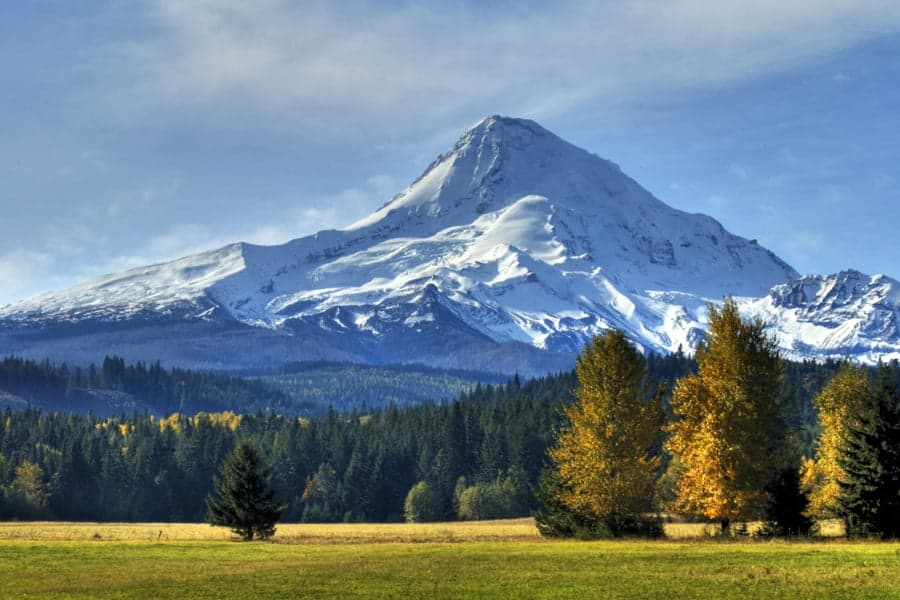
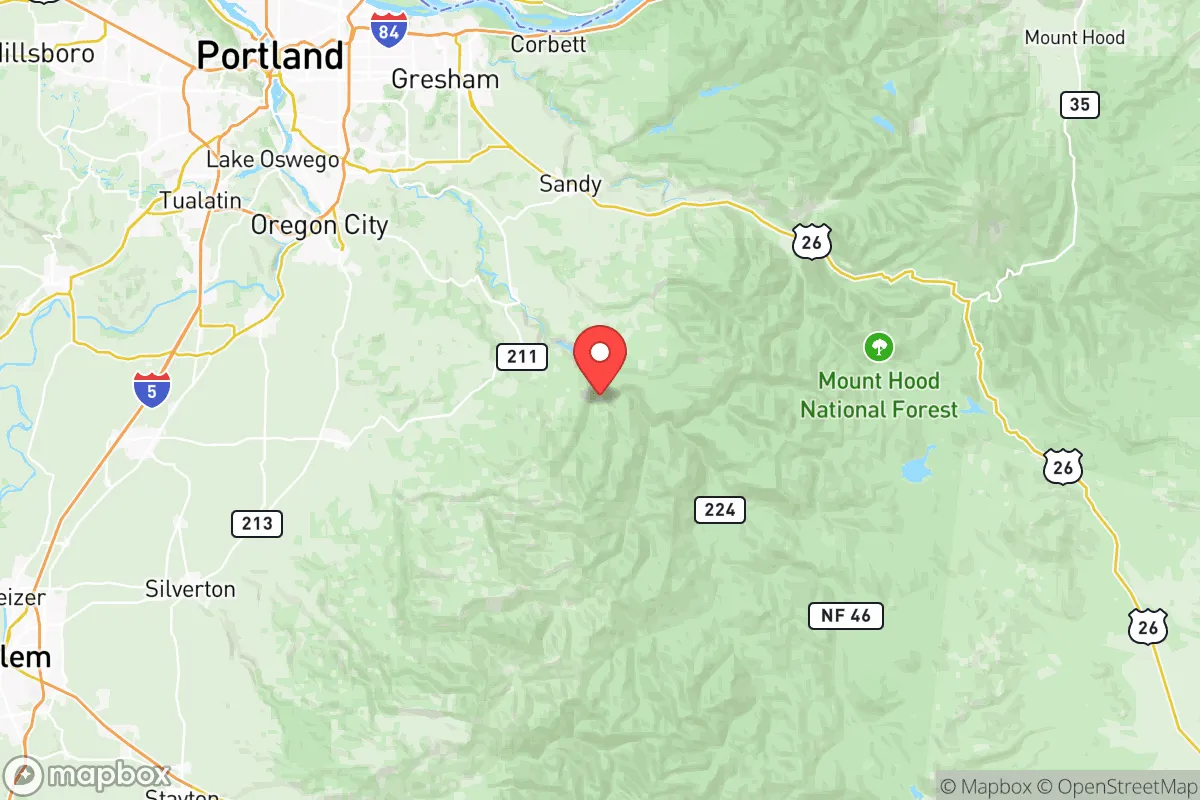
Clackamas County, Oregon, is home to 422,308 residents who live in a predominantly white (77.7%), suburban-rural landscape that blends Portland-adjacent commuter towns with historic farming communities and forested foothills. The county’s population is notably less diverse than the Portland metro average, with a foreign-born share of just 3.4% and a Hispanic population of 9.8% that is the largest minority group. Its identity is shaped by a mix of long-established pioneer families, post-war suburban expansion, and a slow but steady influx of East/Southeast Asian and Indian subcontinent residents, concentrated in cities like Lake Oswego, West Linn, and Happy Valley. For conservative-leaning movers, Clackamas County offers a more traditional, family-oriented environment compared to Portland proper, with strong schools, lower crime rates, and a political tilt that leans right of Multnomah County.
Settlement & growth (pre-1960)
Before American settlement, the Clackamas County area was home to the Clackamas people, a Chinookan-speaking tribe who lived along the Willamette River and its tributaries for thousands of years. Their villages dotted the riverbanks near present-day Oregon City and Gladstone, sustained by salmon runs and camas root harvesting. European contact, beginning with Lewis and Clark in 1805 and followed by Hudson’s Bay Company fur traders, brought disease that decimated the Clackamas population. By the 1850s, the tribe was forcibly removed to the Grand Ronde Reservation, leaving the land open for American settlers.
The first major American wave arrived via the Oregon Trail, peaking between 1843 and 1860. These were primarily white Protestant families from the Midwest and Upper South—farmers, tradesmen, and merchants seeking free land under the Donation Land Claim Act of 1850. Oregon City, the first incorporated city west of the Rockies, became the territorial capital and a milling and transportation hub. Many of these pioneer families settled along the Willamette Falls and spread into the fertile valleys around Canby, Molalla, and Aurora. Aurora, notably, was founded in 1856 as a utopian Christian commune by German-born Dr. William Keil, attracting a distinct German-American community that persisted for decades.
Through the late 19th and early 20th centuries, the county’s population grew slowly but steadily, driven by timber, agriculture, and the railroad. Scandinavian immigrants—Swedes, Norwegians, and Finns—arrived to work in logging camps and sawmills, settling in Estacada and the foothills of the Cascade Range. A smaller number of Italian and Irish laborers came for railroad construction and farming. By 1900, the county was overwhelmingly white, native-born, and Protestant, with small Catholic and Lutheran enclaves. The Dust Bowl and Great Depression brought a modest influx of white migrants from the Plains states, but Clackamas County remained a rural, agricultural county through World War II.
Modern era (post-1965)
The 1965 Hart-Cellar Act had a limited direct impact on Clackamas County compared to coastal urban centers, but it set the stage for gradual diversification. The county’s foreign-born population remains low at 3.4%, but the composition has shifted. East/Southeast Asian communities—primarily Chinese, Korean, and Vietnamese—began arriving in the 1970s and 1980s, often as secondary migrants from Portland or as professionals drawn to tech and healthcare jobs. They concentrated in Lake Oswego and West Linn, where the Asian population now reaches 8-10% in some neighborhoods. Indian subcontinent residents, though small at 0.6% of the county, have grown rapidly since 2000, settling in Happy Valley and Wilsonville, drawn by engineering and IT positions at companies like Mentor Graphics (now Siemens) and FLIR Systems.
Hispanic population growth has been the most significant demographic shift since 1990, rising from roughly 3% to 9.8% today. This wave is primarily Mexican-American, with some Central American families, and is concentrated in the agricultural towns of Woodburn (just over the Marion County line) and Canby, as well as in service-industry jobs in Milwaukie and Oregon City. Many arrived for farm work in the berry, hazelnut, and nursery industries, then moved into construction and landscaping as the county suburbanized.
Domestic migration has been the dominant force shaping modern Clackamas County. Since the 1970s, white families from Portland and other West Coast cities have moved east and south into the county, seeking larger lots, better schools, and lower crime. This suburbanization exploded in the 1990s and 2000s, transforming Happy Valley from a rural crossroads into one of Oregon’s fastest-growing cities—now a majority-white, upper-middle-class suburb with a median home price above $700,000. Wilsonville grew similarly, attracting tech workers and retirees. The county’s Black population remains tiny at 1.0%, reflecting Oregon’s historic exclusion laws and lack of a major industrial draw for the Great Migration.
The future
Clackamas County’s population is projected to continue growing, driven by domestic in-migration from California, Washington, and other high-cost West Coast areas. The county is not homogenizing into a single identity; rather, it is tribalizing into distinct enclaves. Happy Valley and Lake Oswego are becoming denser, more affluent, and more Asian and Indian, while Estacada and Molalla remain overwhelmingly white, rural, and politically conservative. The Hispanic population is likely to grow steadily, especially in Canby and Woodburn, but will remain a minority share. The foreign-born percentage may rise from 3.4% to 5-6% over the next decade, but Clackamas will remain one of Oregon’s least diverse counties by national standards.
Cultural identity is being shaped by absorption rather than replacement. New Asian and Indian residents are largely professional and English-proficient, integrating into existing suburban institutions. Hispanic families are more likely to be working-class and bilingual, creating distinct cultural nodes in agricultural towns. The county’s political character—moderate to conservative, with a strong independent streak—is likely to persist, as in-migrants from California often cite taxes and governance as reasons for leaving, reinforcing the county’s existing lean.
For someone moving in now, Clackamas County offers a stable, family-oriented environment with good schools, low crime, and a population that is slowly diversifying but remains majority-white and culturally traditional. The next 10-20 years will see continued suburban infill, especially along the I-205 and Highway 99E corridors, but the county’s fundamental character—pioneer-rooted, suburban-rural, and politically center-right—is unlikely to change dramatically.

* Values derived from national, state, county, city and local statistics and may differ in a specific area. Last updated: 2026-05-12T14:40:46.000Z
Narrative content on this page is AI-generated and may contain mistakes. Verify any details that matter before acting on them.
ReloMaps may earn a commission from affiliate links at no extra cost to you.

