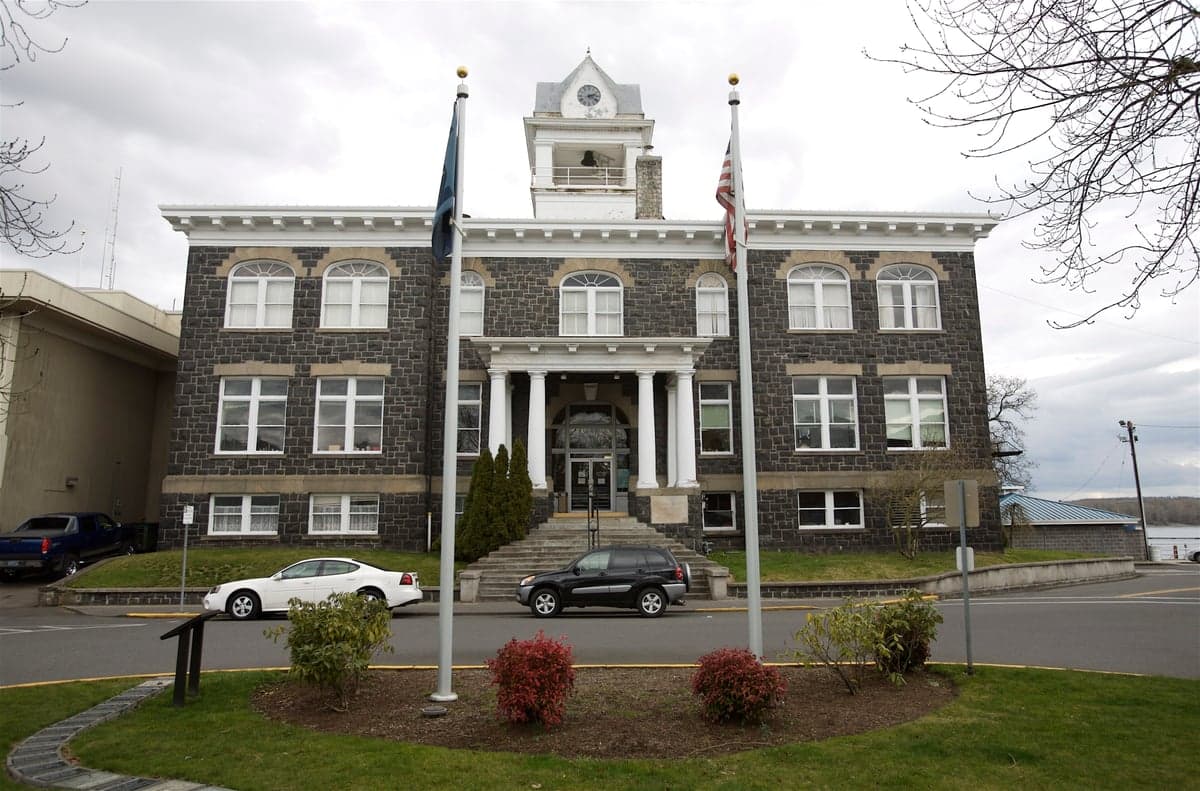
Photo: Wikipedia
Demographics of Columbia County
Affluence Level in Columbia County
A middle-class area roughly in line with national averages across income, home values, education, and employment.
People of Columbia County
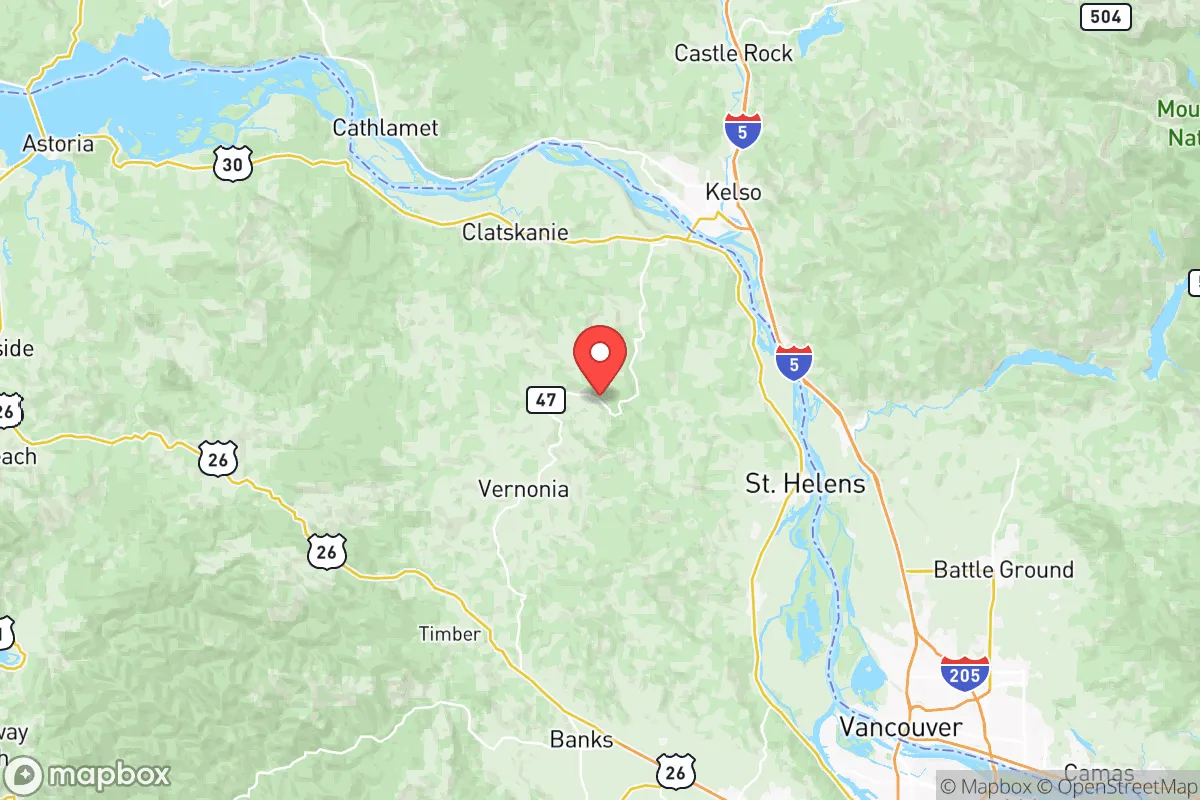
The people of Columbia County, Oregon, today are predominantly white, native-born, and rooted in a rural, working-class identity shaped by timber, farming, and a quiet, self-reliant character. With a population of 53,178, the county is one of Oregon's least diverse, where 85.0% of residents identify as white alone, and only 1.1% are foreign-born. The largest minority group is Hispanic or Latino at 6.4%, while Black (0.6%) and East/Southeast Asian (0.6%) communities are very small, and the Indian subcontinent population is effectively zero. The county's distinctive identity is tied to its position as a rural buffer between the Portland metro area and the Oregon Coast, with a strong sense of local independence and a population density of roughly 60 people per square mile.
Settlement & growth (pre-1960)
Before American settlement, the land now called Columbia County was home to the Chinookan peoples, particularly the Clatskanie (Tlatskanai) tribe, who lived along the lower Columbia River and its tributaries. These Native groups relied on salmon fishing, hunting, and trade along the river, which served as a major indigenous highway. European contact began with British and American fur traders in the early 19th century, but permanent white settlement did not begin in earnest until the 1840s and 1850s, when the Oregon Trail brought American pioneers into the Willamette Valley. The Donation Land Claim Act of 1850 accelerated settlement, granting 320 acres to married couples who would farm the land.
The first major wave of American settlers were largely of English, Scots-Irish, and German stock, moving west from the Midwest and Upper South. They established the county's earliest towns along the Columbia River and its tributaries. St. Helens, founded in 1845 and named after Mount St. Helens, became the county seat in 1857 and grew as a river port for shipping timber and agricultural goods. Columbia City, just south of St. Helens, was platted in 1867 and became a landing for steamboats. Clatskanie, founded in the 1850s, grew as a farming and logging center on the Nehalem River. Vernonia, settled in the 1870s, became a major timber town after the railroad arrived in the 1920s, drawing loggers and mill workers from across the Pacific Northwest.
The timber industry dominated the county's economy and population growth from the late 19th century through the mid-20th century. The arrival of the railroad in the 1880s and 1890s connected the county's mills to national markets, spurring a wave of domestic migration from other parts of Oregon, Washington, and the Midwest. Rainier, incorporated in 1885, grew as a shipping point for lumber and dairy products. Scappoose, originally a farming community, expanded with the timber boom and later became a bedroom community for Portland. The county's population grew steadily, reaching about 15,000 by 1940, then spiking to 22,000 by 1950 as post-war demand for housing fueled logging and milling.
Notably, Columbia County did not experience significant immigration from Southern or Eastern Europe, nor from Asia, during this period. The Chinese Exclusion Act of 1882 and Oregon's own history of racial exclusion kept the county overwhelmingly white. The small Hispanic population that exists today began arriving only in the late 20th century, primarily as agricultural laborers in the dairy and berry farms around Mist and Birkenfeld.
Modern era (post-1965)
The 1965 Hart-Cellar Act, which abolished national-origin quotas, had little direct effect on Columbia County. The county's foreign-born population remains minuscule at 1.1%, far below the national average. Instead, the demographic story of the past 60 years is one of domestic migration and suburbanization. Beginning in the 1970s, the decline of the timber industry—due to automation, federal logging restrictions, and the spotted owl controversy—triggered an out-migration of younger workers. The county's population stagnated, growing only from 35,000 in 1980 to 49,000 in 2010, as many families left for jobs in Portland or the Willamette Valley.
Since the 1990s, the county has experienced a slow but steady in-migration of people from the Portland metro area, seeking cheaper housing and a rural lifestyle. This "amenity migration" has been concentrated in Scappoose, which has grown from a village of 1,500 in 1980 to over 7,000 today, and in St. Helens, which has added subdivisions along Highway 30. These new residents are often white, middle-class, and more educated than the existing population, though the county's college attainment rate remains low at 19.2%. The Hispanic population has grown from under 2% in 1990 to 6.4% today, driven by agricultural labor and construction work, with small clusters in Clatskanie and Rainier. The Black and East/Southeast Asian populations remain negligible, each at 0.6%, and are concentrated almost entirely in St. Helens and Scappoose.
The county's racial and ethnic character has remained remarkably stable. The white share has declined only from 94% in 1990 to 85% today, almost entirely due to Hispanic growth. There is no significant Indian subcontinent population, and the East/Southeast Asian community is tiny, mostly comprising a few families of Filipino and Vietnamese descent who work in healthcare or own small businesses in St. Helens.
The future
Columbia County is likely to continue its slow, modest diversification, but it will remain one of Oregon's whitest and most native-born counties for the foreseeable future. The Hispanic population is projected to grow to perhaps 10-12% by 2040, driven by natural increase and continued labor demand in agriculture and construction. However, the county's rural character, lack of major employers, and distance from Portland's job centers will limit large-scale immigration. The East/Southeast Asian and Black populations will likely remain below 2% each, as there are no established ethnic enclaves or industries to attract them.
The most significant demographic trend is the continued in-migration of white, middle-class families from the Portland metro area, particularly to Scappoose and St. Helens. This is gradually raising the county's median income and home values, but also creating tension between long-time residents and newcomers over land use, development, and local culture. The county is not tribalizing into distinct ethnic enclaves; rather, it is slowly homogenizing into a more suburban, commuter-oriented population while retaining its rural, white, working-class core in towns like Vernonia and Clatskanie.
For someone moving in now, Columbia County offers a stable, safe, and culturally homogeneous environment where community ties are strong and change comes slowly. The population is aging—the median age is 43—and younger families are needed to sustain schools and local services. The county's future is not one of rapid transformation, but of gradual, manageable evolution, with the timber past giving way to a future of rural residential living and small-scale agriculture.

* Values derived from national, state, county, city and local statistics and may differ in a specific area. Last updated: 2026-05-22T10:28:56.000Z
Narrative content on this page is AI-generated and may contain mistakes. Verify any details that matter before acting on them.
ReloMaps may earn a commission from affiliate links at no extra cost to you.

