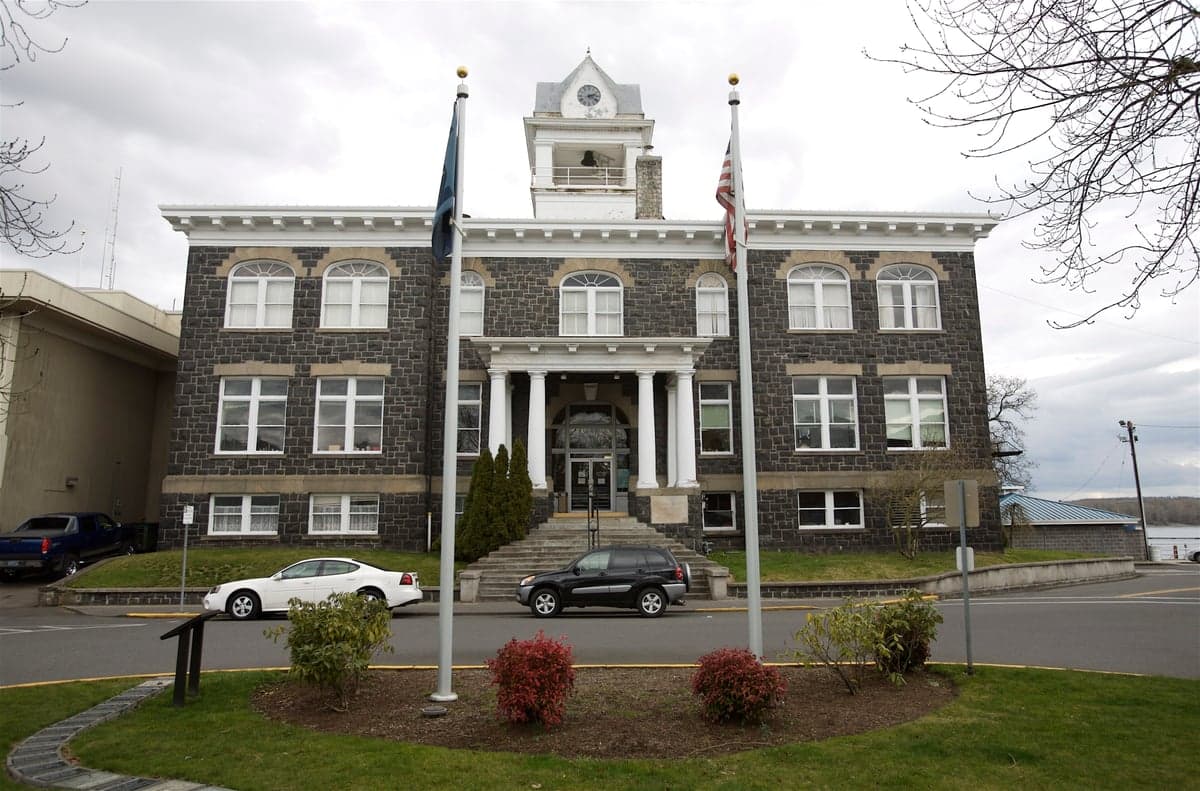
Photo: Wikipedia
Personal Sovereignty in Columbia County
Viable for self-reliance. Generally workable, though some barriers may limit total independence.
What does Personal Sovereignty tell us?
Personal Sovereignty measures your capacity for self-reliance and independence with minimal government friction. Higher scores mean fewer barriers between you and the way you want to live... but it assumes you have the space you need and good neighbors.
What does this tell us?
Personal Sovereignty measures your capacity for self-reliance and independence with minimal government friction. Higher scores mean fewer barriers between you and the way you want to live... but it assumes you have the space you need and good neighbors.
State Policy
Energy independence: Importer (35% of energy produced in-state)
Personal Liberty
Homesteading

Personal Liberty Analysis
Columbia County, Oregon offers a notably higher degree of personal sovereignty than much of the Portland metro area, but it is not a libertarian free-for-all. The county’s rural character and conservative-leaning population create a more permissive environment for self-reliance, gun ownership, and property rights, though state-level mandates from Salem—particularly on land use, taxes, and medical mandates—still impose real constraints. For those weighing relocation from high-regulation states, the key question is whether the county’s local culture and enforcement patterns provide enough buffer against state overreach to make daily life feel genuinely autonomous.
Tax burden and regulatory posture: how Columbia County compares to Portland and Washington
Oregon’s lack of a state sales tax is a clear win for personal finances, but the trade-off is a reliance on high property and income taxes. Columbia County’s property tax rates are moderate by Oregon standards—typically around 1.0% to 1.2% of assessed value—but the state’s income tax, which tops out at 9.9% for high earners, is among the highest in the nation. For a conservative audience, the more pressing concern is regulatory posture. Columbia County’s planning department is less aggressive than Multnomah County’s, but Oregon’s statewide land-use laws, governed by the Land Conservation and Development Commission (LCDC), strictly limit rural development. In towns like St. Helens and Scappoose, zoning is more urban-oriented, with smaller lots and tighter building codes. In contrast, unincorporated areas near Vernonia and Birkenfeld offer more flexibility, though any new construction still requires county permits and must comply with state forest and agricultural conservation rules. The regulatory environment is best described as “managed rural”—you have more freedom than in the city, but you are not truly off the grid from a permitting standpoint.
Self-defense and gun law specifics: what the Second Sanctuary movement means for residents
Columbia County is a Second Amendment Sanctuary county, a designation that signals local law enforcement’s reluctance to enforce state-level gun restrictions they deem unconstitutional. This matters because Oregon has passed Measure 114 (though it is currently tied up in court), which would require permits and background checks for all firearm purchases and ban magazines over ten rounds. In practice, residents of Clatskanie and Rainier report that gun culture is strong and open—concealed carry is common, and local gun shops and ranges operate without the harassment seen in Portland. The county sheriff has publicly stated he will not enforce magazine bans or permit requirements he views as infringements. For preppers and survivalists, this means you can maintain a personal armory without fear of local prosecution, but you should still be aware that federal laws (NFA items, interstate transfers) remain in full effect. The practical takeaway: if you want to keep a defensive rifle or a standard-capacity handgun, Columbia County is one of the safer places in Oregon to do so, but the legal landscape could shift if Measure 114 is fully implemented.
Self-reliance and homesteading viability: lot sizes, zoning, and off-grid feasibility
Homesteading in Columbia County is viable but requires careful site selection. In the more populated western half, near St. Helens and Scappoose, residential lots are typically under an acre, and county codes require connection to public water and sewer in many subdivisions. Move east toward Vernonia or north toward Birkenfeld, and you find larger parcels—5 to 20 acres are common—where well and septic systems are standard. Off-grid living is technically possible, but Oregon’s building codes mandate minimum square footage for dwellings and require septic systems that meet state health standards. Solar panels are allowed, but net metering rules with local utilities (Columbia River PUD and Pacific Power) can be restrictive. Rainwater collection is legal but must not interfere with downstream water rights. For a serious prepper, the best bet is a parcel of 10+ acres in the eastern part of the county, where neighbors are sparse and county enforcement is minimal. Vernonia itself is a small town with a strong DIY ethos, and the surrounding timberlands offer seclusion without being completely remote.
Personal liberties: parental rights, medical autonomy, speech, and property
Parental rights in Columbia County are generally respected, with local school boards in St. Helens and Scappoose tending toward conservative policies on curriculum transparency and parental notification. Oregon state law, however, mandates comprehensive sex education and allows minors to consent to certain medical treatments without parental approval—a point of friction for many conservative families. Medical autonomy is a mixed bag: while the county has a lower COVID-19 vaccination rate than the state average, Oregon’s vaccine mandates for healthcare workers and school attendance still apply. On speech and property, the county is more protective. Local law enforcement does not enforce hate speech codes or social media monitoring, and property rights are defended by the county’s planning department against state overreach in some cases, though the LCDC still holds ultimate authority over land-use decisions. For those concerned about government overreach, the county’s culture is one of “live and let live,” but state-level mandates on education and healthcare remain a persistent threat to full autonomy.
Overall, Columbia County offers a moderate-to-high level of personal sovereignty relative to the Portland metro area or Washington’s King County, but it falls short of the true independence found in parts of Idaho or eastern Oregon. The combination of a Second Sanctuary stance, a homestead-friendly rural fringe, and a local culture that values self-reliance makes it a solid choice for conservatives and preppers who want to escape urban restrictions without moving to a completely unregulated area. The trade-off is that you still answer to Salem on taxes, land use, and some medical mandates. For those willing to navigate those constraints, Columbia County provides a workable balance of freedom and practicality—especially in the eastern townships where state oversight feels more like background noise than a daily intrusion.

* Values derived from national, state, county, city and local statistics and may differ in a specific area. Last updated: 2026-05-22T10:28:56.000Z
Narrative content on this page is AI-generated and may contain mistakes. Verify any details that matter before acting on them.
ReloMaps may earn a commission from affiliate links at no extra cost to you.

