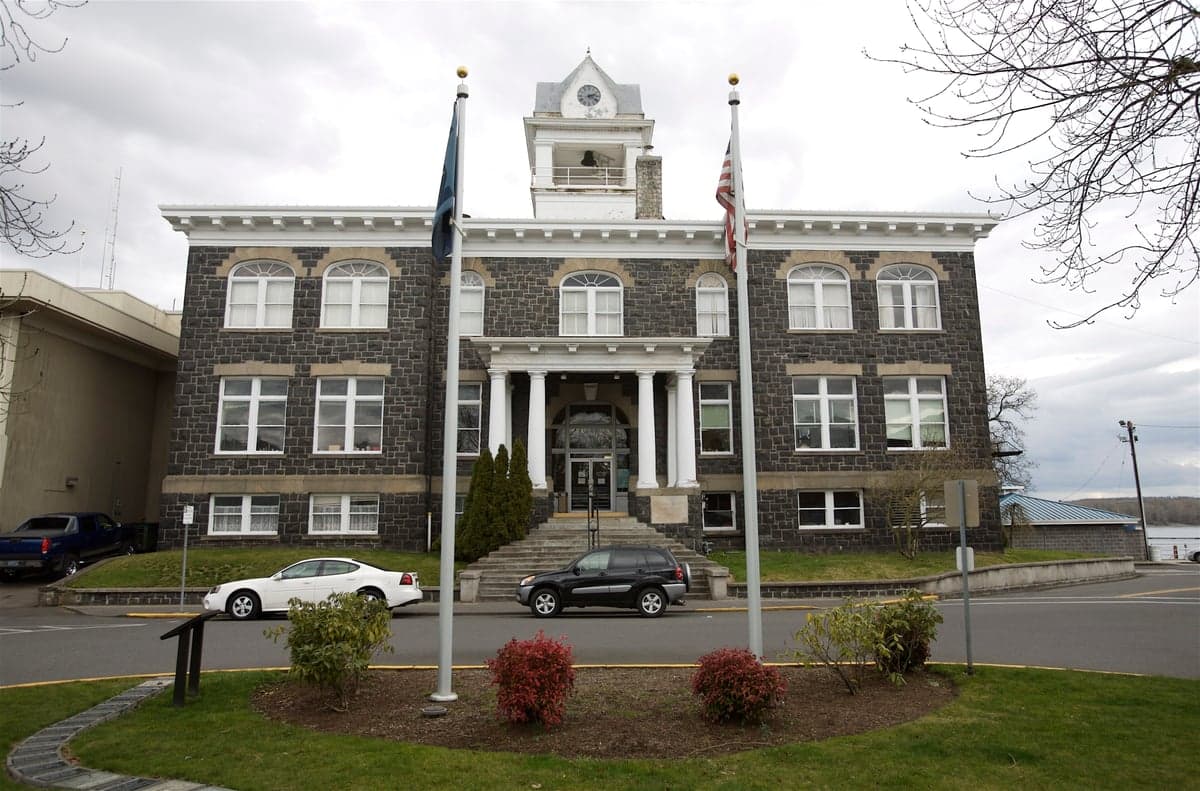
Photo: Wikipedia
Political ClimatePolitical Climate in Columbia County
Showing district-level results — no local-only data available.
Local Political AnalysisPolitical Analysis of Columbia County
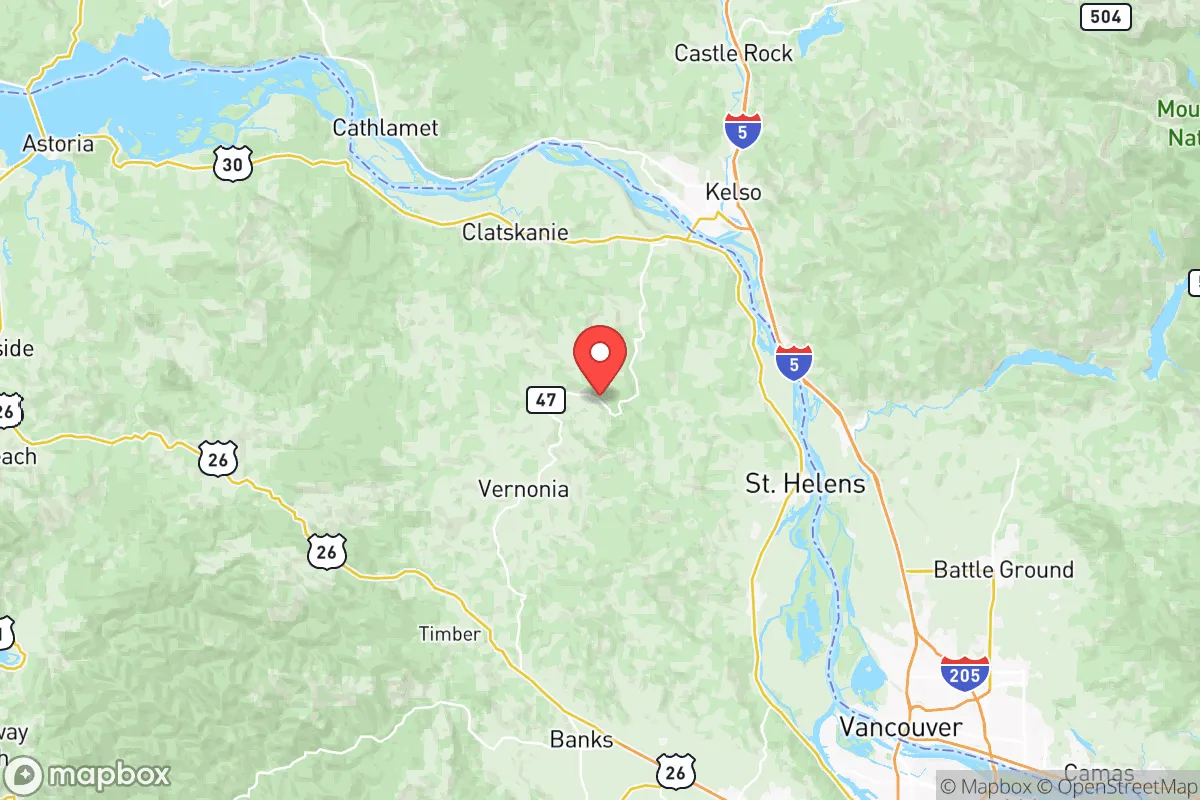
Columbia County, Oregon, has historically been a place where folks valued their independence and weren't too keen on being told what to do, but the political winds have shifted hard. The county now carries a Cook PVI of D+20, which is a far cry from the more moderate, live-and-let-live attitude that used to define places like Vernonia and Clatskanie. Compared to the rest of Oregon, which sits at D+8, Columbia County is a deep blue outlier, and that change has been driven largely by an influx of new residents from Portland who brought their progressive politics with them.
How it compares
The difference between Columbia County and the rest of Oregon isn't just a number—it's a cultural chasm. While the state as a whole leans left, many rural counties east of the Cascades and even parts of the Willamette Valley still hold conservative majorities. But here in Columbia County, the blue wave has washed over almost everything. The towns tell the story: Scappoose and St. Helens are now reliably blue, with precincts there routinely voting for candidates who push for stricter land-use regulations and higher taxes. On the other hand, Vernonia and Clatskanie still have pockets of red, where folks remember when the county wasn't a rubber stamp for Portland's agenda. The swing precincts are in the unincorporated areas around Mist and Birkenfeld, where a few dozen votes can tip a local race. But even those are trending left as new subdivisions pop up.
What this means for residents
For those of us who've been here a while, the shift has been jarring. Local government has become more aggressive about imposing new rules—land-use restrictions that make it harder to build a shop on your own property, higher fees for everything from building permits to septic inspections, and a general attitude that the county knows better than you do. The school boards and planning commissions are now dominated by folks who see government as a tool for social engineering rather than a servant of the people. If you value your Second Amendment rights, you've noticed the county sheriff's office has become less friendly to concealed carry permits, and there's talk of adopting "red flag" laws locally. Property taxes have climbed steadily, and new bond measures for schools and parks pass easily, even as the infrastructure in rural areas crumbles.
Cultural and policy distinctions
The cultural divide is stark. In St. Helens, you'll see more electric vehicles and "In This House We Believe" signs than pickup trucks and American flags. The county's push for equity-based policies in hiring and contracting has raised eyebrows among longtime residents who just want the roads plowed and the potholes fixed. The local paper, The Chronicle, has shifted its editorial stance to match the new majority, rarely questioning the progressive orthodoxy. Meanwhile, in Vernonia, the old-timers still gather at the Logger's Tavern and grumble about the county commission. The long-term trajectory is clear: Columbia County is becoming a bedroom community for Portland, and with that comes a loss of the rugged individualism that once made this place special. If you're thinking of moving here, just know that the government's hand is heavy, and it's only getting heavier.

State Political ClimatePolitical Climate in Oregon
State Political AnalysisPolitical Environment in the State
Oregon is a state of stark political contrasts, with a Cook PVI of D+8 that masks a deep and growing divide between its urban strongholds and its vast, conservative-leaning rural interior. Over the last 10-20 years, the state has shifted from a purple-ish battleground to a solidly blue state at the statewide level, driven almost entirely by the explosive growth of the Portland metro area and the Willamette Valley corridor. However, that blue veneer is thin—most of the state’s landmass votes overwhelmingly Republican, and the cultural and policy battles between the two sides have only intensified, making Oregon a fascinating but increasingly polarized place for a conservative to consider relocating.
Urban vs. rural divide
The political map of Oregon is essentially a tale of two states. The urban crescent—Portland, Salem, Eugene, and Bend—generates the vast majority of the state’s Democratic votes. Multnomah County (Portland) alone delivers a margin of over 200,000 votes for Democrats, enough to swamp the rest of the state. Meanwhile, the rural counties east of the Cascades—places like Klamath Falls, Pendleton, Baker City, and Ontario—routinely vote 70-80% Republican. The Willamette Valley’s suburban counties, such as Washington and Clackamas, have been trending blue for a decade, but they still contain pockets of conservative resistance, particularly in cities like Oregon City and Canby. The 2020 election saw several rural counties flip even further right, with Lake County and Harney County posting some of the highest Trump margins in the nation. The divide isn’t just electoral—it’s cultural, with rural residents feeling increasingly alienated from the policies coming out of Salem and Portland.
Policy environment
Oregon’s policy environment is a mixed bag that leans heavily progressive, especially on social and environmental issues. The state has no sales tax, which is a plus, but it has one of the highest personal income tax rates in the country (top marginal rate of 9.9%) and high property taxes in many areas. The regulatory posture is aggressive: Oregon has some of the strictest land-use laws in the nation, a cap-and-trade carbon program (though it’s been repeatedly stalled by walkouts), and a recent push to decriminalize hard drugs—which backfired so badly that the state partially recriminalized possession in 2024. On education, Oregon spends above the national average per pupil but ranks near the bottom in graduation rates and test scores, a persistent frustration for parents. Election laws are among the most liberal: Oregon was the first state to vote entirely by mail, and it has automatic voter registration, same-day registration, and no voter ID requirement—a setup that raises eyebrows among conservatives concerned about election integrity. The state also has a “sanctuary” law (ORS 181A.820) that limits local cooperation with federal immigration enforcement, a flashpoint in many communities.
Trajectory & freedom
Over the last five years, Oregon has become less free in several key areas that matter to conservatives. The 2021 legislative session saw a flurry of bills that expanded government control: a strict gun control package (Measure 114, partially blocked by courts) that bans magazines over 10 rounds and requires a permit to purchase; a law that effectively eliminates parental notification for minors seeking abortions; and a sweeping “equity” mandate in public schools that has led to curriculum battles in districts like Beaverton and Lake Oswego. On the property rights front, the state’s land-use planning system remains a heavy hand, and a 2023 law (HB 2001) preempted local zoning to force higher-density housing in single-family neighborhoods—a move many see as an erosion of local control. On the plus side, Oregon has no personal income tax on Social Security benefits, and the state’s “right to farm” laws offer some protection for agricultural landowners. But the overall trajectory is concerning: the state legislature has become more aggressive in preempting local control, and the governor’s office has used executive orders on climate and health mandates that bypass the legislature entirely.
Civil unrest & political movements
Oregon has a long history of political activism, but the last five years have been particularly volatile. The 2020 Portland protests—which lasted for months and involved nightly clashes between demonstrators and federal law enforcement—made international headlines and left a lasting scar on the city’s reputation. The “Wall of Moms” and “Patriot Prayer” groups became national symbols of the left-right street conflict. Since then, the intensity has cooled, but the underlying tensions remain. Rural counties have seen a surge in “Second Amendment sanctuary” resolutions—over a dozen counties, including Douglas County and Josephine County, have declared themselves non-compliant with state gun laws. There’s also a growing “Greater Idaho” movement, where several eastern Oregon counties have voted to explore seceding from Oregon to join Idaho, citing irreconcilable cultural and political differences. Immigration politics are a live wire: the sanctuary law has led to friction between state and federal authorities, and some rural sheriffs have publicly refused to enforce it. Election integrity remains a hot topic, with many conservatives skeptical of the state’s all-mail voting system, especially after the 2020 election saw a surge in ballot drop-box usage and a high number of “cured” ballots.
Projection
Looking ahead 5-10 years, the trajectory is not encouraging for conservatives. Demographic trends favor the urban areas: Portland’s suburbs are growing faster than the rural counties, and in-migration from California and other blue states continues to tilt the electorate leftward. The state’s political class shows no sign of moderating—if anything, the legislature is likely to push further on climate mandates, gun control, and social engineering in schools. The “Greater Idaho” movement is unlikely to succeed in the near term, as it requires approval from both state legislatures, but it will continue to be a pressure valve for rural frustration. What a conservative moving in now should expect is a state where your vote for statewide office will be increasingly irrelevant, but where local control—especially in the counties east of the Cascades and in smaller Willamette Valley towns—still offers a measure of freedom. The key is to choose your location carefully: Redmond and Prineville in Central Oregon are growing but remain conservative, while Grants Pass and Medford in the south offer a more traditional lifestyle. Avoid Portland, Salem, and Eugene unless you’re prepared for a constant policy and cultural headwind.
Bottom line for a new resident: Oregon is a beautiful state with incredible natural amenities, but its political climate is increasingly hostile to conservative values. If you’re moving here, do so with eyes wide open. Pick a county that aligns with your values, get involved in local politics, and be prepared for a state government that will continue to push policies you likely oppose. The trade-off is access to some of the best outdoor recreation in the country, a relatively mild climate, and a slower pace of life outside the urban centers. Just don’t expect the state to change direction anytime soon—the urban machine is too powerful, and the rural vote is too diluted.
* Values derived from national, state, county, city and local statistics and may differ in a specific area. Last updated: 2026-05-22T10:28:56.000Z
Narrative content on this page is AI-generated and may contain mistakes. Verify any details that matter before acting on them.
ReloMaps may earn a commission from affiliate links at no extra cost to you.

