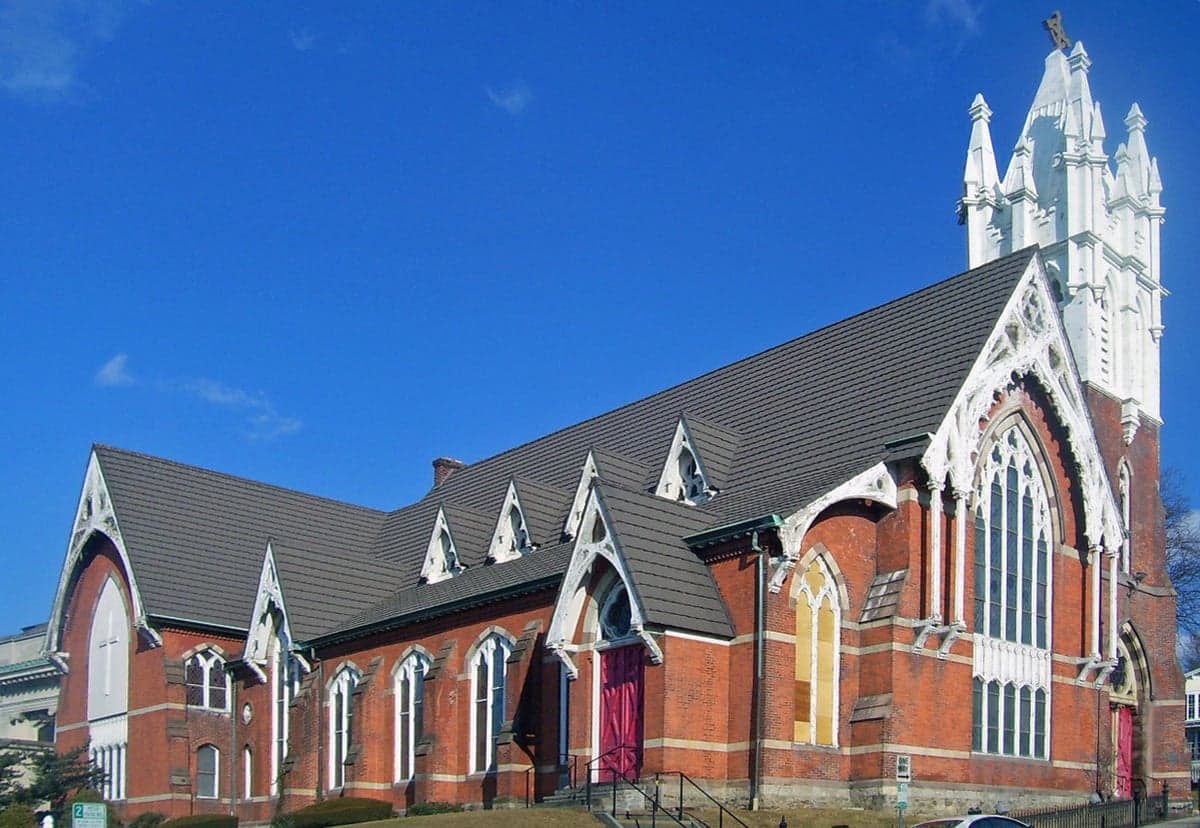
Photo: Wikipedia
Personal Sovereignty in Ossining, NY
Moderate friction. Expect trade-offs in some aspect of personal liberty and independence.
What does Personal Sovereignty tell us?
Personal Sovereignty measures your capacity for self-reliance and independence with minimal government friction. Higher scores mean fewer barriers between you and the way you want to live... but it assumes you have the space you need and good neighbors.
What does this tell us?
Personal Sovereignty measures your capacity for self-reliance and independence with minimal government friction. Higher scores mean fewer barriers between you and the way you want to live... but it assumes you have the space you need and good neighbors.
State Policy
Energy independence: Importer (12% of energy produced in-state)
Personal Liberty
Homesteading

Personal Liberty Analysis
For a conservative-leaning individual or family with a survivalist mindset, Ossining, New York presents a deeply challenging environment for personal sovereignty. While the village offers a strong sense of community and proximity to nature, its location within Westchester County and the state of New York means you are operating under some of the most restrictive and high-tax policies in the nation. The autonomy you can carve out here is largely defensive—protecting what you have from government overreach—rather than expansive. The core reality is that the state’s progressive apparatus actively constrains your ability to live independently, defend yourself, and control your property, making Ossining a location where personal sovereignty must be fought for, not assumed.
Tax burden and regulatory posture: how the state constrains your financial autonomy
Your financial sovereignty in Ossining is under constant siege from one of the heaviest tax burdens in the country. New York State has a progressive income tax structure that can reach 8.82% for high earners, and Westchester County adds its own layer of taxation. Property taxes in Ossining are notoriously high, often exceeding $20,000 annually for a modest single-family home, driven by a complex web of school districts, village, town, and county levies. This is not a place where you can easily reduce your footprint; the state’s regulatory posture on everything from vehicle inspections to building permits is dense and costly. For a prepper, this means a significant portion of your income is pre-allocated to the state before you can fund your own preparedness, supplies, or land improvements. The state’s aggressive tax collection and enforcement mechanisms leave little room for financial maneuvering, and any attempt to reduce your tax liability through off-grid living or reduced consumption is met with complex compliance hurdles.
Self-defense and gun law specifics: navigating New York’s restrictive framework
If personal defense is a priority, Ossining is a hostile jurisdiction. New York’s SAFE Act and subsequent 2022 CCIA (Concealed Carry Improvement Act) have created a legal minefield for gun owners. To legally possess a handgun, you must obtain a pistol permit from the Westchester County Clerk’s office, a process that can take 6-12 months and requires character references, fingerprinting, and a background check. The CCIA effectively ended “shall issue” carry by requiring applicants to demonstrate “proper cause” beyond general self-defense, though a 2024 Supreme Court ruling (NYSRPA v. Bruen) has loosened this standard, leading to ongoing legal battles. Magazines are capped at 10 rounds, and “assault weapons” are banned by feature, including common semi-automatic rifles like the AR-15. Ammunition purchases require a background check and a state-issued license. For a survivalist, this means your defensive capabilities are legally limited to bolt-action rifles, shotguns, and low-capacity handguns. The legal risk of carrying a firearm for protection is high, and the state’s “red flag” laws allow authorities to confiscate weapons based on anonymous complaints, a direct threat to your right to self-defense.
Self-reliance and homesteading viability: lot sizes, zoning, and off-grid feasibility
Ossining’s zoning and land use regulations make true self-reliance difficult. The village itself is densely developed, with typical lot sizes of 0.1 to 0.25 acres in the core, and larger lots of 0.5 to 1 acre in the more rural northern and eastern fringes. However, even on larger lots, Westchester County’s building codes and environmental regulations are stringent. Off-grid living is effectively illegal; the village and town require connection to municipal water and sewer systems where available, and any alternative power or waste systems must meet state health department standards that are nearly impossible to satisfy without a grid tie. Raising livestock is restricted—chickens are allowed in some areas with a permit, but larger animals like goats or pigs are generally prohibited. Gardening is permitted, but the short growing season (Zone 6b) and deer pressure limit yields. For a prepper, the best you can do is a suburban homestead with a large vegetable garden, rain barrels (legal but regulated), and a backup generator. True self-sufficiency—off-grid power, water, and food production—is not feasible within the legal framework.
Personal liberties: parental rights, medical autonomy, speech, and property
Your personal liberties in Ossining are circumscribed by state-level mandates that prioritize collective outcomes over individual choice. Parental rights are under direct assault: New York has no parental bill of rights, and the state’s education law allows schools to provide medical services (including mental health counseling and reproductive health referrals) without parental consent for students as young as 12. The state’s vaccine mandate for school attendance is among the strictest in the nation, with no philosophical exemption and a narrow religious exemption that is rarely granted. Medical autonomy is severely limited: the state’s public health law gives the health commissioner broad emergency powers, as seen during COVID-19, when mandates for masks, vaccines, and business closures were enforced without legislative approval. Free speech is protected by the First Amendment, but New York’s hate crime laws and social media regulation efforts create a chilling effect for conservative viewpoints. Property rights are weak; the state’s eminent domain powers are broad, and environmental regulations (like the Freshwater Wetlands Act) can restrict your use of your own land without compensation. In short, your ability to make decisions for your family, your body, and your property is constantly subject to state override.
Overall, personal sovereignty in Ossining is a defensive posture, not an expansive one. You are operating within a system that taxes heavily, restricts self-defense, limits self-reliance, and curtails personal liberties. Compared to areas in the South, Midwest, or even upstate New York’s more rural counties, Ossining offers far less autonomy. For a survivalist or prepper, this location demands a high level of legal vigilance, financial resilience, and a willingness to operate within the margins of the law. If you value maximum personal sovereignty, you would be better served by a jurisdiction with lower taxes, fewer gun restrictions, and stronger parental rights. However, if you are tied to the area for family or work, you can still carve out a degree of independence by focusing on financial discipline, legal compliance, and community-based preparedness—but you will always be fighting an uphill battle against the state.

* Values derived from national, state, county, city and local statistics and may differ in a specific area. Last updated: 2026-04-19T03:29:03.000Z
Narrative content on this page is AI-generated and may contain mistakes. Verify any details that matter before acting on them.
ReloMaps may earn a commission from affiliate links at no extra cost to you.

