Photo: Wikipedia
Political ClimatePolitical Climate in Ossining, NY
District shown is the primary district for this city’s centroid. Cities may span multiple districts.
Local Political AnalysisPolitical Analysis of Ossining, NY
Ossining, New York, has a Cook Political Report Partisan Voting Index of D+1, meaning it leans slightly more Democratic than the national average, but that number doesn’t tell the full story of how things have shifted here over the past decade. If you’ve lived here as long as I have, you remember when this was a reliably moderate, blue-collar town where folks kept their politics to themselves and the local government mostly focused on keeping taxes reasonable and the streets safe. Today, that D+1 feels like a floor, not a ceiling, as progressive activism and top-down state mandates have increasingly shaped daily life in ways that many of us find concerning.
How it compares
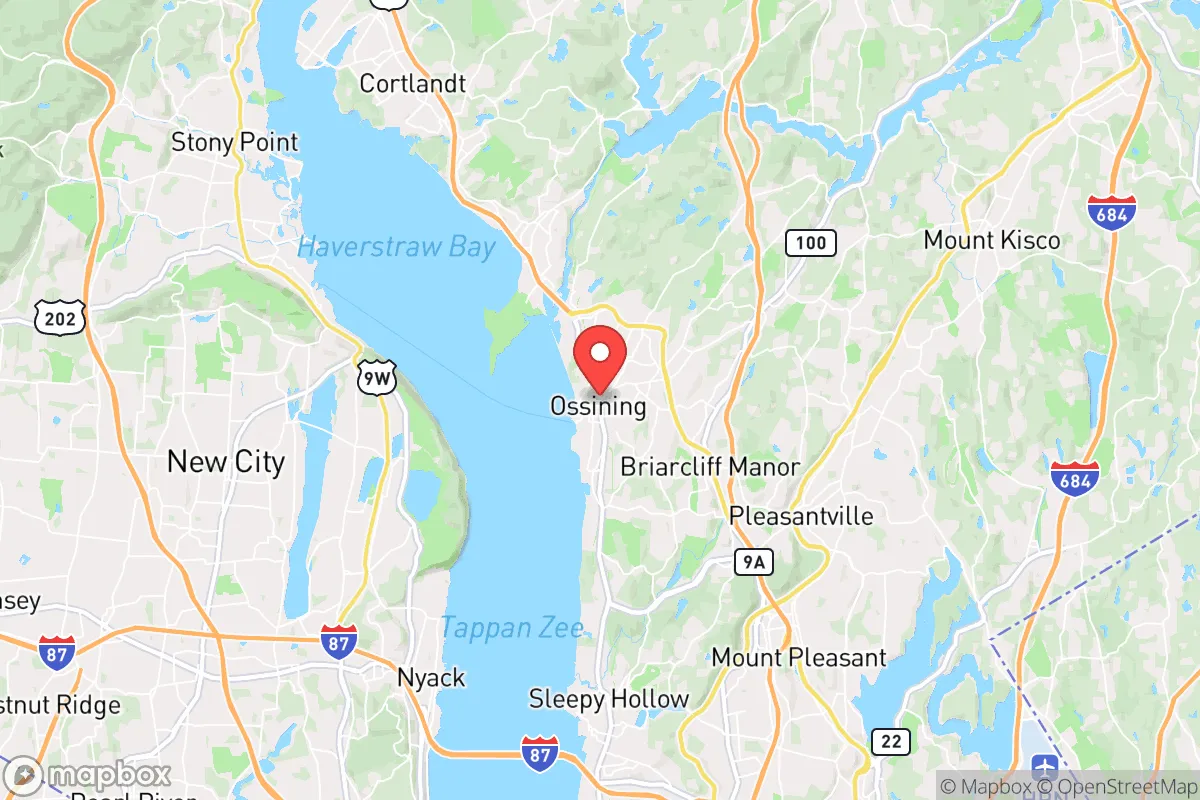
Drive ten minutes north to Croton-on-Hudson and you’ll find a town that’s gone even further left, with a town board that’s openly embraced sanctuary policies and rent control experiments. Head south to Sleepy Hollow, and you’ll see a similar pattern of aggressive zoning changes and tax hikes justified by “equity” goals. The real contrast, though, is with towns like Yorktown or Somers just east of the Taconic—places where the local boards still push back against Albany’s overreach, where property taxes haven’t ballooned as fast, and where you don’t feel like your Second Amendment rights are under constant siege. Ossining used to be more like those towns; now it’s drifting toward the Westchester river towns’ progressive consensus, and the difference is palpable at the ballot box and in local council meetings.
What this means for residents
For families and small business owners, the practical effect of this political shift is a steady erosion of personal freedom and financial predictability. The village board has embraced New York State’s Climate Leadership and Community Protection Act with enthusiasm, which means mandates on everything from gas stoves to home heating systems are coming down the pike—whether you can afford the upgrades or not. School board elections have become battlegrounds over curriculum transparency and parental rights, with progressive slates winning more seats each cycle. Property taxes, already among the highest in the nation, keep climbing to fund new social programs and DEI initiatives that many residents never voted for. If you value being left alone to run your life without a government checklist, you’re going to feel increasingly squeezed here.
Cultural and policy distinctions worth watching
One of the more telling local developments is the Ossining Police Reform and Reinvention Collaborative, which was pushed through in 2021 under state pressure. While the report itself was full of buzzwords, the real concern is the slow defunding-by-attrition of the police force—response times have crept up, and some longtime officers have left for departments in less hostile environments. On the cultural side, the village has leaned hard into “sanctuary” rhetoric, limiting cooperation with federal immigration authorities, which has created a quiet tension in a town that’s always been a mix of working-class families, new immigrants, and longtime homeowners. The long-term trajectory here is clear: more regulation, higher taxes, and less local control. If you’re considering a move, I’d look closely at the town board’s voting record and the school board’s curriculum policies before you sign anything.

State Political ClimatePolitical Climate in New York
State Political AnalysisPolitical Environment in the State
New York State has been a solidly blue stronghold for decades, with Democrats holding every statewide office and supermajorities in both legislative chambers. The state hasn't voted Republican in a presidential election since 1984, and the partisan lean has only deepened in the last 10-20 years as the New York City metro area has grown more progressive while upstate rural counties have become more Republican but lost population. The dominant coalition is a mix of New York City progressives, suburban liberals, and public-sector unions, but that coalition is showing cracks as taxes, crime, and education policies drive a steady exodus of conservative-leaning families and businesses.
Urban vs. rural divide
The political map of New York is a tale of two states. New York City and its immediate suburbs—Westchester, Nassau, and Suffolk counties—generate roughly 70% of the state's Democratic vote, with Manhattan and Brooklyn delivering margins of 80% or higher for Democratic candidates. The city's five boroughs are the engine of the state's progressive agenda, from rent control to sanctuary city policies. Meanwhile, upstate New York is overwhelmingly Republican, with counties like Allegany, Wyoming, and Orleans routinely voting 65-70% for GOP candidates. The divide is stark: drive 90 minutes north of Manhattan and you hit Orange County, which flipped from blue to red in the 2010s and now votes Republican by double digits. Erie County (Buffalo) is a Democratic island in a sea of red western New York, while Monroe County (Rochester) has trended left as the city grows and suburbs like Greece and Henrietta moderate. The Capital Region around Albany is a purple battleground, with the city itself blue but surrounding counties like Rensselaer and Saratoga leaning Republican.
Policy environment
New York's policy environment is among the most progressive in the nation, and it shows in the tax code. State income tax rates range from 4% to 10.9%, with the top rate applying to income over $25 million—but the effective burden on middle-class families is high because of the state's high cost of living. Property taxes are among the highest in the country, with the average effective rate around 1.7%, and in places like Westchester County, it can exceed 2.5%. The regulatory posture is aggressive: New York has a strict rent stabilization system covering over a million units, a statewide plastic bag ban, and some of the nation's toughest environmental regulations under the Climate Leadership and Community Protection Act. Education policy is dominated by the teachers' unions, with charter school caps and a "Foundation Aid" formula that heavily favors urban districts. Healthcare is heavily regulated, with the state running its own health insurance exchange and expanding Medicaid under the Affordable Care Act. Election laws are among the most liberal: no-excuse absentee voting, early voting, automatic voter registration, and same-day registration are all in place. The state also has a "sanctuary" law that limits cooperation between local law enforcement and federal immigration authorities.
Trajectory & freedom
Over the last decade, New York has become less free by almost any measure. The 2019 Criminal Justice Reform Act eliminated cash bail for most misdemeanors and non-violent felonies, leading to a surge in repeat offending that has driven up crime rates in cities like Rochester and Buffalo. The 2022 "Clean Slate" Act automatically seals criminal records after a certain period, which critics say undermines public safety and employer background checks. On gun rights, the state passed the SAFE Act in 2013, which banned assault weapons and high-capacity magazines, and then the 2022 CCIA (Concealed Carry Improvement Act) after the Bruen decision, which made it nearly impossible to get a concealed carry permit in most of the state. Parental rights have been eroded by the state's 2019 "Reproductive Health Act," which removed restrictions on late-term abortion and allowed non-physicians to perform the procedure, and by the 2021 "Gender Expression Non-Discrimination Act," which critics say allows schools to hide a child's gender identity from parents. Medical autonomy took a hit with the state's strict COVID-19 vaccine mandates for healthcare workers and public employees, which remain in place for some sectors. Property rights are constrained by the state's rent control laws and by the 2019 Housing Stability and Tenant Protection Act, which eliminated vacancy decontrol and made it harder for landlords to evict problem tenants. The state's tax burden is a major driver of out-migration: New York lost over 500,000 residents between 2020 and 2024, with many moving to Florida, Texas, and the Carolinas.
Civil unrest & political movements
New York has been a flashpoint for political activism on both sides. The 2020 Black Lives Matter protests in New York City, Buffalo, and Rochester were among the largest and most destructive in the country, with looting and property damage in Manhattan's SoHo and Midtown districts. The state's response was to pass police reform legislation, including the repeal of 50-a (which had shielded police disciplinary records), but crime continued to rise. On the right, the "Second Amendment Sanctuary" movement has gained traction in upstate counties like Allegany, Steuben, and Chemung, where local sheriffs have refused to enforce parts of the SAFE Act and CCIA. The "Parents' Rights" movement has been strong in Long Island's Nassau County and in Westchester's suburbs, where school board meetings have become battlegrounds over critical race theory, gender ideology, and mask mandates. Immigration politics are a constant source of tension: New York City's sanctuary policies have drawn over 150,000 asylum seekers since 2022, overwhelming shelters and straining city budgets, while upstate communities like Buffalo and Albany have seen smaller but still contentious arrivals. The "New York State of Mind" secession movement, which would split the state into two or three separate entities, has gained some traction in rural counties but faces long odds. Election integrity remains a concern for conservatives, with the state's 2019 "Early Voting Law" and 2020 "No-Excuse Absentee Voting" changes making it easier to vote but also raising questions about ballot security.
Projection
Over the next 5-10 years, New York's political trajectory is likely to continue its leftward drift in the cities and its rightward shift in the rural areas, but the overall state will remain solidly blue because the population centers are growing faster than the rural areas. New York City's population has stabilized after a pandemic-era dip, and the city's progressive coalition is entrenched. The suburbs are the key battleground: Nassau and Suffolk counties on Long Island have been trending purple, with Republicans winning county executive races in 2021 and 2023, but the state's Democratic gerrymandering of congressional districts will keep the delegation heavily blue. The upstate exodus will continue, with counties like Chautauqua and Jefferson losing population while the Hudson Valley (Orange, Dutchess, Ulster) becomes more Democratic as New York City refugees move north. The state's fiscal situation is precarious: the budget relies heavily on high-income earners, and if the out-migration of wealthy residents continues, the state will face a structural deficit that could force tax increases or service cuts. A new resident moving in now should expect a state where personal freedom is increasingly constrained by state mandates, where the tax burden is high and likely to rise, and where the cultural and political center of gravity is firmly in New York City. The upstate areas offer a more conservative lifestyle, but they are fighting a demographic and economic headwind.
For a conservative-leaning individual or family considering New York, the bottom line is this: the state is not friendly to conservative values at the policy level, and the trend is toward more government control over housing, education, healthcare, and personal conduct. If you're moving here, you'll want to target specific upstate counties like Allegany, Wyoming, or Orleans where the local culture is more aligned with your values, but you'll still be subject to state-level laws on taxes, guns, and education that are among the most restrictive in the nation. The cost of living is high, the regulatory environment is dense, and the political climate is increasingly polarized. If you value low taxes, limited government, and personal autonomy, New York is likely a poor fit—and the data on out-migration suggests many of your fellow conservatives have already reached that conclusion.
* Values derived from national, state, county, city and local statistics and may differ in a specific area. Last updated: 2026-04-19T03:29:03.000Z
Narrative content on this page is AI-generated and may contain mistakes. Verify any details that matter before acting on them.
ReloMaps may earn a commission from affiliate links at no extra cost to you.

