
Photo by Mary Hammel on Unsplash
Political ClimatePolitical Climate in Overland Park, KS
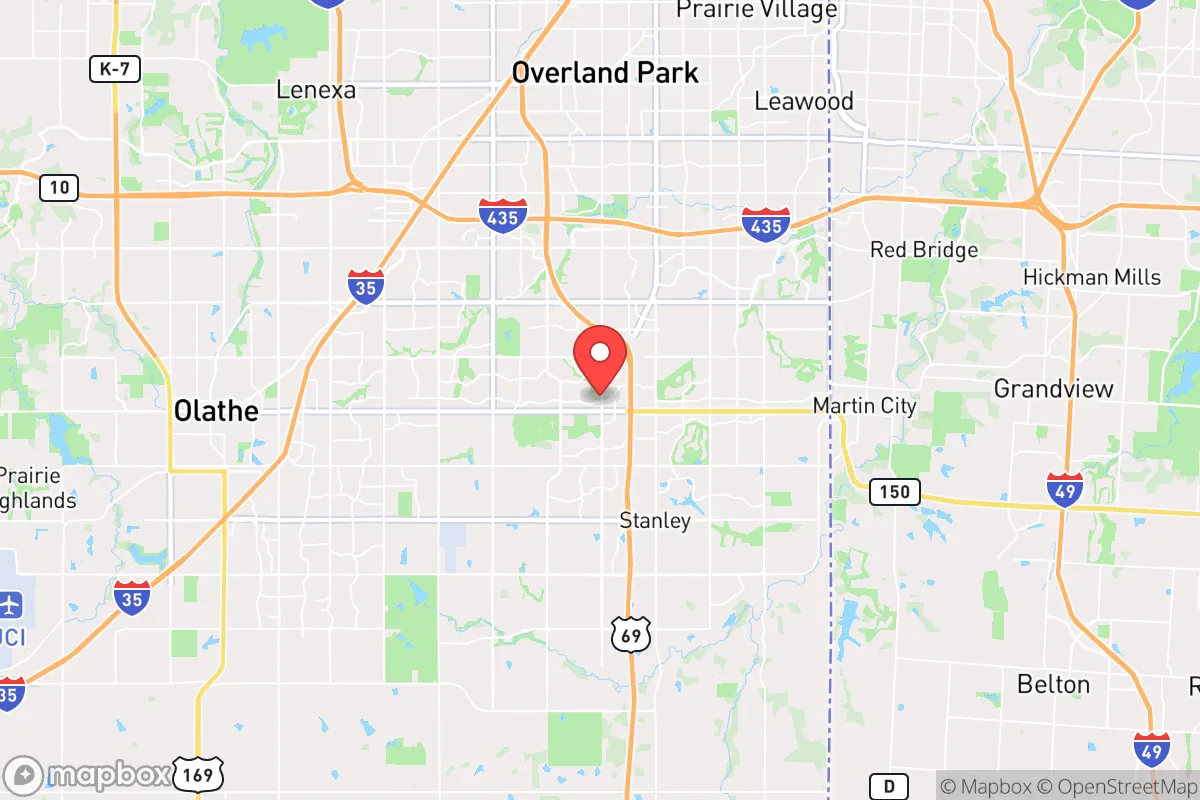
District shown is the primary district for this city’s centroid. Cities may span multiple districts.
Local Political AnalysisPolitical Analysis of Overland Park, KS
Overland Park used to be a place where you could count on common-sense conservative values, but it’s been shifting in a concerning direction over the last decade. The Cook PVI now sits at D+2, meaning the district leans slightly Democratic, which would have been unthinkable 20 years ago when this area was a solid Republican stronghold. You’re seeing more progressive policies creep in at the local level, and a lot of us long-time residents are watching closely to see if this trend accelerates or if the pendulum swings back.
How it compares
Drive 15 minutes south to Olathe or 20 minutes west to Gardner, and you’ll feel like you’re in a different world politically. Those communities still vote reliably Republican, with Olathe’s precincts often going +15 to +20 points red in recent elections. Overland Park, by contrast, has become the most liberal part of Johnson County, especially in the older neighborhoods near 95th Street and Metcalf. The contrast is stark: you can go from a neighborhood where people fly Trump flags to one where you see “In This House We Believe” signs within a five-minute drive. Even Leawood, which borders Overland Park to the east, has held onto more conservative leanings in its southern half. The shift here feels like it’s being driven by newcomers from the coasts and younger families who don’t remember when this city was a bedrock of fiscal responsibility and limited government.
What this means for residents
For those of us who value personal freedoms and want government to stay out of our lives, the changes are real and unsettling. The city council has started pushing more zoning restrictions and environmental mandates that drive up housing costs and limit what you can do with your own property. There’s also been a noticeable uptick in local officials talking about “equity initiatives” and diversity training for city employees—code for progressive social engineering that wastes taxpayer money. If you’re a business owner, you’ve probably noticed the permitting process getting slower and more bureaucratic, with new fees and regulations that didn’t exist a decade ago. The school board has become a battleground too, with some members pushing curriculum changes that prioritize social activism over academic fundamentals. It’s not a full-blown crisis yet, but the trajectory is clear: more government overreach, less individual liberty.
Cultural and policy distinctions
One thing that still sets Overland Park apart from places like Lawrence or Kansas City, Missouri is that the city hasn’t gone full progressive—yet. You won’t find defund-the-police movements here, and the city still maintains a strong police presence and low crime rates compared to urban cores. But the cultural shift is undeniable. The farmers’ markets and local festivals now feature more political activism booths, and you’ll hear more conversations about “sustainability” and “inclusivity” at neighborhood meetings than about tax relief or property rights. The real test will come in the next few election cycles. If the current trend holds, Overland Park could become a mirror of what’s happened in places like Johnson County’s northern tier—where conservative voices are increasingly marginalized. For now, it’s still a decent place to raise a family, but you’ve got to stay engaged and vote in every local election if you want to keep it that way.

State Political ClimatePolitical Climate in Kansas
State Political AnalysisPolitical Environment in the State
Kansas has long been a reliably red state in presidential elections, last voting for a Democrat in 1964, but its internal political climate is far more nuanced than that streak suggests. The dominant coalition is a mix of traditional fiscal conservatives, rural social conservatives, and a growing libertarian-leaning wing, but a persistent moderate Republican faction and a concentrated Democratic base in the northeast keep the state from being a lock for the most aggressive conservative policies. Over the last 20 years, the state has swung dramatically between tax-cutting experiments and tax-hike reversals, between school funding battles and parental rights expansions, making it a fascinating case study in how a red state navigates internal ideological fights.
Urban vs. rural divide
The political map of Kansas is a textbook example of the urban-rural split. The entire eastern third of the state, anchored by Johnson County (suburban Kansas City), is the state’s population and economic engine, and it’s where the political drama lives. Johnson County has been trending purple for a decade; it voted for Trump in 2016 and 2020, but by shrinking margins, and it elected a Democratic county commission majority in 2022. Wyandotte County (Kansas City, KS) and Douglas County (Lawrence, home to the University of Kansas) are deep blue, providing the bulk of Democratic votes. Meanwhile, the rest of the state—the vast, flat expanse west of the Flint Hills—is deeply red. Sedgwick County (Wichita) is a bellwether: it leans Republican but has a sizable moderate and Democratic base, and it’s where the state’s largest city, Wichita, often produces closer races than the rest of the state. The rural counties, like Greeley County on the Colorado border or Sherman County in the northwest, routinely vote 80-90% Republican. The divide isn’t just about party; it’s about worldview. Rural Kansans see the state government in Topeka as a distant, sometimes meddlesome force, while suburban Johnson County residents are more concerned with school quality, property taxes, and infrastructure.
Policy environment
Kansas’s policy environment is a rollercoaster. The most famous experiment was the 2012-2017 “Kansas Experiment” under Governor Sam Brownback, which slashed income taxes across the board, hoping to spur growth. It did spur growth in some sectors, but it also cratered state revenues, leading to massive budget shortfalls and cuts to education and infrastructure. The legislature, led by a coalition of Democrats and moderate Republicans, reversed most of the cuts in 2017, raising taxes back to pre-2012 levels. That fight defined the state’s politics for a decade. Today, the state has a flat income tax rate of 5.7% (down from a top rate of 6.45% before the experiment), and the sales tax is 6.5%, with local add-ons pushing it higher in some cities. Property taxes are a perennial complaint, especially in Johnson County, where rising home values have pushed tax bills up even as rates stay flat. On education, the state has been under a Kansas Supreme Court order for years to adequately fund schools, leading to repeated funding increases that conservatives argue are unsustainable. On social issues, Kansas is solidly conservative: it has a constitutional amendment defining marriage as between a man and a woman (though unenforceable after Obergefell), a 24-hour waiting period for abortions, and a law requiring parental consent for minors. Election laws are moderately restrictive: voter ID is required, and the state has a strict proof-of-citizenship requirement for voter registration, though it’s been partially blocked by courts. The state does not have a “red flag” gun law, and it has permitless carry for concealed firearms.
Trajectory & freedom
On the freedom front, Kansas has been a mixed bag, but the trajectory is cautiously positive for conservatives. The biggest win in recent years was the passage of the Parental Bill of Rights (HB 2236) in 2021, which explicitly affirms parents’ rights to direct their children’s education, healthcare, and upbringing. It was a direct response to COVID-era school closures and mask mandates, and it passed with strong bipartisan support. On gun rights, the state has been a leader: permitless carry was enacted in 2015, and the legislature has repeatedly blocked attempts to impose universal background checks or waiting periods. The state also passed a law in 2023 prohibiting local governments from enforcing any federal gun laws that don’t exist in Kansas, a clear nullification-style move. On the downside, the state’s tax burden remains high for a red state, and the property tax system is opaque and burdensome. The state also has a high prison population and a “three strikes” law that some conservatives see as an overreach of government power. The biggest threat to freedom, in the view of many locals, is the state’s heavy reliance on federal funding—about 30% of the state budget comes from Washington—which creates a vulnerability to federal mandates. The 2023 legislature did pass a law requiring a supermajority vote to raise taxes, which is a positive step for fiscal restraint.
Civil unrest & political movements
Kansas is not a hotbed of civil unrest, but it has its flashpoints. The most visible in recent years was the 2022 “Summer of Mercy” protests in Overland Park, where pro-life activists demonstrated outside a Planned Parenthood clinic that had expanded its services. Those protests were large but peaceful, and they reflected the deep cultural divide between the state’s conservative majority and its progressive pockets. On the left, the Lawrence area has seen periodic protests over racial justice and police reform, but they’ve been small compared to larger cities. Immigration politics are relatively quiet; Kansas is not a border state, and the immigrant population is small, though the state has a law requiring local law enforcement to cooperate with federal immigration authorities. There is no serious secession or nullification movement, though the “Kansas is not California” sentiment is strong among conservatives who want to keep the state’s culture intact. Election integrity was a major issue after 2020, with the state’s Republican secretary of state, Scott Schwab, defending the state’s voting system as secure while the legislature passed a law banning ballot drop boxes and tightening absentee ballot rules. The 2022 gubernatorial race between Democrat Laura Kelly and Republican Derek Schmidt was a proxy war over these issues, with Kelly winning narrowly by appealing to moderates in Johnson County.
Projection
Over the next 5-10 years, Kansas is likely to remain a red state, but the margin will shrink. The key demographic shift is the continued growth of Johnson County, which is becoming more diverse, more educated, and more moderate. If Johnson County continues its trend toward Democrats, the state could become a true swing state within a decade. That would force the Republican Party to either moderate its message or rely on rural turnout to win statewide races. The state’s in-migration is mostly from other Midwestern states, not from the coasts, so the cultural shift will be gradual. The biggest wild card is the state’s fiscal health: if the economy slows and tax revenues dip, the state will face another round of budget fights that could alienate voters. For a conservative moving in, the bottom line is that Kansas is a good place to live if you want a low-regulation environment on social issues and gun rights, but you’ll pay more in taxes than you would in Texas or Florida. The state’s politics are stable but not static, and the fight over the soul of the Kansas Republican Party—between the pragmatic moderates and the hardline conservatives—will define the next decade.
For a new resident, the practical takeaway is this: Kansas offers a high degree of personal freedom on the issues that matter most to conservatives—parental rights, gun rights, and religious liberty—but you’ll need to be engaged in local politics to keep it that way. The state’s tax structure is a work in progress, and the school funding battles are ongoing. If you’re moving to Johnson County, expect a more moderate, suburban political environment; if you’re heading to rural Kansas, you’ll find a deeply conservative, community-oriented culture. Either way, you’ll be in a state where your vote counts, and where the political fights are real but rarely violent. It’s a good place to raise a family if you value freedom and are willing to fight for it.
* Values derived from national, state, county, city and local statistics and may differ in a specific area. Last updated: 2026-04-29T18:33:19.000Z
Narrative content on this page is AI-generated and may contain mistakes. Verify any details that matter before acting on them.
ReloMaps may earn a commission from affiliate links at no extra cost to you.

