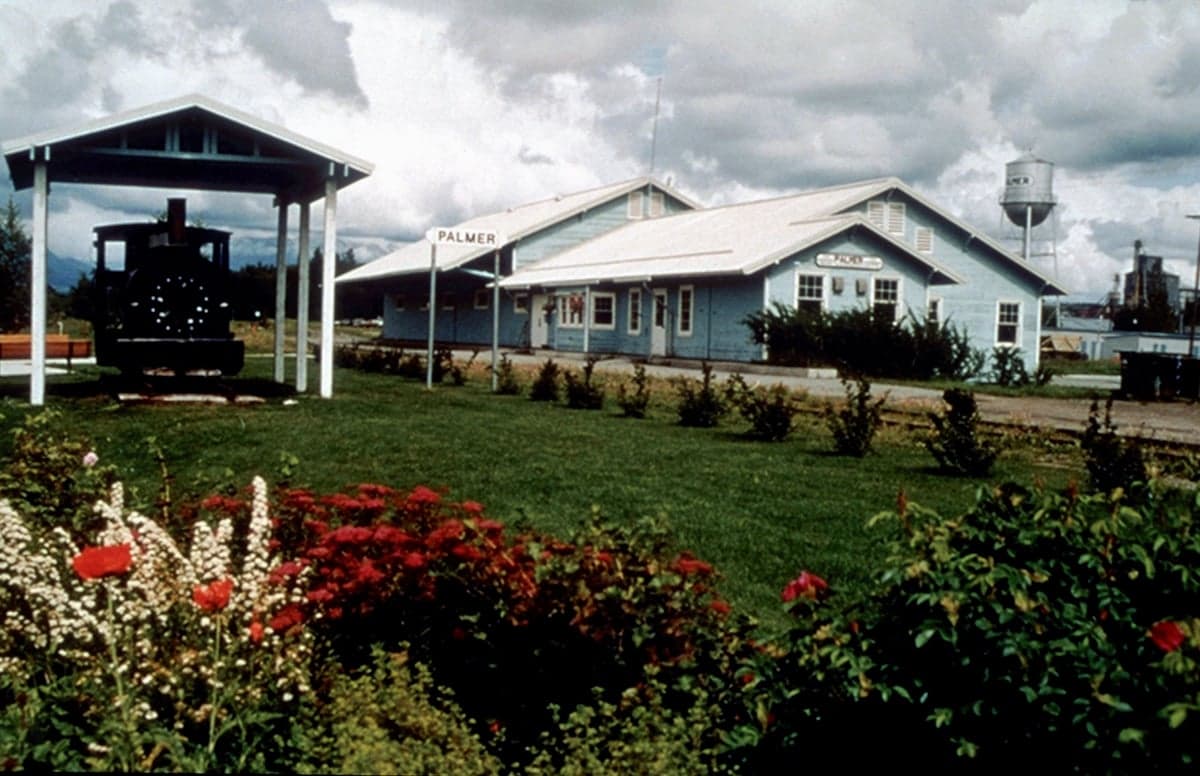
Photo: Wikipedia
Personal Sovereignty in Palmer, AK
Strong independent fundamentals that actively favor personal liberty and low regulation.
What does Personal Sovereignty tell us?
Personal Sovereignty measures your capacity for self-reliance and independence with minimal government friction. Higher scores mean fewer barriers between you and the way you want to live... but it assumes you have the space you need and good neighbors.
What does this tell us?
Personal Sovereignty measures your capacity for self-reliance and independence with minimal government friction. Higher scores mean fewer barriers between you and the way you want to live... but it assumes you have the space you need and good neighbors.
State Policy
Energy independence: Net exporter (350% of energy produced in-state)
Personal Liberty
Homesteading

Personal Liberty Analysis
Palmer, Alaska, offers one of the strongest personal sovereignty environments in the United States, particularly for those who view government overreach as a growing threat to individual liberty. Nestled in the Matanuska-Susitna Valley, this community operates under a state constitution that explicitly protects the right to keep and bear arms, prohibits personal income tax, and enshrines privacy rights. For the survivalist or prepper mindset, Palmer represents a strategic outpost where the state’s physical distance from federal power centers aligns with a legal framework that prioritizes personal autonomy over bureaucratic control. The question isn’t whether you can live free here—it’s whether you’re prepared to handle the responsibilities that come with that freedom.
Tax burden and regulatory posture: How Alaska’s lack of income tax and minimal state oversight affect your autonomy
Alaska’s tax structure is a cornerstone of personal sovereignty in Palmer. The state imposes no personal income tax and no statewide sales tax, though the Matanuska-Susitna Borough levies a modest sales tax of around 3% on goods and services. Property taxes in Palmer are relatively low, with a mill rate of approximately 12.5 mills, meaning a $300,000 home carries an annual tax bill of roughly $3,750. This is significantly lower than the national average and a fraction of what you’d pay in high-tax states like California or New York. The regulatory posture is equally favorable: Alaska operates under a “right to farm” law that protects agricultural activities from nuisance lawsuits, and the borough’s zoning code is permissive compared to the Lower 48. There are no state-level building codes in unincorporated areas, and Palmer itself enforces only basic structural standards. For the prepper, this means you can build a root cellar, install a wood stove, or construct a detached workshop without wading through layers of permits. The state’s Permanent Fund Dividend, which pays residents an annual check from oil revenues, is a direct cash rebate that further reduces your dependency on government services—a rare example of the state returning value rather than extracting it.
Self-defense and gun law specifics: Constitutional carry, stand your ground, and what it means for your security
Alaska is one of the most gun-friendly states in the nation, and Palmer reflects that ethos. The state has constitutional carry—no permit required to open or conceal carry a firearm for anyone legally allowed to possess one. There is no waiting period, no firearm registry, and no permit-to-purchase requirement. Magazine capacity is unrestricted, and the state preempts local governments from enacting stricter gun ordinances, so Palmer’s city council cannot ban AR-15s or limit magazine sizes. Alaska also has a strong Stand Your Ground law, codified in statute, which removes the duty to retreat before using deadly force in self-defense. For the survivalist, this legal framework means you can defend your home, your family, and your property without fear of prosecution for exercising a natural right. The state’s castle doctrine explicitly covers occupied vehicles and places of business, not just dwellings. Bear spray is common here, but the legal environment encourages carrying a sidearm as a primary deterrent against both two-legged and four-legged threats. The Mat-Su Borough’s rural character means law enforcement response times can exceed 30 minutes in outlying areas, making personal firearms not just a right but a practical necessity for security.
Self-reliance and homesteading viability: Lot sizes, zoning, and off-grid feasibility in the Mat-Su Valley
Palmer’s zoning and land-use policies are a dream for anyone seeking self-reliance. The Matanuska-Susitna Borough allows minimum lot sizes of 1 acre in many rural residential zones, and parcels of 5 to 40 acres are common within a 15-minute drive of downtown. Zoning is lenient: you can keep chickens, goats, and even a horse on a single acre without special permits. The borough’s code explicitly permits accessory dwelling units, workshops, and greenhouses as of right. Off-grid living is not only feasible but common. There are no state laws requiring connection to municipal water or sewer; many residents rely on wells and septic systems. Solar panels, wind turbines, and propane generators are standard, and the borough does not restrict rainwater collection. The growing season is short—roughly 100 days—but the legendary 24-hour daylight in June allows for intensive gardening, and the Mat-Su Valley is known for producing 80-pound cabbages. For the prepper, the key advantage is that you can achieve meaningful food independence here: a 5-acre plot can support a family with a vegetable garden, berry patches, fruit trees, and a few livestock animals. The state’s Permanent Fund Dividend also provides a small but reliable income stream that can offset the cost of supplies. The biggest challenge is the cost of shipping heavy equipment or building materials, but the trade-off is a regulatory environment that lets you build, grow, and store without asking permission.
Personal liberties: Parental rights, medical autonomy, free speech, and property rights in practice
Palmer’s legal climate strongly favors parental rights and medical autonomy. Alaska has no state-level vaccine mandate for children attending public school, and parents can opt out of any immunization requirement with a simple written statement. The state’s health department does not track or enforce mask mandates in schools, and the borough has consistently resisted federal health directives. Medical freedom is further supported by Alaska’s Health Care Decisions Act, which allows individuals to refuse any medical treatment and designates a surrogate decision-maker without court involvement. For the survivalist, this means you can stockpile antibiotics, use telemedicine from out-of-state providers, and practice holistic or alternative medicine without fear of prosecution, as long as you’re not defrauding someone. Free speech is robust: Alaska’s constitution provides stronger protections than the First Amendment, and there are no hate speech laws or restrictions on political expression. Property rights are equally strong. The state’s Takings Clause requires just compensation for any regulatory taking, and the borough’s comprehensive plan explicitly prioritizes private property rights over government land-use restrictions. You can post no-trespassing signs, enforce them with legal backing, and even use deadly force to defend your property under certain circumstances. The only notable limitation is that Alaska’s remote location means you’re subject to federal land management on roughly 60% of the state’s territory, but Palmer itself sits on private and borough-owned land, minimizing federal overreach in daily life.
Compared to the Lower 48, Palmer offers a sovereignty profile that rivals rural Texas or Montana but with the added advantage of no income tax and a cash dividend from the state. The trade-offs are real: harsh winters, limited medical infrastructure, and a 45-minute drive to Anchorage for specialized services. But for the individual or family who values personal autonomy over convenience, Palmer represents one of the last places in the United States where you can live largely outside the reach of government intrusion. The legal framework is designed to let you fail or succeed on your own terms, and the community’s culture reinforces that independence. If your goal is to minimize your interaction with the state while maximizing your ability to defend, provide for, and govern your own household, Palmer is a top-tier relocation target.

* Values derived from national, state, county, city and local statistics and may differ in a specific area. Last updated: 2026-04-19T19:34:10.000Z
Narrative content on this page is AI-generated and may contain mistakes. Verify any details that matter before acting on them.
ReloMaps may earn a commission from affiliate links at no extra cost to you.

