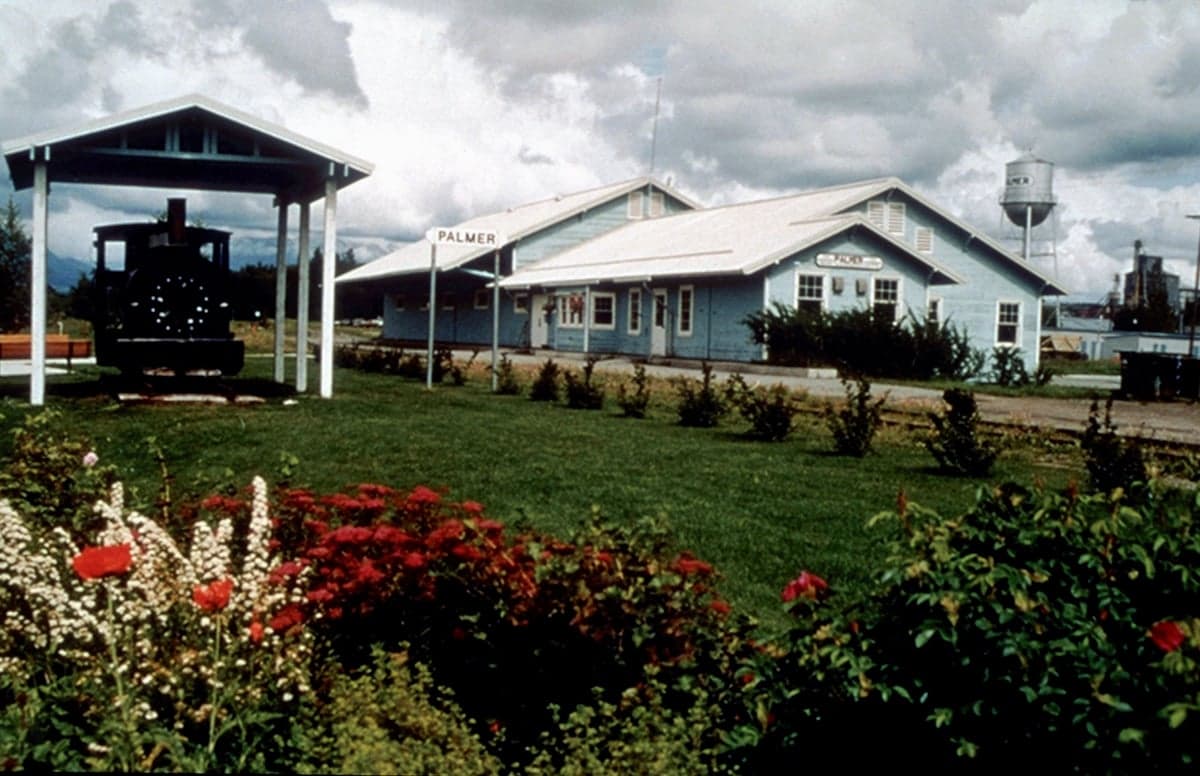
Photo: Wikipedia
Political ClimatePolitical Climate in Palmer, AK
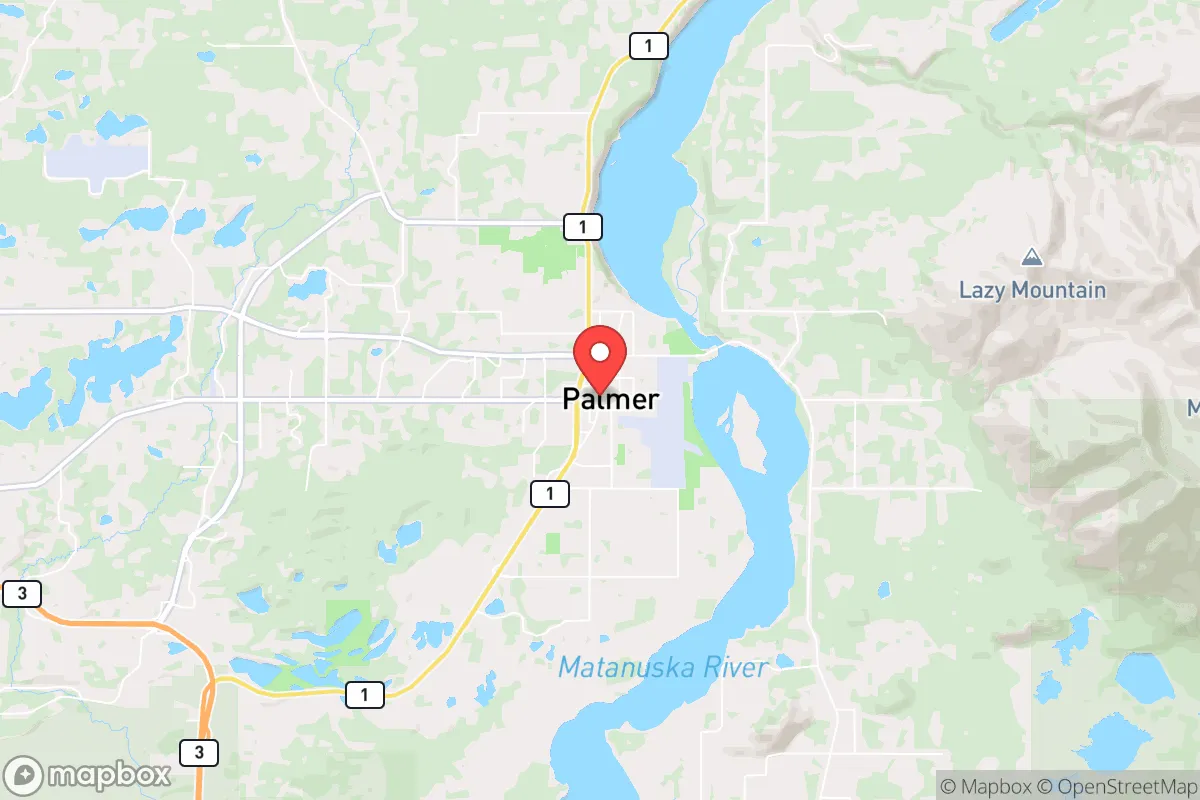
District shown is the primary district for this city’s centroid. Cities may span multiple districts.
Inherited from parent state — no local data available.
Local Political AnalysisPolitical Analysis of Palmer, AK
Palmer, Alaska, sits in a reliably conservative pocket of the Mat-Su Valley, with a Cook PVI of R+6 that reflects a community where traditional values and personal liberty still carry real weight. For decades, this area was a no-nonsense place where folks minded their own business and expected the same from government, but I’ve watched the political winds shift a bit over the last ten years. While Palmer itself still leans solidly red—you’ll see more Trump signs than anything else in a typical election year—there’s a growing undercurrent of progressive activism creeping in from Anchorage, just 42 miles south, and from transplants who bring big-city ideas with them. The local school board and borough assembly races have gotten noticeably more contentious, with debates over curriculum transparency and property rights heating up in ways they never used to.
How it compares
Compared to Anchorage, which is a blue island in a red state, Palmer feels like a different country politically. Anchorage’s Assembly has pushed through mask mandates, vaccine requirements for city workers, and zoning changes that prioritize density over private property—all things that would get laughed out of a Palmer town hall. Even Wasilla, just 10 miles west, is a bit more libertarian-leaning than Palmer, with a stronger strain of “leave us alone” politics. But the real contrast is with Talkeetna, about 60 miles north, which has a quirky, artsy, and decidedly more liberal vibe. Palmer sits in the middle: conservative enough to feel safe, but close enough to the urban corridor that you can’t ignore the pressure from the left. The Mat-Su Borough as a whole still votes Republican by wide margins, but the margins have shrunk in some precincts near the Parks Highway, and that’s worth keeping an eye on.
What this means for residents
For someone who values personal freedom, Palmer still offers a pretty good deal. Property taxes are low compared to the Lower 48, there’s no state income tax, and the borough government generally stays out of your business when it comes to how you use your land or raise your kids. But the warning signs are there. The push for “equity” policies in the school district, the growing calls for stricter environmental regulations on private land, and the slow creep of Anchorage-style housing mandates—like accessory dwelling unit requirements—are all things that should make a freedom-minded resident nervous. If you’re moving here, you’ll find plenty of neighbors who share your concerns, but you’ll also need to stay engaged locally. The local elections matter more than the national ones, because that’s where the real overreach starts.
Culturally, Palmer still holds onto its agricultural roots—the Alaska State Fair is a big deal here, and the 4-H and FFA programs are strong. You’ll see more pickup trucks than Teslas, and the gun culture is alive and well, with most folks comfortable with concealed carry. But the influx of remote workers and retirees from blue states has brought a subtle shift: more coffee shops with oat milk, more “Live Laugh Love” signs, and a growing number of people who don’t understand why you’d want to keep a snowmachine in your front yard. The long-term trajectory depends on whether the old-timers and like-minded newcomers can hold the line against the progressive tide. For now, Palmer is still a good place to raise a family without the government breathing down your neck, but you’ve got to stay vigilant.

State Political ClimatePolitical Climate in Alaska
State Political AnalysisPolitical Environment in the State
Alaska has long been a unique political beast—a state where libertarian-leaning individualism, resource extraction, and a deep distrust of federal overreach have historically created a solidly Republican lean, but with a stubborn independent streak that keeps things interesting. Over the last 20 years, the state has shifted from reliably red to a more volatile battleground, with the 2022 U.S. Senate race being a prime example: Republican incumbent Lisa Murkowski won as a write-in candidate against a Trump-backed challenger, while Governor Mike Dunleavy (R) cruised to re-election. The overall partisan lean remains Republican, but the coalition is fracturing between establishment conservatives, populist Trumpists, and a small but vocal progressive bloc centered in Anchorage and Juneau. The trajectory since 2010 has been a slow drift rightward on cultural issues, but with surprising resistance to the national GOP on fiscal matters—Alaskans love their Permanent Fund Dividend (PFD) and hate taxes, which creates strange bedfellows.
Urban vs. rural divide
The political map of Alaska is a textbook case of the urban-rural split, but with a twist. Anchorage, home to about 40% of the state's population, is the swing region—its more liberal precincts in the downtown core and the Hillside area lean Democratic, while the suburban sprawl of Eagle River and Chugiak votes heavily Republican. The 2022 governor's race saw Anchorage split almost evenly, with Dunleavy winning the city by just 2 points. Juneau, the capital, is the state's most reliably blue city, driven by state government workers and a strong environmentalist presence; it voted 65% for Biden in 2020. Fairbanks is the conservative anchor of the Interior, with a heavy military and resource-extraction workforce that delivers 60%+ Republican margins. The real story is the Mat-Su Valley (Wasilla, Palmer, Houston)—this is the fastest-growing region in the state and a conservative stronghold where Trump won 70% of the vote in 2020. Rural Alaska, including the vast Bush communities like Barrow (Utqiaġvik) and Nome, is a wild card: predominantly Alaska Native, these areas lean Democratic on social spending but are culturally conservative and skeptical of federal land restrictions. The divide isn't just red vs. blue—it's about who controls the land and the resource wealth.
Policy environment
Alaska's policy environment is a mixed bag that reflects its frontier ethos. On the plus side for conservatives: no state income tax and no state sales tax—the state funds itself through oil revenue and the PFD, which in 2023 paid out $1,312 per resident. This creates a powerful incentive to keep government lean and resist new taxes. The regulatory posture is generally business-friendly, especially for oil, gas, and mining, though the Biden administration's restrictions on ANWR and the Arctic National Wildlife Refuge have been a major flashpoint. Education policy is a battleground: the state has a weak school choice landscape, with no voucher program and only a handful of charter schools, though homeschooling is popular in rural areas. Healthcare is dominated by the Alaska Tribal Health System for Native populations, but private insurance costs are among the highest in the nation due to the state's remote geography. Election laws are relatively open—Alaska uses a top-four primary system and ranked-choice voting (RCV), which was passed by ballot initiative in 2020. This has been controversial among conservatives, with the Alaska Republican Party officially opposing RCV and pushing for repeal. The state also has no voter ID law, which is a concern for election integrity advocates.
Trajectory & freedom
On the freedom front, Alaska is a tale of two trends. Gun rights are robust: the state has constitutional carry (no permit needed for concealed carry), no magazine capacity limits, and a strong preemption law that prevents local governments from passing their own restrictions. In 2023, Governor Dunleavy signed a bill protecting firearm manufacturers from lawsuits over criminal misuse. Parental rights have seen a win with the passage of the "Parental Rights in Education" bill (HB 105) in 2024, which requires schools to notify parents of any curriculum involving sexual orientation or gender identity. However, medical freedom took a hit during COVID: Alaska had one of the longest-running mask mandates in the country (until March 2022) and a vaccine passport system for state employees, though no broad mandate for private businesses. Property rights are a constant tension—the state owns vast tracts of land, and federal control over 60% of Alaska's territory (via national parks, refuges, and forests) is a perennial grievance. The "Alaska Lands Act" and ongoing battles over the Ambler Road project in the Brooks Range show the friction between resource development and environmental regulation. Overall, the state is becoming more free on cultural and Second Amendment issues, but less free on economic and land-use matters due to federal overreach.
Civil unrest & political movements
Alaska is not a hotbed of street protests, but there are visible flashpoints. The PFD fight is the most consistent political battleground—every year, debates over the dividend's size (and whether to use it to fund government) spark rallies at the state capitol in Juneau. The secessionist movement has a small but vocal presence, with the Alaska Independence Party (AIP) still active, though it's more of a libertarian protest vote than a serious threat. In 2020, there were scattered protests over COVID restrictions in Anchorage and Wasilla, with armed demonstrators at the Governor's Mansion. The election integrity debate is heated: the 2020 ranked-choice voting system was challenged in court by conservatives, and a 2024 ballot initiative to repeal RCV is expected. Immigration politics are muted—Alaska has a small foreign-born population (about 7%), but there are no sanctuary city policies, and the state has cooperated with federal immigration enforcement. The most visible political movement is the resource development vs. environmentalism divide, with groups like "Alaskans for Sustainable Mining" clashing with the "Sierra Club" over Pebble Mine and the Willow Project. A new resident would notice the "Don't California My Alaska" bumper stickers everywhere—a sign of the cultural war against progressive transplants.
Projection
Over the next 5-10 years, Alaska is likely to become more conservative on cultural issues but more volatile on fiscal ones. The in-migration pattern is key: the state is losing population overall (down about 3% since 2020), but the people moving in are disproportionately conservative-leaning retirees and remote workers from California and Washington, drawn by the lack of income tax and the outdoor lifestyle. The Mat-Su Valley will continue to grow and solidify as a red bastion, while Anchorage may drift slightly left as younger, more diverse residents move in. The big wild card is the PFD and oil revenue: if oil prices stay high, the state can avoid budget cuts and maintain its low-tax paradise. But if prices crash, the pressure to impose an income tax or sales tax will grow, which could trigger a political realignment. The ranked-choice voting system is likely to be repealed or modified, which would strengthen the GOP's grip. Federal land policy will remain a flashpoint—expect more legal battles over ANWR drilling and the Ambler Road. For a conservative moving in now, the next decade looks like a continued fight to preserve the state's frontier freedoms against federal encroachment and the slow creep of progressive urban politics.
Bottom line for a new resident: Alaska is a great fit if you value low taxes, gun rights, and personal autonomy, but you'll need to be politically active to keep it that way. The state is not a red utopia—it's a battleground where your vote matters, especially in the Mat-Su Valley and Anchorage suburbs. If you're moving here, expect to join the fight over the PFD, ranked-choice voting, and federal land use. It's a place where one person can make a difference, but only if they show up.
* Values derived from national, state, county, city and local statistics and may differ in a specific area. Last updated: 2026-04-19T19:34:10.000Z
Narrative content on this page is AI-generated and may contain mistakes. Verify any details that matter before acting on them.
ReloMaps may earn a commission from affiliate links at no extra cost to you.

