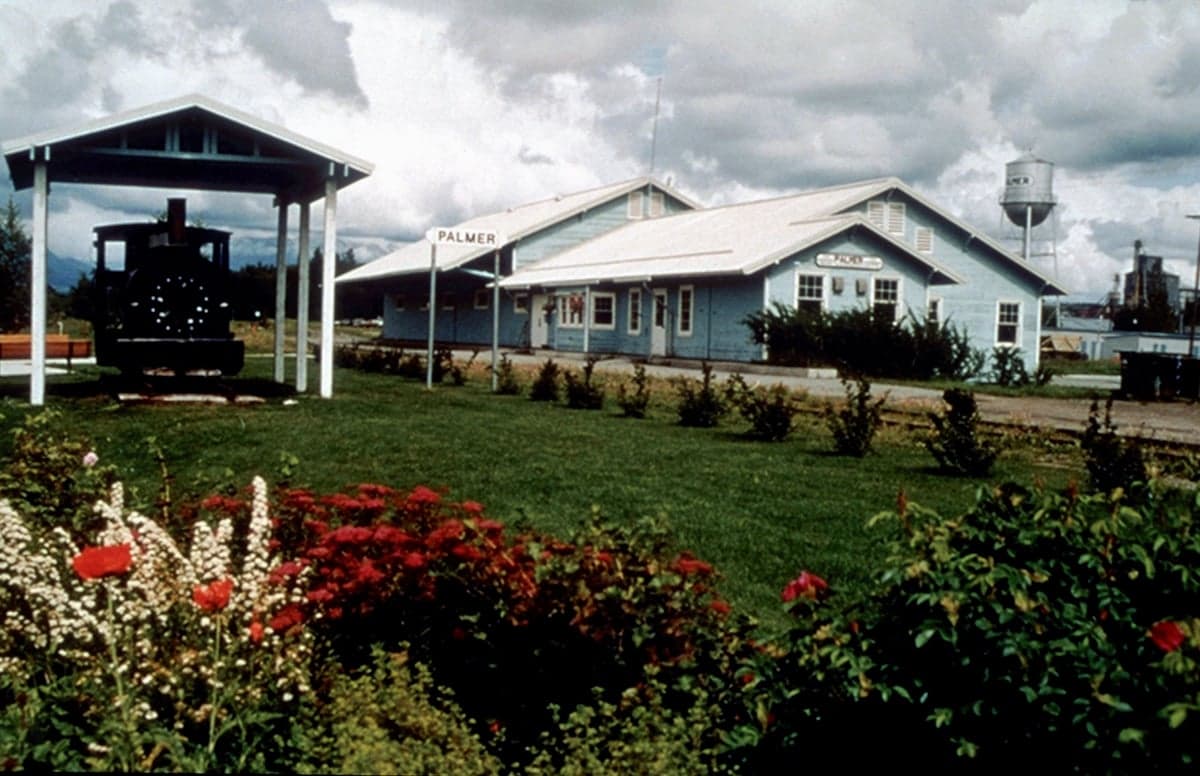
Photo: Wikipedia
Quality of Life in Palmer, AK
Above-average quality of iife. The area offers a reasonable cost of living, decent mobility, and a mix of neighborhood amenities.
What does Quality of Life tell us?
Quality of Life blends cost of living, nearby amenities, socioeconomic signals, and neighborhood character. City-level scores represent the whole municipality; individual neighborhoods can differ.
What does this tell us?
Quality of Life blends cost of living, nearby amenities, socioeconomic signals, and neighborhood character. City-level scores represent the whole municipality; individual neighborhoods can differ.
Cost of Living
2% below national average
The Real Cost of Living in Palmer, AK for 2026
| Tier | Individual | Family (4) |
|---|---|---|
| Survival | $18k | $34k |
| Comfortable | $54k | $79k |
| Luxury | $113k+ | $175k+ |
| Elite (Top 5%) | $133k+ | $206k+ |
90%
The Area Signal
A metric tracking the socioeconomic signals of the area.


Hobbies
Explore the areaGroceries
4 within 10 miles
Gas
0 within 10 miles
Hospital
3 within 20 miles
Airport
Palmer Municipal Airport PAQ
Post Office
USPS — Wasilla, AK
Critical Amenities
Quality-of-Life Analysis
Palmer, Alaska, presents a quality-of-life profile that blends small-town affordability with the rugged appeal of the Matanuska-Susitna Valley. With a cost-of-living index of 98—just below the national average of 100—Palmer offers a relative bargain compared to Anchorage, where the index hovers around 115. The population skews toward families, outdoor enthusiasts, and workers in agriculture, logistics, and the nearby oil and gas sector, creating a community that values self-reliance and access to nature over urban convenience.
Cost of living, housing affordability, and how Palmer compares to Anchorage and Wasilla
Palmer’s housing market is notably more accessible than Alaska’s urban core. The median home value sits at $275,900, roughly 30% lower than Anchorage’s median of about $390,000, while median rent is $1,134—well under the $1,400+ typical in the state’s largest city. This affordability gap is a primary driver for newcomers, though buyers should note that inventory is tight and properties often sell within weeks. Compared to neighboring Wasilla, Palmer’s home values are slightly higher (Wasilla’s median is around $265,000), but Palmer offers a more historic downtown and stronger agricultural zoning, which appeals to those seeking land for gardening or livestock. The average commute of 25.8 minutes is longer than Wasilla’s 22 minutes but shorter than Anchorage’s 30-minute average, reflecting Palmer’s role as a bedroom community for workers commuting south on the Glenn Highway. Utility costs, especially heating oil and electricity, are higher than the Lower 48—expect to pay 20-30% more for winter heating—which partially offsets the housing savings.
Schools, daily amenities, and the rhythm of life in the Mat-Su Valley
Daily life in Palmer revolves around the Matanuska-Susitna Borough School District, which serves roughly 19,000 students. Palmer High School and the newer Palmer Junior Middle School are well-regarded, with graduation rates above 90% and strong vocational programs in agriculture and mechanics. For daily errands, the downtown core on South Alaska Street offers a walkable mix of local shops, the Palmer Farmers Market (a summer staple since 1993), and big-box retailers like Fred Meyer and Walmart on the outskirts. Healthcare is handled by Mat-Su Regional Medical Center in Wasilla, a 10-minute drive, which provides emergency and specialty care—though for complex procedures, residents often travel 45 minutes to Anchorage. The rhythm of life is distinctly seasonal: summer brings 19-hour daylight for gardening, fishing, and the Alaska State Fair, while winter demands snow removal, woodstove maintenance, and shorter days. Internet access is improving, with fiber-optic service from MTA and GCI covering most of the town, but rural pockets still rely on slower DSL or satellite.
Who thrives in Palmer—and who might struggle
Palmer is best suited for individuals and families who prioritize outdoor recreation, space, and a slower pace over urban nightlife and cultural density. Hikers, anglers, and hunters will find world-class access to the Chugach Mountains, Knik River, and Hatcher Pass within 30 minutes. Retirees on fixed incomes benefit from the low cost of living, though the long, dark winters (as little as 5.5 hours of daylight in December) can be isolating for those without a strong social network. Remote workers with reliable internet can thrive, but those in high-paying professional fields—tech, finance, specialized medicine—may find limited local opportunities and need to commute to Anchorage or work remotely. Families with school-age children will appreciate the safe neighborhoods and strong community events, but should budget for higher heating and transportation costs. Ultimately, Palmer rewards those who embrace its trade-offs: lower housing costs in exchange for a remote, weather-dependent lifestyle that demands resilience and resourcefulness.

Crime in Palmer, AK
Lower crime rates than 78% of comparable U.S. locations.
Violent CrimeViolent Crime Analysis
Property CrimeProperty Crime Analysis
Crime Analysis
Palmer, Alaska, presents a mixed safety profile that diverges sharply from national averages. With a violent crime rate of 176.2 per 100,000 residents, the city is notably safer than the U.S. average of roughly 380 per 100,000, but property crime—at 1,351 per 100,000—is significantly higher than the national benchmark of about 1,950 per 100,000. This combination means residents face a lower risk of violent assault but a substantially elevated risk of theft, burglary, and vehicle break-ins compared to the rest of the country.
Crime in context
When compared to Alaska as a whole, Palmer’s violent crime rate is well below the state average of approximately 800 per 100,000, placing it among the safer communities in the Matanuska-Susitna Borough. However, the property crime rate is roughly in line with the state average, which hovers around 1,400 per 100,000. This suggests that while Palmer avoids the violent crime spikes seen in larger Alaskan cities like Anchorage or Fairbanks, it is not immune to the property theft and vandalism that plague the region. The city’s proximity to Anchorage—about 40 miles away—means it experiences spillover crime from the larger metro area, where progressive judicial policies have been linked to higher recidivism and reduced consequences for property offenders.
What residents experience
Daily life in Palmer for most residents involves a heightened awareness of property security. Vehicle thefts, package thefts from porches, and burglaries of unoccupied homes are the most common complaints reported to the Palmer Police Department. Violent incidents, such as aggravated assault or robbery, are rare but do occur, often tied to domestic disputes or alcohol-related altercations. The city’s small-town feel means that many residents know their neighbors, which can serve as a natural deterrent, but the transient population drawn by seasonal work and tourism can increase opportunistic crime. Palmer’s police force maintains a visible presence, with response times averaging under 10 minutes for priority calls, though resource constraints mean property crime investigations are often deprioritized unless a suspect is caught in the act.
Neighborhood-level variation
Safety in Palmer is not uniform across the city. The downtown core and areas near the Palmer-Wasilla Highway corridor see higher concentrations of property crime, particularly around retail centers and parking lots. In contrast, the residential neighborhoods east of the Parks Highway, such as the areas near Finger Lake and the Colony subdivision, report fewer incidents, with violent crime being almost nonexistent. Newer subdivisions on the outskirts, like those off Knik-Goose Bay Road, benefit from lower population density and active neighborhood watch programs, but their isolation can make them targets for burglaries during the day when homes are empty. Overall, Palmer’s crime landscape is one where vigilance against theft is essential, but the risk of violent harm remains low for most residents.
* Values derived from national, state, county, city and local statistics and may differ in a specific area. Last updated: 2026-04-19T19:34:10.000Z
Narrative content on this page is AI-generated and may contain mistakes. Verify any details that matter before acting on them.
ReloMaps may earn a commission from affiliate links at no extra cost to you.

