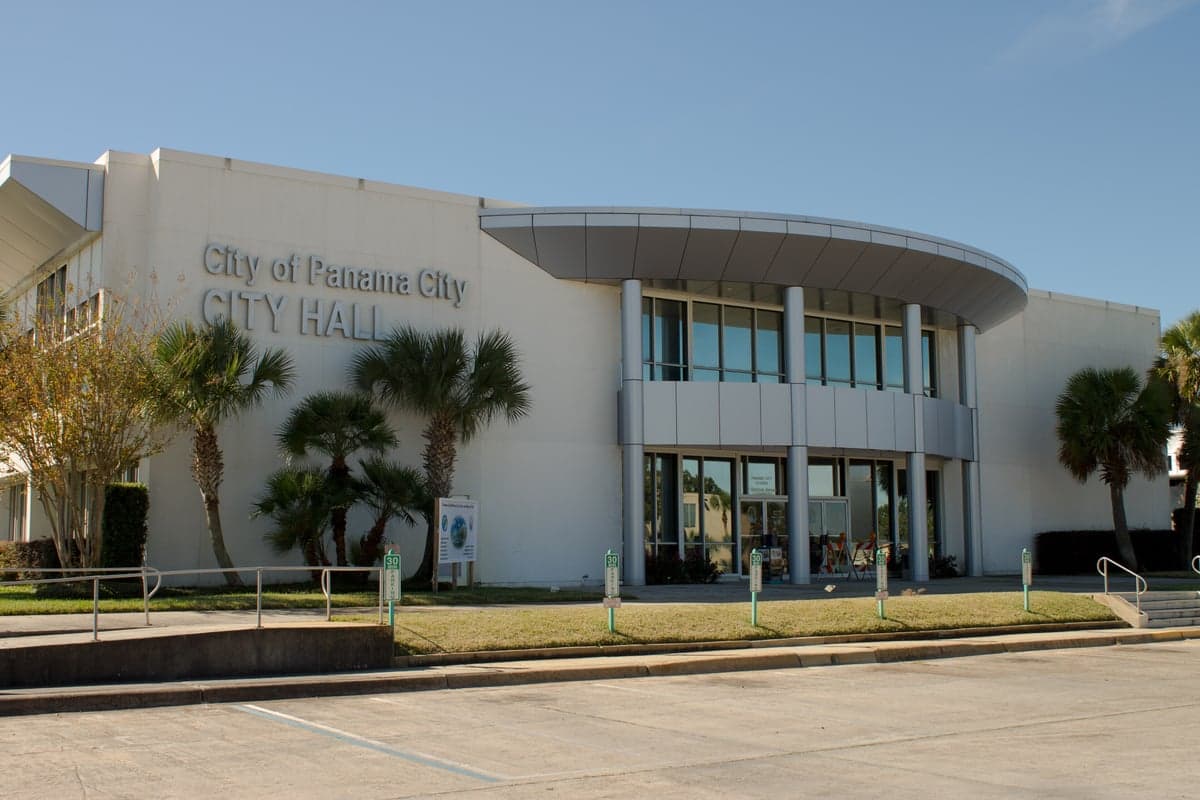
Photo: Wikipedia
Personal Sovereignty in Panama City, FL
Viable for self-reliance. Generally workable, though some barriers may limit total independence.
What does Personal Sovereignty tell us?
Personal Sovereignty measures your capacity for self-reliance and independence with minimal government friction. Higher scores mean fewer barriers between you and the way you want to live... but it assumes you have the space you need and good neighbors.
What does this tell us?
Personal Sovereignty measures your capacity for self-reliance and independence with minimal government friction. Higher scores mean fewer barriers between you and the way you want to live... but it assumes you have the space you need and good neighbors.
State Policy
Energy independence: Importer (10% of energy produced in-state)
Personal Liberty
Homesteading

Personal Liberty Analysis
Panama City, Florida, offers a personal sovereignty environment that stands in stark contrast to the heavily regulated, high-tax states many conservative-leaning individuals are fleeing. The city sits within a state that has deliberately positioned itself as a bulwark against federal overreach, with a constitutional preemption framework that limits local government’s ability to infringe on state-level protections for gun rights, property use, and medical choice. For a survivalist or prepper evaluating this area, the key takeaway is that Panama City provides a legal and cultural foundation where individual autonomy is the default, not the exception—though the degree of true self-reliance depends heavily on where you settle within the county and how you navigate the coastal development pressures.
Tax burden and regulatory posture for individuals and families
Florida’s lack of a state income tax is the single most impactful policy for personal sovereignty here. Panama City residents keep 100% of their earned income, which directly funds their own preparedness efforts—whether that’s land acquisition, supplies, or training—rather than subsidizing state programs. Property taxes in Bay County are moderate, typically around 0.8% to 1.0% of assessed value, which is manageable compared to the Northeast or Midwest. The regulatory posture at the state level is explicitly pro-business and pro-property rights, with Florida’s “Live Local Act” limiting local zoning restrictions on affordable housing and accessory dwelling units. However, Panama City itself has a municipal code that can be more restrictive than unincorporated Bay County, particularly regarding building permits, setback requirements, and short-term rentals. For a prepper, the strategic move is often to purchase land just outside city limits—in areas like Southport or Fountain—where county-level oversight is lighter and the ability to build a workshop, store supplies, or keep livestock is less contested. The state’s strong homestead exemption (up to $50,000 off assessed value) also protects primary residences from forced sale by most creditors, a meaningful sovereignty safeguard.
Self-defense and gun law specifics in Panama City
Florida is a “shall issue” state for concealed carry, and as of 2023, it became a permitless carry state for anyone legally allowed to possess a firearm. Panama City fully reflects this posture: there are no local ordinances that override state preemption on firearms, meaning no extra waiting periods, magazine bans, or registration schemes. Open carry is restricted for handguns unless you’re engaged in fishing, hunting, or camping—but concealed carry without a permit is now legal. For a survivalist, this means you can keep a firearm in your vehicle, home, or on your person without bureaucratic hurdles. Stand-your-ground laws are fully in effect, with no duty to retreat in any place you have a legal right to be. The local sheriff’s office in Bay County is generally pro-Second Amendment, and there are no “gun-free zones” beyond the federally mandated ones (schools, federal buildings). The practical reality is that Panama City is one of the most firearm-friendly metro areas in the Southeast, with multiple gun ranges, training facilities, and a strong culture of self-defense. The only caveat is that coastal tourist zones like the beach strip can have heightened police presence, but that’s more about public intoxication than gun rights enforcement.
Self-reliance and homesteading viability: lot sizes, zoning, off-grid feasibility
Panama City’s geography offers a split personality for homesteading. Within the city proper, lots are typically small (5,000 to 10,000 square feet), and zoning restricts livestock, large gardens, and non-standard structures. But drive 15 minutes north or east, and the picture changes dramatically. Unincorporated Bay County allows for agricultural zoning on parcels as small as one acre, and many rural subdivisions have no HOA restrictions. Lot sizes in areas like Callaway, Springfield, and the northern part of the county routinely run from half an acre to five acres, with prices still reasonable compared to the rest of coastal Florida—often $15,000 to $40,000 per acre for raw land. Off-grid feasibility is moderate: Florida’s high water table and frequent hurricanes make septic systems and well drilling standard, but solar is viable year-round, and the state has no net-metering restrictions that penalize self-generation. The biggest sovereignty challenge is that Bay County enforces building codes tied to wind-load standards (due to hurricane risk), which adds cost and complexity to any DIY structure. However, there is no state-level ban on rainwater collection, and composting toilets are legal in unincorporated areas. For a prepper, the sweet spot is a 2- to 5-acre parcel north of Highway 390 or near Deerpoint Lake, where you can have a garden, chickens, a backup generator, and a well without attracting county attention.
Personal liberties: parental rights, medical autonomy, speech, and property
Florida has become a national leader in codifying parental rights, with the Parental Bill of Rights (2021) and the “Don’t Say Gay” law (2022) establishing that parents have the fundamental right to direct their children’s education, healthcare, and upbringing. In Panama City, this translates to school boards that are generally responsive to conservative parents, and a local culture where medical decisions—including vaccine choice and alternative treatments—are respected. Medical autonomy is strong: Florida law prohibits state-mandated vaccine passports, and the state’s emergency powers were curtailed in 2021 to prevent governors from shutting down businesses or churches without legislative approval. Free speech is robust, with no local hate speech ordinances or permit requirements for public gatherings beyond standard parade permits. Property rights are protected by the Bert J. Harris Jr. Private Property Rights Protection Act, which allows landowners to sue if government regulation reduces property value by more than 40%. The practical effect is that Panama City’s local government is cautious about overreaching zoning or environmental restrictions, knowing they can be challenged. The only notable limitation is that coastal construction setback lines and dune protection zones can restrict building near the beach, but that’s a narrow concern for most inland residents.
Overall, Panama City ranks as a high-sovereignty location within the United States, particularly when compared to the West Coast, Northeast, or even parts of the Upper Midwest. The combination of no income tax, permitless carry, strong parental rights, and limited local regulation creates an environment where an individual can live largely unbothered by government intrusion. The primary trade-offs are the hurricane risk (which mandates some building code compliance) and the need to choose your specific neighborhood carefully—inside city limits, you’ll face more rules; outside them, you’ll find the autonomy that aligns with a survivalist mindset. For a single person or family looking to maximize personal sovereignty while staying within a functioning coastal economy, Panama City is a strong contender that beats most of the country on the metrics that matter most.

* Values derived from national, state, county, city and local statistics and may differ in a specific area. Last updated: 2026-05-13T17:01:27.000Z
Narrative content on this page is AI-generated and may contain mistakes. Verify any details that matter before acting on them.
ReloMaps may earn a commission from affiliate links at no extra cost to you.

