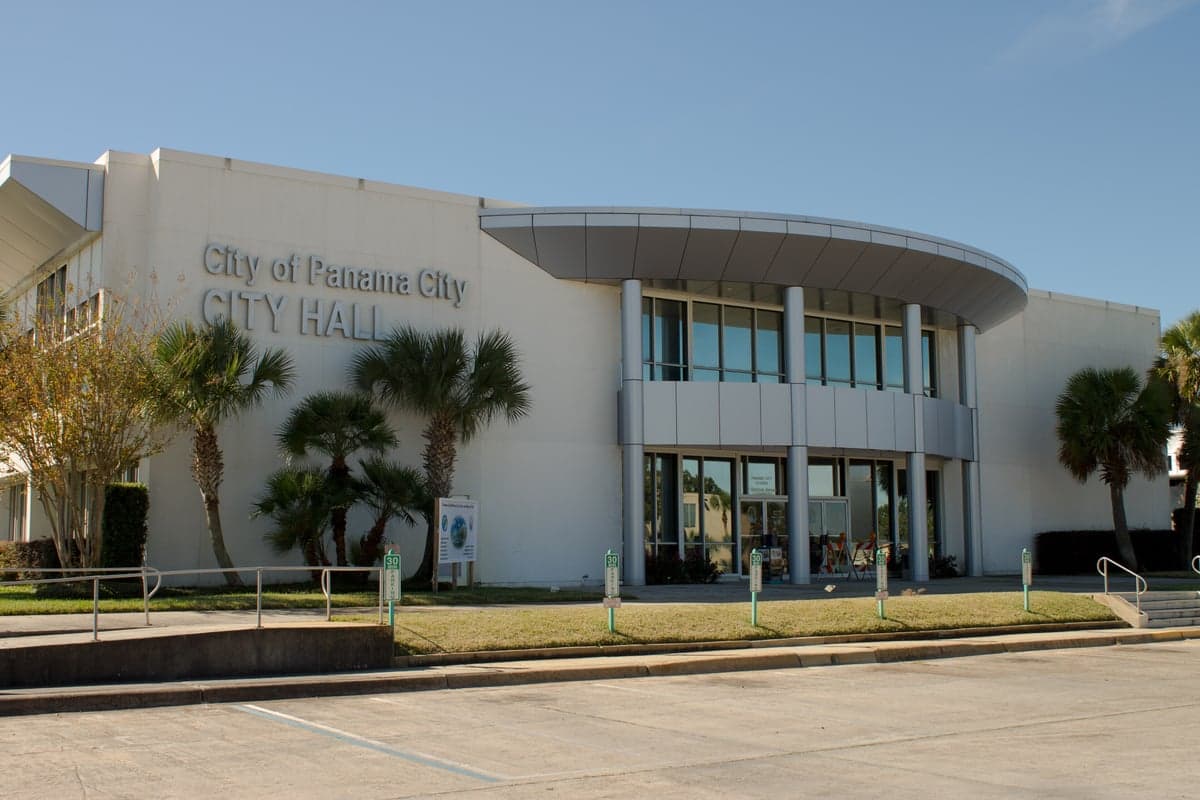
Photo: Wikipedia
Political ClimatePolitical Climate in Panama City, FL
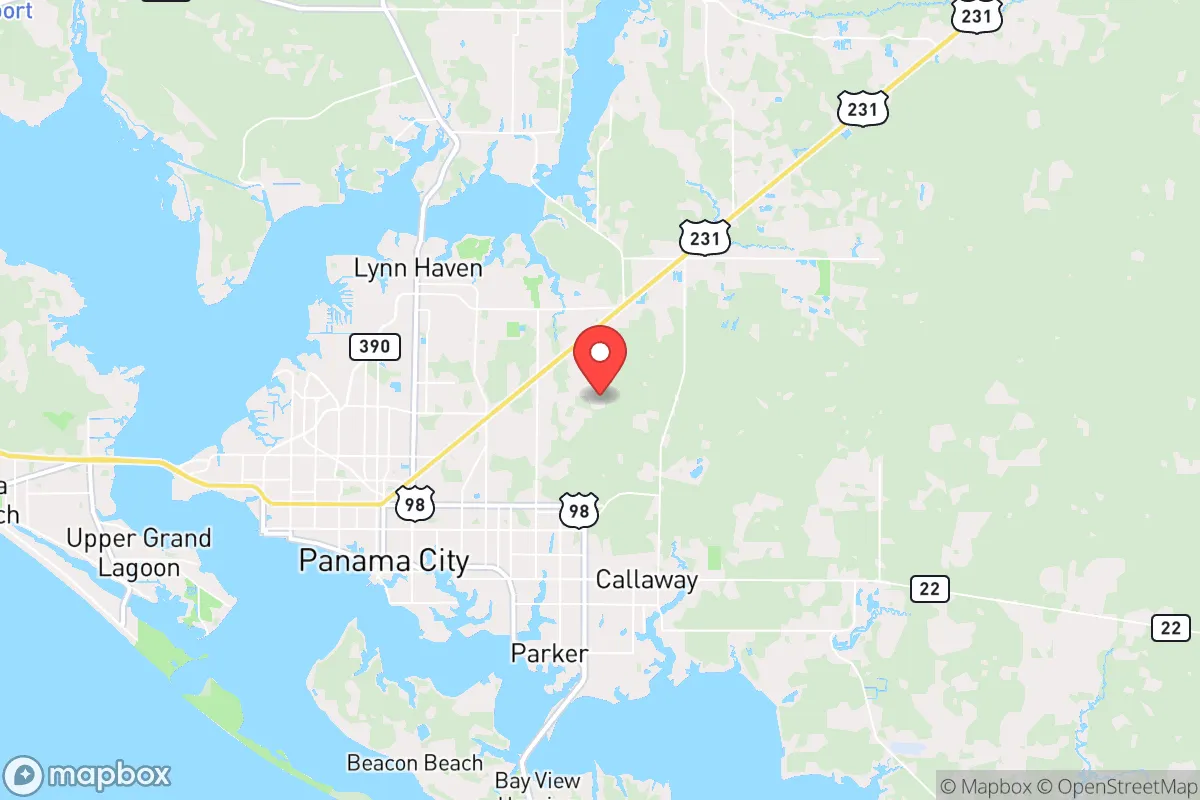
District shown is the primary district for this city’s centroid. Cities may span multiple districts.
Local Political AnalysisPolitical Analysis of Panama City, FL
Panama City has long been a reliably conservative stronghold, and that hasn't changed much, even as the rest of the state has seen some shifts. The area's Cook Political Voting Index sits at R+8, which is a solid three points more Republican than the state of Florida as a whole, which is R+5. That might not sound like a huge gap, but in practical terms, it means Panama City and Bay County are among the last places in Florida where you can still count on local leaders to at least pay lip service to limited government and personal responsibility. The trajectory here is actually pretty stable—if anything, the influx of folks from more progressive parts of the state has been slow, and most newcomers seem to be looking for the same conservative values that have always defined this stretch of the Panhandle.
How it compares
When you stack Panama City up against the rest of Florida, the differences are stark. The state as a whole has been trending purple for years, especially in the I-4 corridor and down south around Miami and Fort Lauderdale. Places like Tallahassee, just a couple hours east, have gone hard blue, and even Pensacola to the west has seen some progressive inroads. But Panama City? It's still the kind of place where you can have a real conversation about government overreach without getting labeled an extremist. The surrounding towns—Lynn Haven, Callaway, and even Springfield—are all cut from the same cloth. You don't see the same kind of push for expansive social programs or heavy-handed regulations that you'd find in, say, Orlando or Tampa. The local school board, city commission, and county council are all dominated by folks who believe in keeping taxes low and letting people live their lives without a bunch of bureaucratic interference.
What this means for residents
For someone living here, the political climate translates directly into daily life. You're not going to see the kind of aggressive zoning or business mandates that have choked small businesses in other parts of the state. Property rights are still taken seriously, and there's a general distrust of any proposal that sounds like it's coming from Tallahassee or Washington. That said, there's been a slow creep of progressive ideology showing up in local elections—usually from outside money or transplants who don't quite get the local culture. It's something to keep an eye on, because once those ideas take root, they're hard to pull out. The good news is that the community is still small enough that most people know each other, and there's a strong network of civic groups and churches that push back against anything that feels like government overreach into personal freedoms.
One thing that really sets Panama City apart is the cultural resistance to the kind of top-down policy changes you see in bigger cities. For example, while Miami and Orlando have embraced things like sanctuary city policies and expansive public health mandates, Panama City has largely stayed out of those fights. The local attitude is more "live and let live" in the traditional sense—meaning the government should stay out of your business, not the other way around. Looking ahead, the biggest concern is whether the area can maintain that identity as more people move in from other states. If the next few elections bring in candidates who are more interested in national trends than local values, you could see a real shift. But for now, Panama City remains one of the few places in Florida where you can still count on a conservative approach to governance, and that's worth holding onto.

State Political ClimatePolitical Climate in Florida
State Political AnalysisPolitical Environment in the State
Florida is a solidly Republican state with a Cook PVI of R+5, but don't let that single number fool you — it's a battleground in miniature, a place where a fast-growing, diverse population has created a political climate that's both deeply conservative in its policy instincts and surprisingly volatile in its electoral outcomes. Over the last 10-20 years, the state has lurched from a classic swing state (remember the 2000 recount?) to a reliably red-leaning powerhouse, driven by a massive influx of domestic migrants from blue states, a growing Hispanic electorate that leans right on economics and culture, and a Republican party that has consolidated power at every level of government. The dominant coalition is a mix of suburban families, retirees from the Midwest and Northeast, and rural conservatives, all united by a shared skepticism of high taxes, heavy regulation, and what they see as progressive overreach in education and public health.
Urban vs. rural divide
The political map of Florida is a study in stark contrasts. The major metros — Miami-Dade, Broward (Fort Lauderdale), and Palm Beach County — are the Democratic strongholds, with Miami-Dade in particular being a fascinating case: it's a heavily Hispanic county that has been trending rightward, flipping from a 30-point Democratic margin in 2012 to a single-digit one in 2024. That shift alone has reshaped the state's entire political calculus. Meanwhile, the Tampa Bay area (Hillsborough and Pinellas counties) is the classic swing region, with St. Petersburg and Tampa proper leaning blue but the surrounding suburbs and exurbs like Wesley Chapel and Lutz voting red. The real engine of Republican dominance is the I-4 corridor and the sprawling, fast-growing interior: Orlando's Orange County is blue, but the surrounding counties — Lake, Seminole, Osceola — are red or trending red. The Panhandle, from Pensacola to Tallahassee, is deeply conservative, with rural counties like Liberty and Calhoun routinely delivering 80%+ margins for Republicans. The southwest coast, including Naples (Collier County) and Sarasota, is a retirement haven for conservative-leaning snowbirds, while the Space Coast (Brevard County) is a mix of military, aerospace, and tech workers who lean right. The bottom line: the Democratic vote is increasingly concentrated in a few dense urban cores, while the Republican vote is spread across a vast, growing suburban and exurban landscape.
Policy environment
Florida's policy environment is aggressively conservative, and it's a major reason people are moving here. There is no state income tax, which is a huge draw for high-earners and business owners. The regulatory posture is business-friendly, with a right-to-work law and a tort reform environment that has made it harder to file frivolous lawsuits. On education, Governor Ron DeSantis and the legislature have pushed through the Parental Rights in Education Act (the so-called "Don't Say Gay" law), expanded school choice through universal Education Savings Accounts, and banned Critical Race Theory and DEI programs in public schools and universities. Healthcare policy is a mixed bag: Florida did not expand Medicaid under the ACA, and the state has been a leader in medical freedom legislation, including a ban on vaccine passports and a law prohibiting employers from mandating COVID-19 vaccines. Election laws have been tightened, with stricter voter ID requirements, limits on drop boxes, and a ban on ballot harvesting. The state also passed a 15-week abortion ban (later extended to six weeks), which is a key issue for conservative voters. Property rights are strongly protected, with no state-level rent control and a robust homestead exemption that shields primary residences from creditors. The overall posture is one of limited government, low taxes, and a strong emphasis on parental and individual rights.
Trajectory & freedom
Florida is becoming more free in several key dimensions, and that's the explicit goal of the current political leadership. The state has expanded gun rights significantly: it passed permitless carry (constitutional carry) in 2023, allowing any law-abiding adult to carry a concealed firearm without a permit. It also has a "Stand Your Ground" law and preempts local governments from enacting stricter gun ordinances than the state. On parental rights, the state has become a national model for conservatives, with laws giving parents more control over school curricula, library books, and medical decisions for their children. Medical freedom was a major flashpoint during COVID, and Florida was one of the first states to ban vaccine mandates for private employers and to prohibit mask mandates in schools. Property rights were strengthened by a 2024 law that limits the ability of homeowners' associations to impose fines and restricts local governments from enacting rent control. However, there are areas where freedom has been curtailed: the six-week abortion ban is a significant restriction on bodily autonomy, and the state's strict election laws have been criticized by voting rights groups. The trend is clear: Florida is doubling down on a vision of freedom that prioritizes economic liberty, gun rights, and parental control, while imposing more restrictions on abortion and, to a lesser extent, on certain forms of protest and assembly.
Civil unrest & political movements
Florida has seen its share of political flashpoints, but the overall level of civil unrest is lower than in many other large states. The most visible movements have been on the right: the "Don't Say Gay" law sparked protests and boycotts from progressive groups, but the backlash was largely national, not local. The state has also been a focal point for immigration politics, with Governor DeSantis busing migrants to Martha's Vineyard and signing a tough anti-sanctuary city law that requires local law enforcement to cooperate with ICE. There is no serious secession or nullification rhetoric in Florida — it's a state that is broadly comfortable with its place in the Union. Election integrity controversies have been a major theme since 2020, with the state creating an Office of Election Crimes and Security and prosecuting a handful of cases of alleged voter fraud. The most visible flashpoint for a new resident would likely be the cultural battles in schools: school board meetings in places like Brevard County and Collier County have been heated, with parents clashing over library books, curriculum, and transgender policies. On the left, there are organized activist groups like the Florida Rising and the Dream Defenders, but they have limited influence in a state where Republicans hold a supermajority in the legislature. The overall atmosphere is one of political engagement, but not widespread unrest — most people are here because they like the direction the state is heading.
Projection
Over the next 5-10 years, Florida is likely to become more conservative, not less. The demographic trends are overwhelmingly favorable to Republicans: the state is adding about 1,000 new residents per day, and the vast majority are coming from blue states like New York, California, and Illinois. These migrants tend to be older, wealthier, and more conservative than the average American — they're moving to Florida precisely because of its low taxes, light regulation, and conservative cultural climate. The Hispanic electorate, which is growing rapidly, is also trending rightward, particularly among Cuban-Americans in Miami-Dade and Venezuelan-Americans in South Florida. The only wild card is the youth vote: younger Floridians are more progressive on issues like climate change and abortion, but they vote at lower rates and are a smaller share of the electorate than in other states. The Republican supermajority in the legislature is likely to hold, and the state will continue to pass conservative legislation on education, guns, and taxes. A new resident moving in now should expect to find a state that is increasingly self-confident in its conservative identity, with a government that is actively trying to shape the national conversation on parental rights, medical freedom, and economic liberty.
Bottom line for a new resident: If you're moving to Florida for the politics, you're probably coming for the right reasons. The state is a safe harbor for conservative values — low taxes, strong gun rights, parental control over education, and a government that takes a skeptical view of federal overreach. You'll find a political culture that is engaged but not chaotic, with a clear direction of travel. Just be aware that the urban areas — Miami, Orlando, Tampa, and Fort Lauderdale — are blue islands in a red sea, and the cultural battles over schools and public health are real and ongoing. But if you want a state that is actively pushing back against progressive trends, Florida is one of the few places in the country where that project is succeeding.
* Values derived from national, state, county, city and local statistics and may differ in a specific area. Last updated: 2026-05-13T17:01:27.000Z
Narrative content on this page is AI-generated and may contain mistakes. Verify any details that matter before acting on them.
ReloMaps may earn a commission from affiliate links at no extra cost to you.

