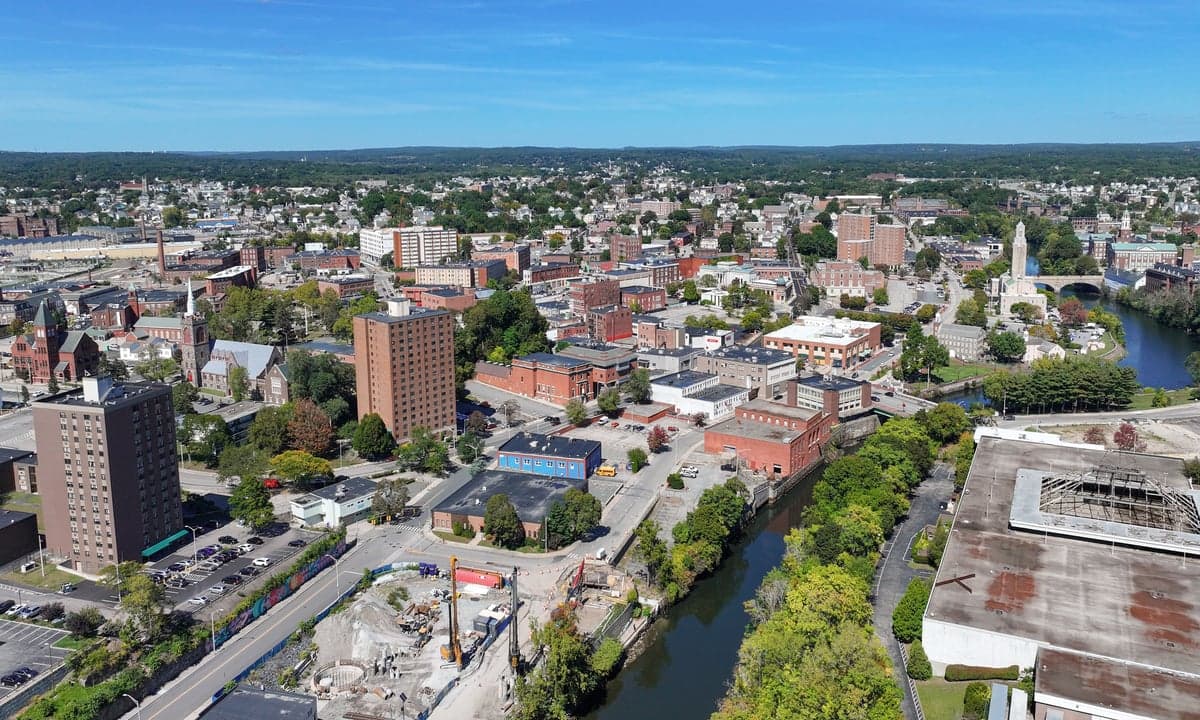
Photo: Wikipedia
Political ClimatePolitical Climate in Pawtucket, RI
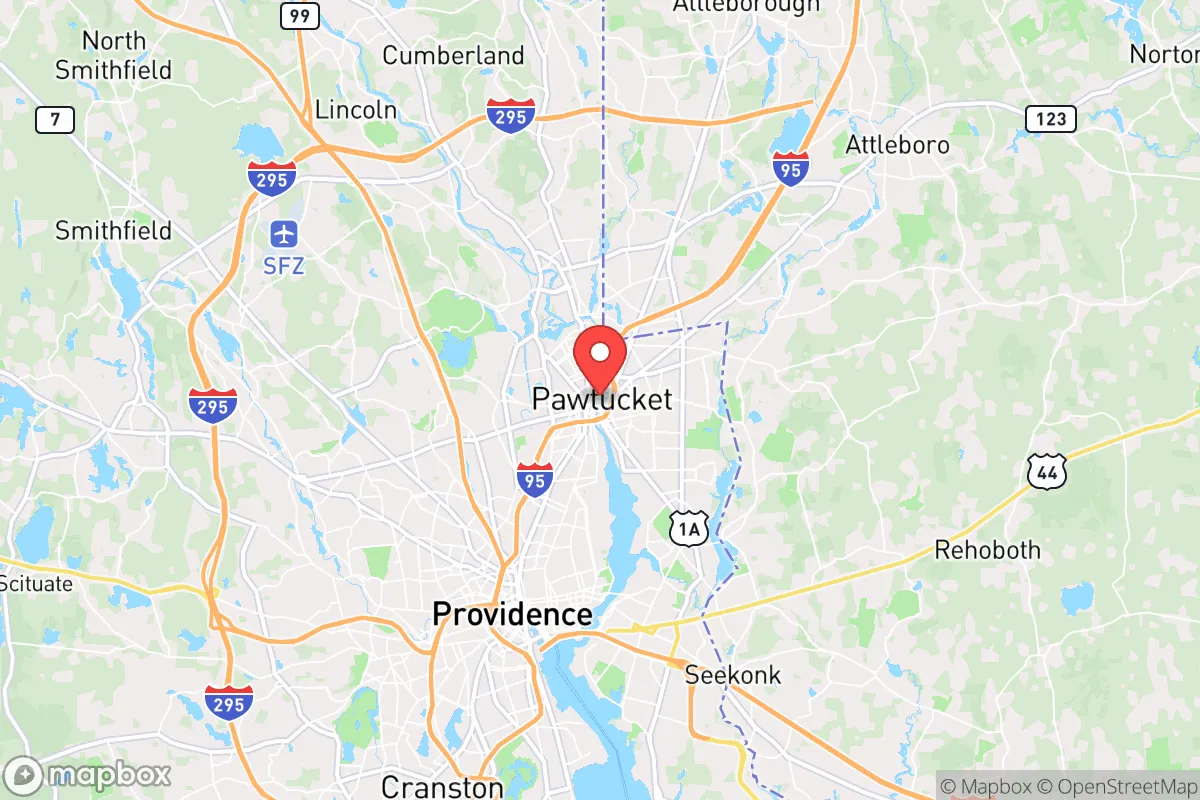
District shown is the primary district for this city’s centroid. Cities may span multiple districts.
Local Political AnalysisPolitical Analysis of Pawtucket, RI
Look, I’ve lived in Pawtucket my whole life, and I’ve watched this town shift from a solid, blue-collar, live-and-let-live kind of place into something that feels a lot more… managed. The numbers back up what you’d feel on the ground: the Cook PVI is D+12, which means Democrats have a heavy, structural advantage here. That’s not just a statistic—it’s the reason you see a lot of top-down policies that don’t always match what folks actually want at the kitchen table. The trajectory has been steadily leftward for the last decade, and it’s not slowing down.
How it compares
If you drive ten minutes north to Attleboro, Massachusetts, you’ll feel a different vibe entirely. Attleboro is more purple, with a lot more pushback on things like mask mandates, school curriculum changes, and property tax hikes. Same with Cumberland just to the north—still more independent-minded. But Pawtucket? It’s surrounded by Providence’s shadow, and that means the city council and school board here tend to follow the state’s progressive playbook pretty closely. East Providence across the river is a little more moderate, but Pawtucket is the heart of the D+12 district, and you can feel it in everything from zoning rules to how the police are treated.
What this means for residents
For the average person, the biggest red flag is how much government reach has expanded into daily life. It used to be that you could put an addition on your house or run a small repair business out of your garage without three layers of permits and inspections. Now, the city has gotten aggressive about code enforcement, business licensing, and even short-term rental restrictions. The school board has also pushed a lot of social-emotional learning and DEI training that a lot of parents I know find intrusive. There’s a feeling that your personal freedoms—how you raise your kids, what you do with your property, even what you say at a public meeting—are being squeezed. The tax burden is real too: Pawtucket’s property tax rate is one of the highest in the state, and you don’t always see the return in services.
On the plus side, if you’re aligned with the progressive agenda, you’ll find plenty of like-minded neighbors and active community groups. But if you’re more of a traditional, keep-the-government-out-of-my-business type, you’ll feel increasingly like an outsider in your own town. The city’s leadership has been very vocal about things like racial equity audits and climate action plans, which sound nice on paper but often translate into new fees, mandates, and committees that don’t seem to make life any easier for the working families who’ve been here for generations.
One thing that hasn’t changed much is the strong union presence—especially among teachers and city workers. That’s a double-edged sword. It protects some jobs and pensions, but it also locks in a lot of spending that limits what the city can do about taxes or school choice. Culturally, Pawtucket still has that old mill-town grit, with a lot of Portuguese and Dominican families who keep things real. But the politics are drifting further from that working-class foundation every election cycle. If the trend holds, I’d expect more zoning overhauls, more public spending on social programs, and less tolerance for anyone who questions the direction. It’s still a fine place to live if you keep your head down, but the days of being left alone are fading fast.

State Political ClimatePolitical Climate in Rhode Island
State Political AnalysisPolitical Environment in the State
Rhode Island has long been a one-party Democratic stronghold, but the picture is more complicated than a simple blue label. The state’s political climate is dominated by a progressive urban core in Providence and a handful of surrounding cities, while the more rural and suburban towns—places like East Greenwich, North Kingstown, and Foster—still lean conservative or, at minimum, vote for moderate Republicans. Over the last 10-20 years, the state has shifted noticeably leftward on social and economic policy, driven by an influx of out-of-state transplants and a powerful public-sector union machine. For a conservative considering relocation, the key takeaway is that while the state’s overall partisan lean is solidly Democratic (voting +28 for Biden in 2020), there are pockets of resistance and a policy environment that has become increasingly hostile to traditional freedoms.
Urban vs. rural divide
The political map of Rhode Island is a textbook case of the urban-rural split. Providence, the state capital and largest city, is the engine of the Democratic machine, with its large student population, public-sector workforce, and immigrant communities. The city consistently delivers margins of 80%+ for Democratic candidates. The same pattern holds in Pawtucket, Central Falls, and Woonsocket—old mill cities with high poverty rates and strong union ties. These four cities alone account for roughly 40% of the state’s vote, making it nearly impossible for Republicans to win statewide. In contrast, the more rural and suburban areas—Washington County (South County) and parts of Kent and Bristol counties—are where conservatives find their footing. Towns like East Greenwich, North Kingstown, and Foster regularly vote Republican or split tickets. In 2024, the 2nd Congressional District (covering most of the state outside Providence) was competitive, with Republican candidate Allan Fung losing by only 4 points, a sign that the rural vote is still alive. The divide is stark: drive 20 minutes south of Providence and you’ll find a completely different political culture, with lower taxes, more gun rights, and a stronger sense of local control.
Policy environment
Rhode Island’s policy environment is a mixed bag for conservatives, but the trend is concerning. The state has one of the highest tax burdens in the nation, with a top income tax rate of 5.99% and property taxes that are among the highest in New England. The sales tax is 7%, and there’s a meals and beverage tax that can push dining out to 9% or more. The regulatory posture is heavy, especially in healthcare and housing. The state has a Certificate of Need (CON) law that restricts new hospital and healthcare facility construction, driving up costs. On education, Rhode Island has a strong public-school system in wealthy suburbs (Barrington, East Greenwich) but failing schools in urban districts. School choice is limited, with only a small charter school sector and no voucher program. Healthcare is dominated by the state’s Medicaid expansion and a strong push for single-payer, though it hasn’t passed yet. Election laws are among the most liberal in the country: no voter ID requirement, automatic voter registration, and mail-in voting for all. For a conservative, the policy environment feels like a slow-motion slide toward a European-style social democracy, with high taxes funding generous public benefits.
Trajectory & freedom
Over the last five years, Rhode Island has become less free in several key areas. The most visible flashpoint is gun rights. In 2022, the state passed a ban on “ghost guns” and raised the age to purchase rifles and shotguns to 21. In 2023, it passed a ban on open carry and a “safe storage” law that requires firearms to be locked up when not in use. The state also has a “red flag” law that allows police to confiscate firearms without a criminal conviction. On parental rights, the state passed a law in 2023 that prohibits schools from notifying parents if a child changes their gender identity or pronouns, a direct blow to parental authority. On medical autonomy, Rhode Island has some of the most permissive COVID-19 vaccine mandates in the country, with healthcare workers and state employees still required to be vaccinated as of 2025. On property rights, the state has a strong “eminent domain” record and has been aggressive in using it for development projects, particularly in Providence. The only bright spot is that the state has not passed a statewide rent control law, though it’s been proposed multiple times. The trajectory is clear: more regulation, less personal freedom, and a government that sees itself as the primary decision-maker in your life.
Civil unrest & political movements
Rhode Island has a history of civil unrest, but it’s been relatively quiet compared to larger states. The most visible flashpoint in recent years was the 2020 Black Lives Matter protests in Providence, which saw several nights of clashes with police and the toppling of a Christopher Columbus statue. The state has a strong sanctuary policy, with Providence and Central Falls declaring themselves “sanctuary cities” and the state passing a law in 2021 that limits cooperation between local police and federal immigration authorities. This has led to tensions in more conservative towns like Cranston and Warwick, where residents have pushed back against the policy. On the right, there is a small but active Second Amendment sanctuary movement, with several towns (Foster, Glocester, Burrillville) passing resolutions declaring themselves “sanctuary towns” for gun rights. There’s also a growing school choice movement, led by parents frustrated with the public school system in urban areas. Election integrity has been a hot topic, with the state’s mail-in voting system drawing criticism from conservatives after the 2020 election, though no major fraud was found. A new resident would notice that political activism is mostly confined to the urban core, with rural areas being more passive but deeply skeptical of state government.
Projection
Looking ahead 5-10 years, Rhode Island is likely to become more progressive, not less. The demographic trends are clear: the state’s population is aging, with young people leaving for lower-cost states, while the urban core is being replenished by immigrants and out-of-state transplants from Massachusetts and New York who bring progressive politics with them. The state’s economy is heavily dependent on government spending (the University of Rhode Island, the state’s healthcare system, and the defense sector at Naval Station Newport), which insulates it from the kind of economic shocks that might force policy changes. The Republican Party is weak, with no statewide elected officials and a shrinking base in the suburbs. The most likely scenario is that Rhode Island continues its slide toward a high-tax, high-regulation, socially progressive model, with the only resistance coming from a few rural towns that will become increasingly isolated. For a conservative moving in now, the expectation should be that the state will be less free in 2035 than it is today, with more gun control, higher taxes, and less parental control over education.
For a conservative considering Rhode Island, the bottom line is this: you can find a community that shares your values in towns like East Greenwich, North Kingstown, or Foster, but you will be fighting an uphill battle against a state government that is increasingly hostile to your way of life. The taxes are high, the regulations are heavy, and the cultural tide is moving against you. If you value low taxes, gun rights, and parental control over education, you will be better off in New Hampshire or even parts of Connecticut. But if you have a job or family ties that keep you here, know that there are still pockets of freedom—you just have to work harder to protect them.
* Values derived from national, state, county, city and local statistics and may differ in a specific area. Last updated: 2026-04-20T17:55:19.000Z
Narrative content on this page is AI-generated and may contain mistakes. Verify any details that matter before acting on them.
ReloMaps may earn a commission from affiliate links at no extra cost to you.

