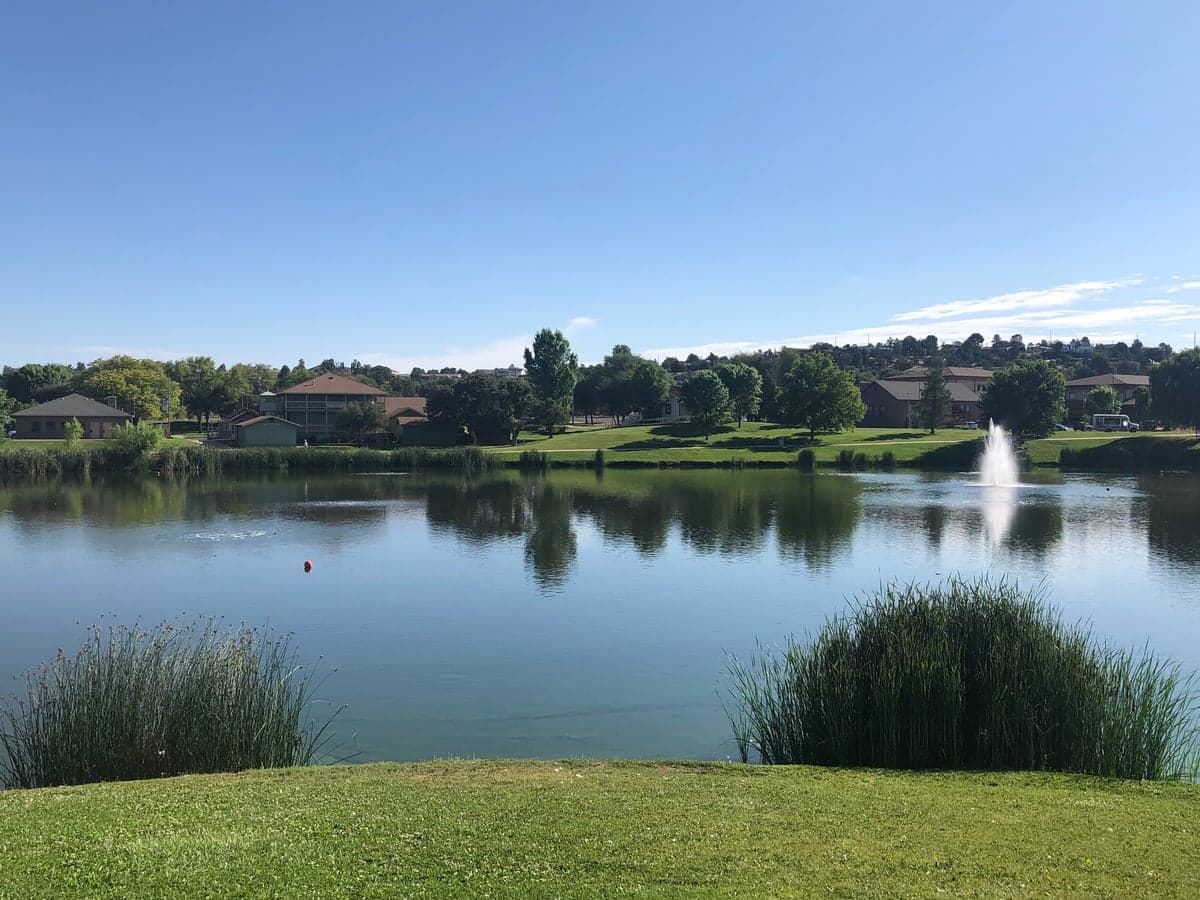
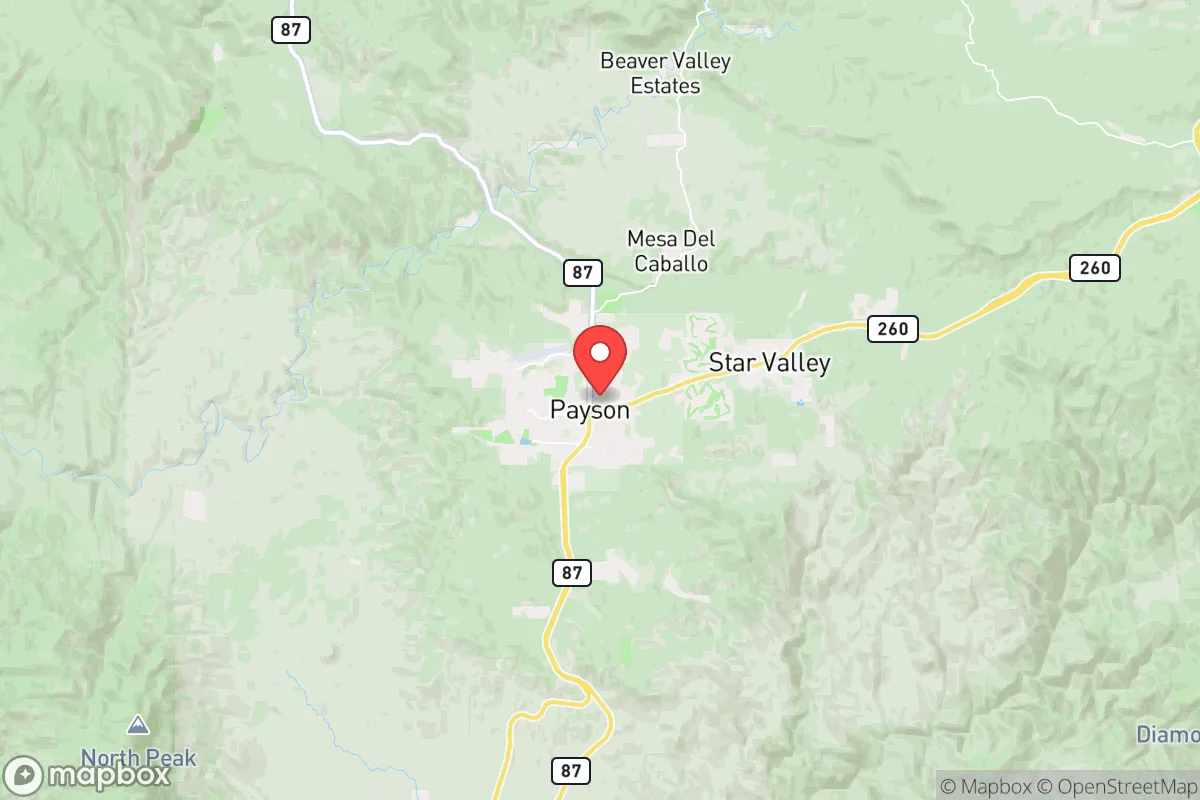
Photo: Wikipedia
Demographics of Payson, AZ
Affluence Level in Payson, AZ
A middle-class area roughly in line with national averages across income, home values, education, and employment.
People of Payson, AZ
The people of Payson, Arizona, today number 16,494 and form a predominantly white, politically conservative community with a distinctly Western, small-town character. The population is notably homogeneous — 83.7% white and 11.5% Hispanic — with a foreign-born share of just 0.8%, far below the national average. The town’s identity is shaped by its history as a timber and ranching hub, its role as a retirement and second-home destination for Arizonans seeking cooler mountain air, and a culture that prizes self-reliance, outdoor recreation, and civic engagement through local churches and the annual World’s Oldest Continuous Rodeo.
How the city was settled and grew
Payson’s original population was drawn by the promise of timber, grazing land, and mineral wealth in the late 19th century. The area was first settled by Anglo-American ranchers and prospectors in the 1880s, following the expulsion of the Yavapai and Apache peoples from the Tonto Basin. The town was formally platted in 1884 and named after a local merchant, John H. Payson. The early economy revolved around cattle ranching and logging, with the first major wave of settlers arriving via the General Crook Trail. These founding families — names like Haught, Hart, and Brown — built homesteads in what is now the Historic District along Main Street and in the Green Valley Park area, where the original schoolhouse and church still stand. A second wave came during the 1920s and 1930s, when the Civilian Conservation Corps built the Payson Ranger Station and improved roads, drawing workers and their families to the Rim Country neighborhoods east of the downtown core. By 1950, Payson’s population was still under 1,000, almost entirely white and native-born, with a small number of Mexican-American families who worked on ranches and in the sawmills settling in the Oxbow Estates area.
Modern era (post-1965)
The post-1965 era brought two major demographic shifts: the paving of Arizona State Route 87 in the 1970s, which connected Payson to Phoenix, and the subsequent boom in retirement and second-home development. The 1970s and 1980s saw an influx of white retirees from Phoenix and Tucson, drawn by the cooler climate and lower cost of living. They settled in master-planned communities like Mesa del Caballo and Kohl’s Ranch, which offered golf courses, gated entries, and mountain views. A smaller but notable wave of working-class families — many of them Hispanic — arrived during the 1990s construction boom, taking jobs in homebuilding, landscaping, and hospitality. These families concentrated in the Flowing Springs neighborhood and along the Beeline Highway corridor. The Hispanic share of the population rose from roughly 5% in 1990 to 11.5% today, though the community remains small and largely integrated rather than forming a distinct ethnic enclave. The East/Southeast Asian population (0.7%) and Black population (0.4%) are tiny and dispersed, with no single neighborhood concentration. The Indian-subcontinent population is effectively zero. The college-educated share stands at 26.5%, reflecting the retiree and remote-worker influx but still below the Arizona average of 30%.
The future
Payson’s population is projected to grow modestly — perhaps reaching 20,000 by 2040 — driven by continued domestic in-migration from Phoenix and other Sun Belt cities. The town is likely to become slightly more diverse, with the Hispanic share possibly rising to 15-18% as younger families move in for affordable housing and service-sector jobs. However, the foreign-born share is expected to remain very low (under 2%), as Payson lacks the industrial or agricultural base that attracts immigrant communities to other parts of Arizona. The white population will remain the overwhelming majority, and the town will likely continue to tribalize along age and income lines rather than ethnicity: retirees in gated communities like Mesa del Caballo, working families in Flowing Springs and Oxbow Estates, and a growing number of remote workers in the Historic District and newer subdivisions near the Payson Regional Medical Center. No significant growth is projected for East/Southeast Asian, Black, or Indian-subcontinent populations.
For someone moving in now, Payson is becoming a more settled, slightly more diverse version of its historic self — a predominantly white, conservative, retiree-and-remote-worker community where the Hispanic presence is growing but remains modest, and where nearly all residents are native-born. The town offers a stable, low-crime environment with strong community institutions, but those seeking significant ethnic or cultural diversity will not find it here. The bottom line: Payson is a place where the population is slowly diversifying along class and age lines, not racial or immigrant ones, and that trajectory is likely to hold for the next generation.

* Values derived from national, state, county, city and local statistics and may differ in a specific area. Last updated: 2026-05-01T06:19:35.000Z
Narrative content on this page is AI-generated and may contain mistakes. Verify any details that matter before acting on them.
ReloMaps may earn a commission from affiliate links at no extra cost to you.

