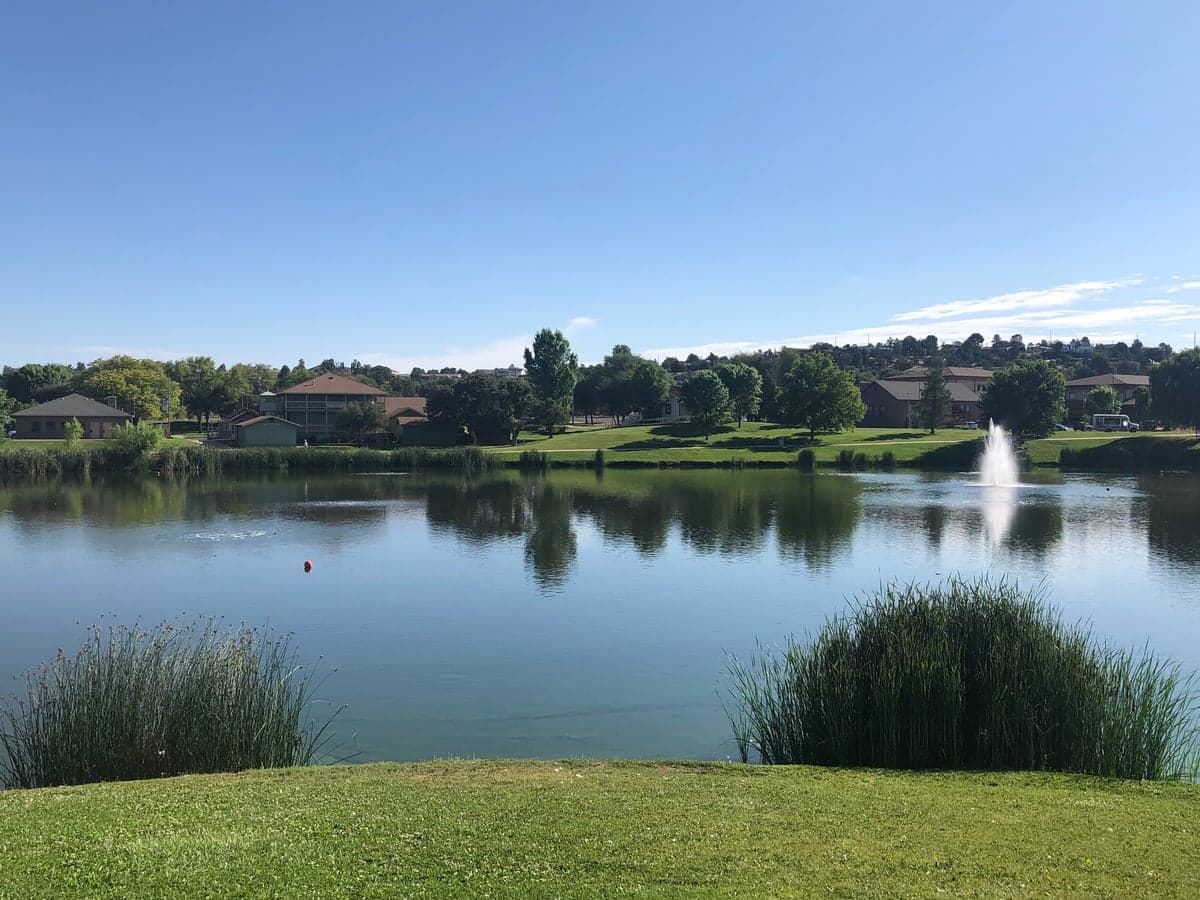
Photo: Wikipedia
Strategic Assessment of Payson, AZ
Meaningful friction. Expect exposure to either population pressure, blast zones, or natural disaster risk. Consider buying a retreat property.
What does the Strategic Assessment tell us?
Our Strategic Assessment grades tactical survivability of an area. Major population centers, military targets, fallout zones, natural disasters, and border exposure all drive risk — lower exposure means a more defensible position in a crisis.
This is heavily inspired by Joel Skousen's Strategic Relocation book. Highly recommended you checkout the book ($)What does this tell us?
Our Strategic Assessment grades tactical survivability of an area. Major population centers, military targets, fallout zones, natural disasters, and border exposure all drive risk — lower exposure means a more defensible position in a crisis.
This is heavily inspired by Joel Skousen's Strategic Relocation book. Highly recommended you checkout the book ($)Strategic Pillars

Key Distances
Regional Safe Places
Below is our recommended "safe zones" in Arizona and the surrounding area based on our strategic heuristics. For most people, it's unrealistic to live in a “safe zone” full-time due to work, family or other personal reasons. They tend to be more rural. However, many of these areas are perfect for second homes and retreat properties that double as a vacation home or even a short-term rental.
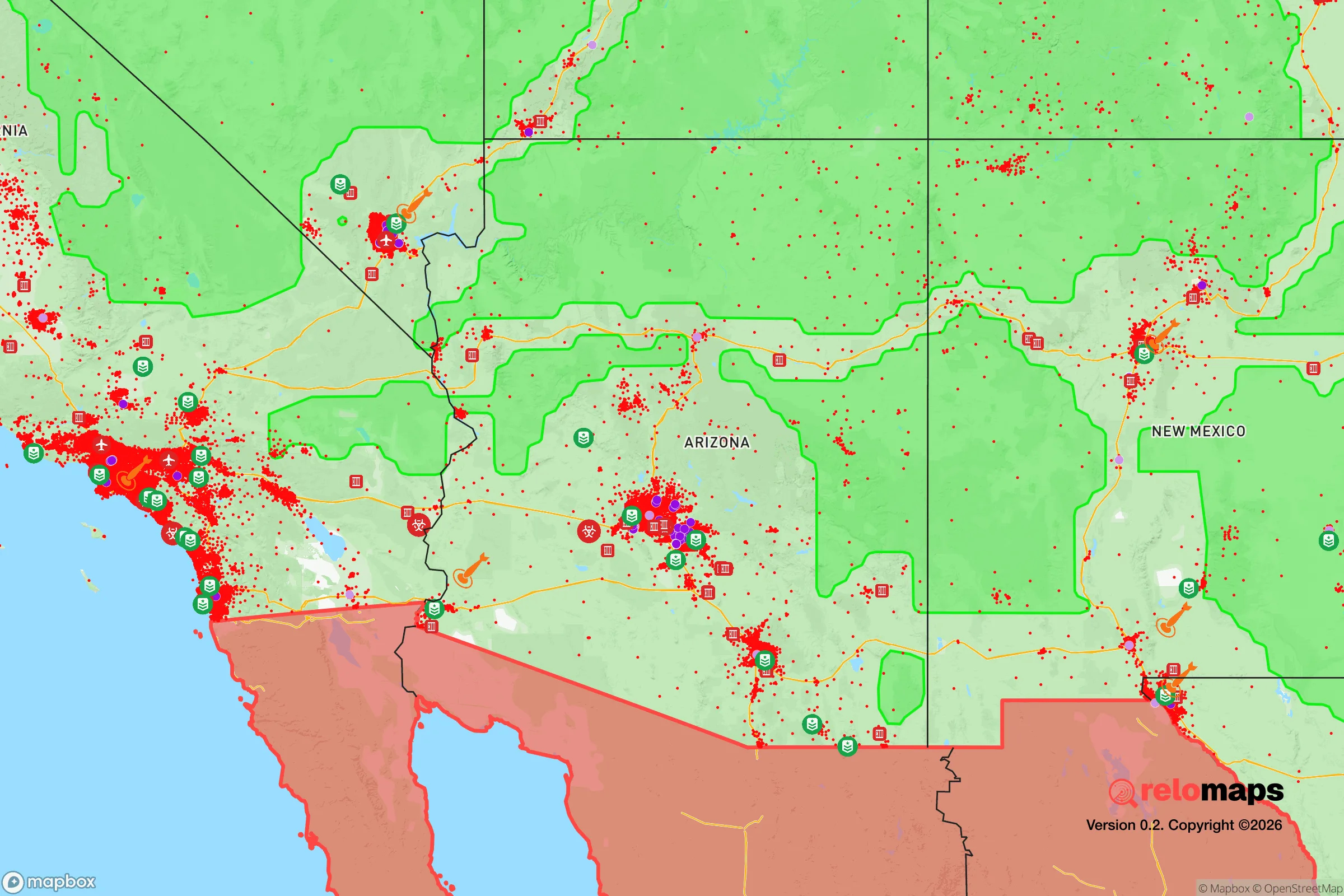
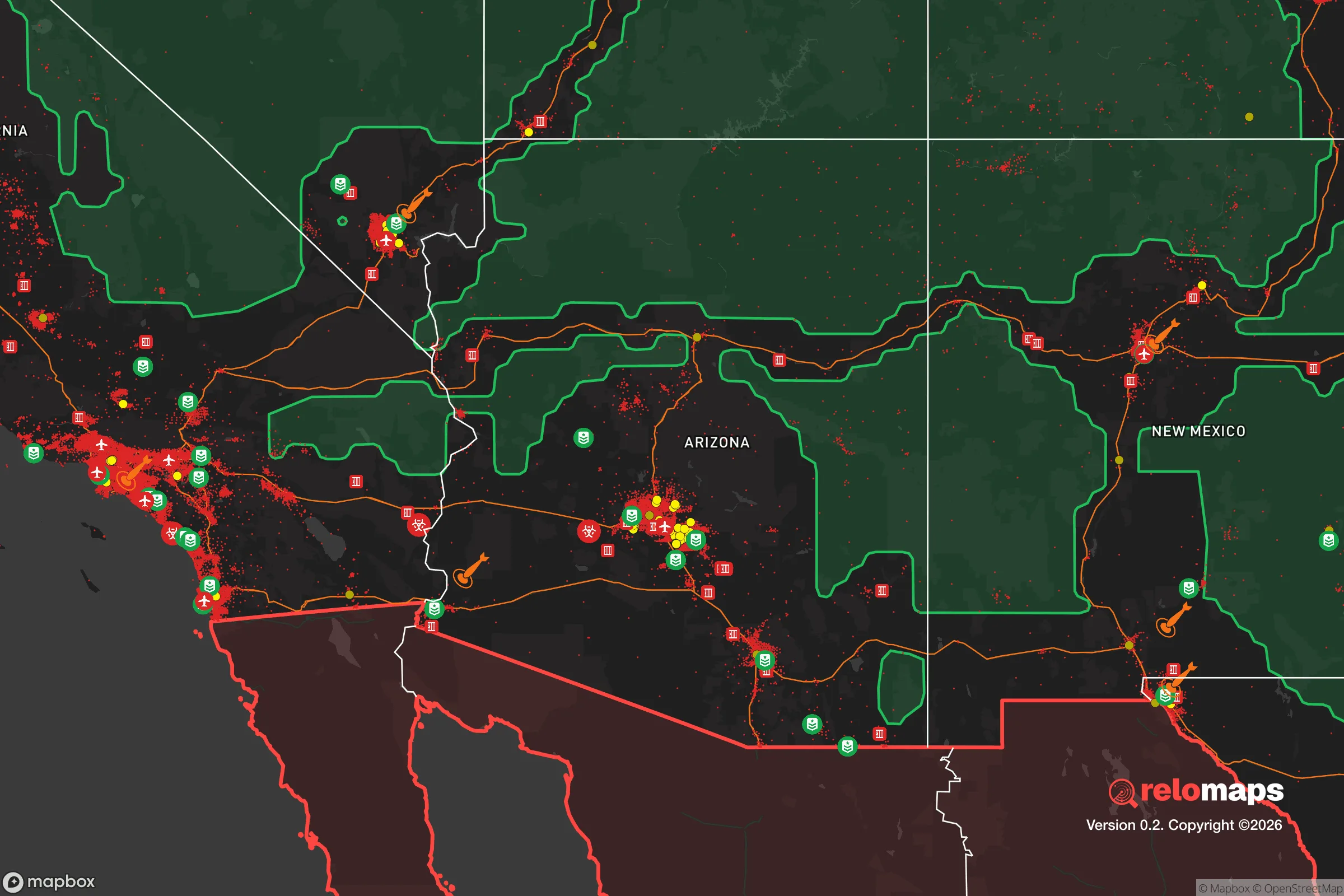


Important Note: For informational purposes only. This does not mean nothing bad ever happens in the green zones. Please use common sense. This is based on public data and modeled with AI. We tried to take a conservative approach but mistakes happen. We update this regularly as new information becomes available.
Solar Generator Recommendations
Backup power matters more here than in safer locations. We've picked three solar generators across budgets and capacity tiers — start with the budget unit if you only need a few essentials, or step up if you want to run a fridge and HVAC for days at a time.

Jackery Portable Power Station Explorer 300
Budget OptionPower on the Go: Weighing only 11 lbs, it's convenient to set up and store with book-sized foldable solar panels

BLUETTI Portable Power Station AC180
Designed for both indoor and outdoor scenarios, AC180 is highly capable as it has a robost capacity and continuous output power.

EF ECOFLOW DELTA Pro Ultra Power Station
Upgraded PickEcoFlow DELTA Pro Ultra is a whole-home energy system designed to grow with your family. Integrated with the Smart Home Panel 2, it scales to meet your evolving energy needs — keeping your home powered, intelligent, and secure through every stage of life.
We earn a commission, at no additional cost to you.
Strategic Assessment Analysis
Payson, Arizona, offers a compelling strategic position for those prioritizing resilience and self-sufficiency, largely due to its location on the Mogollon Rim at roughly 5,000 feet elevation. This places it in a temperate pine forest zone, far from the desert heat of Phoenix and the snowpack extremes of Flagstaff, while remaining within a manageable distance—about 90 miles—from the state capital. For a relocator with a prepper mindset, Payson’s key advantage is its relative isolation from major population centers, combined with access to the Rim’s natural resources, making it a viable fallback location for those seeking to weather civic unrest or large-scale disruptions without being cut off from essential supply routes.
Geographic position and natural advantages for long-term survival
Payson sits at the intersection of several critical geographic features that enhance its strategic value. The Mogollon Rim provides a natural defensive barrier to the south, while the Tonto National Forest surrounds the town on three sides, offering both cover and resources. The area’s elevation moderates temperatures, reducing the risk of extreme heat events that plague lower desert communities, and the annual rainfall—around 20 inches—supports a robust ponderosa pine ecosystem. This means reliable surface water sources, including the East Verde River and numerous creeks, are present within a short drive, a significant advantage over arid regions where water scarcity is a primary vulnerability. The terrain also limits large-scale movement, making Payson less accessible to chaotic population flows from Phoenix or Tucson during a crisis, while still allowing residents to reach those cities for supplies or medical care under normal conditions. The presence of the Payson Airport (PAN) adds a potential evacuation or resupply point, though it is small and not a major commercial hub, which is actually a positive from a security standpoint.
Risks, exposures, and proximity to fallout-relevant landmarks
No location is without vulnerabilities, and Payson has several that a strategic relocator must weigh. The most immediate risk is wildfire: the surrounding national forest has a history of severe burns, including the 2021 Telegraph Fire that came within a few miles of town. This creates a seasonal evacuation threat and potential air quality issues, though Payson’s fire department and community preparedness are better than most rural towns. More critically, Payson lies roughly 90 miles from Phoenix, which is a primary target for any large-scale civil unrest or infrastructure collapse due to its population density and economic importance. While this distance provides a buffer, it also means that fallout from a Phoenix-centric event—whether social, economic, or radiological—could reach Payson via refugees or supply chain disruptions. The town is also about 120 miles from Luke Air Force Base, a potential military target, and 150 miles from the Palo Verde Nuclear Generating Station, the largest nuclear plant in the country. These distances are significant but not absolute; prevailing winds and the Rim’s topography could mitigate some fallout risks, but a relocator should plan for self-sufficiency for at least 30 days post-event. Additionally, the Salt River Project’s water infrastructure, which serves Phoenix, originates in the Rim area, meaning any sabotage or contamination upstream could affect Payson’s water sources indirectly.
Practical resilience for a relocator: food, water, energy, and defensibility
For a relocator focused on practical self-sufficiency, Payson offers a mixed but workable picture. Water is the strongest asset: the East Verde River and Christopher Creek provide year-round flow, and many properties have wells or access to community water systems. Rainwater catchment is viable given the precipitation levels, and the Rim’s aquifers are generally reliable, though new well drilling is regulated and can be expensive. Food production is feasible but not effortless: the growing season is short (May to September) due to elevation, but cold-hardy crops like potatoes, carrots, and greens do well, and the surrounding forest supports hunting (deer, elk, javelina) and foraging (pinyon nuts, berries). Local livestock operations are limited, but small-scale chicken or goat keeping is common among residents. Energy resilience is moderate: grid power is provided by Arizona Public Service (APS) and is subject to outages during winter storms or summer monsoon events, but solar potential is excellent—Payson averages over 280 sunny days per year. Off-grid solar setups are common, and the town’s elevation reduces cooling needs compared to Phoenix, lowering overall energy demand. Defensibility is a double-edged sword: the town’s layout along Highway 87 creates a natural choke point, but also a single primary egress route that could be blocked. The surrounding forest offers cover for those who know the terrain, but also for potential threats. The local population is generally conservative and self-reliant, with a strong gun culture and a sheriff’s office that is responsive but under-resourced for a major crisis. Community networks, such as the Payson Preparedness Group and local church organizations, provide a social safety net that is more robust than in many suburban areas.
The overall strategic picture for Payson is one of calculated trade-offs. It is not a remote bunker location—it is a small town with a permanent population of about 16,000 that swells with seasonal visitors, meaning it has infrastructure (grocery stores, hardware stores, a hospital) but also faces periodic strain. For a relocator seeking a balance between isolation and access, Payson works well: you can be self-sufficient without being cut off from civilization, and you can monitor events in Phoenix without being directly in the blast zone. The key vulnerabilities—wildfire, a single highway, and proximity to a major target—are manageable with proper planning, including defensible space, alternate route knowledge, and a 90-day supply buffer. For those willing to invest in solar, water storage, and community ties, Payson represents a solid strategic fallback that avoids the extremes of desert or high mountain living while retaining the natural advantages of the Rim. It is not a perfect solution, but in a world of increasing uncertainty, it is a rational choice for those who value preparedness over convenience.

* Values derived from national, state, county, city and local statistics and may differ in a specific area. Last updated: 2026-05-01T06:19:35.000Z
Narrative content on this page is AI-generated and may contain mistakes. Verify any details that matter before acting on them.
ReloMaps may earn a commission from affiliate links at no extra cost to you.

