Photo: Wikipedia
Political ClimatePolitical Climate in Payson, AZ
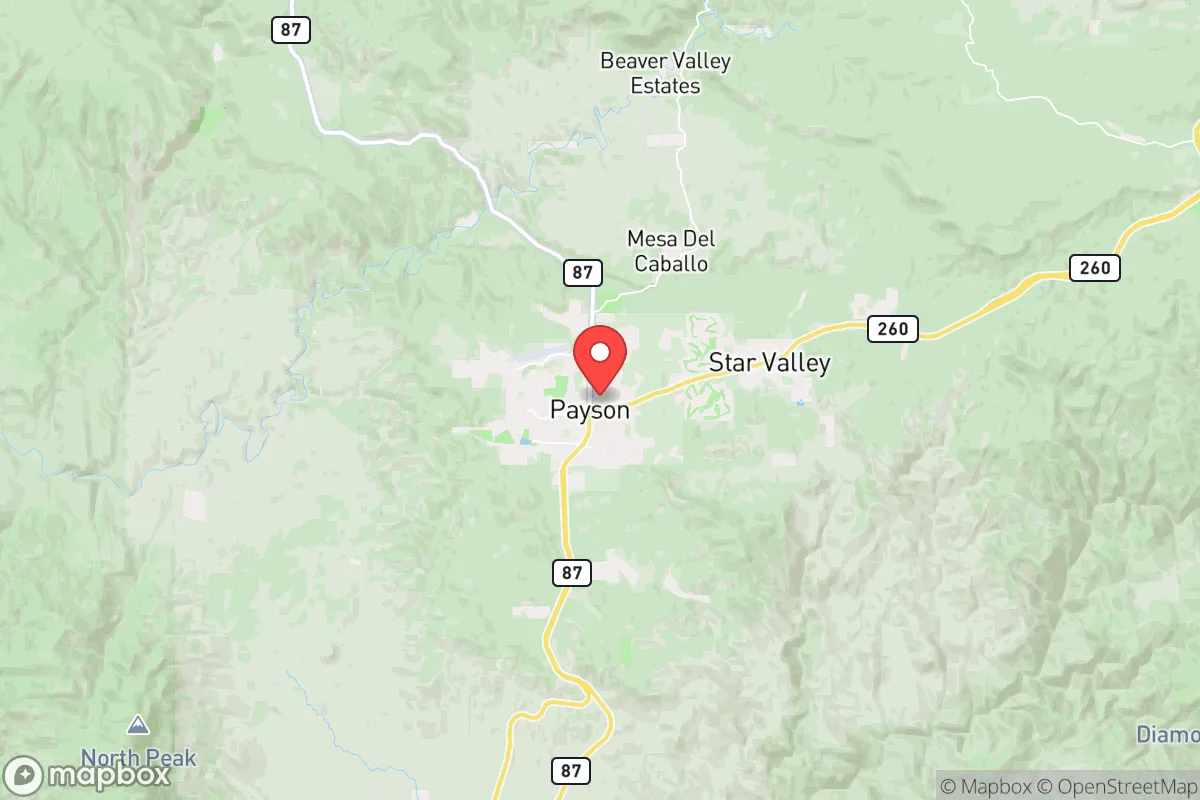
District shown is the primary district for this city’s centroid. Cities may span multiple districts.
Local Political AnalysisPolitical Analysis of Payson, AZ
Payson, Arizona, has long been a reliably conservative community, and that hasn't changed much. The town sits in Gila County, which carries a Cook Partisan Voting Index of R+7, meaning it votes about seven points more Republican than the national average. In the 2024 election, the county went for the Republican presidential candidate by a solid 18-point margin. That’s not a fluke—it’s been trending that way for years. You’ll see more Trump signs than Biden or Harris signs in yards, and the local chatter at the hardware store or the diner leans heavily toward limited government, Second Amendment rights, and keeping federal hands off our land and water. The trajectory here is steady: Payson isn’t flipping blue anytime soon, and if anything, the influx of folks from Phoenix and California who are fed up with big-city taxes and regulations has only reinforced the conservative base.
How it compares
Drive 30 minutes south to Fountain Hills or an hour west to Surprise, and you’ll find a different political flavor—more purple, with a mix of retirees and transplants who sometimes lean moderate or even progressive on local issues. But Payson is a different animal. It’s surrounded by national forest and wide-open spaces, and that geography shapes the politics. People here value self-reliance and personal freedom, and they’re suspicious of government overreach, whether it’s zoning restrictions, mask mandates, or water-use regulations. Compare it to Flagstaff, about 90 minutes north, which is a liberal college town with a very different vibe—think bike lanes, organic co-ops, and city council debates about climate policy. Payson, by contrast, is more about hunting, off-roading, and keeping the government out of your backyard. The contrast is stark, and most locals prefer it that way.
What this means for residents
For someone moving here, the political climate means a few practical things. First, property taxes are low—Gila County has one of the lowest effective property tax rates in Arizona, around 0.5% of assessed value. That’s a direct result of a local government that prioritizes fiscal restraint. Second, gun rights are taken seriously. Arizona is a constitutional carry state, and Payson’s sheriff is known for being pro-Second Amendment. You won’t find much support for red-flag laws or waiting periods here. Third, schools and local services are lean. The Payson Unified School District operates on a tight budget, and there’s no appetite for tax hikes to fund new programs. If you’re looking for a place where the government stays out of your life and your wallet, this is it. But if you’re hoping for progressive social policies or heavy public investment, you’ll be disappointed—and probably frustrated by the local resistance to change.
One cultural distinction worth noting: Payson has a strong independent streak that predates modern partisan labels. The town’s annual events—like the World’s Oldest Continuous Rodeo and the Payson Pro Rodeo—celebrate Western heritage and self-reliance. There’s a palpable distrust of federal land management, especially around the Tonto National Forest, where locals feel that Washington bureaucrats don’t understand the realities of wildfire risk, grazing, or recreation. That sentiment has only grown as the Forest Service has tightened access and fire restrictions in recent years. Looking ahead, the biggest political flashpoint will likely be water rights and growth management. As Phoenix’s sprawl creeps north, there’s pressure to develop more, but the local mood is skeptical—many residents see unchecked growth as a threat to the small-town feel and the freedom to live without constant regulation. If you value personal liberty and a government that stays out of your way, Payson is still a safe bet. Just don’t expect it to change much—that’s the point.

State Political ClimatePolitical Climate in Arizona
State Political AnalysisPolitical Environment in the State
Arizona has transformed from a reliably Republican stronghold into a true battleground state over the past two decades, with a partisan lean that now sits roughly even at the presidential level—Biden won it by just 0.3% in 2020, while Trump lost it by a similar margin in 2024. The dominant coalition is no longer the conservative, retiree-heavy base of the 1990s; instead, it’s a volatile mix of Maricopa County suburbanites, fast-growing Latino voters, and libertarian-leaning independents who swing hard between parties. Over the last 10-20 years, the state has shifted leftward on cultural issues while maintaining a deeply conservative fiscal and regulatory foundation, creating a political environment that feels like two different states depending on where you stand.
Urban vs. rural divide
The political map of Arizona is starkly divided between its booming urban corridors and its vast, sparsely populated rural counties. Maricopa County, home to Phoenix and its sprawling suburbs, is the decisive battleground—it casts about 60% of the state’s votes and has flipped from deep red to purple over the last decade. Within Maricopa, the city of Phoenix itself leans Democratic, driven by younger transplants and a growing Latino population, while suburbs like Mesa and Gilbert remain reliably conservative, though their margins are shrinking. Tucson and Pima County are solidly blue, anchored by the University of Arizona and a progressive base, but the rest of southern Arizona—places like Sierra Vista and Yuma—vote Republican. The rural north and east, including Flagstaff (a liberal college town) and Prescott (a conservative retirement hub), show the same urban-rural split in miniature. The real conservative strongholds are the vast, empty counties like Mohave (Kingman) and Yavapai (Prescott Valley), where Trump won by 30-40 points in 2024. This geographic divide means statewide elections are decided by a handful of swing precincts in Maricopa’s suburban donut.
Policy environment
Arizona’s policy environment is a mixed bag that reflects its split personality. On taxes and regulation, it’s a clear conservative win: the state has a flat 2.5% income tax (phased down from 4.5% in 2023), no estate tax, and a right-to-work law that keeps unions weak. Property taxes are low, and the regulatory climate is business-friendly, especially for housing and mining. On education, the state has embraced school choice aggressively—Arizona’s Empowerment Scholarship Accounts (ESAs) are the most expansive in the nation, allowing nearly all families to use public funds for private or homeschool expenses. However, the state’s public school funding per pupil remains near the bottom nationally, and teacher pay is a perennial fight. Healthcare policy is a flashpoint: Arizona expanded Medicaid under the Affordable Care Act in 2013, but the state also has some of the loosest telemedicine and direct-primary-care laws in the West. Election laws have been a rollercoaster—the 2021 audit of Maricopa County ballots (the “Cyber Ninjas” fiasco) was a national spectacle, but the legislature has since passed voter ID requirements and tightened mail-in ballot rules. Overall, the policy environment is libertarian-leaning on economics but increasingly polarized on social issues.
Trajectory & freedom
On personal freedom, Arizona is a tale of two trends. Gun rights are robust: the state has permitless carry (passed in 2010), no magazine capacity limits, and a strong preemption law that blocks local gun control. In 2024, the legislature passed a bill prohibiting state enforcement of federal gun laws, though it was vetoed by Governor Katie Hobbs. On parental rights, Arizona has a strong Parents’ Bill of Rights (2022) that gives parents access to curriculum and medical records, and it bans transgender athletes from female sports (2022). Medical autonomy is a mixed bag: the state has a near-total abortion ban from 1864 that was briefly revived in 2024 before being repealed, leaving a 15-week ban in place—a win for pro-life advocates, but a chaotic process that unsettled many. Property rights are generally strong, with low property taxes and no rent control, but HOA power is a persistent complaint in suburban developments. The biggest freedom concern is the growth of government overreach in the name of water management—new developments in areas like Buckeye and Queen Creek face state-imposed water-use restrictions that some see as a creeping regulatory burden. Overall, Arizona is becoming more free on economic and Second Amendment fronts, but less free on land use and healthcare choices.
Civil unrest & political movements
Arizona has been a hotbed of political activism, both left and right. The 2020 election protests in Phoenix drew thousands of Trump supporters, and the subsequent “Stop the Steal” movement was centered here, with the Maricopa County audit becoming a national rallying cry. On the left, the #RedForEd teacher walkouts in 2018 shut down schools across the state and led to a wave of progressive school board victories. Immigration politics are ever-present: SB 1070 (2010) made Arizona the face of strict enforcement, but the state has since softened, with Pima County and Tucson declaring themselves “sanctuary” jurisdictions that limit cooperation with ICE. In 2024, the legislature passed HB 2828, a bill requiring local police to enforce federal immigration law, but it was vetoed by Governor Hobbs. The border crisis is a daily reality in Yuma and Nogales, where migrant crossings have overwhelmed local resources and sparked frequent clashes between activists and Border Patrol. Election integrity remains a raw nerve: the 2022 gubernatorial race was decided by just 17,000 votes, and both sides still dispute the results. A new resident will notice the political tension in casual conversation—it’s a state where neighbors openly disagree at the grocery store.
Projection
Over the next 5-10 years, Arizona is likely to continue its drift toward a purple, competitive state, but with a conservative floor that prevents a full blue takeover. In-migration from California is the wildcard—about 60,000 Californians move to Arizona each year, and while many are fleeing taxes and regulation, they often bring moderate-to-liberal social views. The fastest-growing counties are Maricopa and Pinal, where new housing developments are filling with families who care more about school choice and low taxes than culture war issues. The Latino population, now about 32% of the state, is not monolithic—many are conservative on abortion and religion, but lean Democratic on immigration and healthcare. Expect the state to remain a presidential battleground, with Republicans holding an edge in state legislative races due to gerrymandering. The biggest risk to freedom is the water crisis—if the state imposes strict growth limits, it could drive up housing costs and push out the very people who moved here for liberty. A new resident moving in now should expect a state that is politically volatile but fundamentally conservative on economics, with a cultural war that will only intensify.
For a conservative-leaning individual or family, Arizona offers a strong foundation of low taxes, school choice, and gun rights, but you’ll need to pick your county carefully. Maricopa County’s suburbs (Gilbert, Chandler, Scottsdale) are safe bets for like-minded neighbors, while Prescott and Kingman offer a more rural, traditionalist vibe. Avoid Tucson and Flagstaff if you want to avoid progressive politics. The bottom line: Arizona is still a freedom-friendly state, but the fight to keep it that way is ongoing, and your vote will matter more here than almost anywhere else in the country.
* Values derived from national, state, county, city and local statistics and may differ in a specific area. Last updated: 2026-05-01T06:19:35.000Z
Narrative content on this page is AI-generated and may contain mistakes. Verify any details that matter before acting on them.
ReloMaps may earn a commission from affiliate links at no extra cost to you.

