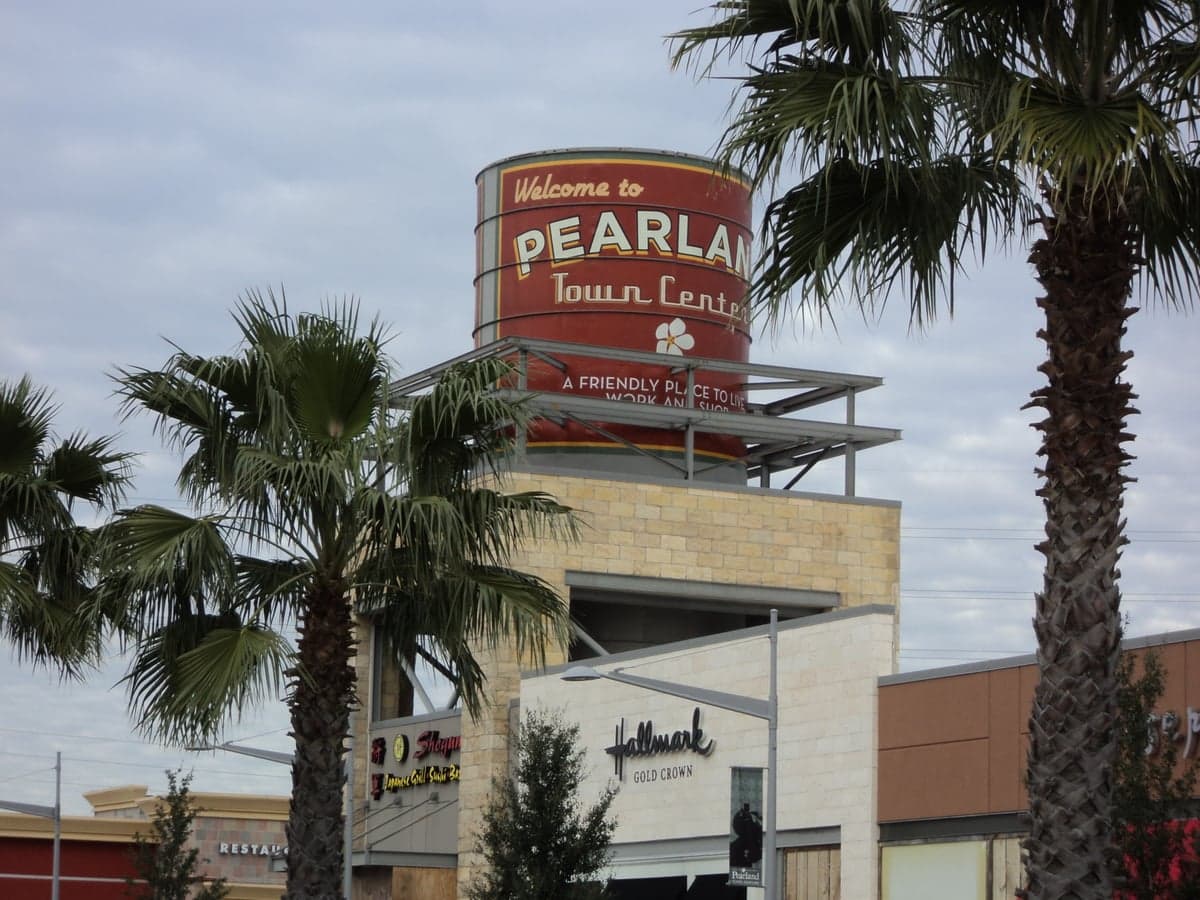
Photo: Wikipedia
Political ClimatePolitical Climate in Pearland, TX
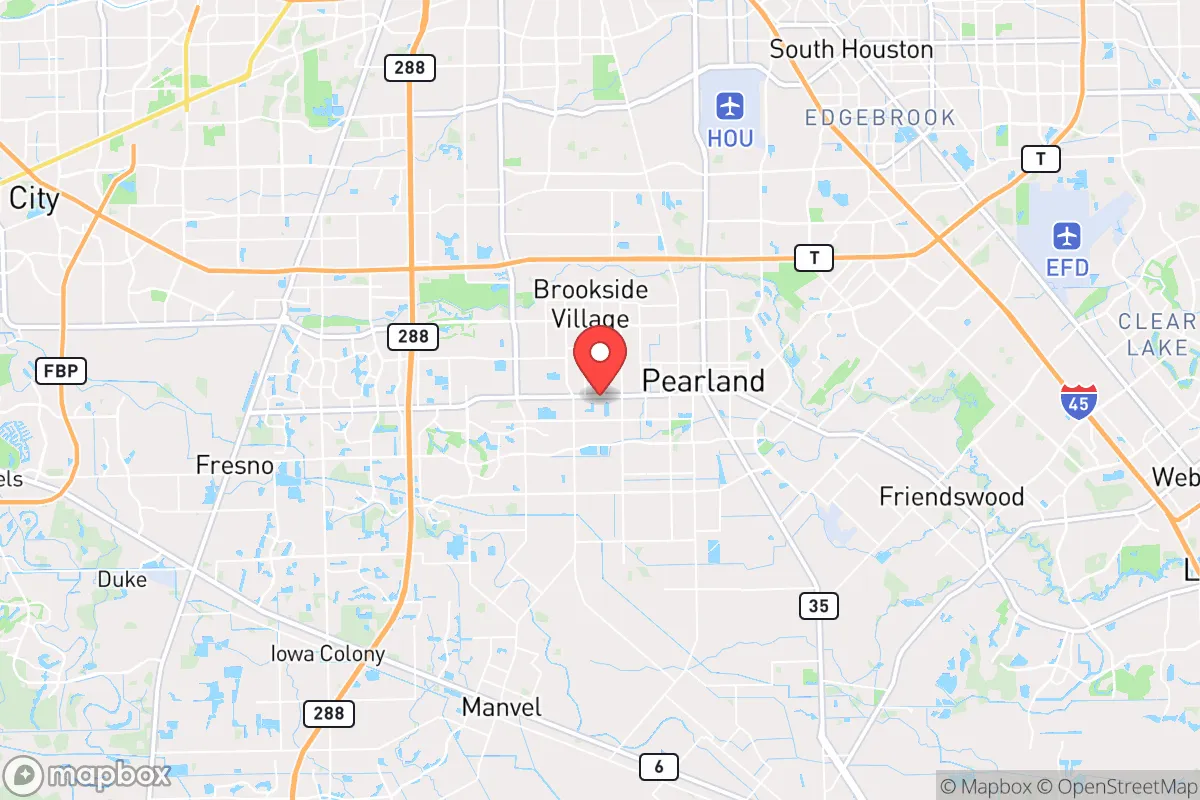
District shown is the primary district for this city’s centroid. Cities may span multiple districts.
Local Political AnalysisPolitical Analysis of Pearland, TX
Pearland, Texas, has a Cook PVI of D+24, meaning it leans heavily Democratic compared to the nation as a whole, but that number doesn't tell the full story of a community that's been rapidly changing. I've lived here for over 20 years, and I remember when this was a reliably conservative, family-oriented suburb where folks kept to themselves and the biggest political debate was about the school tax rate. Now, you're seeing a real shift, driven by an influx of new residents from places like California and the Northeast, and it's brought a lot of the same big-government, progressive policies we used to only see in Houston proper. The local elections and school board races have become battlegrounds, and the old "live and let live" vibe is being replaced by a more activist, top-down approach to governing.
How it compares
If you drive 15 minutes north into Houston, you're in a deep-blue urban environment where the city council is pushing everything from sanctuary city policies to heavy-handed business regulations. But head west to places like Richmond or Fulshear, and you'll find communities that are still solidly red, with lower taxes and a much stronger emphasis on property rights and local control. Pearland sits right in the middle, and it's becoming a political pressure cooker. The contrast is stark: in neighboring Alvin or Manvel, you still see a lot of "Keep It Simple" local government, while Pearland's city council has been flirting with zoning changes and affordable housing mandates that feel like they're straight out of a progressive playbook. It's a real concern for those of us who moved here to escape that kind of government overreach.
What this means for residents
For a long-time resident like me, the biggest worry is the erosion of personal freedoms. We're seeing more noise ordinances, stricter HOA regulations that the city is now enforcing, and a push for "complete streets" policies that prioritize bike lanes over car traffic—which sounds nice but often means less parking and more congestion. The school board has become a hot mess, with debates over curriculum and library books that would have been unthinkable a decade ago. Property taxes are already high in Brazoria County, and with the new progressive tilt, there's a real fear that spending will keep climbing without a corresponding improvement in services. If you value low taxes, minimal government interference, and the right to do what you want with your own property, Pearland is becoming a tougher place to call home.
One cultural distinction that stands out is the growing tension around the city's annual events and public spaces. The old Pearland was all about the rodeo, the July 4th parade, and church potlucks. Now, you see more calls to "diversify" these events and make them "inclusive" in a way that often feels like it's pushing out the traditional values that built this town. The long-term trajectory, if these trends continue, is that Pearland will become a smaller version of Houston—a place where your personal choices are increasingly subject to government approval. For now, it's still a great place to raise a family if you're willing to stay engaged and fight for your rights at the ballot box, but the window is closing fast.

State Political ClimatePolitical Climate in Texas
State Political AnalysisPolitical Environment in the State
Texas remains a solidly Republican state at the statewide level, but the political landscape has shifted noticeably over the past 10-20 years. The dominant coalition is still conservative, anchored by the suburbs, rural areas, and the Panhandle, but the margins have tightened as urban centers like Austin, Dallas, and Houston have grown more progressive. In 2024, Donald Trump carried Texas by roughly 14 points, down from 19 points in 2016, signaling a slow but real erosion of the GOP’s dominance driven by in-migration from blue states and demographic changes in the major metros.
Urban vs. rural divide
The political map of Texas is a story of two worlds. The rural counties—places like Lubbock, Amarillo, and the vast stretches of West Texas—vote Republican by margins of 70-80% or more. These areas are the backbone of the state’s conservative identity. Meanwhile, the major urban centers are increasingly blue. Austin is the most liberal city in the state, with Travis County voting +50 points for Biden in 2020. El Paso is reliably Democratic, and Houston’s Harris County has flipped from purple to solid blue over the last decade. The real battleground is the suburbs. Places like Collin County (north of Dallas) and Fort Bend County (southwest of Houston) were once GOP strongholds but have shifted left as professionals and families from California and the Northeast move in. In 2020, Biden won Fort Bend County by 6 points—a county that voted for Romney by 20 points in 2012. The rural-urban divide is sharp, and the suburbs are where the future of Texas politics will be decided.
Policy environment
Texas has one of the most business-friendly policy environments in the country, which is a major draw for conservatives. There is no state income tax, and property taxes are high but capped at 10% annual growth for homesteads. The regulatory posture is light—permitting for new construction is fast, and occupational licensing is less burdensome than in many states. On education, the state has a strong school choice movement: the 2023 session passed a $500 million school safety package but failed to pass a universal school voucher bill, though Governor Greg Abbott has made it a priority for 2025. Healthcare policy is mixed: Texas did not expand Medicaid under the ACA, which keeps costs lower for the state but leaves many rural hospitals struggling. Election laws tightened after 2020 with Senate Bill 1, which added ID requirements for mail-in voting and banned 24-hour and drive-through voting. For a conservative, the policy environment is generally favorable—low taxes, light regulation, and a focus on parental rights in education—but property taxes and school funding remain pain points.
Trajectory & freedom
On balance, Texas has been moving toward more personal freedom in several key areas, but there are warning signs. The 2021 permitless carry law (HB 1927) allows most adults to carry a handgun without a license, a major expansion of Second Amendment rights. The 2023 “Parental Bill of Rights” (HB 900) requires schools to notify parents of any curriculum changes and restricts sexually explicit content in libraries. On medical freedom, Texas banned COVID-19 vaccine mandates for private employers in 2023 (SB 7). However, the state has also seen government overreach in other areas. The 2021 abortion ban (SB 8) and the near-total ban in 2023 (HB 1280) are popular with conservatives but have created legal uncertainty for doctors. Property rights took a hit with the 2023 law allowing the state to seize land for the border wall (SB 2200), which raised eminent domain concerns. On speech, the state’s social media law (HB 20) prohibits platforms from banning users based on political views, but it’s been tied up in court. Overall, Texas is expanding freedom on guns, parental rights, and medical choice, but the border security push and property rights issues are worth watching.
Civil unrest & political movements
Texas has seen its share of political flashpoints. The 2020 protests in Austin and Dallas over George Floyd’s death were large and sometimes violent, leading to property damage and a lasting tension between city leaders and state Republicans. The state legislature responded with the 2021 “Back the Blue” law (HB 9), which increased penalties for rioting and defunding police. Immigration politics are a constant flashpoint. Governor Abbott’s Operation Lone Star has bused thousands of migrants to New York, Chicago, and Denver, and the state has installed razor wire and buoys along the Rio Grande. The 2023 law (SB 4) allows state police to arrest and deport migrants, though it’s been blocked by courts. Sanctuary city bans remain in place. On the right, the Texas Nationalist Movement (Texit) has gained some traction, with polls showing about 30% of Texans supporting secession, though it remains a fringe idea. Election integrity remains a hot topic: the 2020 audit in Harris County found no widespread fraud, but the 2021 law (SB 1) was passed to tighten procedures. A new resident will see these tensions most visibly in border towns like El Paso and Eagle Pass, where National Guard presence is heavy.
Projection
Over the next 5-10 years, Texas will likely remain Republican at the statewide level, but the margin will continue to shrink. The key driver is in-migration: roughly 1,000 people move to Texas every day, many from California and the Northeast, and they tend to be more moderate or liberal. The suburbs of Dallas, Houston, and Austin will continue to shift left, while rural areas and the Panhandle hold firm. The state’s growing Hispanic population is not monolithic—many in the Rio Grande Valley voted for Trump in 2020 and 2024—but younger Hispanic voters lean Democratic. The 2030 redistricting cycle will be critical: if Republicans hold the legislature, they can gerrymander to preserve power, but if Democrats flip the state House, the map could change dramatically. For a conservative moving in now, expect a state that is still broadly friendly to your values but where the culture war is intensifying. The policy environment will likely stay pro-business and pro-gun, but property taxes and school funding will be ongoing battles.
For a new resident, the bottom line is this: Texas is still a conservative state where your rights to work, own a gun, and raise your family without government interference are generally respected. But the political winds are shifting, especially in the big cities and suburbs. If you’re moving to Lubbock or Amarillo, you’ll find a deeply red community. If you’re headed to Austin or Dallas, be prepared for a more mixed environment where local politics can feel like a blue island in a red state. The state’s trajectory is toward a more competitive two-party system, but for now, Texas remains a place where conservative values still carry the day at the capitol.
* Values derived from national, state, county, city and local statistics and may differ in a specific area. Last updated: 2026-05-03T04:59:12.000Z
Narrative content on this page is AI-generated and may contain mistakes. Verify any details that matter before acting on them.
ReloMaps may earn a commission from affiliate links at no extra cost to you.

